Water is a highly valuable resource. Yet, it’s also one of the easiest to misuse. The use of irrigation systems across gardens, farms, and public landscapes keeps plants healthy. But modern water management requires more than turning sprinklers on and off. As concerns around water scarcity grow, a new generation of smart irrigation controllers is changing the way water is used.
In this blog post, we explain to you what irrigation controllers are. We also cover the types of irrigation controllers and why demand in the irrigation controllers market is on the rise. Keep reading!
Irrigation Controllers: Overview
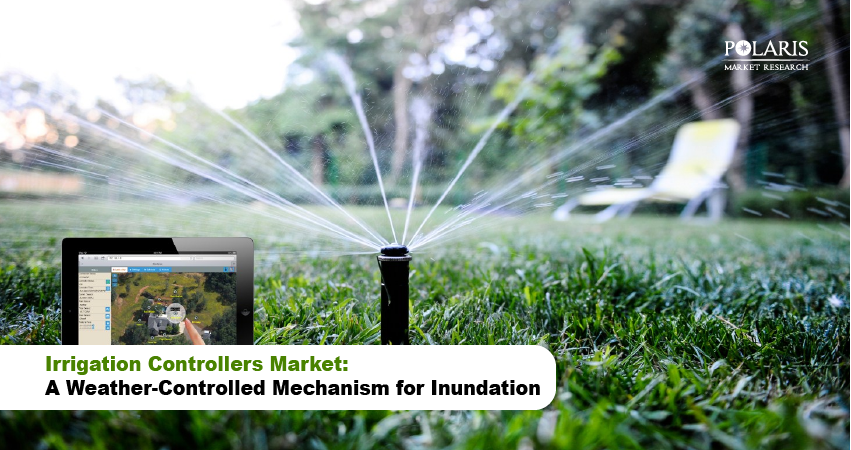
Irrigation controllers are controllers that reduce outdoor water use by observing and using information about site conditions such as soil moisture, rainfall, wind, slope, soil type, plant type, and more, and delivering the precise amount of water based on those factors. In the irrigation controllers market, these controllers acquire sensor feedback or weather data from the irrigated systems or the area and program and regulate irrigation duration and frequency accordingly. For instance, it may reduce watering in cooler months and increase it in hot, dry months.
Market Metrics
The irrigation controllers market is expected to witness sustained growth. The market for these controllers stood at USD 1323.61 million in 2024. It is expected to grow at a CAGR of 13.40% during the forecast period, 2024 to 2032.
The utilization of wireless technologies, such as soil moisture and plant canopy sensors, to acquire real-time data on exterior conditions via Wi-Fi and cloud-based systems, and the use of GPS to track central pivot or constant-move machine movements, is expected to drive product demand throughout the forecast period. In the irrigation controllers market, there has also been increased demand for fully independent solutions to maximize and ensure accurate irrigation.
Types of Irrigation Controllers
Climatologically-Based Controllers
Climatologically based controllers are also known as evapotranspiration controllers. Usually, ET is the process of transpiration by plants, linked to evaporation that occurs from plant and soil surfaces. ET controllers are of three kinds, namely signal-based, historical ET, and onsite weather measurement.
Soil Moisture Sensor Controllers
There are two types of controllers in the soil moisture sensors market: bypass and on-demand. The bypass arrangement is the most common for small sites, including most residential sites. Normally, a bypass SMS controller has a soil moisture approach adaptation from dry to wet. This approach can be used to set and adjust the point at which the irrigation system is permitted to suit the specific plant, soil, and microclimate needs. In comparison, the on-demand SMS controller commences irrigation at a pre-set low soil moisture threshold and concludes irrigation at an escalated soil moisture threshold. This kind of controller is frequently used where an elevated level of tailoring or control is required, such as on commercial sites and other types of sites with multiple irrigation zones.
Applications Across Different Settings
- Residential Gardens: Irrigation controllers are used by homeowners for managing lawns and flower beds with ease. Smart scheduling features help in reducing water bills and also take away guess work.
- Commercial Buildings and Campuses: Commercial facilities and campuses make use of irrigation controllers to keep their outdoor spaces green. These systems allow the management of large landscapes in an efficient way.
- Agriculture and Farming: Irrigation controllers are needed on farms for drip systems and sprinklers from the drip irrigation market. They help reduce labor and increase farm yield.
Geographical Reach
Asia Pacific: Government initiatives to conserve water are anticipated to drive market growth in this region, accounting for the largest revenue share during the forecast period. Further, governments are encouraging the adoption of smart irrigation controllers across several agricultural ventures by offering trade policies, subsidies, and favorable business conditions.
North America: Due to the escalating requirement for wholly digital systems that can impulsively regulate water run hours and water schedule to complement the landscape requirements throughout the region, thus pushing the irrigation controllers market growth.
End Note
The future of irrigation controllers is Wi-Fi-enabled. These controllers can tap into local weather data from nearby weather stations. In the irrigation controller market, several controllers have an associated smartphone application that allows tailored irrigation schedules and zones.