Key Takeaways
- Single-Use Bioreactors are seeing high adoption. They reduce cleaning requirements and help faster production changes.
- Stainless steel bioreactors remain largely used. They are suitable for large-scale manufacturing.
- Production volume often influences technology selection. Operating costs also play an essential role.
- Single-use systems provide flexibility. Stainless steel systems support long term production needs.
- Many biopharma companies use both approaches. This allows them to balance efficiency, scale, and manufacturing requirements.
- In 2026, both technologies continue to hold a key place in bioprocessing.
Evolution of Bioprocess Manufacturing
Bioprocess manufacturing has changed significantly over the past decades. Fixed systems and large infrastructure investments were the early facilities dependence. Stainless steel bioreactors became the industry standard for many years. They helped large production volumes and long operating cycles.
The growth of biologics manufacturing created a need for more flexibility among companies. Speed in product development also became important. This shift prompted many facilities to adopt Single-Use Bioreactors.
Modern production sites now aim on speed and efficiency. Companies want systems that are easier to install and operate. Advances in bioprocessing equipment have helped meet these goals. Manufacturers can scale production more efficiently than before.
The technologies used in today’s bioprocess manufacturing vary. Some facilities still rely on conventional systems. Others choose flexible solutions to meet changing production needs. The choice often depends on the type of product, production scale and business goals.
Advantages of Single-Use Bioreactors
Reduced Contamination Risks
In many facilities, contamination is still a daily concern. Small errors can affect entire batches. Single-use bioreactors help reduce this risk in a practical way. These systems arrive pre-sterilized and sealed. Teams do not need to clean them after each run. This removes several manual steps from the process.
With stainless steel bioreactors, cleaning takes time and effort. It also needs strict checks before reuse. Any gap in cleaning can create problems later. Disposable systems avoid this issue completely. Each batch uses a fresh setup, which improves safety.
This method enables more seamless biopharmaceutical production in busy facilities. Operators can spend more time focused on process control instead of cleaning tasks. It also reduces the use of harsh cleaning chemicals. Over time, this makes for easier and more reliable operations.
Faster Changeovers and Flexibility
Production needs can change quickly in today’s market. Companies often handle multiple products at once. Single-use bioreactors make these transitions easier to manage. Systems can be replaced quickly between batches. There is no need to wait for long cleaning cycles. This supports speed up work in biologics manufacturing environments.
Teams can move from one product to another without delay. It is also useful in cell culture production. In this area flexibility matters a lot. Smaller batches become easier to handle. Facilities can adjust output based on demand changes. This is important for new therapies and trials. It also supports faster decision-making during production. Overall, this flexibility helps companies stay competitive and responsive.
Why Stainless Steel Bioreactors Remain Essential
Large-Scale Production Advantages
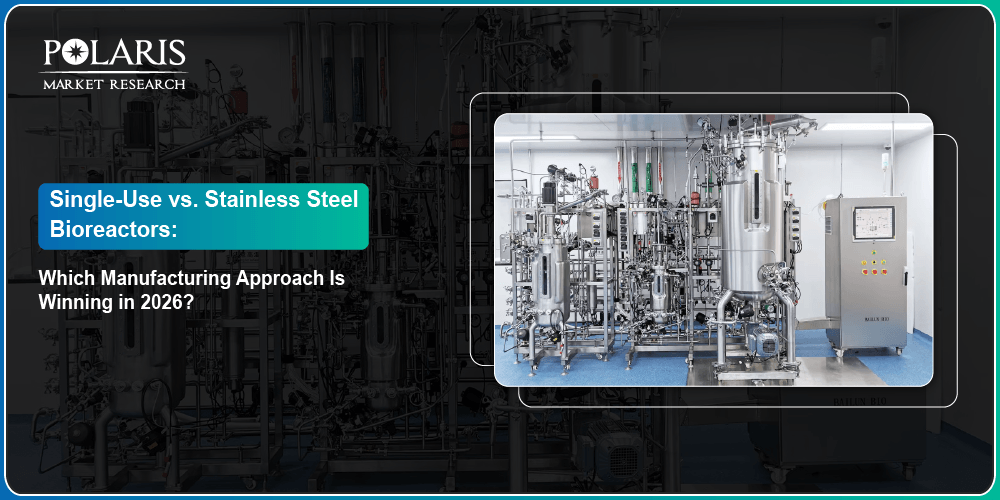
For large-scale output, stainless steel bioreactors are still widely used. They handle big volumes without frequent system changes. Many facilities depend on them for steady biopharmaceutical production. These systems run for long cycles with stable conditions.
Teams are already trained to do these setups well. The process feels familiar and easier to control. This is important when production runs non-stop for weeks. Small issues can be handled without stopping the system.
Single-use bioreactors work well for smaller batches. But at very large scale, they are less practical. Material handling becomes more complex at higher volumes. For this reason, stainless steel systems still hold strong value.
Long-Term Cost Efficiency
The initial cost of stainless systems is usually high. But over time, the cost becomes easier to manage. Many companies use them for years without major changes. This helps balance spending in pharmaceutical manufacturing.
Reusable systems eliminate the need to buy material for each cycle. This is important for large cell culture production facilities. The cost is spread out over many batches and over time. Some maintenance is required but teams plan for it in advance.
Single-use bioreactors reduce early investment needs. But they add ongoing costs with every batch. Over long periods, this can become expensive. For stable production, stainless systems still make financial sense.
Cost, Sustainability, and Operational Comparison
When teams compare systems, cost is often the first concern. Single-use bioreactors need lower upfront investment for setup. This helps new facilities start faster with fewer resources. There is less need for heavy bioprocessing equipment during installation.
But daily use tells a different story over time. Each batch needs fresh materials and disposal handling. These costs build up in regular biologics manufacturing work. At the same time, cleaning steps are removed, saving effort.
Stainless steel bioreactors cost more at the start. Still, they are used again and again for years. This helps balance spending in long-term production settings. For this reason many large plants still rely on them.
Sustainability also shapes decisions now. Disposable systems generate more solid waste after every run. The handling of this waste is not always simple. Some companies are trying recycling, but it is still limited.
Stainless systems use more water and cleaning chemicals daily. Cleaning cycles also take time and energy. So, both options come with environmental trade-offs.
From an operations view, disposable systems feel easier to handle. Less time on cleaning and validation steps. Stainless setups take more planning and regular maintenance. But they provide consistent performance for long production runs.
Which Platform Is Leading in 2026?
The answer depends on what manufacturers need. There is no clear winner. Single-Use Bioreactors are becoming common in newer facilities. They fit well where flexibility matters most.
At the same time, stainless steel bioreactors still hold a strong position. Many large facilities already depend on them. They work well for long production runs. Companies often continue using systems they know well.
Demand for biopharmaceutical production keeps growing. This creates room for different manufacturing approaches. Some products need flexibility. Others need consistent, large-scale output.
Improvements in bioprocessing equipment have supported both technologies. Operations today are more efficient than before. Process monitoring has also improved across facilities. Many manufacturers no longer choose only one option. They use different systems for different needs. A facility may use disposable systems for development. It may use traditional systems for commercial production.
In 2026, the market is not moving in one direction. Both technologies are still growing. The leading choice depends on production goals, facility setup, and product requirements.
Conclusion
Both single-use and stainless steel bioreactors play important roles in 2026. Single-use bioreactors are winning for new facilities and flexible production. They help teams move faster and reduce cleaning work. This is especially useful in biologics manufacturing and smaller batch operations.
Stainless steel bioreactors still matter for large-scale, long-term production. They offer stability and better cost recovery over years. Many established plants rely on them for high-volume biopharmaceutical production.
The choice depends on your production goals, scale, and budget. New facilities often prefer disposable systems for speed. Older plants may keep stainless systems for core products. Both platforms will continue to serve different needs in the industry.