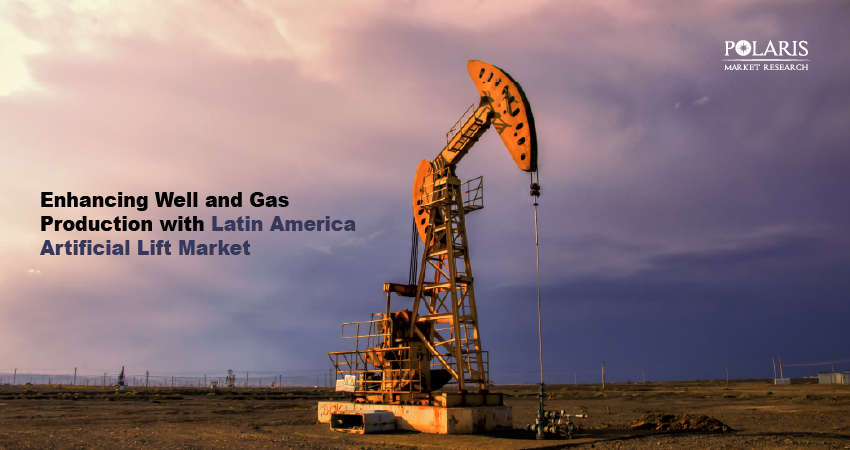
Artificial lift has emerged as a crucial means to increase well productivity and improve hydrocarbon extraction in the rapidly evolving world of oil and gas production. When natural pressure declines, artificial lift refers to the use of various technologies to raise crude oil or natural gas from reservoirs to the surface. Artificial lift technologies have become increasingly significant in the Latin American oil and gas sector as a result of rising energy demand and a focus on enhancing production efficiency. Keep reading as we explain all that you need to know about the Latin America artificial lift market.
Did You Know?
The Latin America artificial lift market has witnessed remarkable growth in recent years, driven by the region's burgeoning oil and gas industry and the increasing emphasis on maximizing production rates. The market was valued at USD 825.54 million in 2023 and is expected to grow at a CAGR of 4.3% from 2023 to 2032.
Why is Artificial Lift Needed?
The natural pressure in wells forces hydrocarbons to the surface. Even high-potential wells lose it over time, though. During sustained production, the loss of pressure makes it more difficult for the oil to naturally rise. Artificial lift aids in sustaining flow and extending well life. Here’s why artificial lift is needed:
Declining Pressure Over Time: Extraction of large volumes of oil from any deposit results in eventual and gradual loss of internal energy of the reservoir. Artificial lift restores the required force to enable the upward movement of the oil.
Heavy or Thick Oil: The oil in some reservoirs is so viscous that it can’t flow easily. The thickness of the oil makes additional help necessary for it to reach the surface. Artificial lift mechanisms provide the needed push for ensuring steady production.
Increased Water Production: Maturing wells often pull up more water with the oil. This added water increases the fluid's weight and reduces its flow efficiency. Artificial lift helps manage heavier fluid columns.
What Are Artificial Lift Mechanism Types?
Pump Assisted
Pump-assisted artificial lift systems use mechanical devices to lift fluids from the well. Two primary types are:
- Positive Displacement Pumps: These pumps from the positive displacement pumps market operate by displacing a fixed amount of fluid per stroke. They are well-suited for handling heavy, viscous fluids with inconsistent flow rates.
- Dynamic Displacement Pumps: Dynamic pumps impart energy to the fluid through rotating impellers or vanes, converting mechanical energy into kinetic energy and lifting the fluid to the surface.
Gas Assisted
Gas-assisted artificial lift systems from the artificial lift market utilize natural gas injected into the well to reduce the hydrostatic pressure and promote fluid flow. Gas lift is an economical and versatile method that can be adjusted to various production conditions, making it a popular choice in the industry.
What’s Influencing Market Demand?
- Growing demand for energy resources in Latin America.
- Maturing oilfields and declining natural reservoir pressure.
- Advancements in artificial lift technologies lead to improved efficiency and reliability.
- Increasing investments in the oil and gas sector in Latin American countries.
- Rising adoption of unconventional oil and gas extraction methods.
What Are Artificial Lift Types?
Electric Submersible Pump ESP
ESP is one of the most utilized artificial lift methods in Latin America. The method basically consists of a downhole pump powered by electricity to lift the fluid up to the surface. ESPs are very effective for deep and high-production-rate wells.
Progressive Cavity Pump (PCP)
PCP is suited for heavy, abrasive, and high-viscosity fluids. This operates through a helical rotor-stator system that allows for smooth and continuous fluid lifting, thus making it a good choice when there is pretty difficult reservoir conditions.
Rod Lift
The rod lift, or beam lift, is a type of artificial lift that uses a series of rods and a surface pump jack to lift fluids. It is a conventional and economical method for shallow to moderately deep wells with relatively low-to-moderate production rates.
Gas Lift
Gas lift is a very popular and versatile method in the Latin America Artificial Lift market. The injected gas serves as an agent to lighten the fluid column and enables the fluid to flow to the surface. It works effectively for wells where production conditions change and with high gas-to-oil ratios.
Others
Other artificial lift methods, including hydraulic pump systems, plunger lifts, and jet pump systems, have applicability to particular wells and reservoir characteristics that offer their unique solutions for optimum production.
To Conclude
The Latin America artificial lift market is set to grow significantly in the coming years, with the region continuing to witness significant spending in its oil and gas industry. The artificial lifting technologies have been vital for effective and sustainable hydrocarbon production in view of the increasing energy demand and well productivity enhancement. Latin America will continue to hold its position within the global petroleum and gas domain as the sector further develops and utilizes advanced artificial lift methods.