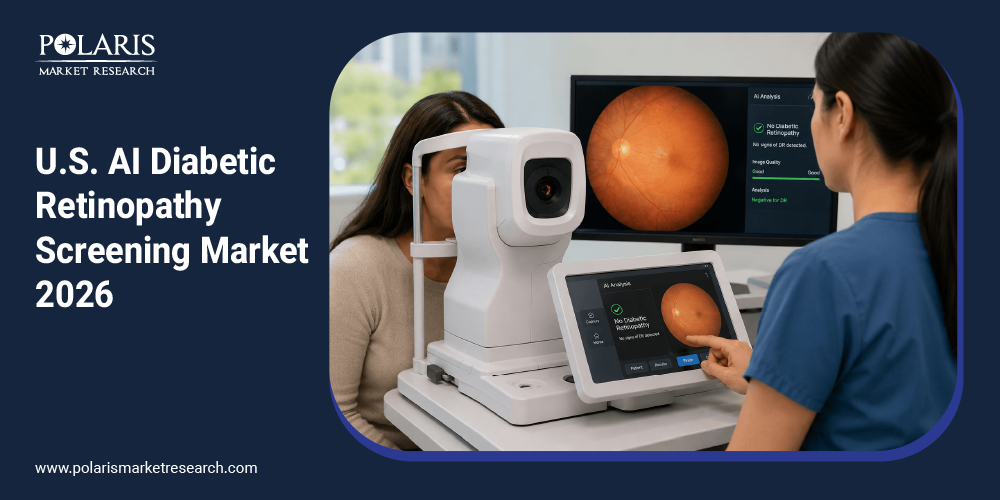
Diabetes can affect more than blood sugar levels. In the retina it can also damage the small blood vessels and lead to vision loss. The issue is that early stages of diabetic retinopathy can be asymptomatic. To spot these changes before they become severe regular eye screenings are important. In the US, health systems are exploring the use of artificial intelligence (AI) to make retinal screening faster and more readily available. AI tools can look at images of the retina to help identify patients who need more eye care, helping to catch diabetic eye disease earlier.
What Is AI Diabetic Retinopathy Screening?
AI diabetic retinopathy screening uses computer software to examine images of the retina and detect signs of diabetic eye disease. A retinal camera takes pictures of the back of the eye. The software studies these images to identify changes such as damaged blood vessels, bleeding, and other signs of the disease.
In traditional screening, the retinal images are usually reviewed by an eye care specialist. Automated screening tools analyze the images, providing results without the need for a specialist to review each image. For further examination based on the findings, patients may be advised to visit an eye specialist.
These tools do not replace a complete eye examination. They help healthcare providers identify patients who may need additional care. Particularly in primary care clinics where an eye specialist may not be available they can also make eye screening easier to access.
Key Growth Drivers
Rising Diabetes Prevalence
The growing number of people living with diabetes is increasing the need for regular eye examinations. Diabetes can damage the small blood vessels in the retina, leading to diabetic retinopathy. If not detected and treated early, it can cause permanent vision loss. But many with diabetes don’t have their eyes checked regularly. Busy schedules, travel difficulties, high costs and limited access to eye specialists can delay screening.
Automated retinal screening can help address some of these challenges. During routine diabetes checkups patients can have their retinal images taken. The software checks the images and helps doctors decide whether further examination is needed.
As the number of people living with diabetes continues to grow, healthcare providers are looking for practical ways to screen more patients. This is creating opportunities for the AI diabetic retinopathy screening market.
FDA-Cleared Autonomous Screening Tools
Approval from the U.S. Food and Drug Administration (FDA) has helped introduce automated diabetic retinopathy screening into clinical practice. Certain approved systems can examine retinal images and identify signs of the disease without requiring an eye specialist to review every image.
These tools allow screening to take place in primary care clinics and other suitable healthcare settings. During regular medical visits patients can get their eyes checked instead of arranging a separate appointment with an ophthalmologist. However, FDA clearance applies to specific devices and their approved uses. It doesn’t mean that every screening tool can find all eye conditions or that every product on the market has been cleared.
As more healthcare providers consider these systems, their accuracy, ease of use, cost, and ability to fit into existing medical services will influence adoption.
Where Is AI Diabetic Retinopathy Screening Being Deployed?
Automated retinal screening is gradually moving beyond traditional eye clinics. In different healthcare settings it allows healthcare providers to check for signs of diabetic eye disease.
Primary care clinics: Doctors can offer retinal screening during routine diabetes checkups. This saves patients from arranging a separate appointment for an initial screening.
Retail health clinics: Selected clinics may offer screening using retinal cameras and suitable software. For people who need regular checkups this can make the service more convenient.
Telehealth services: Retinal images can be captured at local clinics and shared with eye specialists when needed. This approach can help patients in areas with limited access to specialist care.
Community health programs: Screening programs can reach people who face difficulties travelling to hospitals or eye clinics.
For example, as part of routine diabetes care some primary care clinics in the U.S. have introduced automated screening. These programs show how eye screening can become a regular part of managing diabetes.
Accuracy and Remaining Caveats
Automated retinal screening can help detect diabetic retinopathy, but its accuracy depends on the system used and the quality of the images. In a clinical trial, the LumineticsCore system, formerly known as IDx-DR, recorded 87.2% sensitivity and 90.7% specificity for detecting more-than mild diabetic retinopathy.
Sensitivity is a measure of how good a system is at identifying people who have the condition. Specificity is a measure of how good a system is at identifying people who do not have the condition. These results are for that particular system and trial and not for every screening tool.
There are also practical challenges. Poor-quality images may require another scan or a specialist examination. For further assessment and treatment patients with a positive result need to be able to access an eye specialist. Without appropriate follow up, early detection may not lead to better outcomes. The cost of equipment, training staff and differences in access to healthcare can also affect uptake. Thus, screening tools need to be integrated with dependable referral services and routine eye care.
Market Outlook, 2026–2034
According to Polaris Market Research, the U.S. AI diabetic retinopathy screening market was valued at USD 184.15 million in 2025 and is projected to reach USD 1,081.73 million by 2034, growing at a CAGR of 21.74%.
Rising diabetes cases, rising demand for early detection and wider adoption of automated screening tools are expected to support market growth. However, equipment costs, reimbursement policies and access to eye specialists may affect adoption.
FAQs
Can AI actually screen for diabetic retinopathy accurately?
Yes. Approved AI tools can detect signs of diabetic retinopathy from retinal images. However, the accuracy varies from system to system and some patients need further examination by an eye specialist.
Where is AI retinopathy screening available today?
It is available in selected U.S. primary care clinics and other healthcare settings equipped with suitable screening tools.
Is AI retinal screening FDA-cleared?
Yes. The FDA has cleared specific systems, including LumineticsCore, EyeArt, and AEYE Diagnostic Screening. However, not all AI screening tools are FDA-cleared.
Conclusion
Early detection can make a real difference in managing diabetic eye disease. Automated retinal screening enables healthcare providers to screen a larger number of patients and to identify patients who may need further care. As the technology is used more, access, affordability, and appropriate follow-up will remain important.
Explore the AI Diabetic Retinopathy Screening Market to learn more about market trends, growth drivers, and future opportunities. You can also read our blog on AI in Radiology to understand how AI is transforming medical diagnosis.

.png)