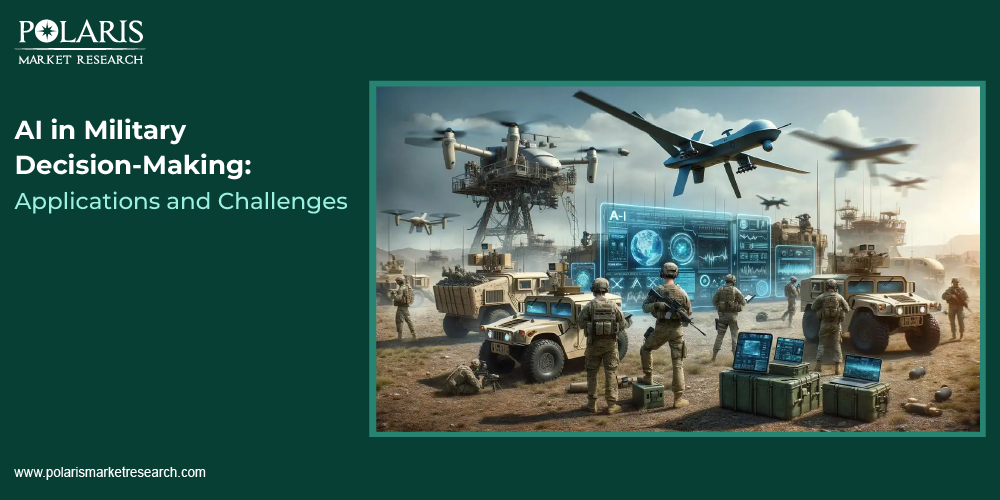
Military operations contain lots of information. Intelligence, satellite imagery, video surveillance and sensor data all contribute to understanding what is happening on the ground. It takes time to review this information, particularly when decisions must be made quickly. This is where artificial intelligence (AI) is proving useful. Artificial intelligence helps defense organizations analyze big data and identify key patterns and potential risks in military decision-making. It is used in military intelligence, logistics, equipment maintenance and operational planning. At the same time, its growing use raises questions about security, reliability, and the role of human judgment in military decisions.
What Is AI in Military Decision-Making?
Artificial intelligence in military decision-making refers to the use of artificial intelligence to help military personnel to understand information and make better informed decisions. They use machine learning, data analytics and computer vision to analyze data coming from different sources. They also help identify patterns that may be difficult to notice through manual analysis.
For example, an AI system can scan satellite images or sensor data and flag changes for further attention. It can also support military planners compare different situations and assess possible risks.
But AI doesn’t always make the decisions on its own. In many applications, it works as a support system that provides information and recommendations. For reviewing these findings and making important decisions military commanders and trained personnel remain responsible.
Key Applications of AI in Military Decision-Making
AI is being used in different areas of defense operations. Its applications go beyond intelligence gathering and also include equipment management, logistics, and planning.
Military Intelligence and Threat Assessment
Military intelligence teams collect information from several sources, including satellites, surveillance cameras, drones, and ground-based sensors. Going through all this information manually can be time-consuming.
AI supports simplify this process by examining large amounts of data and identifying patterns. For instance, to highlight changes in an area computer vision systems can analyze satellite images and surveillance footage. For further investigation machine learning can also support organize intelligence information and identify unusual patterns.
This means that analysts can spend more time on analyzing the key findings and less time reviewing each and every single piece of information manually. However, AI-generated results still need human verification before they are used in decision-making.
Military Logistics and Predictive Maintenance
Keeping military equipment and supplies ready for use requires careful planning. Defense organizations need to manage fuel, spare parts, vehicles, ammunition, and other essential resources.
AI can help with this process by studying inventory records, equipment usage, and supply requirements. These insights can help military organizations identify possible shortages and plan resource distribution.
Predictive maintenance is another useful application. AI systems can examine equipment performance and maintenance records to identify signs of possible failure. This gives maintenance teams an opportunity to inspect and repair equipment before a major problem occurs. As a result, organizations can reduce unexpected downtime and improve equipment availability.
Operational Planning and Decision Support
Military planning involves several factors, including available resources, environmental conditions, intelligence information, and possible risks. Even a small change in these factors can affect operational decisions.
AI-powered decision-support systems can examine information from different sources and help planners compare possible scenarios. They can also organize complex data and highlight factors that may require attention.
These systems do not replace the experience of military commanders. Instead, they provide additional information that can help commanders understand a situation and consider different options before making decisions.
Emerging Trends in Military AI
Military AI is moving beyond individual applications. Defense organizations are exploring ways to connect different technologies and make information easier to access across their operations.
AI-Enabled Command-and-Control Systems: Command-and-control systems help military leaders coordinate people, equipment, and operations. AI can bring information from multiple sources together, making it easier to understand changing situations. Data fusion also helps combine information from different sensors and intelligence platforms.
Autonomous and Uncrewed Systems: Uncrewed aerial, ground, and maritime systems are becoming part of modern defense operations. These platforms collect information from different environments. AI can help process this data and support monitoring, navigation, and equipment functions. Human supervision remains important, particularly when systems operate in sensitive military environments.
Edge AI and Digital Simulations: Edge AI allows information to be processed closer to where it is collected. This can be useful in locations where internet connectivity is limited or communication with central systems is difficult. Digital twins and simulation tools are also being explored for equipment testing, training, and performance analysis.
Responsible AI Development: As military organizations adopt AI, they must also consider how these systems work and how their outputs are used. Explainability, human oversight, accountability, and reliable performance are becoming important parts of military AI development.
Challenges and Risks of AI in Military Decision-Making
Although AI can support several military activities, its use comes with challenges that defense organizations cannot ignore.
Data Quality and Accuracy: AI systems depend on the information used to train and operate them. If the data is incomplete, outdated, or incorrect, the system may produce misleading results. This can affect the quality of decisions.
Cybersecurity Threats: Military AI systems may become targets of cyberattacks. Hackers could attempt to access sensitive information, disrupt systems, or manipulate the data used by AI models. Strong cybersecurity measures are necessary to protect these platforms.
Transparency and Accountability: Some AI systems are difficult to understand because they do not clearly explain how they reach a particular result. This creates problems when military personnel need to examine or justify an AI-generated recommendation.
Integration and Skills Gaps: Many defense organizations still use older systems and infrastructure. Connecting these technologies with newer AI platforms can be difficult. A shortage of skilled professionals and the need for specialized training can also slow down adoption.
Opportunities for Defense Modernization
AI gives defense organizations new ways to improve their existing operations. Faster data analysis can help military personnel understand situations more clearly, while predictive maintenance can support equipment readiness.
It can also help organizations manage supplies, plan resources, and connect information from different defense systems. However, these improvements depend on secure infrastructure, reliable data, and proper training. Organizations that focus on these areas can make better use of AI while keeping human judgment central to important decisions.
Market Outlook and Industry Implications
The growing use of AI in defense is attracting attention from technology developers, software companies, cybersecurity providers, and defense equipment manufacturers. According to Polaris Market Research, the global Artificial Intelligence (AI) in Military Market was valued at USD 18.55 billion in 2025. It is expected to reach USD 99.34 billion by 2034, growing at a CAGR of 20.5% from 2026 to 2034. North America held the largest market share of 41.7% in 2025, while Asia Pacific is expected to record the fastest growth, with a CAGR of 26.8% during the forecast period.
The increasing adoption of AI-powered surveillance, cybersecurity, autonomous systems, and command platforms is creating new opportunities in the defense sector. Rising government spending and the need to modernize military operations are also supporting market growth.
Conclusion
AI in military decision-making is changing how defense organizations collect information, assess situations, and plan their operations. Its applications in intelligence, logistics, predictive maintenance, and operational planning can make military activities more efficient. However, challenges related to data accuracy, cybersecurity, and accountability need careful attention. AI can provide valuable support, but human judgment and responsibility must remain at the center of military decision-making.
Frequently Asked Questions
What is AI in military decision-making?
AI in military decision-making refers to the use of artificial intelligence to examine military information, identify patterns, assess risks, and support planning. It helps military personnel make informed decisions using data and analytical insights.
How is AI used in military intelligence?
AI helps intelligence teams examine satellite images, surveillance footage, sensor data, and other information. It can identify patterns, highlight unusual activities, and organize information for further analysis by human experts.
Can AI make military decisions autonomously?
Some military systems can perform specific tasks with varying levels of autonomy. However, AI-based decision-support tools generally provide recommendations for human evaluation. The level of human involvement depends on the system and its intended use.
What are the main risks of military AI?
The main risks include inaccurate data, biased results, cyberattacks, technical failures, and a lack of transparency. Unclear accountability and excessive dependence on automated systems are also important concerns.
How does AI support defense modernization?
AI supports defense modernization by improving intelligence analysis, equipment maintenance, logistics planning, and information sharing. These applications can help defense organizations manage resources and improve operational readiness.
Explore the latest market trends, growth drivers, and emerging opportunities in the Artificial Intelligence (AI) in Military Market. Visit Polaris Market Research to access the full market report.