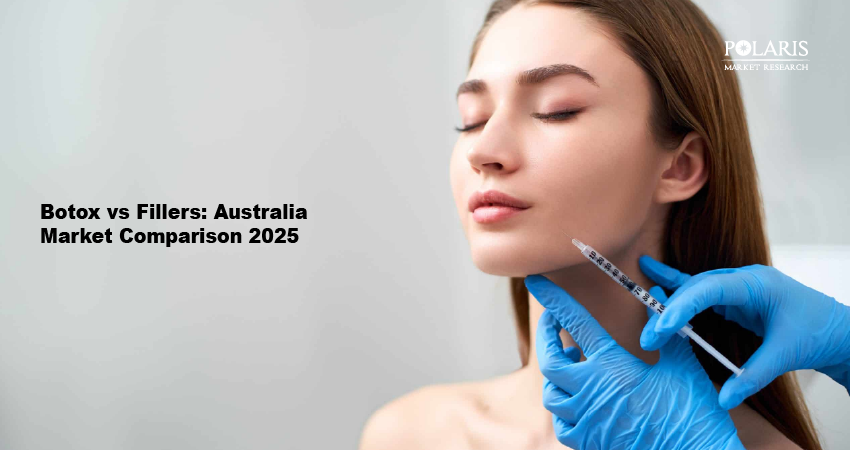
Cosmetic treatments have changed a lot over the years, especially in Australia. More people now go with quick and non-surgical options to improve their appearance. There are several choices available, of which Botox and dermal fillers are the most common. People use them to smooth wrinkles and shape facial features without the need for major surgery.
In conversations, Botox and fillers are often talked about together. But their working and uses are different. Knowing the differences means people can choose the right treatment for their needs. In this blog, we explain to you what these treatments are and how they work. We also cover the key stats for the Australia facial injectables market.
What is Botox?
Botox is a purified protein. It helps relax specific facial muscles for a short period. A small injection of Botox reduces lines caused by repetitive expressions. These expressions can take the form of smiling, frowning, or raising eyebrows. Botox works on the muscles and not the skin. So, the results are natural when it’s done in a correct way.
Botox is a part of the Australia facial injectables market, which is projected to account for a CAGR of 24.3% between 2024 and 2032. In Australia, Botox is commonly used on the forehead and around the eyes. The purified protein is also used for frown lines between the eyebrows. People prefer it because the procedure is quick; it usually takes between 10 and 15 minutes. Most individuals start noticing results within a few days. The effect of Botox usually lasts three to four months. Regular sessions allow individuals to maintain a smooth appearance.
What Are Dermal Fillers?
Dermal fillers work in a different way than Botox. These fillers don’t relax muscles. Instead, they add volume to the areas of the face that look thin and flat. Most fillers used in Australia are made of a soft gel that’s similar to substances naturally present on the skin. The injection of dermal fillers helps fill in deeper lines and replace lost volume.
Filler products from the dermal fillers market are popular among individuals who want to enhance their lips and lift their cheeks. They are also used to shape the jawline and soften smile lines. Dermal fillers provide people with a non-surgical option for subtle changes. A notable thing about fillers is that the results can be seen straight away. How long the results last depends on the filler type and area treated. Most effects stay between six months and two years.
How Botox and Fillers Differ?
Botox and fillers are two popular cosmetic treatments. But as mentioned earlier, they do different things. Botox relaxes the muscles that cause wrinkles, especially on the forehead and around the eyes. Fillers, on the other hand, add volume to areas that look thin or hollow. The areas include cheeks, lips, and jawline. Botox is best for lines that appear when individuals make facial expressions. It takes a few days to show results. Fillers work right away and are used to shape the face.
Botox and fillers target different concerns. As such, many people opt to go with both treatments together. Botox smooths active lines, whereas fillers restore fullness. This combination helps create a balanced and natural look. This is why it has become highly common across aesthetic clinics in Australia.
Why Australians Choose These Treatments?
Many Australians prefer Botox and fillers as they fit easily into their busy lifestyle. These treatments are quick and give noticeable results. Also, they don’t need very long recovery periods. People like that they can get natural-looking improvements without the need for surgery.
Another reason behind their popularity in the Australia facial injectables market is the rise of “preventive treatments.” Younger people are now choosing low doses of Botox to slow the formation of deep wrinkles. At the same time, adults of all ages use fillers to refresh their appearance and smooth lines in a subtle way.
What Are Benefits and Considerations for these Treatments?
Botox and fillers are beneficial when used in an appropriate way. Botox softens expression lines and provides a more relaxed appearance. Fillers improve facial volume and give the face a more youthful look. The quick treatment time makes these procedures appealing to individuals who have busy schedules.
However, patients must have realistic expectations. Too much of this treatment can be unnatural. Highly qualified practitioners will not only evaluate but can also provide safe injections. A qualified professional knows the anatomy of faces. Therefore, they are best at advising on which is the most suitable type of treatment.
Side effects of Botox and fillers are temporary. But it’s still a good practice to discuss them in advance. Clear communication between the patient and practitioner allows for a positive experience.
What’s Driving Market Expansion in Australia?
Due to increased awareness and social media influence, the facial injectable market in Australia has witnessed steady growth over the last few years. This shift toward minimally invasive treatment options is another factor driving market demand.
Clinics in major cities across Australia report a growing interest in both younger and older age groups. The country has a well-established network of dermatologists and cosmetic nurses who have embraced the best international practices.
Botox is the top choice for reducing wrinkles. Fillers are becoming popular as individuals seek treatments that add shape and definition to the face. Many clinics now combine both options to deliver smooth, long-lasting results. Strict rules and proper training also help keep the treatments safe in the country.
Conclusion
Botox and fillers are now a big part of the Australia facial injectables market. These treatments are popular as they allow people to look fresher without surgery. The recovery time of these treatments is also small. Sure, the treatments work in different ways. But they give noticeable results that fit easily into busy routines. As interest continues to grow, Botox and fillers are expected to stay important in the country’s cosmetic industry for many years.