For many years, copper cables were used for most communication needs. They carried phone calls and connected early computers. Copper cables also helped deliver the first versions of the internet. But today, people expect much faster connections. And copper can no longer keep up. This is where fiber optics comes in.
Many homes and businesses have now started switching from copper to fiber. This is due to the various benefits fiber optics offers. In this blog, we will explain the differences between the two. We will also cover why fiber is becoming the top choice and what the future may hold for the fiber optics market.
What is Fiber Optics?
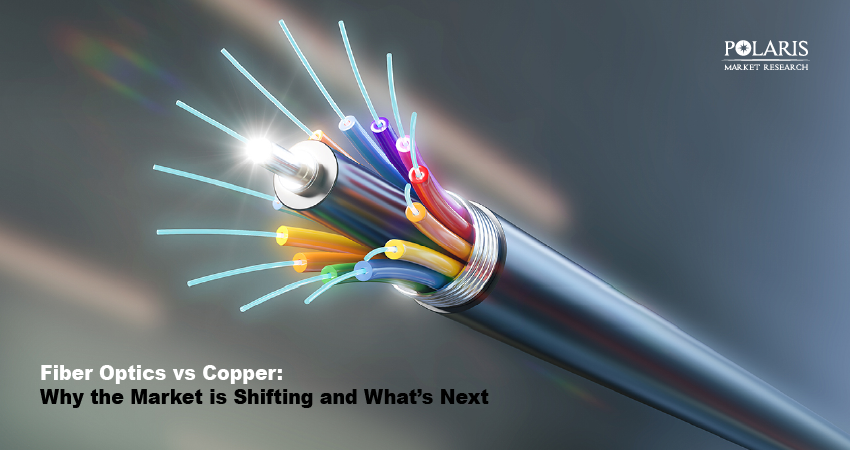
Fiber optics is a technology that uses very thin glass or plastic strands. These strands carry information using light. You can think of them as sending a beam of light through a clear tube. As there’s nothing to block the path, the light travels fast and reaches the other end without trouble. Fiber uses light instead of electricity. So, it can carry huge amounts of data at very high speeds. It also isn’t easily affected by weather or nearby cables. This is often a problem with older communication wires.
Did you know? The fiber optics market stood at USD 9.44 billion in 2024. The market is expected to account for a CAGR of 8.3% between 2025 and 2034. The market is primarily driven by the rising adoption of smart fiber sensing solutions and the growing deployment of 5G.
What Is Copper Cabling?
Copper cabling has been the foundation of communication systems for a long time. They transmit information as electrical systems. They have long been used for telephone lines and early internet connections. However, the introduction of data-intensive digital activities, such as remote work and streaming, pushed copper to its limits. Electrical signals tend to become weak over long distances. Copper cables can also be easily affected by weather conditions. In essence, copper was essential in connecting the world. However, it was intended for a time when our digital demands were far lower.
Why the Shift Is Happening?
Faster Speeds
Speed is one of the major factors driving the shift from copper to the fiber optics market. Copper wires were designed for phone calls. And not for today’s heavy internet usage. They work fine for simple tasks such as browsing or checking emails. But they struggle when many people stream videos or work online. Fiber optics solves this problem. As fiber carries data using light, it offers extremely fast speeds without slowing down. Be it HD streaming or video meetings, fiber handles everything in a smooth way.
Improved Reliability
As earlier mentioned, the electrical signals that course through copper cabling tend to weaken or be affected by the weather. This usually manifests itself as slow speeds and sudden dropouts. With fiber, these issues are avoided as it uses light rather than electricity. Light signals are strong over long distances. They also do not get affected by weather or electrical interference. For this reason, fiber is a much more reliable option.
Reduced Maintenance
The copper material in copper cabling can corrode. It can also get damaged. As such, copper networks often need repairs. Fiber cables are more durable and can better resist damage. They can stay stable for many years while needing minimal upkeep. Sure, fiber installation can cost more at the start. But it saves money over time. That’s why many countries are switching from old copper networks to fiber.
Rising Need for High Bandwidth Services
Modern life demands strong and high-speed internet. People stream high-quality videos and use cloud storage. Even household appliances are now online. Copper can’t keep up with this growing digital load. In contrast, devices from the fiber optics components market are designed for high bandwidth. As such, it's suitable for today's interconnected world.
Why Copper Is Still Important?
Fiber is becoming the top choice for modern internet connectivity. But copper is still essential, and it’s not going away anytime soon. Many older homes and buildings were originally set up with copper wiring. So, replacing everything at once can be expensive or slow. Copper remains a practical option in these places. It’s easy to install and works well for people who don’t need very high speeds.
Copper is also widely used in remote locations. In many of these locations, upgrading to fiber is difficult due to long distances or high costs. Until fiber networks reach these regions, copper continues to provide essential internet access. Some small businesses and households also prefer copper as the upfront costs are lower.
What Are Emerging Market Trends?
Growth of Smart Cities
Cities globally are becoming smarter. They now use digital tools to manage traffic and daily operations. Things like smart streetlights and connected traffic signals all depend on fast internet. These systems can’t work properly if the network is slow or there are frequent interruptions. Fiber provides the high-speed connectivity needed to keep the smart cities market technologies running in a smooth way.
Rising Adoption of Cloud Services
Businesses today store most of their work online. They use cloud services for emails, documents, and more. This constant data exchange needs a high-capacity internet connection. Fiber handles large volumes of data easily. It supports cloud-based operations without interruption. With growing cloud usage, fiber is becoming a suitable choice for efficient business performance.
Conclusion
People now seek faster and reliable internet than ever before. This is driving the shift from copper to fiber. Fiber is faster and stable than copper. It can also handle far more data. As businesses and cities become more connected, the fiber optics market will support everything. Be it streaming, online work, or smart city systems.