
Anhydrous Hydrogen Fluoride Market Size, Share & Analysis Report, 2026-2034
REPORT DETAILS
Anhydrous Hydrogen Fluoride Market Summary
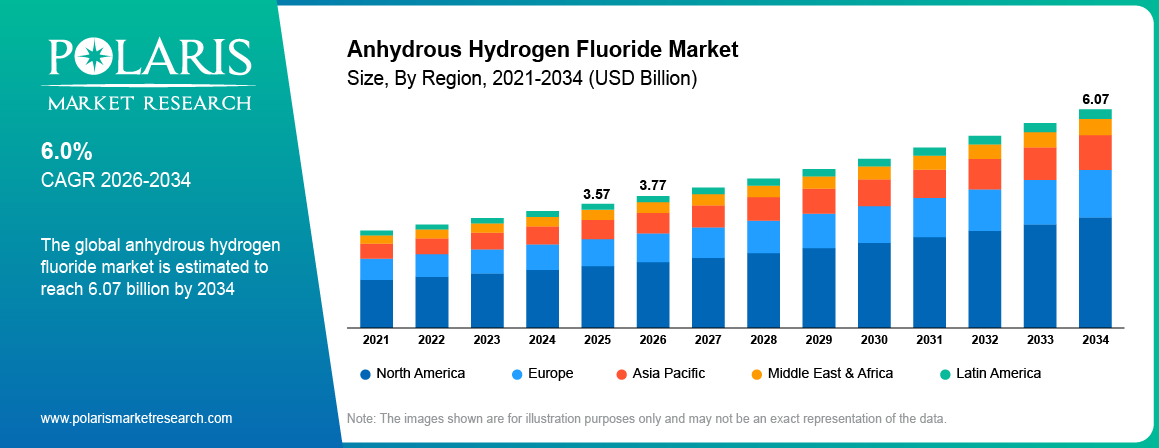
The global anhydrous hydrogen fluoride market size was valued at USD 3.57 billion in 2025. The market is expected to exhibit a CAGR of 6.0% from 2026 to 2034. The market is expanding due to its essential role in producing fluorinated compounds, aluminum, and refrigerants.
Market Statistics
Anhydrous Hydrogen Fluoride Market Key Takeaways
- Asia Pacific held the largest revenue share of 41.9% in 2025. This is due to the growth of the pharmaceutical industry.
- North America is projected to experience significant growth at a 5.7% CAGR. The expansion of chemical processing activities contributes to the regional market growth.
- India is projected to experience substantial growth at a 7.1% CAGR. This is owing to the rapid expansion of the semiconductor manufacturing industry.
- The fluorogases segment held 41.9% share in 2025. The growing use of fluorogases as a refrigerant contributes to the segment’s leading position.
- The fluoropolymers segment is expected to experience a significant CAGR of 6.9%. This is due to its growing applications across sectors such as automotive, electronics, and healthcare.
Note: Figures and projections outlined in this report are the result of Polaris Market Research’s proprietary analytical processes, grounded in the latest available datasets and market observations.
AI Impact on Anhydrous Hydrogen Fluoride Market
- AI optimizes the process for the production of anhydrous hydrogen fluoride through optimization of process parameters, energy consumption, and efficiency of materials usage.
- It helps ensure safety through observation of the status of the operations being performed and identification of possible risks.
- AI aids quality management through quality control of the performance of products.
- It helps schedule maintenance and logistics for manufacturers
Anhydrous hydrogen fluoride (AHF) is a highly reactive, colorless, and corrosive gas or liquid that contains hydrogen and fluorine. It is commonly used in various industrial applications such as aluminum production, petrochemical refining, and various fluorine-containing compound synthesis.
The expansion of petroleum refining capacity is boosting the anhydrous hydrogen fluoride market demand. Private and public sector refineries are expanding their refining capacities, due to which the demand for AHF is rising. According to the Indian Ministry of Petroleum & Natural Gas, petroleum refining capacity in India rose by 41.7 million metric tons per annum (MMTPA) in a decade, showcasing the expansion of refining capacities. This is used to produce alkylates, which are important for improving fuel quality.
To Understand More About this Research: Download Sample Report
The anhydrous hydrogen fluoride market development is driven by technological advancements in its formulations. Advanced formulations of AHF are anticipated to be used in a wider range of applications, from electronics to clean energy technologies, by reducing costs and improving safety, leading to increased demand and expansion in the forecast years.
Anhydrous Hydrogen Fluoride vs Hydrofluoric Acid
| Factor | Anhydrous Hydrogen Fluoride (AHF) | Hydrofluoric Acid (HF Solution) |
| Water Content | Almost free from water | Mixture with water |
| Purity | Highly pure | Lesser concentration |
| Usage | Extensively utilized | Less extensively used |
| Applications in Semiconductors | Widely utilized | Less utilized than AHF |
| Handling Needs | Needs special arrangements for handling | Does not need such special facilities |
| Containers | Kept under pressure | Kept under normal conditions |
Market Dynamics
Driver: Growth of Semiconductor Industry
Semiconductor manufacturers are expanding their operations to meet high market demand. According to the United States Semiconductor Industry Association, in the US alone, the semiconductor industry employs over 280,000 people, showcasing the growth of the industry. Additionally, growing government incentives are driving the growth of the semiconductor industry. In semiconductor manufacturing, anhydrous hydrogen fluoride is used for essential processes such as cleaning and etching. Therefore, the growth of the semiconductor industry is driving the anhydrous fluoride market expansion.
Driver: Growth in Industrialization
Industries such as manufacturing, electronics, and automotive are expanding across the world. Thus, the demand for anhydrous hydrogen fluoride for processes such as the creation of fluorochemicals is rising. According to the United Nations Industry Development Organization, the industrial sector grew by 2.3% in 2023, showcasing the growth in industrialization. Industrial growth leads to higher production of goods and technology, increasing the need for specialized chemicals such as anhydrous hydrogen fluoride. Thereby, rising industrialization, especially in emerging regions, is driving the industry growth.
Restraint: Environmental Regulations and Low-GWP Refrigerant Transition
Environmental regulations designed to decrease GHG emissions are having a major impact on the refrigerant industry. Global regulators are actively promoting efforts toward phasing down HGWPs via programs such as the Kigali Amendment and other regional climate change programs. Due to such initiatives, there has been a significant increase in the use of lower GWP refrigerants, providing superior environmental performance while retaining cooling efficiency and energy savings. The trend has created high demand for fluorochemicals required in the production of new generation refrigerants that require AHF as an important ingredient. Increased use of sustainable cooling solutions by consumers from different sectors has thus resulted in increased AHF demand.
Segment Analysis
Assessment by Application Outlook
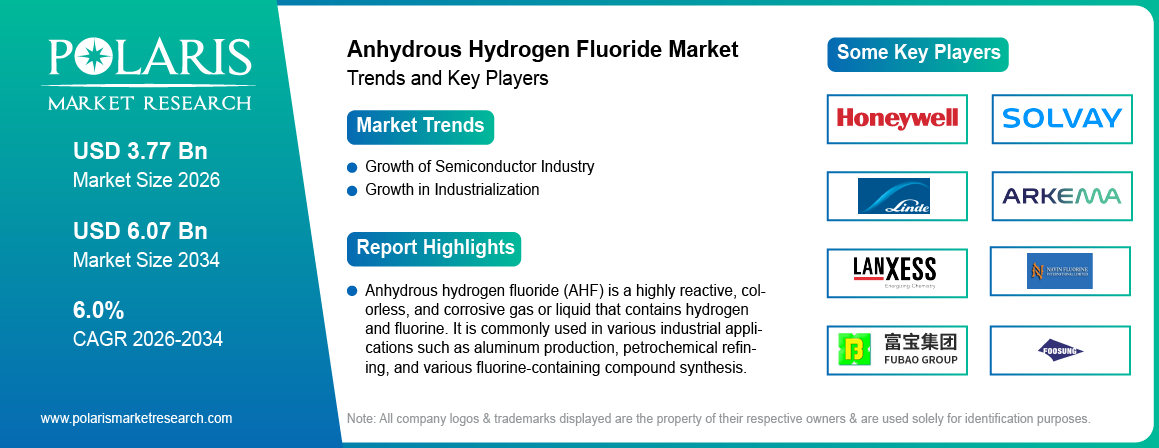
The market is segmented based on application, includes fluoropolymers, fluorogases, pesticides, and others. The fluorogases segment held 41.9% share in 2025 due to its growing use as a refrigerant. AHF is essential in the production of fluorinated gases, which are widely used in refrigeration and air conditioning systems. These gases offer high efficiency and low environmental impact, driving their adoption in various industries. The increasing demand for energy-efficient and eco-friendly cooling solutions contributes significantly to segmental dominance.
The fluoropolymers segment is expected to experience a significant CAGR of 6.9% in the global market during the forecast period due to its increasing application in industries such as automotive, aerospace, electronics, and healthcare. Fluoropolymers are known for their high resistance to heat, chemicals, and wear, making them ideal for a wide range of applications. The increasing demand for advanced materials in these industries, particularly for components that require durability and reliability, is driving the growth of the fluoropolymers segment.
Regional Analysis
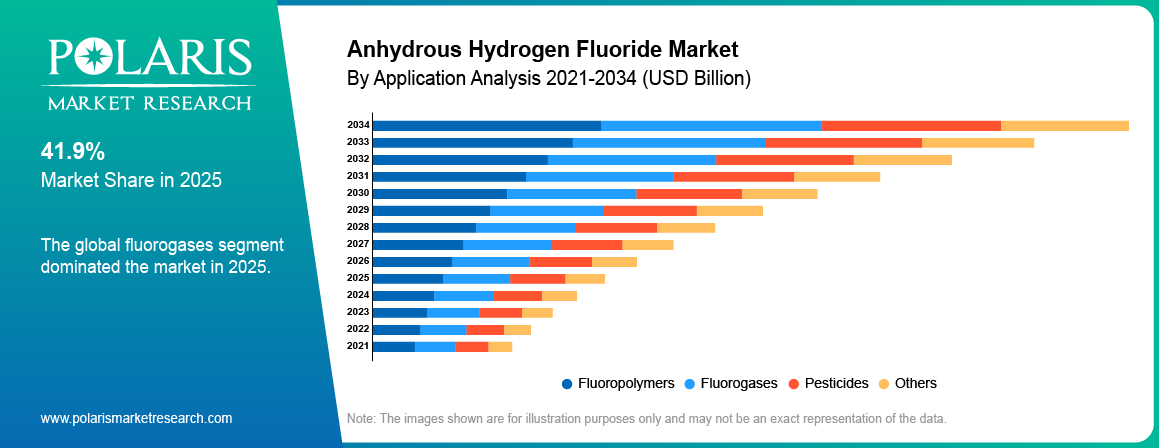
North America is projected to experience significant growth at a 5.7% CAGR due to the growth of the pharmaceutical industry. Pharmaceutical industries in North America are expanding their operations to fulfill the demand from consumers, due to which the demand for AHF is growing. According to the Pharmaceutical Research and Manufacturers of America, the pharmaceutical industry in the US employs over 4.9 million people, highlighting the industry growth. AHF is primarily employed for the synthesis of various active pharmaceutical ingredients (APIs) and specialized chemicals. Therefore, the growth of the pharmaceutical industry is driving the industry development in North America.
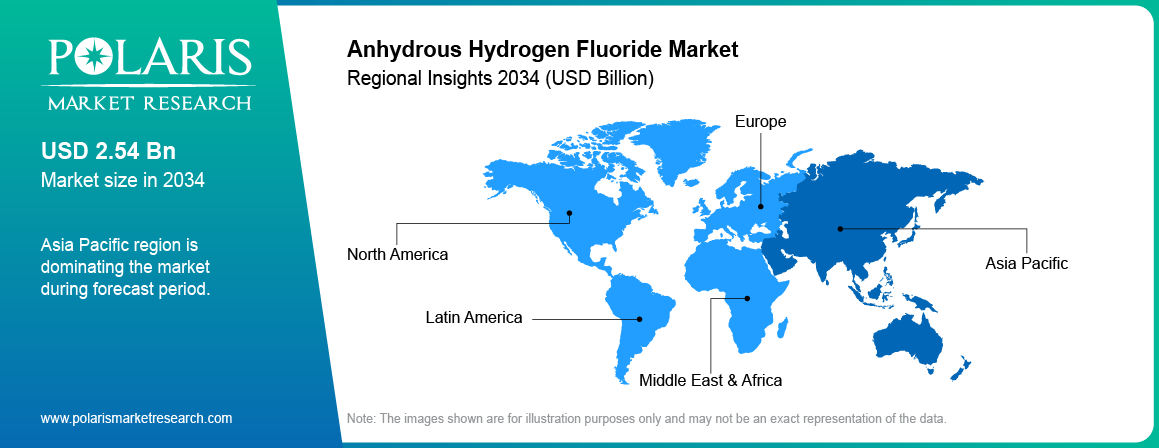
Asia Pacific held the largest revenue share of 41.9% in 2025 due to the expansion of chemical processing activities. Countries such as China, India, and Japan are seeing significant growth in industries such as petrochemicals, pharmaceuticals, and electronics, all of which require this chemical in their production processes. This chemical is used in manufacturing a variety of products, including fluoropolymers, refrigerants, and semiconductors. Additionally, the region is home to many large-scale chemical production facilities, which further drives the market growth. Thus, the expansion of chemical processing activities is driving the market growth in Asia Pacific.
India anhydrous hydrogen fluoride market is experiencing substantial growth due to the rapid expansion of the semiconductor manufacturing industry. India has become a significant hub for semiconductor production, driven by increasing demand for electronic devices and advancements in technology. AHF is a critical material in the production of semiconductors, where it is used in etching and cleaning processes during chip fabrication, leading to its market expansion in India.
Competitive Analysis
This industry is constantly evolving, with numerous companies striving to innovate and distinguish themselves. Leading global corporations dominate the market by leveraging extensive research and development, and advanced techniques. These companies pursue strategic initiatives such as mergers and acquisitions, partnerships, and collaborations to enhance their product offerings and expand into new markets.
New companies are impacting the industry by introducing innovative products to meet the demand of specific sectors. This competitive environment is amplified by continuous progress in product offerings. A few major players in this industry include Honeywell International Inc.; Solvay, Linde plc; Arkema; Lanxess; Navin Fluorine International Limited, Fubao Group; Foshan Nanhai Shuangfu Chemical Co., Ltd; Foosung Co, Ltd; Fluorchemie Dohna GmbH; Fluorsid S.p.A.; and Derivados del Fluor SA.
Honeywell International Inc. is a multinational conglomerate corporation headquartered in Charlotte, North Carolina. The company offers products in four areas, including building technologies, aerospace, safety & productivity solutions (SPS), and performance materials and technologies (PMT). The Home and Building Technologies segment offers products, solutions, software, and technologies that help homeowners stay in control and connected to their comfort, energy, and security. The Performance Materials and Technologies segment manufactures and develops process technologies, materials, and automation solutions. Moreover, the Safety and Productivity Solutions segment provides software, products, and connected solutions, including footwear and personal protection equipment designed for play, work, and outdoor activities. Honeywell Aerospace provides aircraft engines, avionics, flight management systems, and services to airlines, airports, manufacturers, space programs, and the military. Honeywell International Inc. operates in various industries such as aerospace and travel, commercial real estate, energy, healthcare, life sciences, logistics & warehouse, retail, and utilities.
Linde plc, a global industrial gases and engineering company, is headquartered in Dublin, Ireland,and serves customers across various industries. The company was formed in October 2018 through the merger of Linde AG and Praxair Inc., and it has since become one of the largest industrial gas companies in the world, with a presence in over 100 countries. Linde offers a wide range of products and services, including gases, equipment, and technology solutions for various industries such as healthcare, food & beverage, energy, and manufacturing. Its portfolio of products includes atmospheric gases, such as nitrogen, oxygen, and argon, as well as specialty gases, including hydrogen, helium, and acetylene. It also provides a range of gas-handling equipment, including cylinders, valves, regulators, and cryogenic equipment, such as tanks and refrigeration systems. One of Linde's core strengths is its expertise in air separation technology, which involves separating atmospheric air into its constituent gases. The company has a long history of developing and manufacturing air separation plants, which produce large amounts of gases, including oxygen, nitrogen, and argon, used in a wide range of industries. Linde also offers various engineering and consulting services to help customers improve their productivity, efficiency, and environmental performance. The company's engineers and experts work closely with customers to identify opportunities for optimization and develop tailored solutions that meet their needs.
List of Key Companies
- Honeywell International Inc.
- Solvay
- Linde plc
- Arkema
- Lanxess
- Navin Fluorine International Limited
- Fubao Group
- Foshan Nanhai Shuangfu Chemical Co., Ltd
- Foosung Co, Ltd
- Fluorchemie Dohna GmbH
- Fluorsid S.p.A.
- Derivados del Fluor SA
Market Developments
- July 2026: The U.S. Environmental Protection Agency (EPA) approved three new PFAS-based pesticides for agricultural use, while the approvals intensified regulatory and environmental scrutiny of fluorinated chemicals. The development is expected to increase attention on the fluorochemical value chain, including feedstocks such as anhydrous hydrogen fluoride used in the manufacture of fluorinated intermediates for agrochemical applications. (Source: foodandwine.com)
- June 2025: Taiwan Speciality Chemicals Corp acquired a 65% stake in Hung Jie Technology for USD 100.33 million, aiming to strengthen its anhydrous hydrogen fluoride production capabilities for semiconductor applications, with projected revenue growth of 170%. (Source: taipeitimes.com)
Future Outlook
The growing demand for anhydrous hydrogen fluoride will be facilitated by the expanding semiconductor fabrication industry, growing demand for fluoropolymers and refrigerants with low global warming potential, and expanding application of fluorochemicals in high-tech industrial uses. Technological progress in the development of highly purified production methods, energy technologies, battery chemicals, and electronics components is likely to boost demand. Meanwhile, increasingly stringent environmental and safety regulations will spur technological innovation in production, storage, and distribution, thus establishing the significance of AHF as a chemical in modern industrial ecosystems.
Anhydrous Hydrogen Fluoride Market Segmentation
By Application Outlook (Volume, Kilotons, Revenue USD Billion, 2021–2034)
- Fluoropolymers
- Fluorogases
- Pesticides
- Others
By Regional Outlook (Volume, Kilotons, Revenue USD Billion, 2021–2034)
- North America
- US
- Canada
- Europe
- Germany
- France
- UK
- Italy
- Spain
- Netherlands
- Russia
- Rest of Europe
- Asia Pacific
- China
- Japan
- India
- Malaysia
- South Korea
- Indonesia
- Australia
- Rest of Asia Pacific
- Middle East & Africa
- Saudi Arabia
- UAE
- Israel
- South Africa
- Rest of Middle East & Africa
- Latin America
- Mexico
- Brazil
- Argentina
- Rest of Latin America
Anhydrous Hydrogen Fluoride Market Report Scope
| Report Attributes | Details |
| Market Size Value in 2025 | USD 3.57 billion |
| Market Size Value in 2026 | USD 3.77 billion |
| Revenue Forecast by 2034 | USD 6.07 billion |
| CAGR | 6.0% from 2026 to 2034 |
| Base Year | 2025 |
| Historical Data | 2021–2024 |
| Forecast Period | 2026–2034 |
| Quantitative Units | Volume in Kilotons, Revenue in USD billion, and CAGR from 2026 to 2034 |
| Report Coverage | Volume Forecast, Revenue Forecast, Market Competitive Landscape, Growth Factors, and Trends |
| Segments Covered |
|
| Regional Scope |
|
| Competitive Landscape |
|
| Report End User |
|
| Customization | Report customization as per your requirements with respect to countries, regions, and segmentation. |
Source: Polaris Market Research Analysis
Anhydrous Hydrogen Fluoride Market FAQ's
The anhydrous hydrogen fluoride industry size was valued at USD 3.57 billion in 2025 and is projected to grow to USD 6.07 billion by 2034.
The global market is projected to register a CAGR of 6.0% from 2026–2034.
Asia Pacific held the largest revenue share of 41.9% in 2025.
A few key players in the industry are Honeywell International Inc.; Solvay; Linde plc; Arkema; Lanxess; Navin Fluorine International Limited; Fubao Group; Foshan Nanhai Shuangfu Chemical Co., Ltd; Foosung Co, Ltd; Fluorchemie Dohna GmbH; Fluorsid S.p.A.; and Derivados del Fluor SA.
The fluorogases segment held 41.9% share in 2025 due to its growing use as a refrigerant.
Download Sample Report of Anhydrous Hydrogen Fluoride Market
Please fill out the form to request a customized copy of the research report.


