
Future of Robotics Market Size, Share, Trends & Forecast, 2026–2034
REPORT DETAILS
Future of Robotics Market Summary
The global future of robotics market size was valued at USD 90.50 billion in 2025. The market is projected to grow at a 15.3% CAGR from 2026 to 2034. The market growth is primarily driven by the rising adoption of industrial automation robotics to enhance productivity and improve workplace safety. It is also benefiting from the integration of robotics with the Internet of Things (IoT) and edge computing robotics.
Market Statistics
Future of Robotics Market Key Takeaways
- Asia Pacific led with a 37.40% future of robotics market share in 2025. This is owing to its strong industrial base, expanding manufacturing sector, and rapid technological advancements in robotics and automation.
- North America is projected to grow at a 14.70% CAGR during the forecast period. The regional market growth is driven by increasing investments in automation, artificial intelligence, and advanced robotics solutions across industries.
- The ground segment dominated with a 60.80% share in 2025. Its dominance is linked to the widespread use of ground-based robotic systems across industrial, defense, logistics, and commercial applications.
- The collaborative robots (cobots) segment is expected to grow at an 19.00% CAGR during the forecast period. Cobots are increasingly being deployed across industries requiring safe and efficient human-robot collaboration.
- The fixed robotics segment dominated the market in 2025 with an 41.30% share. This is owing to their high usage in heavy traditional manufacturing.
Note: Figures and projections outlined in this report are the result of Polaris Market Research’s proprietary analytical processes, grounded in the latest available datasets and market observations.
What is the Future of Robotics Market?
The future of robotics market is an emerging global industry focused on AI-based, self-governing, and intelligent robotics systems market solutions, which can carry out functions in various sectors such as manufacturing, health care, logistics, military, and consumers among others. This involves developments in deep learning, machine learning, sensing technologies, and human-robot interaction that enhance automation and real-time decision making.
Future of Robotics in Simple Terms
The future of robotics involves developing intelligent and practical robots that can be employed in various day-to-day activities. Robots have become more intelligent in comprehending the environment and performing various duties. These robots are employed in industries, factories, warehouses, hospitals, farms, stores, and other places. In brief, future robots will be more self-reliant and will assist humans in performing tedious, complex, or hazardous jobs.
Market Summary
The future of robotics market expansion is primarily driven by advancements in artificial intelligence (AI) and deep learning (ML). These technologies enhance robotic capabilities by enabling real-time decision-making, adaptive learning, and improved autonomy. AI-powered robots can analyze complex data, optimize workflows, and enhance precision in industries such as manufacturing, logistics, and healthcare. These developments are shaping the market across different robot types, applications, industries, and regions, creating new areas for growth and adoption. Therefore, as AI continues to evolve, robots are becoming increasingly refined, leading to improved efficiency, accuracy, and cost-effectiveness across various applications.
Another major driver is the growing demand for service robots across multiple sectors, such as healthcare, retail, logistics, and agriculture. Service robots are transforming industries by automating repetitive tasks, improving operational efficiency, and addressing labor shortages. In healthcare, robotic systems assist in surgeries, rehabilitation, and patient care. For instance, in June 2026, Medtronic submitted 510(k) filings to expand the Hugo robotic-assisted surgery system into general and gynecologic specialties in the U.S. The milestone builds momentum for the company’s purposeful launch of the Hugo RAS system, which was cleared by the FDA for urologic surgical procedures in December 2025 (source: medtronic.com). In logistics, autonomous mobile robots optimize supply chain management and warehouse operations. The increasing integration of robotics in everyday operations is reshaping industries, enhancing productivity, and fostering innovation. Thus, as businesses seek greater automation and efficiency, the future of robotics market growth is expected to accelerate.
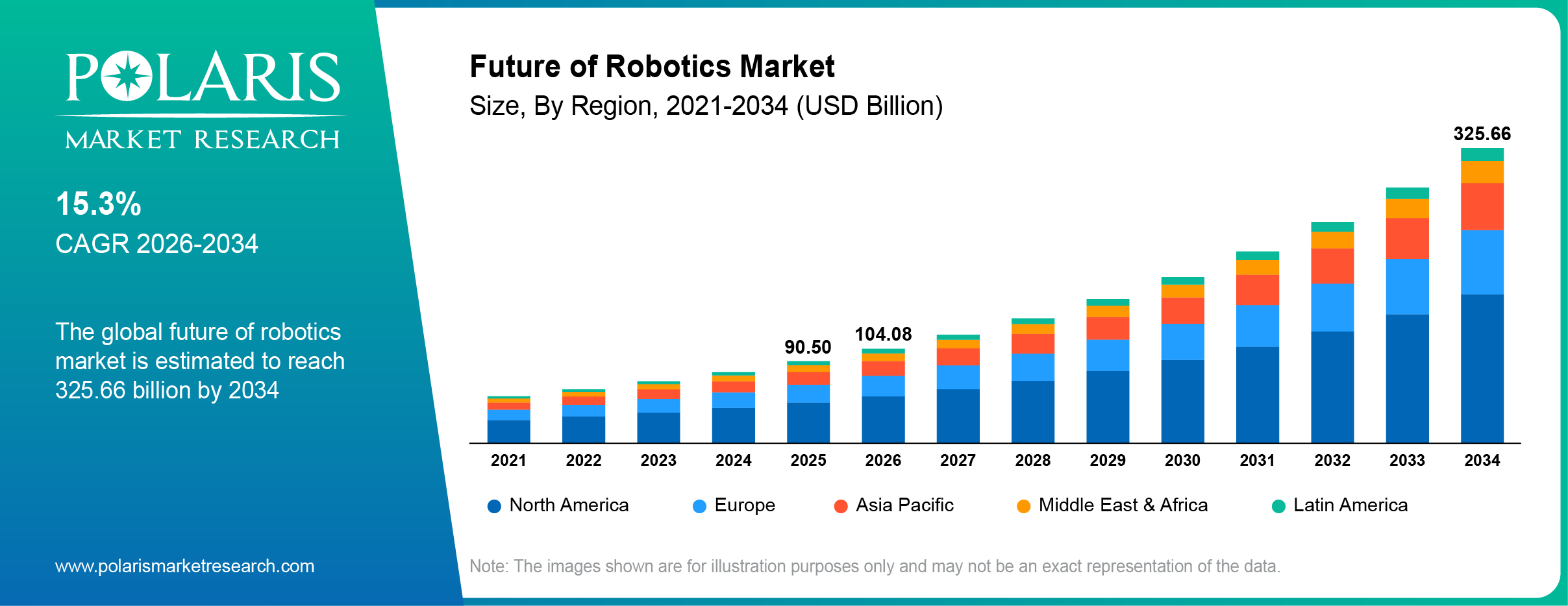
Source: Polaris Market Research Analysis
Market Dynamics
Rising Adoption of Robotics in Industrial Automation
Industries such as automotive, manufacturing, and others are increasingly leveraging robotic systems to enhance productivity, reduce operational costs, and improve workplace safety. For instance, in May 2026, FANUC revealed advancements in open platforms and Physical AI capabilities through the application of the latest advancements in AI. The company announced a strategic partnership with Google for the enhancement of its Physical AI Robot System. The collaboration involves FANUC leveraging Google’s state of the art technologies (source: fanuc.eu). These innovations reflect FANUC’s commitment to meeting the evolving needs of industries with smarter, safer, and more user-friendly automation solutions. The advanced robotic solutions equipped with precision control and machine vision optimize manufacturing processes, minimizing human error and downtime. The adoption of robotics in industrial automation continues to expand as businesses strive for higher operational agility and cost-effectiveness, reinforcing the future of robotics market development.
Integration of Robotics with IoT and Edge Computing
The integration of robotics with the Internet of Things (IoT) and edge computing enhances real-time data processing, enabling robots to operate with greater autonomy, responsiveness, and intelligence. For instance, in May 2026, Geek+ (Geekplus) launched the new generation of its Intelligent Operation Platform (IOP). Being cloud-based, this technology takes advantage of AI-based data intelligence services for enhancing efficiency and reducing risk associated with the operations of businesses by enabling efficient real-time resource allocation based on data. Being a centralized operational control center, the system provides analytics, monitoring, and highly customizable enterprise dashboards (source: geekplus.com). This allows for highly accurate positioning, navigation, and obstacle avoidance, helping enterprises effectively cope with diverse and complex logistics scenarios while enhancing both efficiency and accuracy. IoT-connected robots facilitate seamless communication within industrial ecosystems, optimizing predictive maintenance, remote monitoring, and autonomous decision-making. Edge computing further strengthens robotics by processing data closer to the source, reducing latency, and improving efficiency in time-sensitive applications. This integration is set to revolutionize automation as industries increasingly adopt interconnected robotic systems, driving advancements in intelligent robotics and accelerating the transformation of industrial and service sectors.
Key Market Growth Drivers
- Increase in Demand for Automation: Organizations are using robotics to increase their productivity and reduce manual efforts.
- Labor Shortages: A shortage in the labor force is driving companies to opt for robotics in order to perform tasks.
- Expansion of E-Commerce: The rising orders are boosting demand for robots used in warehouses and logistics.
- Advances in Artificial Intelligence: Improvements in AI technology are making robots more intelligent.
- Increase in Defense Budgets: Increasing budget allocation for autonomous systems is driving robotics in the defense sector.
- Advancements in Autonomous Navigation: Better navigation capabilities are helping robots operate in warehouses, factories, and other places.
Challenges in the Market
- High Costs of Deployment: Robotics technology can involve high costs related to the purchase, installation, training, and maintenance of the system.
- Complex System Integration: Integrating a new robot with existing systems can pose difficulties for companies.
- Labor-Related Concerns: The increase in automation can raise concerns about labor displacement and changing workforce needs.
- Limited Training Data: Robots might not be able to deal with cases that do not have any training information.
- Cybersecurity Risks: Robotic systems that are connected can pose cybersecurity risks to the company.
Opportunities :Growing Demand for Robotics Maintenance Services
Increasing utilization of robotics technology has resulted in service robotics market growth. As companies become increasingly dependent on robots for carrying out various activities, maintenance services become essential to ensure the efficiency of the system. It is also necessary to carry out repair services if any issue occurs with the robot. This has created opportunities for specialized service providers that understand robotics systems. Maintenance services can assist with inspections, repairs, software updates, and equipment checks. The demand for skilled robotics technicians and predictive maintenance robotics services will also rise as usage becomes more widespread.
How Modern Robotics Systems Work?
Input Devices for Data Gathering: Robots use cameras, sensors, and other devices for collecting data.
Information Processing with the Help of AI and Machine Learning: Robots process data in order to understand objects and changes taking place around them.
Decision Making: Depending on the collected data, a robot makes decisions regarding the actions to be undertaken in accordance with the performed task.
Action Execution: The robot carries out the desired task or action as per instruction.
Improve using Feedback loop: Improvement is possible where required using feedback loops.
Learning to Adapt: Robots learn about their surroundings by analyzing the collected data.
Robot Types at a Glance
| Robot Types | Definition | Mobility | Applications | 2026-2034 Prospects |
| Autonomous Mobile Robots (AMR) | Self-navigating robots equipped with sensors and mapping systems to navigate without following fixed guideposts | Free-moving, dynamically programmed | Warehouse logistics, hospital logistics, intralogistics | Highly attractive due to e-commerce and warehouse robots automation potential |
| Automated Guided Vehicles (AGV) | Material handling equipment moving along fixed guideposts (wires, magnetic tape or optical markers) | Fixed-guidepost route | Manufacturing plant logistics, cargo transport on fixed route | Continued strong growth, more hybridized with AMR navigation technologies |
| Articulated Robots | Multi-jointed robotic arms which emulate human arm movements | Fixed-base, multiple axes of motion | Welding, painting, assembling, material handling | Continued growth dependent on automotive and electronics capex cycles |
| Humanoid Robots | Bipedal robots made in human form for general-purpose tasks in human environment | Bipedal or wheeled | Factory pilot projects, logistics, preliminary stages of service/retail applications | The fastest-growing segment; still in pre-mass-commercialization stage |
| Collaborative Robots (Cobots) | Special robots developed with safety sensing to collaborate with humans without physical barriers | Fixed-base, common workspace | SME assembly, packaging, picking, placing | The fastest adopted by SMEs; the leader in ease of deployment |
Source: Polaris Market Research Analysis
Traditional Robotics vs Future AI Robotics
| Comparison Parameter | Traditional Robotics | Future Artificial Intelligence Robotics |
| Intelligence | Based on pre-set instructions and rules | Learns from information and adapts to changing conditions |
| Flexibility | Created to perform specific and repetitive jobs | Capable of performing a variety of jobs and adapting to changing conditions |
| Decision Making | Guided by preset instructions | Decision-making based on the information available at the moment |
| Interaction with Humans | Work independent of human workers | Programmed to work in collaboration with humans |
| Learning | Changes require manual programming | Learns to perform better based on information and experiences |
| Application | Applicable to repetitive manufacturing operations | Widely applicable in manufacturing, healthcare, logistics, agriculture, defense and household applications |
| Deployment | Need special installations and controlled environment | Turning towards robots which adapt to changing conditions |
Source: Polaris Market Research Analysis
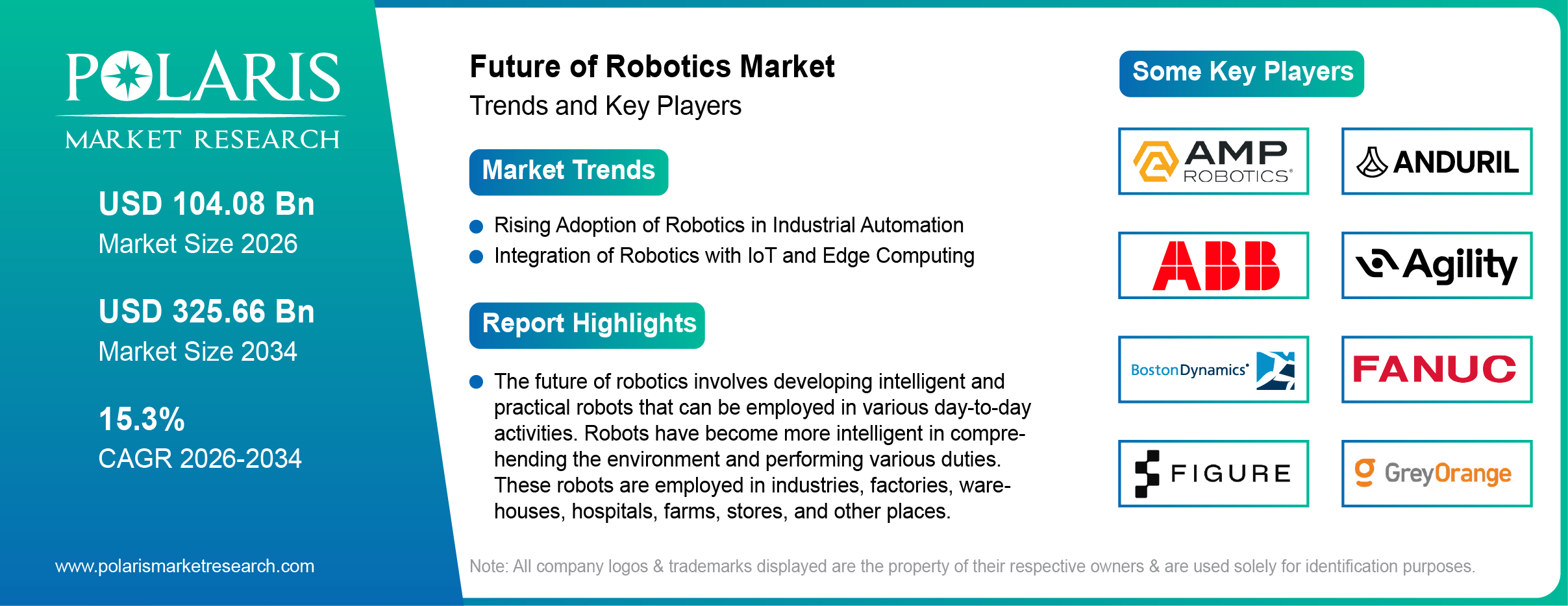
Source: Polaris Market Research Analysis
Market Segment Insights
By Robotics Type
The ground segment was dominant with a 60.80% market share in 2025. This is mainly because of its diverse uses in industrial, commercial, and military applications. Industries such as manufacturing, logistics, healthcare, and agriculture are increasingly integrating ground robots to automate complex tasks, enhance operational efficiency, and improve workplace safety. Advancements in mobility, sensor technology, and AI-powered automation have further strengthened the capabilities of ground-based robots, enabling them to perform precision-driven tasks with high accuracy. Additionally, the rising deployment of autonomous mobile robots (AMRs) and automated guided vehicles (AGVs) in warehouses, factories, and distribution centers has reinforced the segment’s dominance, making it a critical component of the future of robotics market.
By Robotics Environments
The collaborative robots (cobots) market segment is projected to grow at an 19.00% CAGR. This is owing to their increasing deployment across industries requiring human-robot collaboration. Unlike traditional industrial robots, cobots are designed with advanced safety features, real-time adaptability, and user-friendly programming, allowing them to work alongside human workers without extensive safety barriers. Their versatility in applications such as assembly, material handling, and precision tasks makes them an attractive solution for small and medium-sized enterprises (SMEs) seeking cost-effective automation. The growing emphasis on flexible manufacturing, coupled with labor shortages and the need for improved productivity, is accelerating the adoption of cobots across various sectors, positioning them as a key driver of the future of robotics market growth.
By Robotics Mobility
The fixed robotics segment accounted for an 41.30% share in 2025. Fixed robots find their application in manufacturing plants wherein operations take place within a fixed boundary. These robots are ideal for tasks that need to be done in a repetitive manner and should give similar results. Some of the typical applications of fixed robots are assembly, welding, material handling, and inspection tasks. The increasing trend towards automating factories is adding to the demand for fixed robots. Their well-established usage in various industries is expected to drive adoption during the forecast period.
By Robotics Application
The material handling segment dominated with a 27.80% share in 2025. Material handling robots can carry products, components, and other kinds of objects from one place to another in an industrial or warehouse environment. This kind of robot is becoming increasingly popular among industries that require faster and more efficient material handling. Some activities where material handling robots can be useful include movement of goods, loading, unloading, and sorting. More automation of warehouses and the growth of e-commerce are likely to drive demand even further for such robots.
By Industry Vertical
The logistics & retail industry segment is projected to witness the fastest growth at a 17.30% CAGR. An increase in the usage of robotics within warehousing and retail is driving this trend. Companies are using robotics for operations like handling stock, sorting, order processing, and transporting goods. The rise in e-commerce has also driven the need for quicker warehousing processes. Robotics enable companies to handle increased order volume without having to do so manually. Rising interest in automated logistics is expected to generate more demand for robotics solutions within the logistics and retail industry.
Segmentation Overview
| By Robotics Type | By Robotics Environments | By Robotics Mobility
| By Robotics Application
| By Industry Vertical
| By Region |
|
|
|
|
|
|
Source: Polaris Market Research Analysis
Real-World Applications & Use Cases
- Smart Manufacturing: Robots aid in the process of assembly, welding, inspection, and many other industrial processes.
- Warehouse Management: Robots transport items and facilitate order management.
- Healthcare and Surgery: Robots help surgeons in performing complicated surgeries.
- Military and Reconnaissance: Robots assist in the process of surveillance and reconnaissance in hard-to-reach areas.
- Agriculture: Robots help with monitoring of crops and other agricultural activities.
- Retail Management: Robots aid in inventory management and service delivery in retail stores.
Emerging Technologies in Robotics
Robotics is evolving through different technologies that make robots function effectively and interact better within the environment they operate. AI and machine learning enable robots to think and react to changes within the environment. Computer vision technology aids robots in seeing what exists around them. Edge computing and 5G or 6G connectivity make communication faster. Digital twins give companies an opportunity to test the robots’ systems using virtual environments. Another technology used for training robots is generative AI.
Which Technologies will Shape the Future of Robotics?
| Technology | Function in Robotics | Advantage |
| AI and ML | Enables robots to learn from data and adapt to various situations | Greater flexibility |
| Computer Vision | Enables robots to recognize objects and perceive their environment | Greater perception |
| Edge Computing | Computes information close to robots | Enhanced response time |
| 5G/6G Connectivity | Enables communication between robots and connected systems | Greater connectivity |
| Digital Twin | Produces virtual replicas of robotic systems | Safer experimentation |
| Generative AI | Assists in the training of robots and performing tasks by robots | Greater flexibility |
| Swarm Robotics | Allows robots to collaborate with each other | Greater coordination |
Source: Polaris Market Research Analysis
Future of Robotics Market Trends
- Humanoids and Purpose-built Robots: Humanoid robots market trends are gaining traction in the field of robotics as they are engineered to operate in environments suited for humans. Purpose-built robots are being used to perform certain tasks in the field of robotics.
- AI Foundation Models for Robotics Control: AI foundation models are becoming a vital field in robotics. They provide robots with a sense of understanding of their environment and assist in responding to various scenarios.
- Robotics-as-a-Service (RaaS): Robotics-as-a-service is becoming popular among business organizations. Business organizations can use robotic solutions on a service-based model. It helps businesses save on the costs of heavy investment in robotics solutions.
- Open-source Robotics Ecosystems: Open-source platforms are becoming increasingly popular in the field of robotics. Open-source platforms provide software and resources that developers can use to create robotic solutions.
- Swarm and Collaborative Robotics Systems: Swarm robotics includes operations where robots work as a collective group. On the other hand, collaborative robotics is a process where robots work along with humans.
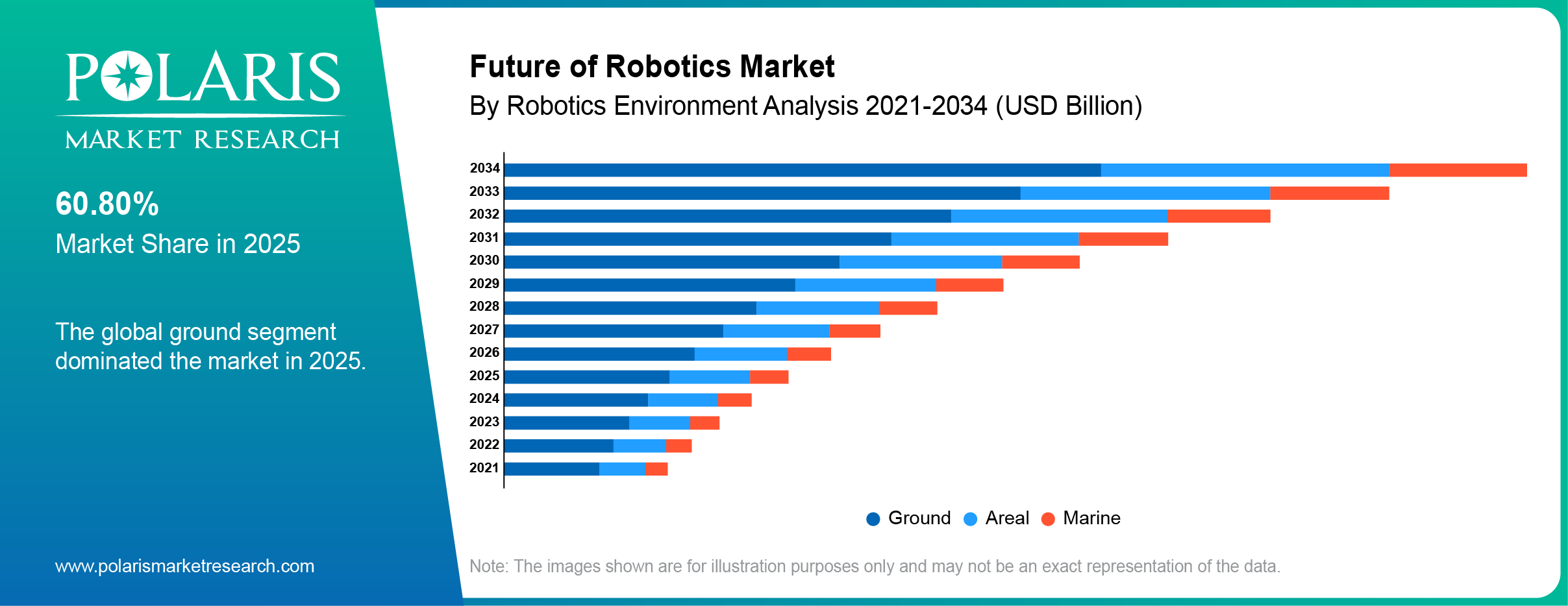
Source: Polaris Market Research Analysis
Market Regional Analysis
Asia Pacific
Asia Pacific led with a 37.40% share in 2025. The regional market dominance is attributed to its strong industrial base and rapid technological developments. The market also benefits from significant investments in robotics automation in manufacturing. Countries such as China, Japan, and South Korea are at the forefront of robotics development, with high adoption rates in manufacturing, electronics, and logistics. The International Trade Administration (ITA) issued a June 2026 update indicating that South Korea has invested $7.5 billion through a financial program launched in September 2024 to facilitate the country's AI Autonomous Manufacturing Project. Within the framework of a different AI Factory Project, this overall strategy seeks to create more than 100 AI manufacturing areas by 2030 through the use of robots in an attempt to counter the dwindling workforce of the country. Factories that are being run using smart factory systems under government guidance have registered a 25 percent productivity rise while 27 percent reduction in defectives (source: trade.gov). Additionally, the expanding e-commerce sector, increasing demand for service robots, and advancements in artificial intelligence have reinforced Asia Pacific’s position as the dominant market for robotics, driving large-scale deployment across industries.
North America
The North America future of robotics market is expected to grow with a CAGR of 14.7%. Growth of the regional market is mainly attributed to the rising investments in automation and robotics technologies. The region's strong focus on industrial automation, particularly in sectors such as automotive, healthcare, and logistics, is accelerating the adoption of robotics technologies. Additionally, the growing demand for service robots in applications such as healthcare, security, and smart infrastructure is contributing to the future of robotics market expansion. The integration of robotics with emerging technologies such as the Internet of Things (IoT) and edge computing is further enhancing operational efficiency, enabling North America to lead in next-generation robotic innovations and adoption.
Europe
Europe accounted for an 21.80% market share in 2025. The European region represents an important market for robotics owing to its automation in the manufacturing industry and other industries. Germany holds an important position within the sector of industrial robotics, especially in the manufacturing and automotive industries. The UK is increasingly adopting robotics in the logistics, healthcare, and manufacturing industries. France is increasingly investing in automation and robotics technology in its industrial sector. Investment in automation and robotic technology is expected to drive regional market growth.
Latin America & Middle East & Africa
Latin America and the Middle East & Africa have become emerging markets for robotics. The rising popularity of automation is enabling the use of robots in manufacturing, logistics, agriculture, and many other sectors. Companies are exploring robotics to achieve efficiency and to become less dependent on manual processes. The Middle East region is witnessing investments in technology and large-scale infrastructure projects, which are creating opportunities for robotic systems. Robotics market by country analysis reveals that Latin American markets are also gradually automating their industries and logistics activities.
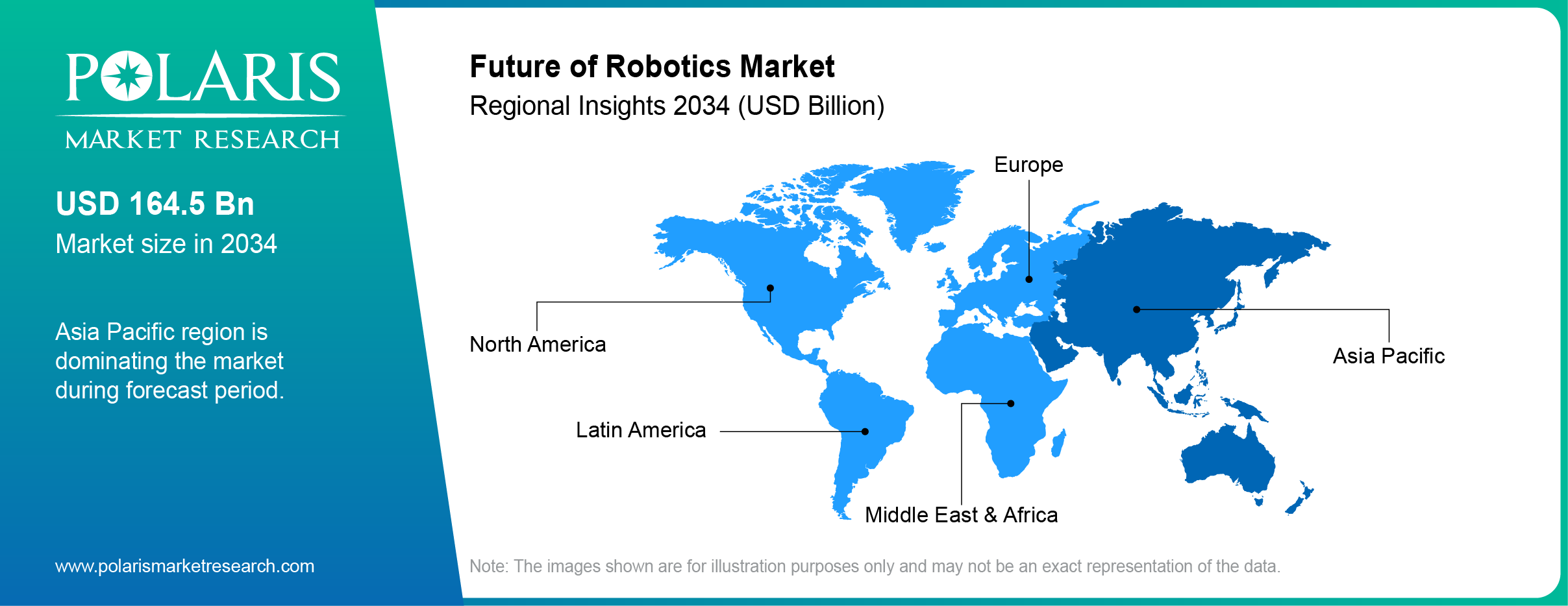
Source: Polaris Market Research Analysis
Key Players and Competitive Insights
The competitive landscape includes global leaders and regional players competing to capture the future of robotics market share through innovation, strategic alliances, and regional expansion. Global players leverage robust R&D capabilities and extensive distribution networks to deliver advanced robotic systems, AI-powered solutions, and autonomous technologies. Market trends indicate rising demand for solutions such as collaborative robots (cobots), edge computing-enabled systems, and AI/ML integration, reflecting advancements in robotics science and automation techniques. According to the future of robotics market analysis, the market is projected to grow significantly, driven by increasing adoption in manufacturing, healthcare, logistics, and service sectors.
Regional companies capitalize on localized needs by offering cost-effective and tailored robotic solutions, especially in emerging markets such as Southeast Asia and India. Competitive strategies include mergers and acquisitions, partnerships with research institutions, and the introduction of innovative robotic products to address the growing demand for automation and digital transformation across industries. Companies are focusing on developing robots with enhanced capabilities in human-robot collaboration, advanced sensing and perception, and others. These developments underline the role of technological innovation, market adaptability, and regional investments in driving the robotics industry expansion, particularly in emerging applications such as autonomous mobile robots (AMRs), service robots, and specialized industry-specific solutions.
NVIDIA Corporation specializes in the semiconductor industry, primarily known for its graphics processing units (GPUs) and AI technologies. The company's innovations have greatly influenced gaming, professional visualization, and high-performance computing sectors. NVIDIA has established itself as a dominant force in the graphics market. The rise of AI has further propelled NVIDIA's growth, particularly following the success of AI applications like OpenAI's ChatGPT, which utilized NVIDIA’s powerful GPU infrastructure. Looking ahead, NVIDIA is poised to play a crucial role in the future of robotics. Its advancements in autonomous vehicle technology through the DRIVE platform and partnerships with major automotive manufacturers highlight its commitment to integrating AI into robotics. In March 2026, NVIDIA launched new robotics software and systems such as Cosmos world models, Isaac simulators, and Isaac GR00T N models while expanding their collaboration in the robotics sector (source: nvidia.com). This synergy between AI and robotics is expected to enhance automation across various industries, from manufacturing to logistics. NVIDIA's continuous innovation in GPU technology will likely position it at the forefront of this transformative landscape as demand for intelligent robotic systems grows, driving advancements that redefine efficiency and capabilities in robotics.
Boston Dynamics specializes in advanced mobile manipulation robots. The company has developed iconic robots such as BigDog, Spot, and Atlas, which are known for their agility and intelligence, enabling them to operate in complex environments like construction sites and warehouses. In recent years, Boston Dynamics has shifted its focus from research and development to commercializing its robotic solutions. This transition aims to leverage Hyundai's manufacturing expertise to scale up the production and distribution of its robots. Boston Dynamics introduced the production model of its completely electric humanoid robot, Atlas, in January 2026. The company also announced planned 2026 deployments with Hyundai and Google DeepMind (source: bostondynamics.com). Looking ahead, Boston Dynamics envisions a future where robotics plays an integral role in various industries, enhancing productivity and safety. Their commitment to ethical practices includes a pledge against weaponizing their technology. Boston Dynamics is poised to lead innovations that redefine automation and human-robot collaboration across sectors such as logistics, construction, and beyond as the field of robotics evolves.
Vendor Positioning Snapshot
| Company | HQ | Core Focus | Notable Recent Move |
| AMP Robotics | Colorado, U.S. | Recycling robots | Focuses on AI-powered sorting systems for recycling. |
| Anduril Industries | California, U.S. | Defense robotics and autonomous systems | Expanding autonomous defense systems and manufacturing capabilities. |
| ABB Ltd. | Zürich, Switzerland | Industrial robotics and automation | Agreed to sell its robotics business to SoftBank for $5.375 billion, with closing planned for mid-to-late 2026. |
| Agility Robotics | Oregon, U.S. | Humanoid robots | Opened a new Fremont facility in July 2026 to support development of its Digit humanoid robot. |
| Boston Dynamics | Massachusetts, U.S. | Mobile and humanoid robots | Plans to invest $100 million in a new robotics and AI center in Massachusetts. |
| FANUC Corporation | Yamanashi, Japan | Industrial robots and automation | Announced a $90 million U.S. facility to expand robot manufacturing capacity. |
| Figure AI | California, U.S. | Humanoid robots | Focuses on developing general-purpose humanoid robots for workplace tasks. |
| GreyOrange | Georgia, U.S. | Warehouse robotics | Develops robotic systems for warehouse automation and order fulfillment. |
| Honeybee Robotics | Colorado, U.S. | Space robotics | Develops robotic systems for space exploration and specialized applications. |
| KUKA AG | Augsburg, Germany | Industrial and mobile robotics | Continues development of robotic solutions for manufacturing and industrial applications. |
| NVIDIA Corporation | California, U.S. | Robotics AI and computing | Expanded its robotics platform and introduced tools for physical AI development. |
| Rapid Robotics | California, U.S. | Industrial automation | Provides robotic automation for manufacturing operations. |
| Robust.AI | Massachusetts, U.S. | Warehouse robotics | Develops mobile robots for warehouse and industrial environments. |
| Scythe Robotics | Colorado, U.S. | Autonomous outdoor robots | Was acquired by Autonomous Solutions, Inc. in 2026. |
| Simbe Robotics, Inc. | California, U.S. | Retail robots | Develops robots for store inventory management. |
| Universal Robots | Odense, Denmark | Collaborative robots | Focuses on expanding collaborative robot adoption across industries. |
| UBTECH Robotics | Shenzhen, China | Humanoid and service robots | Launched its UWorld U1 humanoid robot series in China in June 2026. |
| Unbox Robotics Pvt. Ltd. | Bengaluru, India | Warehouse robotics | Develops robotic systems for parcel sorting and warehouse operations. |
| Vecna Robotics | Massachusetts, U.S. | Autonomous mobile robots | Provides mobile robots for material movement and warehouse operations. |
| Yaskawa Electric Corporation | Fukuoka, Japan | Industrial robots and automation | Partnered with NVIDIA in 2026 to accelerate robotics and AI development. |
Source: Polaris Market Research Analysis
Future of Robotics Market Key Players
- AMP Robotics
- Anduril Industries
- ABB Ltd.
- Agility Robotics
- Boston Dynamics
- FANUC Corporation
- Figure AI
- GreyOrange
- Honeybee Robotics
- KUKA AG
- NVIDIA Corporation
- Rapid Robotics
- Robust.AI
- Scythe Robotics (Acquired by Autonomous Solutions, Inc. in 2026)
- Simbe Robotics, Inc.
- Universal Robots
- UBTech Robotics
- Unbox Robotics Pvt. Ltd.
- Vecna Robotics
- Yaskawa Electric Corporation
Industry Developments
- August 2026: HII announced signing performance-based production agreements with Path Robotics and GrayMatter Robotics. According to HII, the agreements are intended to accelerate the development and deployment of advanced physical AI automation across U.S. Navy shipbuilding programs. (source: hii.com)
- July 2026: ATOMIX announced the completion of a strategic equity-based merger with warehouse automation provider Atomix. The strategic development intends to bridge the gap between embodied AI software and physical hardware delivery. (source: atomixrobot.com)
Market Report Scope
| Report Attributes | Details |
| Market Size Value in 2025 | USD 90.50 billion |
| Market Size Value in 2026 | USD 104.08 billion |
| Revenue Forecast by 2034 | USD 325.66 billion |
| CAGR | 15.3% from 2026 to 2034 |
| Base Year | 2025 |
| Historical Data | 2021–2024 |
| Forecast Period | 2026–2034 |
| Quantitative Units | Revenue in USD billion and CAGR from 2026 to 2034 |
| Report Coverage | Revenue Forecast, Market Competitive Landscape, Growth Factors, and Industry Trends |
| Segments Covered |
|
| Regional Scope |
|
| Competitive Landscape |
|
| Report Format |
|
| Customization | Report customization as per your requirements with respect to countries, regions, and segmentation. |
Source: Polaris Market Research Analysis
Future Outlook
The future of robotics market forecast 2034 indicates high growth potential for the market as organizations increase adoption of robotics in manufacturing, logistics, healthcare, agriculture and other industries. Humanoid and specialized robots are also anticipated to get increased focus with improvements in their abilities. Robotics as a Service could be helpful for increasing adoption of robotics due to its flexibility in utilization by businesses. Development in AI, sensor and connectivity technologies is likely to make robots more versatile. The future of robotics industry report also covers the opportunities associated with collaborative robots, autonomy and application innovations of robotics. High cost, integration and security would continue to pose challenges for the market.
Future of Robotics Market FAQ's
The global future of robotics market size was valued at USD 90.50 billion in 2025 and is projected to grow to USD 325.66 billion by 2034.
The global market is projected to register a CAGR of 15.3% during the forecast period.
Asia Pacific dominated the Future of Robotics Market with a 37.4% share in 2025, driven by rapid automation and increasing adoption of robotics technologies.
A few of the key market players include AMP; Anduril Industries; ABB Ltd.; Agility Robotics; Boston Dynamics; FANUC Corporation; Figure AI; GreyOrange; Honeybee Robotics; KUKA AG; NVIDIA Corporation; Rapid Robotics; Robust.AI; Scythe Robotics; Simbe Robotics, Inc.; Universal Robots; UBTech Robotics; Unbox Robotics Pvt. Ltd.; Vecna Robotics; and Yaskawa Electric Corporation.
The ground segment accounted for the largest market share of 60.8% in the Future of Robotics Market in 2025, driven by increasing adoption of ground-based robotic systems.
Collaborative robots (cobots) are expected to witness the fastest growth, owing to their advanced safety features, flexible programming, and rising adoption among small and medium-sized enterprises seeking cost-effective automation.
Key drivers include advancements in artificial intelligence and deep learning, growing demand for service robots across healthcare and logistics, and increasing integration of robotics with IoT and edge computing technologies.
Robots and artificial intelligence are transforming jobs rather than totally replacing them. They substitute for simple physical operations and rudimentary information handling, but they also generate new jobs.
Major trends include the emergence of humanoid robots, the growth of robotics as a service model, use of AI foundation models, and an increase in collaborative and swarm robotics.
Some of the major industries that implement robotics are manufacturing, logistics, healthcare, defense, agriculture, and retail.
Download Sample Report of Future of Robotics Market
Please fill out the form to request a customized copy of the research report.


