
Cystic Fibrosis Market Size, Share, Trends & Forecast, 2026-2034
REPORT DETAILS
Cystic Fibrosis Market Size & Forecast, 2026-2034
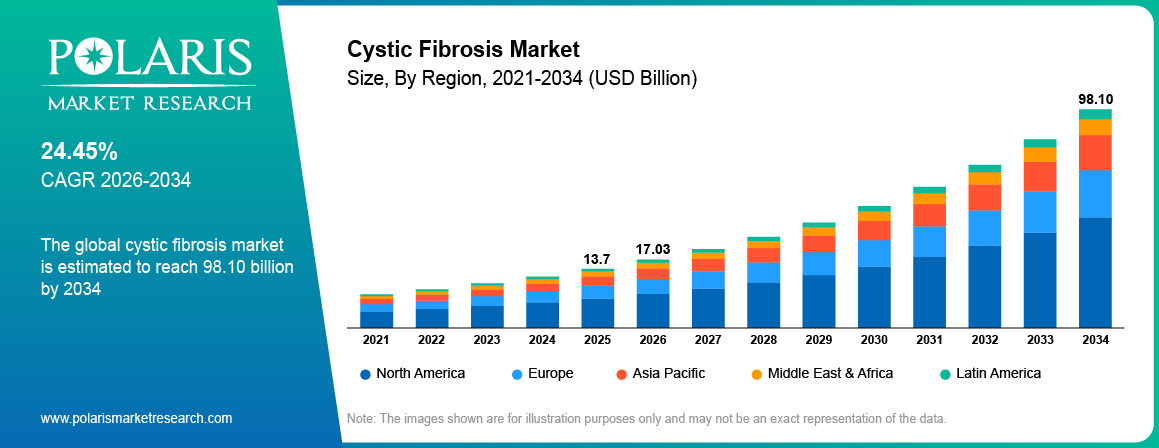
The global cystic fibrosis (CF) market is estimated around USD 17.03 Billion in 2026 with consistent growth anticipated during 2026 to 2034. Expanded CFTR modulator eligibility and orphan drug incentives are driving cystic fibrosis market growth. The market is projected to grow at a CAGR of 24.45% during the forecast.
Market Statistics
Cystic Fibrosis Market Key Takeaways: Therapy, Route, Channel & Region
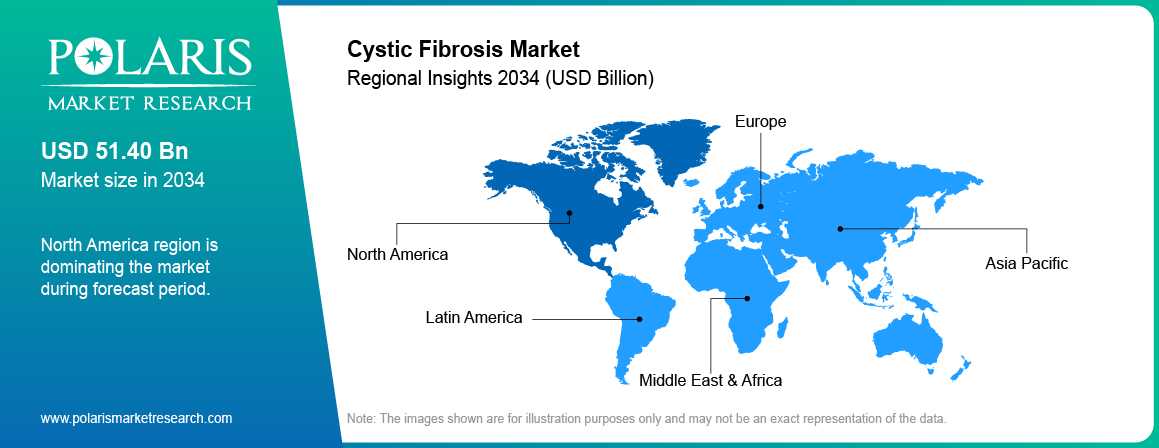
- North America dominated the market with nearly 52.40% market share in 2025. Good reimbursement policies and early adoption of innovative therapies supported its leading position.
- Asia Pacific is expected to grow at a CAGR of around 10.20% during 2026–2034. Better diagnosis rates and improving healthcare infrastructure are driving regional market growth.
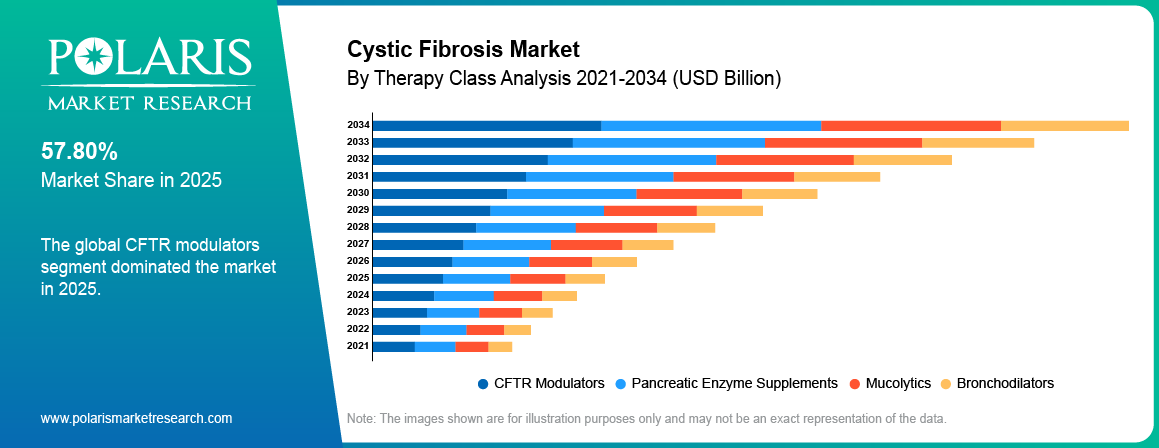
- CFTR modulators dominated the market, accounting for approximately 57.80% market share in 2025. They led the market because they address the underlying cause of cystic fibrosis.
- Online and specialty pharmacies are projected to grow at a CAGR of nearly 11.30% during 2026–2034. Their expansion is improving patient access to specialty medications.
- The oral segment held around 53.50% market share in 2025. Ease of administration and better patient compliance supported the segment's dominance.
- The injectable segment is projected to grow at a CAGR of approximately 9.60% during 2026–2034. Increasing use in severe cases and hospital-based treatment is expected to support its growth.
Note: Figures and projections outlined in this report are the result of Polaris Market Research’s proprietary analytical processes, grounded in the latest available datasets and market observations.
What Is Cystic Fibrosis (CF)? Causes, CFTR Mutations & Treatment Overview
Cystic fibrosis (CF) is an inherited genetic disease caused by mutations in the CFTR gene. It causes thick, sticky mucus that mainly affects the lungs and digestive system. CFTR modulators, antibiotics, mucolytics, bronchodilators and other supportive therapies are the treatment available. These treatments will improve lung function, manage symptoms and improve quality of life.
How Cystic Fibrosis Treatment Works: CFTR Modulators, Supportive Care & Monitoring
First, a genetic test is performed to confirm cystic fibrosis. Also it determines the CFTR gene mutation. Next, to determine the severity of the disease the doctor will evaluate lung function, symptoms, and overall health. Based on the findings, the doctor will choose the most suitable treatment. Medicines may include CFTR modulators, antibiotics, bronchodilators, mucolytics, or pancreatic enzyme supplements.
The patient’s response is evaluated through routine clinical follow-ups and lung function tests. The treatment plan is modified whenever required to achieve better disease control. Continuous surveillance also helps in detecting the complications at an early stage. Long-term treatment and regular medical care support improved clinical outcomes, slower disease progression, and a better quality of life.
Source: Polaris Market Research Analysis
Cystic Fibrosis Market Dynamics: Drivers, Opportunities, Restraints & Challenges
- Expansion of CFTR modulator eligibility is increasing therapy uptake across major markets.
- Supportive orphan drug incentives are sustaining investment in cystic fibrosis therapeutics.
- High therapy costs limit access in price sensitive healthcare systems.
- Development of mutation agnostic therapies creates long-term growth opportunity for the market.
Cystic Fibrosis Market Drivers & Growth Opportunities
Expansion of CFTR Modulator Eligibility: Wider regulatory approvals for CFTR modulators across multiple mutation types widen the addressable patient population. Broader eligibility supports higher treatment uptake, increasing lifetime therapy duration per patient. Early diagnosis through newborn screenings and improved survival rates reinforces such sustained demand from within the cystic fibrosis therapeutics market.
Supportive Orphan Drug Incentives: Orphan drug frameworks guarantee market exclusivity, faster regulatory review, and favorable pricing for treatments for cystic fibrosis. These incentives improve the commercial viability for the developer while supporting continued investment in advanced CFTR-targeted treatments. As an example, in March 2025, RCT2100 is an investigational *mRNA-based therapy developed by ReCode Therapeutics to treat cystic fibrosis and has been designated as an Orphan Drug by the U.S. FDA.
Early diagnosis and improved life expectancy: Early detection, through universal screening programs, facilitates early treatment of cystic fibrosis. In a study published in the "Journal of the American Medical Association" or "JAMA" during early 2025, it was indicated that 3.7% of 4,000 newborns who underwent screening had tested positive, thus necessitating early treatment. Improved life expectancy has increased the adult cystic fibrosis population, which extends treatment duration per patient and supports sustained market growth over time.
Restraints & Challenges
High Therapy Cost and Uneven Access: The high cost of CFTR modulator treatments per annum is a limiting factor for adoption in a cost-sensitive healthcare setting. There is also disparity in reimbursements and accessibility of treatments to different geographical settings, which slows down the initiation of treatments and limits accessibility to a clinical facilities.
Global vs 7MM Cystic Fibrosis Market: Patient Access, Reimbursement & Revenue Concentration
| Parameter | Global Market Scope | 7MM Market Scope |
| Patient Coverage | Includes diagnosed and partially treated patients worldwide | Focused on US, EU5, and Japan with high diagnosis rates |
| Revenue Contribution | Moderate due to access and reimbursement gaps | Dominant share driven by premium pricing and high uptake |
| Therapy Access | Limited access in emerging regions | Broad access to CFTR modulators |
| Commercial Priority | Long-term expansion opportunity | Core revenue generating markets |
Source: Polaris Market Research Analysis
AI in Cystic Fibrosis: Drug Discovery, Genetic Analysis, Trials & Personalized Treatment
- AI is helping to make clinical trials more efficient through better patient selection and data analysis.
- AI is speeding up drug discovery by helping identify new treatment targets.
- AI is improving diagnosis through faster analysis of genetic data.
- AI is supporting to match therapies to gene mutations for customized treatment.
Cystic Fibrosis Treatment Market Overview & Commercial Landscape
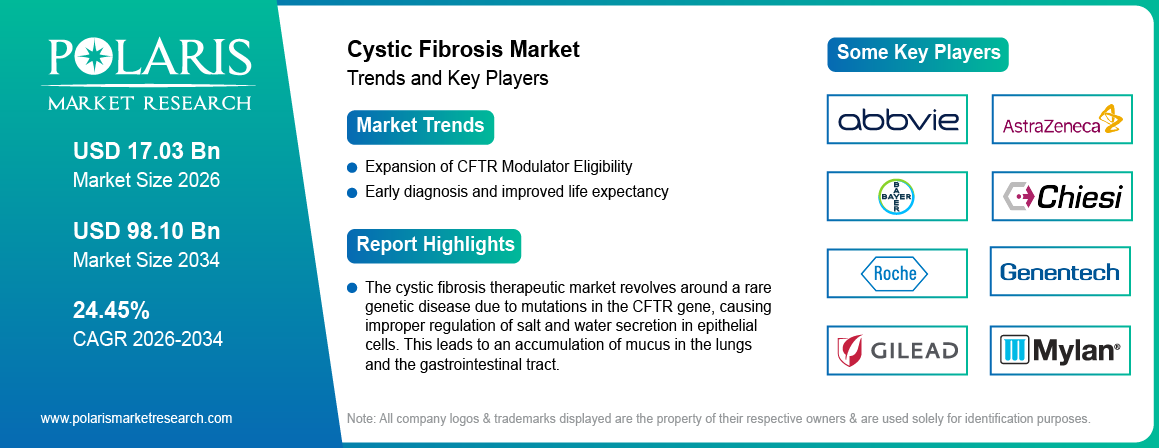
The cystic fibrosis therapeutic market revolves around a rare genetic disease due to mutations in the CFTR gene, causing improper regulation of salt and water secretion in epithelial cells. This leads to an accumulation of mucus in the lungs and the gastrointestinal tract. Cystic fibrosis is a chronic and progressive disease, thus requiring lifelong care. These qualities push the use of the therapeutic market for cystic fibrosis across pediatric and adult populations.
There have been major changes in the cystic fibrosis treatment market in the last ten years. The previous decade was associated with cystic fibrosis management strategies focusing solely on symptom management by airway clearance therapy, infectious disease management, and support therapy. The emergence of CFTR modulators indicated a new trend in cystic fibrosis treatment management by targeting the genetic cause of cystic fibrosis; thus, cystic fibrosis improved lung function.
The treatment therapy area covered under the scope of the cystic fibrosis market includes prescription-based treatments like CFTR modulators, mucolytics, antimicrobial/antibiotics, and anti-inflammatory medications used under routine treatment practices. The treatment therapy area does not include any diagnosis tools or equipment, nutritional supplements, or non-pharmacological supportive treatments for the therapy area specified. For commercialization and profit potential evaluation, the global markets are taken into consideration with a focus on the 7MM markets that prioritize higher diagnosis and treatment rates with reasonable reimbursement regimes in place for increased therapy adoption.
Global Genes estimates revealed, there are 1 in 10 people worldwide with a rare disease, or an estimated 400 million people worldwide living with a diagnosed or undiagnosed rare disease. Around 80% percent are genetic, roughly 70% manifest the first signs and symptoms during childhood. While 95% lack an FDA-approved treatment with a median cost of delayed diagnosis at USD 517,000.
CFTR Modulators vs Traditional Cystic Fibrosis Treatments
| Factor | Traditional Treatments | CFTR Modulators |
| Approach | Focus on managing symptoms. | Target the underlying genetic cause. |
| Treatment Focus | Help control infections and reduce mucus buildup. | Improve the function of the CFTR protein. |
| Outcome | Help manage the disease and its symptoms. | Can slow disease progression by treating the root cause. |
| Adoption | Widely used for many years. | Adoption is increasing with broader approvals and clinical benefits. |
Source: Polaris Market Research Analysis
Cystic Fibrosis Respiratory Management
Respiratory management is a large part of cystic fibrosis treatment. Airway clearance techniques are used to help clear thick mucus from the lungs. Mucolytic medicines help to make the mucus easier to clear. Antibiotics are used to reduce the risk of lung infections. The condition is followed with regular checks of lung function. Additional breathing support may be required for some patients as the disease progresses to help keep their lungs healthy.
Digestive Care in Cystic Fibrosis Treatment
Digestive care is a major part of cystic fibrosis treatment. To better digest food and absorb nutrients pancreatic enzyme replacement therapy (PERT) assists the body. Nutritional support is important for maintaining a normal weight and meeting daily energy needs. Treatment of pancreatic insufficiency, a common feature of cystic fibrosis, is also an important part of the treatment to improve digestion and overall well-being.
Cystic Fibrosis Treatment in Children
For children with cystic fibrosis early treatment is important. Newborn screening supports detect the condition soon after birth, allowing treatment to begin early. The medicines are selected and altered based on the age, symptoms and overall health of the child. Follow-up visits are important to track healthy growth, proper nutrition, lung function and overall development as the child grows.
Source: Polaris Market Research Analysis
Cystic Fibrosis Market Segmentation Analysis
This report offers detailed coverage of the cystic fibrosis market by therapy class, route of administration and distribution channel to help readers identify the fastest expanding and most attractive demand segments.
Cystic Fibrosis Market by Therapy Class: CFTR Modulators, Enzymes, Mucolytics & Bronchodilators
-
CFTR Modulators
The CFTR modulators was the leading segment in 2025, as these products tackle the root cause problem of the mutation present in the CFTR gene, rather than the symptoms alone. The segment has been identified as the prime revenue-generating segment of the cystic fibrosis therapeutics industry due to its premium pricing and long-term usage regimen.
-
Pancreatic Enzyme Supplements
Pancreatic enzyme supplements had an appreciable market share in cystic fibrosis treatment owing to its widespread condition of pancreatic insufficiency in population. These medications form an essential part of day-to-day cystic fibrosis management to aid in digestion. Their regular use maintains this consistent demand, though its contribution to cystic fibrosis treatment revenue remains lesser compared to disease-modifying agents.
-
Mucolytics
The mucolytics market is growing due to its constant requirement for airway clearance medication. This medication aids in the improvement of the respiratory system by reducing pulmonary complications when administered in addition to the main therapy. There will be continuous use owing to the dependence on supportive respiratory care.
-
Bronchodilators
The bronchodilators market segment is also expected to register the highest CAGR during the forecast period. This is owing to its capability of these products to improve the flow of air. Additionally, these products are often used in addition to other medications to improve the functionality of the lungs.
Cystic Fibrosis Therapy Class Market Share & Commercial Rationale
| Therapy Class | Revenue Share Trend | Commercial Rationale |
| CFTR Modulators | Highest | Disease modifying impact and premium pricing |
| Pancreatic Enzyme Supplements | Moderate | Lifelong use with stable demand |
| Mucolytics | Moderate | Chronic respiratory management |
| Bronchodilators | Lower | Adjunct therapy with lower pricing |
Source: Polaris Market Research Analysis
Cystic Fibrosis Pipeline by Modality: CFTR Modulators, Gene Therapy, mRNA & RNA Therapies
| Pipeline Modality | Development Focus | Commercial Implication |
| CFTR Modulators | Next generation combinations and label expansion | Sustains near to mid-term revenue dominance |
| Gene Therapy | Curative intent approaches | Long-term disruption potential |
| mRNA Therapy | Mutation agnostic correction strategies | Expands addressable patient population |
Source: Polaris Market Research Analysis
Cystic Fibrosis Market by Route: Oral, Inhaled & Injectable Therapies
-
Oral
In 2025, the oral class accounted for dominating the cystic fibrosis treatment market due to its patient compliance and convenience of use. CFTR modulators and pancreatic enzyme supplements are useful in patients with cystic fibrosis and can conveniently fit into the current management of the disorder with ease and convenience of use.
-
Inhaled
Inhaled cystic fibrosis therapies contributed substantively to the market share, owing to its direct intervention in the respiratory system. Inhaled medications like mucolytic therapy and bronchodilator are still the mainstay in the management of the airway. Adherence is still moderate due to its prolonged administration time; however, the chronic requirement for respirator assistance explains the steady use.
-
Injectable
The injectable category is expected to witness the highest growth rate over the forecast period due to its critical use in serious cases of infection or when treating an acute diseases state. Injectables are inherently delivered under observation, in a hospital or clinic setting, making long-term treatment less convenient and adherable. Thus, the absolute need for injectables in serious cases encourages the growth of the route of therapy as a whole.
Cystic Fibrosis Market by Distribution Channel: Hospital, Retail & Specialty Pharmacies
-
Hospital Pharmacies
Hospital pharmacies led the industry for cystic fibrosis drug in 2025, reflecting centralized prescribing, treatment initiation, and monitoring. CFTR modulator and acute therapies are often begun by hospital facilities, where monitoring and administration by specialist providers are an integral component. Being closely tied to treatment approvals helps ensure a large volume distribution through hospital CF programs.
-
Retail Pharmacies
Retail pharmacies have a moderately established presence in the market for treating cystic fibrosis, mainly due to its routine dispensing of MF for stable CF patient management. The drawback is that there is a restricted capability to address complex reimbursement processes for specialty handling, thus limiting their usage in high-value orphan drugs.
-
Online & Specialty Pharmacies
The growth rate is anticipated to be highest among online and specialty pharmacies, as these align with specialty pharmacy orphan drugs. In these, there is a strong ability to manage costly treatments, refrigerator logistics, and real-time payment processing. The strong payment channel and rare disease management expertise make these platforms a desirable channel for prolonged treatment access regarding cystic fibrosis.
Source: Polaris Market Research Analysis
Clinical Applications & Treatment Goals in Cystic Fibrosis Care
| Application | Benefit |
| Improving lung function | Improves breathing and maintains lung health. |
| Reducing respiratory infections | Lowers the risk of repeated lung infections. |
| Managing mucus buildup | Clears thick mucus from the airways. |
| Supporting digestion | Improves digestion and nutrient absorption through enzyme replacement. |
| Preventing complications | Reduces the risk of disease-related complications. |
| Long-term disease management | Controls symptoms and improves quality of life. |
Source: Polaris Market Research Analysis
Cystic Fibrosis Market Regional Analysis: North America, Europe, Asia Pacific, Latin America & MEA
North America Cystic Fibrosis Market: Size, Access & CFTR Modulator Adoption
North America represented a leading market share in 2025 due to the earlier approval of innovative treatments and the strong coverage of reimbursements. Easy access to modulators from government and commercial payers of insurance enables a high penetration of CF treatments as well as a prolonged course of treatment per patient. The strong infrastructure of specialized pharmacies and centers of excellence adds value to the CF market.
U.S. Cystic Fibrosis Market: Patient Population, Reimbursement & Treatment Uptake
The U.S. market led cystic fibrosis market in North America due to comprehensive insurance coverage that enables rapid adoption of premium CFTR modulators. Moreover, strong presence of specialty pharmacies and clinical centers improves adherence and sustains high lifetime treatment value. For example, in September 2025, ACRI received USD 3.2 million funding from NIH for study of safety and efficacy of drugs for cystic fibrosis in pregnant women and infants.
Asia Pacific Cystic Fibrosis Market: Diagnosis, Access & Growth Outlook
Asia Pacific is projected to witness the fastest growth in the cystic fibrosis market over the forecast period. This is growing due to improving diagnosis rates and expanding healthcare infrastructure. According to the Economic Survey 2025–26, India's public healthcare spending is estimated to be 1.9% of GDP in FY26 from 2.5% in FY25. Increasing awareness and greater availability of genetic testing are improving patient identification over time.
China Cystic Fibrosis Market: Genetic Diagnosis, Awareness & Treatment Access
China held the predominating share in Asia Pacific owing to rising disease awareness and gradual expansion of genetic diagnostic capability. In addition, ongoing healthcare system strengthening is improving access pathways for rare disease treatments over time.
Europe Cystic Fibrosis Market: CFTR Modulator Access, Reimbursement & Care Networks
Europe cystic fibrosis industry expected to hold significant share by 2034, owing to strict regulatory environment with increasing adoption of CFTR modulators. Although there is pressure on reimbursements, the growing number of approvals, as well as the clinical acceptability of disease-modifying agents, remains supportive for the market. In November 2025, the European Commission approved the first treatment, namely Brinsupri or brensocatib, which is specifically for non-cystic fibrosis bronchiectasis.
Regional Demand Heat Map
| Region | Market Intensity | Key Demand Drivers |
| North America | High | Strong reimbursement coverage and early adoption of CFTR modulators support high treatment penetration and long therapy duration. |
| Europe | Medium to High | Regulatory approvals and growing CFTR modulator use support value, while HTA pressure moderates access and pricing. |
| Asia Pacific | Medium | Improving diagnosis rates and expanding healthcare infrastructure support long-term growth potential. |
| Latin America | Low to Medium | Uneven diagnosis rates and limited reimbursement constrain access to high-cost cystic fibrosis therapies. |
| Middle East and Africa | Low | Limited genetic screening, low awareness, and restricted reimbursement frameworks reduce therapy adoption. |
Source: Polaris Market Research Analysis
Source: Polaris Market Research Analysis
Cystic Fibrosis Market Competitive Landscape & Leading Companies
The competitive landscape cystic fibrosis market is highly concentrated, with a few CFTR modulator companies holding the majority of revenues through patented therapies. Market leadership is supported by strong reimbursement in North America and Europe. Competitive positioning is made possible through the expansion of the pipeline, label extension, and partnerships.
The prominent companies operating in the cystic fibrosis market are Vertex Pharmaceuticals Inc.; AbbVie Inc.; Novartis AG; Gilead Sciences, Inc.; F. Hoffmann-La Roche AG; Mylan N.V.; Pfizer Inc.; Bayer AG; Genentech, Inc.; AstraZeneca; Chiesi Farmaceutici S.p.A.; Teva Pharmaceutical Industries Ltd.; and Viatris Inc.; among others.
Premium Insights and Future Outlook
Shift Toward Mutation-Agnostic Therapies
Mutation-agnostic therapies are changing the cystic fibrosis future prognosis with the expanding pool of treatment-eligible patients beyond the identified CFTR mutations. This helps broaden the treatment reach with greater relevance to the commercial market with increased revenue growth potential within the cystic fibrosis therapy market.
Cystic Fibrosis Drug Pricing, Reimbursement & Access Dynamics
The prevailing orphan drug pricing trends contribute to an optimal positioning for CF treatments, proven by a high degree of unmet demand and a chronic usage regimen. However, it is being accompanied by an ever-growing scrutiny of pricing by third-party payer sources, which emphasize a focus beyond short-term outcomes and a real-world efficiency performance.
Long-Term Market Scenarios
In the base case, the market is seen to grow consistently due to the increasing use of CFTR modulators and improved patient survival rates. In the upside scenario, the factors are based on the success of mutation agnostic therapies in reaching untapped patient populations. In the downside scenario, the factors are based on the control of reimbursement policies.
Leading Cystic Fibrosis Companies: Marketed Therapies & Emerging Pipeline Players
- AbbVie Inc.
- AstraZeneca
- Bayer AG
- Chiesi Farmaceutici S.p.A.
- F. Hoffmann-La Roche AG
- Genentech, Inc.
- Gilead Sciences, Inc.
- Mylan N.V.
- Novartis AG
- Pfizer Inc.
- Teva Pharmaceutical Industries Ltd.
- Vertex Pharmaceuticals Inc.
- Viatris Inc.
Cystic Fibrosis Market Future Outlook: Next-Generation CFTR, Gene & RNA Therapies
As new treatment options become available the cystic fibrosis market is expected to grow. Advances in CFTR modulators, precision medicine, and mutation-agnostic therapies will support this growth. Gene therapy, mRNA-based treatments and better screening programs are likely to create new opportunities. Better access to cutting-edge medicines and a greater emphasis on personalized care are likely to improve cystic fibrosis treatment in the years ahead.
Cystic Fibrosis Market Developments: Approvals, Pipeline Updates & Access Deals, 2025-2026
- April 2026: Vertex Pharmaceuticals received U.S. FDA approval to expand the labels of ALYFTREK and TRIKAFTA. The approval increased access to these CFTR modulators for about 95% of people with cystic fibrosis in the U.S.(Source: https://news.vrtx.com)
- October 2025: Vertex Pharmaceuticals shared new clinical data showing improved outcomes across its cystic fibrosis treatment portfolio, including stronger efficacy results for next-generation CFTR modulators.
- July 2025: NHS England secured access to Vertex’s Alyftrek, enabling eligible cystic fibrosis patients to receive the new once-daily treatment.
Cystic Fibrosis Market Segmentation by Therapy Class, Route, Channel & Region
By Therapy Class Outlook (Revenue, USD Billion, 2021-2034)
- CFTR Modulators
- Pancreatic Enzyme Supplements
- Mucolytics
- Bronchodilators
By Route of Administration Outlook (Revenue, USD Billion, 2021-2034)
- Oral
- Inhaled
- Injectable
By Distribution Channel Outlook (Revenue, USD Billion, 2021-2034)
- Hospital pharmacies
- Retail pharmacies
- Online & specialty pharmacies
By Regional Outlook (Revenue, USD Billion, 2021-2034)
- North America
- US
- Canada
- Europe
- Germany
- France
- UK
- Italy
- Spain
- Netherlands
- Russia
- Rest of Europe
- Asia Pacific
- China
- Japan
- India
- Malaysia
- South Korea
- Indonesia
- Australia
- Vietnam
- Rest of Asia Pacific
- Middle East & Africa
- Saudi Arabia
- UAE
- Israel
- South Africa
- Rest of Middle East & Africa
- Latin America
- Mexico
- Brazil
- Argentina
- Rest of Latin America
Cystic Fibrosis Market Report Scope, Segmentation & Forecast Period
| Report Attributes | Details |
| Market Size in 2025 | USD 13.7 Billion |
| Market Size in 2026 | USD 17.03 Billion |
| Revenue Forecast by 2034 | USD 98.10 Billion |
| CAGR | 24.45% from 2026 to 2034 |
| Base Year | 2025 |
| Historical Data | 2021–2024 |
| Forecast Period | 2026–2034 |
| Quantitative Units | Revenue in USD Billion and CAGR from 2026 to 2034 |
| Report Coverage | Revenue Forecast, Competitive Landscape, Growth Factors, and Industry Trends |
| Segments Covered |
|
| Regional Scope |
|
| Competitive Landscape |
|
| Report Format |
|
| Customization | Report customization as per your requirements with respect to countries, regions, and segmentation. |
Source: Polaris Market Research Analysis
Cystic Fibrosis Market FAQ's
The global market size was valued at USD 13.7 Billion in 2025 and is projected to grow to USD 98.10 Billion by 2034.
North America dominates due to early CFTR modulator adoption and strong reimbursement coverage.
Treatment includes CFTR modulators, mucolytics, pancreatic enzyme supplements, and anti-infectives.
A few of the key players in the market are Vertex Pharmaceuticals Inc., AbbVie Inc., Novartis AG, Gilead Sciences, Inc., F. Hoffmann-La Roche AG, Mylan N.V., Pfizer Inc., Bayer AG, Genentech, Inc., AstraZeneca, Chiesi Farmaceutici S.p.A., Teva Pharmaceutical Industries Ltd., and Viatris Inc.
Growth is supported by expanded CFTR eligibility, early diagnosis, and improved life expectancy.
Cystic fibrosis is an inherited genetic disorder. It causes thick mucus to build up in the lungs and digestive system.
CFTR modulators improve the function of the faulty CFTR protein. They treat the underlying cause in eligible patients.
Common drugs are CFTR modulators, antibiotics, mucolytics, bronchodilators and pancreatic enzymes. The treatment depends on the condition of the patient and the gene mutation.
Today, cystic fibrosis has no cure. Treatment slows disease progression and manages symptoms.
Download Sample Report of Cystic Fibrosis Market
Please fill out the form to request a customized copy of the research report.


