
Maritime Patrol Aircraft Market Size, Share, Trends & Forecast, 2026–2034
REPORT DETAILS
Maritime Patrol Aircraft Market Summary
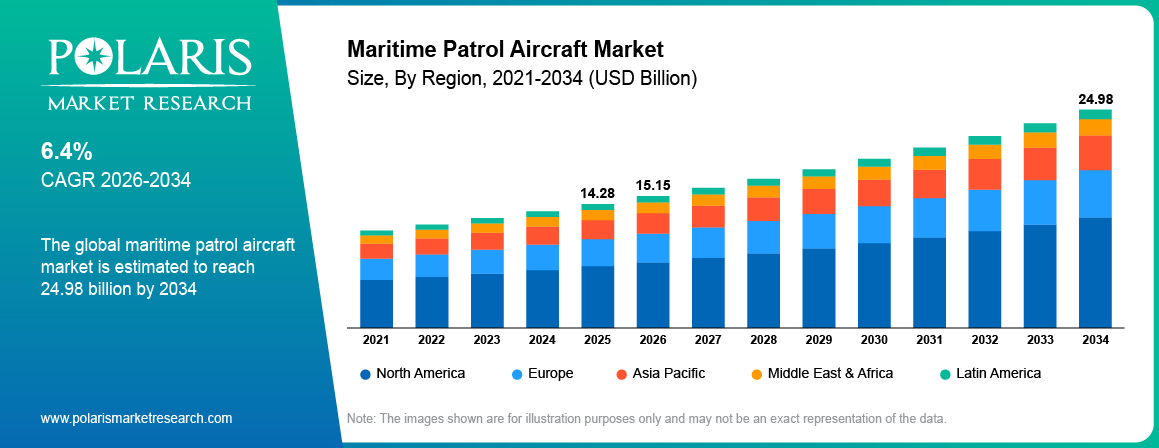
The global maritime patrol aircraft market size was valued at USD 14.28 billion in 2025. The market is projected to account for an 6.4% CAGR from 2026 to 2034. Rising geopolitical tensions and aging legacy fleets requiring replacement are a few of the key factors driving the maritime patrol aircraft market growth.
Market Statistics
Maritime Patrol Aircraft Market Key Takeaways
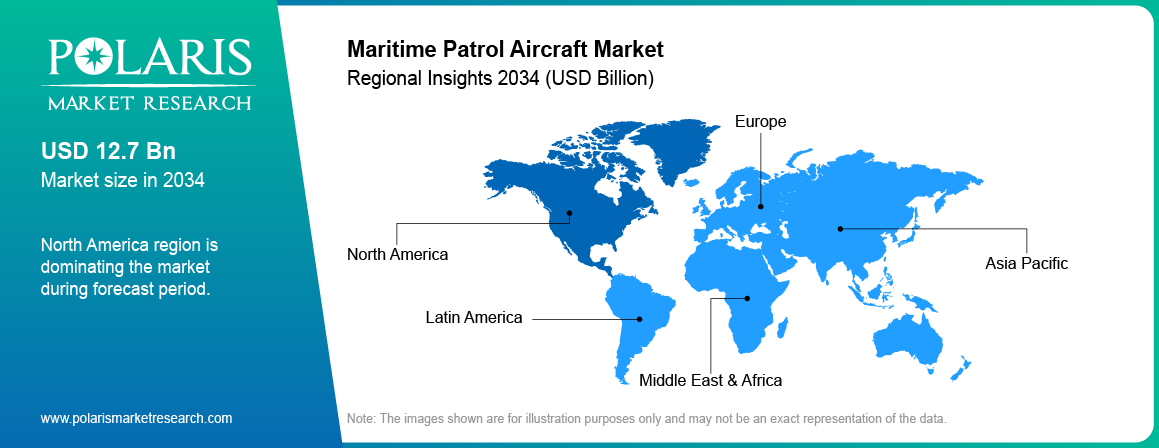
- North America accounted for an 38.00% maritime patrol aircraft market share in 2025. This is owing to the presence of established players in the region.
- Asia Pacific is projected to grow at a 6.90% CAGR. This is due to rising efforts to empower maritime security in the region.
- The armored segment led with a 61.40% share in 2025. The segment’s dominance is driven by its higher potential in protecting against extremely hostile environments.
- The unarmored segment is projected to grow at an 6.90% CAGR. Its lower cost and rapid deployment capabilities contribute to the segment’s rapid growth.
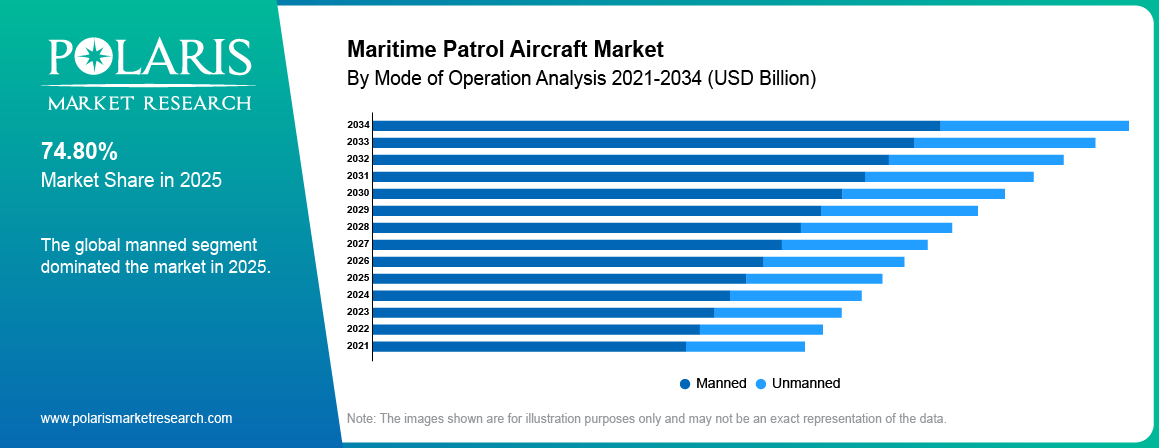
- The manned segment held an 74.80% maritime patrol aircraft market share in 2025. They support surveillance and reconnaissance activities in large maritime zones.
Note: Figures and projections outlined in this report are the result of Polaris Market Research’s proprietary analytical processes, grounded in the latest available datasets and market observations.
What Is a Maritime Patrol Aircraft?
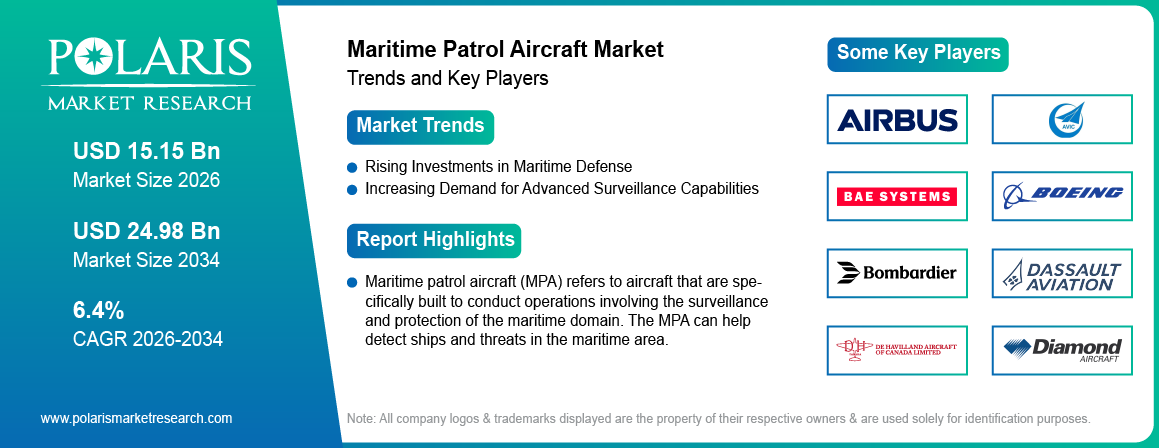
Maritime patrol aircraft (MPA) refers to aircraft that are specifically built to conduct operations involving the surveillance and protection of the maritime domain. The MPA can help detect ships and threats in the maritime area. The aircraft can stay airborne for a long period of time and patrol large areas within one mission.
The MPA aircraft can be used by naval services, coast guard services, and other security forces. There are various types of MPA aircraft according to their ranges, endurance levels, missions, and environment. Both manned and unmanned aircraft can be used for MPA operations.
Core Missions and Capabilities
Maritime patrol aircraft may be used in several maritime missions, including defense operations. For example, anti-submarine warfare (ASW) is one of the defense missions that can be carried out using maritime patrol aircraft. Maritime patrol aircraft may be used in locating and tracking submarines over a large area in the maritime environment. Search and rescue (SAR) missions take advantage of the coverage and endurance of the maritime patrol aircraft to locate distressed individuals and vessels. Maritime patrol aircraft may be used in anti-surface warfare operations through surveillance of surface vessels. Finally, maritime patrol aircraft may be used in border patrols and EEZ patrols to monitor the maritime environment.
Source: Polaris Market Research Analysis
Market Dynamics
Factors influencing the maritime patrol aircraft market include military expenditure, security needs, advancements in technology, and fleet upgrades.
Drivers : Rising Investments in Maritime Defense
Countries have been boosting funding for maritime defense in order to enhance surveillance and ensure the safety of their territorial waters. Aircraft designed for maritime patrols allow for extended surveillance operations in extensive maritime zones. They are also used to offer support to naval forces when performing their operations. There have been growing concerns regarding potential maritime conflicts and threats in recent years. Countries are looking to improve their maritime patrols due to such concerns. Increased defense spending is facilitating the procurement of new aircraft and expanding current fleets. The increased research and development funding has also been a driving factor for aircraft manufacturers to design aircraft according to the latest requirements. In July 2026, Boeing revealed that Denmark has chosen its P-8A Poseidon aircraft to support its maritime patrol needs (source: boeing.com). This selection demonstrates the continuing need for maritime patrol capabilities, as nations increasingly patrol their maritime environments.
Drivers : Increasing Demand for Advanced Surveillance Capabilities
There is a rising need for efficient surveillance at sea. This has resulted in the growing popularity of aircraft with advanced features. Modern maritime patrol aircraft are able to detect and track vessels and submarines. This happens due to the radar and communication technology that is available on the aircraft. There is also research going on on how artificial intelligence and automation can be used in threat and data analysis. In August 2026, Boeing and Northrop Grumman successfully simulated teaming of the P-8A Poseidon and MQ-4C Triton aircraft. The teaming up allows both manned and unmanned aircraft to share data and conduct coordinated missions (source: boeing.com). This highlights the increasing emphasis on collaborative surveillance capability and information sharing in maritime operations.
Drivers : Growing Maritime Traffic and Need for Persistent Monitoring
The growth in maritime traffic is adding to the requirement for surveillance of heavily trafficked maritime routes. An increase in the number of vessels navigating coastal and international waterways may affect maritime domain awareness. Patrol aircraft are capable of providing wide coverage of maritime zones through the air and will give reports on any activity by vessels. The capability of these patrol aircraft to cover wide zones of maritime space means that they are suitable for surveillance of maritime regions that would otherwise be hard to monitor from the coast. Increased commercial shipping activity is increasing the need to protect important maritime routes.
Drivers : Rising Focus on Protection of Offshore Assets
There is also an emerging requirement to protect offshore assets, which is generating a further source of demand for maritime patrol aircraft. Offshore oil and gas installations will be located quite far away from any coastal security arrangements. Such facilities might need regular air surveillance to detect possible security threats. Maritime patrol aircraft may offer coverage of such offshore areas and help monitor activities at critical facilities. The capability of aircraft to cover extensive territories is helpful if offshore assets are spread over extensive maritime regions. The development of the offshore energy industry is increasing the territory that needs to be monitored.
Restraints: High Acquisition and Production Costs
The high cost of a maritime patrol aircraft may hinder market adoption. Such aircraft need special designs and highly advanced mission systems. The combination of the various systems makes it difficult to manufacture such aircraft and increases development costs. Maintenance and operational costs may also contribute to the total cost. In nations where the defense budget is constrained, the procurement process of the aircraft may be delayed, or the operation of the current aircraft may go on for a longer period of time. This may lower the immediate need for new aircraft.
Opportunities: Fleet Modernization and Replacement Programs
There is a significant opportunity for maritime patrol aircraft market players with respect to the modernization of aging maritime patrol aircraft fleets. The current aircraft may need to be replaced due to the reduction in performance and rising maintenance costs. The new aircraft help enhance surveillance and increase mission endurance. There will be additional procurement opportunities from countries seeking to improve their naval capacities. Manufacturers can take advantage of this opportunity by producing aircraft that meet current maritime security needs. Fleet replacement will also contribute to generating future demand for maintenance services.
Opportunities: Development of Multi-Mission Aircraft
Multi-mission patrol aircraft are another area where there is maritime patrol aircraft market growth opportunity. Defense organizations now need platforms that are capable of doing various tasks. A single multi-mission aircraft can undertake surveillance missions, search and rescue missions, coastal patrols, and combat missions. This adaptability can improve utilization of defense assets. Moreover, this could be an effective way for countries to meet their various maritime security needs from one platform. Companies that produce versatile planes with varied mission capabilities are expected to benefit from growing demand from defense organizations.
Emerging Trends: Integration of Artificial Intelligence and Advanced Sensors
Artificial intelligence and advanced sensors have become key focus areas in the design of maritime patrol aircraft. Artificial intelligence can be used in the analysis of information gathered by the aircraft during operations. Advanced radar and sensor systems could enhance the detection and tracking of maritime targets. These systems are capable of assisting in the identification of relevant information more efficiently. The use of such systems is anticipated to enhance situational awareness and mission operations.
Emerging Trends: Increasing Use of Unmanned Systems
Unmanned platforms have become increasingly important for maritime surveillance. They can assist in monitoring activities without having any crew on board. Furthermore, they can be used in conjunction with manned platforms to conduct surveillance missions. The combination of manned and unmanned systems can be useful in expanding the surveillance capabilities of defense forces. Increased interest in unmanned systems is likely to influence the future approaches to maritime patrols and surveillance.
Regulatory & Value Chain Landscape
The maritime patrol aircraft market is governed by stringent regulations in the defense and aviation sectors. Airworthiness guidelines must be adhered to before any aircraft can be commissioned for service. Compliance with these standards establishes the safety and operational capability of the aircraft. Military aircraft can also follow national military certification processes. For instance, in Europe, the European Aviation Safety Agency (EASA) specifies the rules for certifying an aircraft and its components. In some cases, military and other government aircraft can be subjected to national regulations.
Defense procurement regulations also influence market development. They impose certain criteria that have to be met when purchasing maritime patrol aircraft. Criteria can include specifications related to technical capabilities and operational requirements of the aircraft. Procurement programs can also include requirements for local production or technology transfer. Such participation can influence the participation of foreign manufacturers.
Export regulation is yet another significant factor in international aircraft sales. Defense exports from the United States can be subject to International Traffic in Arms Regulations (ITAR). This regulation governs the export and transfer of military goods and related technical information. Specific products that could serve commercial applications or have dual purposes may come under the Export Administration Regulations (EAR). Another channel through which U.S. defense products can be sold to foreign governments is through the Foreign Military Sale program. These regulations may impact the time taken for procurement and international transfer of technology.
The value chain starts with aircraft producers. Suppliers supply engines and the structure of the aircraft. Defense technology firms supply mission equipment. System integrators integrate all these systems with the aircraft platform. Testing comes next after the integration phase. Defense firms will receive the final aircraft. Maintenance firms offer services for the aircraft. Spare parts, repairs, upgrades, and technical support are vital throughout the aircraft's lifespan.
Source: Polaris Market Research Analysis
Report Segmentation Overview
The maritime patrol aircraft market is segmented based on type, platform or aircraft class, propulsion system, mission type and application, end user, systems or mission equipment, solution, mode of operation, and region.
| Segmentation Axis | Segments |
| By Aircraft Protection Type | Armored, Unarmored |
| By Platform | Heavy Jet MPA, Medium Turboprop MPA, Light Turboprop/Business-Twin Conversions, MALE UAV MPA, Amphibious/Seaplane MPA |
| By Propulsion System | Turbofan, Turbojet, Turboprop, Turboshaft, Electric |
| By Mission Type | Anti-Submarine Warfare (ASW), Intelligence, Surveillance & Reconnaissance (ISR), Search and Rescue (SAR), Anti-Surface Warfare, Border & Exclusive Economic Zone (EEZ) Patrol |
| By End User | Naval Forces, Coast Guard, Other Defense & Security Agencies |
| By Systems | Sensors, Communication Systems, Armament, Self-Protection Systems, Navigation & Avionics |
| By Solution | OEM, Retrofit/Upgrade |
| By Mode of Operation | Manned, Unmanned |
| By Region | North America (U.S., Canada); Europe (France, Germany, UK, Italy, Netherlands, Spain, Russia); Asia Pacific (Japan, China, India, Malaysia, Indonesia, South Korea); Latin America (Brazil, Mexico, Argentina); Middle East & Africa (Saudi Arabia, UAE, Israel, South Africa) |
Source: Polaris Market Research Analysis
By Aircraft Protection Type
The armored segment led with an 61.40% share in 2025. The segment’s dominance is driven by the increasing demand for aircraft with the ability to conduct operations in risky marine environments. Armored aircraft provide more protection when conducting operations in environments that involve threats and hostile activities. The improved protection level makes them suitable for conducting defense operations that require high levels of survivability. The increasing focus on marine security is prompting defense agencies to improve the capacity of their aircraft. All these factors are contributing to increased demand for armored maritime patrol aircraft.
The unarmored segment is projected to grow at an 6.90% CAGR. Its growth is driven by the lower costs involved in procurement and operation of unarmored aircraft. Unarmored aircraft are appropriate for routine surveillance and patrols in regions that pose less risk. In addition, the light weight of unarmored aircraft allows extended flying times and higher payloads. Unarmored aircraft are ideal for search and rescue operations and coastal surveillance purposes. The increasing need for surveillance in larger areas of maritime regions is expected to drive their use. Nations looking for an economical surveillance aircraft may favor unarmored aircraft for routine operations at sea.
| Feature | Armored | Unarmored |
| Protection Level | Higher protection against hostile threats | Standard aircraft protection |
| Typical Use | High-risk maritime defense missions | Routine surveillance and patrol missions |
| Mission Environment | Suitable for areas with greater security risks | Better suited to lower-risk maritime areas |
| Aircraft Structure | Reinforced to improve survivability | Lighter structure with fewer protective features |
| Cost Consideration | Generally higher acquisition and maintenance costs | Generally lower acquisition and operating costs |
| Key Advantage | Greater protection during demanding missions | Lower weight and cost can support operational efficiency |
| Common Applications | Combat support, high-risk surveillance, and defense operations | Coastal patrol, maritime surveillance, and search and rescue |
Source: Polaris Market Research Analysis
By Platform
The heavy jet MPA (turbofan) segment accounted for an 38.20% maritime patrol aircraft market share in 2025. The use of these aircraft is mainly seen in naval forces needing extensive maritime coverage as well as extended endurance of the missions. They are especially suited for ASW and other operations that take place at a considerable distance from the shoreline. The heavy jet MPAs can offer greater range as compared to small patrol planes. They have relevance for those nations having large maritime areas and blue-water navy operations. The future need for the platform type is likely to remain in the forecast period.
The MALE UAV MPA segment is projected to account for an 9.40% CAGR. The use of these platforms is becoming increasingly popular in operations where constant surveillance is necessary. This is because such platforms have the capability to be in operation for a long time without having a crew on board. The MALE UAVs also make it safer for personnel to conduct monitoring operations because of their applications in intelligence, surveillance, and reconnaissance operations.
| Class | Typical Endurance / Range | Typical Cost Tier | Representative Platform | Best-Fit Buyer |
| Heavy Jet MPA (Turbofan) | >9 hours endurance; >4,000 nm range | Highest (USD 200M+ per unit) | P-8A Poseidon, P-1 | Blue-water navies with long-range ASW requirements |
| Medium Turboprop MPA | 6–9 hours endurance; 1,500–2,500 nm range | Mid-tier | C-295 MPA, ATR 72MP | Coast guards and mid-size navies covering large EEZs |
| Light Turboprop / Business-Twin Conversions | 4–6 hours endurance; <1,500 nm range | Lower | CN-235, King Air-based conversions | Coastal patrol and fisheries-protection agencies |
| MALE UAV MPA | >24 hours endurance (no crew limit) | High per-unit, lower total ownership cost at scale | MQ-4C Triton, MQ-9B SeaGuardian | Navies pursuing persistent ISR with reduced crew risk |
| Amphibious / Seaplane MPA | Mission-dependent; open-water landing capability | Niche / specialized | ShinMaywa US-2 (SAR-focused) | Archipelagic nations prioritizing search and rescue |
Source: Polaris Market Research Analysis
By Propulsion System
The turbofan segment held an 46.80% market share in 2025. The turbofan engine finds extensive application in large maritime patrol aircraft where there is a need for high-speed and long-distance operation. The turbofan-powered engine can be used to extend mission capabilities across large maritime zones. Turbofan-powered engines are also used in naval operations that require increased endurance and range. These applications help drive demand in the segment. The continuous development of long-range patrol aircraft is expected to drive future demand for turbofan engines.
The electric segment is projected to grow at an 10.80% CAGR. Electric propulsion is gaining popularity among aircraft manufacturers seeking ways to move away from traditional propulsion mechanisms. Electric propulsion mechanisms can prove useful for reducing fuel usage where conditions permit. Electric propulsion might also be able to cut down on emissions and make aircraft less noisy. Battery developments are creating more possibilities in this regard for maritime patrol. The market is expected to benefit from ongoing research on effective electric aircraft systems.
By Mission Type
The anti-submarine warfare (ASW) segment led with an 45.20% share in 2025. The ASW missions need aircraft equipped with strong detection and tracking technology. Maritime patrol aircraft are useful in carrying out such tasks over wide areas and for long hours. These aircraft employ onboard technology to detect and track submarine movements. The rising concerns over underwater security have also led to an increased relevance of ASW capabilities. As a result, the naval fleet is improving its capability to detect any possible underwater threat. The shift is expected to positively influence the demand for ASW patrol aircraft.
The border & exclusive economic zone (EEZ) patrol segment is projected to grow at an 9.10% CAGR. Maritime patrol aircraft offer an efficient solution for tracking larger maritime territories and detecting any kind of suspicious activity. Maritime patrol aircraft can be utilized in detecting illicit fishing, smuggling, and suspicious vessel movements. Long ranges enable authorities to control territories that are hard to reach and monitor from the shore. Increased attention to protecting marine resources and monitoring of maritime borders is expected to foster the use of EEZ patrol aircraft. This is likely to drive steady demand for patrol aircraft for maritime purposes.
By End User
The naval forces segment led with an 61.20% market share in 2025. The naval forces continue to be the main operators of these aircraft for maritime security and defense operations. The operations carried out by the naval forces may need to cover wide expanses of water. The maritime patrol aircraft have the capability to perform such operations. The other functions include the detection of submarines, tracking of vessels, and maritime surveillance. There has been increasing interest in naval modernization to enhance the strength of the naval forces. This shift is leading to increased procurement of new patrol aircraft.
The coast guard segment is projected to account for an 9.20% CAGR. Coast guard organizations rely on maritime patrol aircraft to perform surveillance operations over coastal waters and exclusive economic zones. They are used to conduct normal surveillance patrols and enable the detection of any activities taking place without authorization in such areas. With increased threats to the security of marine resources, the need for patrol aircraft is on the rise. With an increase in maritime traffic and growing coast guard modernization efforts, this requirement is becoming even more important.
By Systems
The sensors segment held the largest market share of 30.80% in 2025. Sensors play a vital role in tracking objects in maritime environments. Radars aid in the identification of vessels and in monitoring their movement at a distance. Electro-optic and infrared sensors offer more information during surveillance missions. Such capabilities aid in the detection of possible threats through maritime patrol aircraft. Increased focus on accurate maritime surveillance is driving the need for sensors. The use of sensors in surveillance, reconnaissance, and search-and-rescue missions will continue to drive demand for maritime patrol aircraft fitted with sensors.
The self-protection systems segment is projected to account for an 6.60% CAGR. This technology helps to safeguard the aircraft from any possible threat in missions. These may comprise warning systems that signal the crew about any threat. The countermeasure system may aid the aircraft in tackling any such threats. With the rising concern about aircraft survivability, there is an increasing requirement for enhancing their self-protection abilities. At the same time, modernization of existing fleets creates opportunities for upgrading self-protection systems onboard the aircraft.
By Solution
The OEM segment held an 65.70% market share in 2025. OEM solutions consist of the provision of newly manufactured maritime patrol aircraft complete with mission systems. The need for new aircraft is driven by the requirement to improve the surveillance capabilities of countries. New aircraft may be required due to operational needs that are not met by the old aircraft. Government procurement is one of the major drivers of demand for OEM solutions. The growing investment in maritime security is expected to contribute to the segment’s leading position.
The retrofit/upgrade segment is projected to account for an 7.60% CAGR. The process of retrofitting and upgrading enables the existing maritime patrol aircraft to benefit from advanced capabilities without the requirement for replacement of the entire system. Upgrade capabilities may include surveillance, communications, navigation, among others. This assists defense organizations in enhancing the usefulness of the existing aircraft fleet. It also offers an opportunity to upgrade capabilities based on changes in mission needs. Demand for retrofits and upgrades is expected to be driven by the need for capable maritime patrol aircraft in the forecast period.
By Mode of Operation: Manned vs Unmanned Maritime Patrol Aircraft
The manned segment held an 74.80% market share in 2025. Manned maritime patrol aircraft are still predominantly employed where there is a need for crew participation on board. They play a role in conducting surveillance and reconnaissance activities in large maritime zones. Additionally, man-portable maritime patrol aircraft are employed in missions like anti-submarine warfare, search and rescue operations, and coastal patrols. The traditional deployment of manned aircraft in naval as well as coast guard operations continues to support the segment. The rising demand for maritime security will continue to drive the uptake of manned maritime patrol aircraft in the coming years.
The unmanned segment is projected to grow at an 9.50% CAGR. Unmanned maritime patrol aircraft can carry out surveillance missions without exposing the crew onboard. The capacity to stay airborne for prolonged periods enables them to perform continuous surveillance in maritime regions. They are well-suited for surveillance missions. Increasing interest in persistent surveillance in the maritime sector is fueling the interest of defense forces in adopting unmanned platforms for certain missions. Improvements in the capability of unmanned aircraft are also expected to contribute to their use during the forecast period.
Aircraft Platform Comparison
The capabilities of maritime patrol aircraft vary in terms of range, endurance, role, and requirements. The table below provides an overview of representative platforms and their characteristics.
| Platform | Manufacturer | Platform Class | Propulsion | Primary Mission Focus | Notable Operators |
| P-8A Poseidon | Boeing (U.S.) | Heavy Jet (Turbofan) | Jet Engine | ASW, ISR, Anti-Surface Warfare | U.S. Navy, UK, Australia, India, Norway, Germany, South Korea, New Zealand, Canada (on order), Denmark (on order) |
| MQ-4C Triton | Northrop Grumman (U.S.) | MALE UAV / Unmanned | Jet Engine | High-altitude ISR, wide-area maritime surveillance | U.S. Navy, Royal Australian Air Force |
| C-295 MPA / MSA | Airbus (Netherlands/Spain) | Medium Turboprop | Turboprop | Coastal Patrolling, Search & Rescue, Surveillance | India (Navy & Coast Guard), Angola, Ghana, Portugal |
| P-1 | Kawasaki Heavy Industries (Japan) | Heavy Jet (Turbofan) | Jet Engine | ASW, ISR | Japan Maritime Self-Defense Force |
| GlobalEye | Saab AB (Sweden) | Medium Business-Jet Conversion | Jet Engine | Airborne Early Warning, ISR, Maritime Surveillance | United Arab Emirates |
| ATR 72MP | Leonardo / ATR (Italy/France) | Medium Turboprop | Turboprop | Surveillance and Reconnaissance, Coastal Patrolling | Turkey, Nigeria, Italy (Guardia di Finanza) |
| CN-235 MPA / Persuader | Airbus / PT Dirgantara Indonesia | Light/Medium Turboprop | Turboprop | Coastal Patrolling, Search & Rescue | Indonesia, Spain, South Korea, Ireland |
Source: Polaris Market Research Analysis
Source: Polaris Market Research Analysis
Maritime Patrol Aircraft Market by Region
The market for maritime patrol aircraft shows varying growth trends across regions, depending on their defense and maritime security needs.
North America
North America accounted for an 38.00% maritime patrol aircraft market share in 2025. It is characterized by a high level of naval power and the existence of aircraft manufacturers in the region. U.S. constitutes a significant portion of the regional demand. U.S. Navy makes use of maritime patrol aircraft for conducting long-range reconnaissance and anti-submarine warfare operations. P-8A Poseidon constitutes an important platform in the U.S. maritime patrol fleet. Also, Canada has been improving its maritime patrol capabilities. It has developed plans to procure P-8A aircraft to replace its old CP-140 Aurora fleet. This will contribute to the increase in the regional demand for the aircraft. Also, the presence of major defense firms strengthens the region's market position. Countries in North America continue to concentrate on maritime domain awareness. This focus drives investments in aircraft with advanced capabilities for surveillance and communications. Modernization of existing fleets is another factor that contributes to the regional market expansion.
Europe
Europe held an 22.10% market share in 2025. The European region is one of the established markets for maritime patrol aircraft. Several nations across Europe possess dedicated maritime patrol aircraft for surveillance operations. France has made significant investments towards developing maritime patrol capabilities through the country’s naval aviation force. The UK has continued to increase its fleet of P-8A Poseidon for maritime surveillance and ASW missions. There is increasing demand in the European region for maritime patrol aircraft due to the need to monitor the maritime domain of the region. Moreover, the region has a strong defense and aerospace industry. Companies such as Airbus, Leonardo, and Dassault Aviation contribute to market development.
Asia Pacific
Asia Pacific is projected to grow at an 6.90% CAGR. Rising demand for maritime security is driving nations to enhance their maritime surveillance capabilities. India, China, Japan, South Korea, and others are showing growing interest in maritime domain awareness. India is augmenting its capabilities to perform maritime surveillance in the Indian Ocean region. Japan is operating maritime patrol aircraft for the purpose of conducting anti-submarine warfare and surveillance missions. Australia is also augmenting its long range maritime patrol capabilities. The region has a significant coastline and expansive exclusive economic zones that need to be monitored regularly. Modernizing naval forces is driving greater demand for aircraft purchases. Unmanned solutions are also being considered for maritime surveillance. All these factors are anticipated to benefit the market in the region.
Middle East & Africa
The Middle East & Africa is projected to grow at an 9.40% CAGR. The Middle East & Africa region is expected to witness sustained demand for maritime patrol aircraft during the forecast period due to increased investment in maritime surveillance systems in order to secure coastal regions and offshore assets of these countries. The advantage of having aerial coverage provided by maritime patrol aircraft in larger areas is useful for countries with critical shipping routes and lengthy coastlines. Defense modernization is also a significant factor driving the need for maritime patrol aircraft in this region. The UAE and Saudi Arabia plan to invest in modern surveillance equipment and systems. Israel is known for its expertise in the aerospace and defense sector. African countries have also shown interest in acquiring aircraft for their coast patrol purposes.
Latin America
Latin America held an 4.90% market share in 2025. Countries in the region are increasing their maritime surveillance efforts in order to safeguard their coastal waters and maritime resources. The maritime patrol aircraft can aid in monitoring activities in the exclusive economic zone of such countries. Brazil is an important market because of its long coastline and maritime activity. Other nations are also looking to improve their ability in coastal patrolling and surveillance. The maritime security demands include surveillance of any illegal fishing or vessels. Search and rescue missions serve as another application for the aircraft. Cost factors may also play a role in procurement decisions across some countries. This may create more demand for affordable platforms in terms of cost of acquisition and operations.
Source: Polaris Market Research Analysis
Competitive Landscape
The maritime patrol aircraft market comprises established defense and aerospace players with experience in aircraft manufacturing and implementing mission systems. Competition is driven by the ability to satisfy particular needs and support the fleet requirements over a long period of time. Companies operate in certain market segments depending on the aircraft type, mission, and customer needs. Both top maritime patrol aircraft manufacturers and companies offering specialized aircraft solutions exist.
Beyond producing complete platforms, companies offer mission equipment, aircraft systems, and modification services required to execute maritime patrol missions. The presence of aircraft fleets offers additional business for maintenance and upgrade services. New programs for purchasing aircraft are also among the ways of development for manufacturers. The competitive landscape of the maritime patrol aircraft market is expected to remain active as countries strengthen their maritime surveillance and defense capabilities.
Vendor Positioning & Strategic Focus
| Company | Headquarters | Flagship MPA Platform | Strategic Focus | Recent Notable Move |
| Boeing | United States | P-8A Poseidon | Long-range maritime patrol and multi-mission operations | The P-8A Poseidon Increment 3 Block 2 upgrade reached initial operational capability in April 2026. The upgrade adds changes to the aircraft's sensors, antennas, avionics, and other systems. (source: navair.navy.mil) |
| Lockheed Martin Corporation | United States | C-130-based maritime solutions | Modular maritime surveillance and mission systems | Focus remains on adapting established aircraft platforms for specialized surveillance missions and supporting international maritime security requirements. |
| Airbus SE | Netherlands / France / Germany | C295 MPA | Missionized turboprop aircraft for maritime surveillance | The Royal Thai Navy ordered two C295 aircraft in May 2026. The aircraft will support surveillance and search and rescue missions with EO/IR sensors. (source: airbus.com) |
| Saab AB | Sweden | GlobalEye | Multi-domain surveillance and sensor integration | Saab received an order for two GlobalEye aircraft from a Middle Eastern country in July 2026. Deliveries are scheduled for 2030. (source: saab.com) |
| Leonardo S.p.A. | Italy | ATR 72MP | Mission-system integration on turboprop aircraft | The company continues to focus on surveillance and patrol configurations based on commercial aircraft platforms, supporting demand for cost-efficient maritime surveillance solutions. |
| Kawasaki Heavy Industries, Ltd. | Japan | P-1 | Dedicated maritime patrol and anti-submarine warfare capabilities | Kawasaki continues to support Japan's P-1 maritime patrol fleet as Japan strengthens its maritime defense capabilities. |
| Northrop Grumman Corporation | United States | MQ-4C Triton | Persistent unmanned maritime ISR | Northrop Grumman highlighted the MQ-4C Triton's maritime ISR capabilities in March 2026, including maritime patrol, signals intelligence, and search and rescue missions. (source: northropgrumman.com) |
| General Atomics Aeronautical Systems | United States | MQ-9B SeaGuardian | Long-endurance unmanned maritime ISR and ASW | GA-ASI expanded SeaGuardian's ASW capability in January 2026 by testing an expanded sonobuoy dispensing system with the U.S. Navy. (source: ga-asi.com) |
| Israel Aerospace Industries Ltd. | Israel | Maritime Heron | Persistent unmanned maritime surveillance | IAI continues to position Maritime Heron as a multi-sensor UAS for maritime surveillance, search and rescue, and protection of sovereign waters. |
Source: Polaris Market Research Analysis
Maritime Patrol Aircraft Companies List
- Airbus SE
- Aviation Industry Corporation of China (AVIC)
- BAE Systems plc
- Boeing
- Bombardier Inc.
- Dassault Aviation S.A.
- De Havilland Aircraft of Canada Limited
- Diamond Aircraft Industries GmbH
- Elbit Systems Ltd.
- Embraer S.A.
- General Atomics Aeronautical Systems
- Gulfstream Aerospace Corporation
- Harbin Aircraft Industry Group Co., Ltd.
- Hindustan Aeronautics Limited (HAL)
- Israel Aerospace Industries Ltd.
- Kawasaki Heavy Industries, Ltd.
- L3Harris Technologies, Inc.
- Leonardo S.p.A.
- Lockheed Martin Corporation
- Mitsubishi Heavy Industries, Ltd.
- Northrop Grumman Corporation
- RTX Corporation
- RUAG International
- Saab AB
- ShinMaywa Industries, Ltd.
- ST Engineering Ltd.
- Textron Inc.
- Thales Group
Recent Industry Developments
- May 2026: Deutsche Aircraft announced showcasing the D328 Multi-Role Maritime Patrol Aircraft in cooperation with EASP AIR at ILA Berlin 2026. The company also revealed highlighting new uncrewed aircraft capabilities designed for integrated governmental missions. (source: deutscheaircraft.com)
Report Scope
| Report Attributes | Details |
| Market Size Value in 2025 | USD 14.28 billion |
| Market Size Value in 2026 | USD 15.15 billion |
| Revenue Forecast by 2034 | USD 24.98 billion |
| CAGR | 6.4% from 2026 to 2034 |
| Base Year | 2025 |
| Historical Data | 2021–2024 |
| Forecast Period | 2026–2034 |
| Quantitative Units | Revenue in USD billion and CAGR from 2026 to 2034 |
| Report Coverage | Revenue Forecast, Market Competitive Landscape, Growth Factors, and Industry Trends |
| Segments Covered |
|
| Regional Scope |
|
| Competitive Landscape |
|
| Report Format |
|
| Customization | Report customization as per your requirements with respect to countries, regions, and segmentation. |
Source: Polaris Market Research Analysis
Report Coverage
The report offers an in-depth examination of the maritime patrol aircraft market, covering key market trends, growth drivers, restraints, opportunities, and future trends. It reviews developments in terms of procurement and aircraft capabilities that can impact market growth. The report also sheds light on competitive trends and the determinants that will shape the future of the industry. Competitive and regional analysis enables evaluation of differentiations in market development and competitive landscape across leading markets.
Market Opportunities & Future Outlook
The maritime patrol aircraft market is expected to benefit from the ongoing developments in maritime security needs. Fleet renewal will be among the main areas of potential as the old aircraft reach the end of their lifespan. The renewal process can result in demand for new aircraft that have better blue economy maritime surveillance capacity and extended endurance. Development of multi-role aircraft provides another opportunity for market expansion. Defense institutions can utilize these aircraft in various operations at sea without requiring specialized aircraft for each particular activity. This will result in more efficient utilization of the resources of the defense sector. Companies that manufacture aircraft for changing needs are expected to benefit from additional opportunities.
Research Methodology
The maritime patrol aircraft market comprises aircraft equipped with their mission equipment and is valued in USD. The maritime patrol aircraft market scope is based on aircraft intended for maritime reconnaissance, patrols, surveillance, and similar purposes. Secondary research uses defense budgets, procurement websites, parliament and congress archives, fleet updates by the government, aviation databases, and annual reports of companies. These sources help establish an initial perspective on market demand and procurements.
Primary research involves structured interviews with OEM companies, systems integrators, airlines, as well as MRO & sustainment participants. Such interviews are useful for validation of deal timing, cost of mission systems, and program status. The market sizing methodology follows the top-down approach based on procurement plans and fleet replacement cycle. It is cross-validated by bottom-up program-level estimates for key platforms.
Market estimates are validated through triangulation with independent data such as contract signings, aircraft deliveries, and induction into the fleet. Analysts review the findings prior to publishing. The market is fully refreshed each year, with interim updates made on the basis of significant developments such as multi-year deals or program cancellations. The present report uses 2025 as the base year and covers the 2026–2034 maritime patrol aircraft market forecast period.
Maritime Patrol Aircraft Market FAQ's
The maritime patrol aircraft market size was valued at USD 14.28 billion in 2025. The market is projected to reach USD 24.98 billion by 2034.
The market is projected to account for an 6.4% CAGR from 2026 to 2034.
North America held an 38.00% share in 2025. This is due to the presence of established players in the region.
The armored segment led with an 61.40% share in 2025. This is owing to its higher potential in protecting against extremely hostile environments.
A few of the key market players include Airbus SE, BAE Systems plc, Boeing, Bombardier Inc., Dassault Aviation S.A., Embraer S.A., General Atomics Aeronautical Systems, Gulfstream Aerospace Corporation, Harbin Aircraft Industry Group Co., Ltd., Israel Aerospace Industries Ltd., Kawasaki Heavy Industries, Ltd., Leonardo S.p.A., Lockheed Martin Corporation, Mitsubishi Heavy Industries, Ltd., Northrop Grumman Corporation., RTX Corporation, and Saab AB.
Maritime patrol aircraft assist naval forces in observing large maritime areas, identifying possible threats, collecting intelligence data, and performing various missions, such as anti-submarine warfare, coastal patrol, and search-and-rescue operations.
Maritime patrol aircraft cover large ocean areas rapidly in order to find missing ships, aircraft, or people. Maritime patrol aircraft provide relevant information that can be helpful for rescuers during their work.
The market is expanding due to increased security threats in the maritime environment, increased defense spending, naval modernization programs, and increased requirements for coastal patrol.
Maritime patrol aircraft and anti-submarine warfare aircraft have distinct roles depending on their area of operations. Maritime patrol aircraft are used to conduct a wide range of maritime activities such as reconnaissance, observation, search and rescue, among others. Anti-submarine warfare aircraft, on the other hand, are used for the detection and identification of submarines. Nevertheless, many modern maritime patrol aircraft can perform ASW operations. So, the two categories can overlap.
Download Sample Report of Maritime Patrol Aircraft Market
Please fill out the form to request a customized copy of the research report.


