
Molecular Infectious Disease Testing Market Size, Share, Trends & Forecast, 2026-2034
REPORT DETAILS
Molecular Infectious Disease Testing Market Size & Forecast, 2025-2034
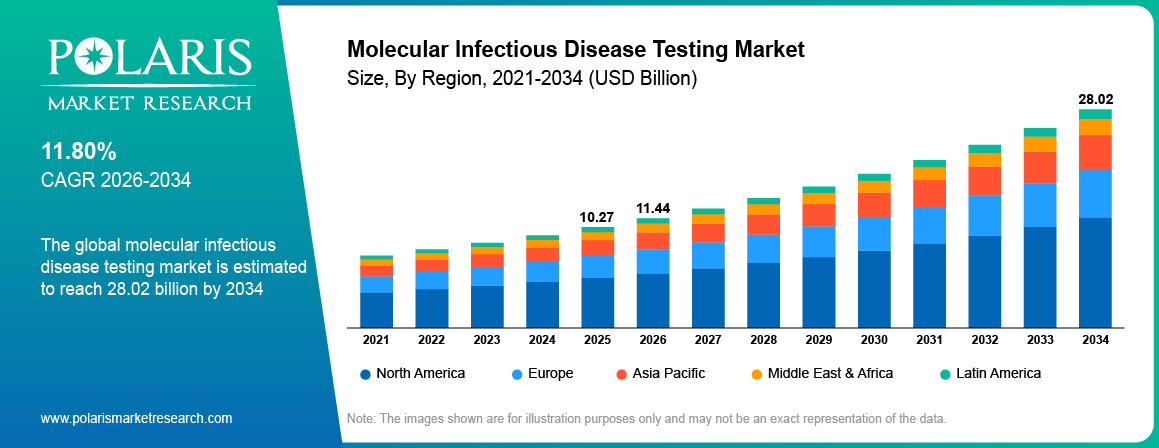
The global molecular infectious disease testing market size was valued at USD 10.27 billion in 2025. The market is expected to grow at a CAGR of 11.80% from 2026 to 2034. Rising prevalence of infectious diseases and technological advancements in testing platforms are a few of the key factors driving market growth.
Market Statistics
Molecular Infectious Disease Testing Market Key Takeaways: Size, Segments, Technologies & Regions
- North America led the global molecular infectious disease testing market with a 41.9% share in 2025. This is primarily due to the region's well-established healthcare infrastructure, widespread adoption of advanced molecular diagnostics, favorable reimbursement policies, and the presence of leading diagnostic companies.
- Asia Pacific is projected to grow at the fastest CAGR of 10.2% during 2026–2034. Increasing healthcare investments, expanding laboratory infrastructure, rising awareness of early disease detection, and growing government initiatives for infectious disease surveillance are driving regional market growth.
- The sexually transmitted diseases segment dominated the market with a 22.8% share in 2025. The segment's leadership is attributed to the rising prevalence of sexually transmitted infections, increasing screening programs, and growing demand for rapid, accurate, and early molecular diagnostic solutions.
- The reagents & kits segment is expected to witness the fastest growth at a CAGR of 10.6% during 2026–2034. The segment's growth is driven by the increasing adoption of molecular diagnostic tests across healthcare settings, recurring demand for consumables, and continuous advancements in assay technologies.
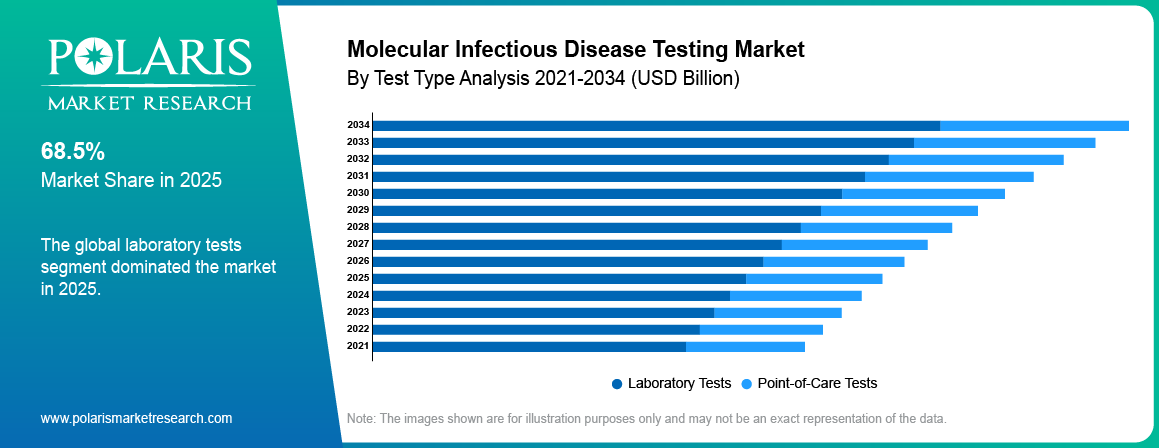
- The laboratory tests segment led the market with a 68.5% share in 2025. The segment's leading position is attributed to its high analytical accuracy, broad availability in centralized diagnostic laboratories, ability to process high testing volumes, and widespread use for confirmatory infectious disease diagnosis.
Note: Figures and projections outlined in this report are the result of Polaris Market Research’s proprietary analytical processes, grounded in the latest available datasets and market observations.
Molecular Infectious Disease Testing Market Dynamics: Drivers, Opportunities, Restraints & Challenges
- The increasing prevalence of diseases such as respiratory infections and sexually transmitted infections is driving market growth.
- Innovations such as real-time PCR and next-generation sequencing are shaping the molecular infectious disease testing market landscape.
- The shift towards point-of-care testing is expected to create several market opportunities.
- Lack of skilled personnel may present market challenges.
AI in Molecular Infectious Disease Testing: Pathogen Detection, Result Interpretation & Lab Automation
- The use of AI enables quick analysis of the information generated from molecular diagnostics for fast identification of infectious pathogens.
- Machine learning increases test accuracy by spotting patterns that can easily escape manual analysis.
- AI helps detect the presence of infectious diseases early on, resulting in early diagnosis and treatment.
- Use of AI for automating laboratory work enhances efficiency and testing speed.
Source: Polaris Market Research Analysis
To Understand More About this Research: Download Sample Report
What Is Molecular Infectious Disease Testing? PCR, NAAT & Sequencing Explained
Molecular infectious disease diagnostics is an advanced diagnostic technique that determines the presence of infection through testing for the genetic material of the virus, bacteria, fungi, or any pathogen through DNA or RNA. The technique enables quick diagnosis of the disease, determination of effective treatment, and prevents further spread of infection.
How Molecular Infectious Disease Testing Works: Sample Preparation, Amplification, Detection & Interpretation
Sample Collection – Collection of a biological sample, including blood, saliva, urine, or nasal/ throat swab, is done from the patient.
Extraction of Genetic Material – The genetic material from the suspected pathogen is extracted from the sample.
Amplification of Genetic Material – Technologies such as PCR or NGS are used for amplifying the genetic material.
Detection of Pathogen – This test detects the particular virus, bacteria, or other pathogenic microorganisms.
Analysis of Data – The data are analyzed by diagnostic software and laboratories systems.
Interpretation of Clinical Findings – The healthcare professional interprets the findings.
Decision on Treatment – These tests help in deciding the treatment of the infection.
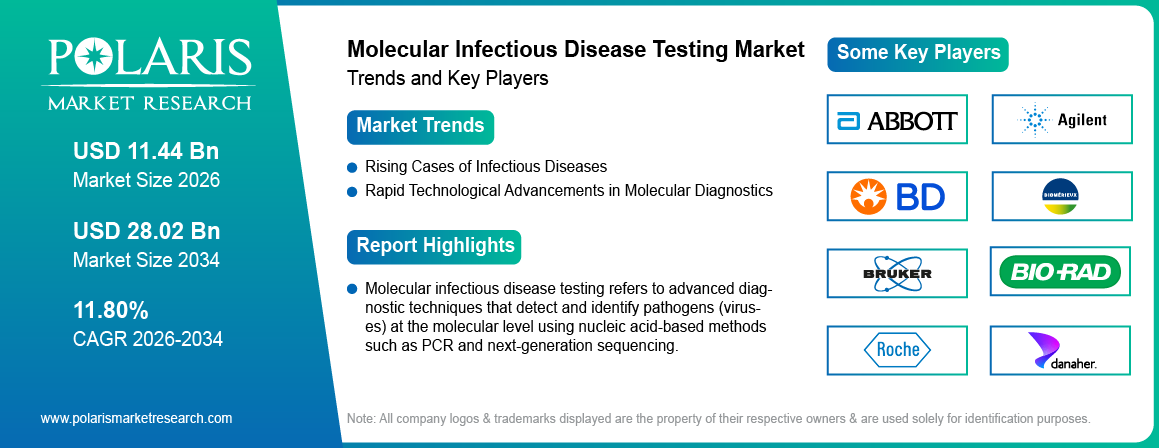
Molecular infectious disease testing refers to advanced diagnostic techniques that detect and identify pathogens (viruses) at the molecular level using nucleic acid-based methods such as PCR and next-generation sequencing. The market for molecular infectious disease testing is experiencing growth, driven by the increasing demand for point-of-care (POC) testing. The need for rapid, accurate, and decentralized diagnostic solutions has surged, particularly where timely detection is essential for effective patient management. POC molecular testing allows healthcare providers to make immediate clinical decisions, improving treatment outcomes and reducing the burden on centralized laboratories. The growing adoption of these rapid molecular diagnostic solutions across hospitals, clinics, and home care settings is shaping molecular infectious disease testing market expansion.In April 2026, QuidelOrtho expanded its decentralized footprint by acquiring LEX Diagnostics and its rapid PCR technology. After receiving FDA approval and a CLIA waiver in February 2026, the cartridge system provides highly sensitive multiplex detection of Influenza A, Influenza B, and COVID-19 in less than ten minutes.
Another driver fueling molecular infectious disease testing market growth is the increasing funding for molecular testing from government bodies, healthcare organizations, and private investors.Substantial investments in research and development have led to technological advancements, improving the efficiency and accessibility of molecular diagnostics. Funding initiatives are also supporting the expansion of diagnostic infrastructure and the development of innovative testing platforms. Therefore, as governments and healthcare agencies prioritize early disease detection and pandemic preparedness, financial support continues to strengthen the adoption of molecular infectious disease testing worldwide.For instance, in September 2025, the Biomedical Advanced Research and Development Authority (BARDA) and University Lab Partners (ULP) launched the ReadyDetect initiative. It is a $10 million competition that aims to accelerate next-generation diagnostics. The two-part decentralized diagnostics competition spans through 2028.
Molecular Diagnostics vs Culture, Antigen & Serology: Speed, Sensitivity & Use Cases
| Feature | Molecular Diagnostics | Traditional Diagnostic Methods |
| Detection Technique | Detects DNA or RNA of pathogen | Detects pathogens through growth, proteins, and antibodies |
| Speed | Fast results in few hours | Takes several days |
| Accuracy | Highly accurate and precise | Moderate accuracy in most cases |
| Early Diagnosis | Can detect infections in their early stages | Normally needs high numbers of pathogens |
| Multiplex | Tests multiple pathogens in a single test | Normally tests for one pathogen at a time |
| Clinical Applications | For rapid diagnosis and surveillance purposes | For routine diagnosis and culturing information |
Source: Polaris Market Research Analysis
Consolidate Under: Molecular Infectious Disease Testing Market Dynamics
Rising Infectious Disease Burden and Outbreak Preparedness Drive Molecular Testing Demand
The increasing prevalence of diseases such as respiratory infections, sexually transmitted infections, and emerging pathogens has boosted the need for accurate and rapid detection methods.Molecular diagnostics offer superior sensitivity and specificity compared to conventional techniques, allowing early diagnosis and targeted treatment, as the growing burden of bacterial, viral, and fungal infections necessitates advanced diagnostic solutions. The demand for efficient diagnostic tools is further amplified by the global emphasis on disease surveillance, infection control, and public health preparedness, driving the adoption of molecular testing across healthcare settings.
Multiplex PCR, Rapid NAAT and NGS Expand Molecular Diagnostic Capabilities
Innovations such as real-time PCR, digital PCR, and next-generation sequencing have remarkably improved the ability to detect pathogens with higher precision and reduced turnaround times.Automation and miniaturization of molecular diagnostic platforms have facilitated decentralized testing, making it feasible for point-of-care and resource-limited settings by improving the accuracy, speed, and accessibility of infectious disease testing. Additionally, advancements in multiplex testing allow simultaneous detection of multiple pathogens, improving diagnostic efficiency. These technological improvements are driving the adoption of molecular infectious disease testing, strengthening its role in modern healthcare diagnostics.In April 2026, QIAGEN accelerated its syndromic testing capabilities by introducing the CE-IVDR-approved QIAstat-Dx BCID GPF Plus AMR Panel. The company stated that the panel allows for rapid identification of 20 pathogens and 10 AMR markers from bloodstream infections within about an hour.
Molecular Infectious Disease Testing Market Challenges: Cost, Skilled Labor, Regulation & Supply Chain
- The high cost of molecular diagnostic testing market equipment and tools.
- Availability of qualified personnel in the laboratory setting to conduct the test.
- Time-consuming process of gaining approval for new diagnostic tools.
- Constraints in accessing molecular diagnostics in developing countries.
- Supply chain disruption leading to shortages of reagents and laboratory consumables.
Molecular Infectious Disease Testing Market Trends
| Innovation | Market Impact |
| Multiplex PCR Panels | Enables multiple pathogens to be detected simultaneously using only one sample. |
| Point-of-Care Molecular Diagnosis | Gives fast results for patients at the point of care. |
| Digital PCR (dPCR) | Gives extremely sensitive detection of pathogens present in low abundance and quantitative results. |
| Next-Generation Sequencing (NGS) | Serves as an instrument for complete identification of pathogens. |
| CRISPR Diagnostics | Gives quick and highly specific identification of infectious pathogens |
| Laboratory Automation | Increases laboratory efficiency and reduces error rate. |
Source: Polaris Market Research Analysis
Source: Polaris Market Research Analysis
Molecular Infectious Disease Testing Market Segmentation & Segment Insights
By Infectious Disease/Application: STIs, Respiratory, GI, Bloodstream/Sepsis, TB & More
The global molecular infectious disease testing market segmentation, based on disease, includes respiratory infectious diseases, gastrointestinal infectious diseases, sexually transmitted diseases, hospital-acquired infections, vaginitis, meningitis, vector-borne diseases, and other infectious diseases. The sexually transmitted disease segment dominated the market share in 2025 due to the increasing prevalence of sexually transmitted infections (STIs) and the rising demand for accurate and early diagnostic solutions. The growing awareness of STI-related complications and the implementation of routine screening programs have driven the adoption of molecular diagnostic tests, which offer high sensitivity and specificity. Additionally, the integration of point-of-care molecular testing for STIs has improved accessibility and timely detection, facilitating immediate clinical interventions. The focus on early disease management, associated with advancements in multiplex testing for multiple STI pathogens, has further contributed to the molecular infectious disease testing market demand.
By Product & Service: Reagents & Kits, Instruments, Software & Services
The global molecular infectious disease testing market segmentation, based on product & service, includes reagents & kits, instruments, and services & software. The reagents & kits segment is expected to witness the fastest market growth during the forecast period, driven by the increasing adoption of molecular diagnostic tests across healthcare settings. The rising demand for consumables such as nucleic acid extraction kits, PCR reagents, and pathogen-specific assay kits is attributed to the high testing volume and the need for repeat purchases. Technological advancements in assay design, such as multiplex and real-time PCR, digital PCR, and end-point PCR kits, have improved test efficiency and specificity, supporting molecular infectious disease testing market development. Additionally, the widespread use of reagents & kits in both centralized laboratories and point-of-care testing accelerates segment growth, making it the most rapidly expanding category in the market.
Molecular Infectious Disease Testing Use Cases: Clinical Diagnosis, AMR & Outbreak Surveillance
| Application | Purpose |
| Tests for Respiratory Infections | Detects respiratory pathogens including COVID-19, influenza, and RSV. |
| Sexually Transmitted Disease Testing | Identifies STIs like chlamydia, gonorrhea, and HPV infections. |
| Hospital-Acquired Infection Monitoring | Detects healthcare-associated pathogens to facilitate infection control. |
| Gastrointestinal Pathogen Detection | Able to detect the pathogens that cause gastrointestinal infections. |
| Detection of Tuberculosis | Enables the detection of tuberculosis pathogens and their drug-resistant strains. |
| Surveillance of Infectious Disease Outbreaks | Helps public health departments in tracking disease outbreaks. |
Source: Polaris Market Research Analysis
Source: Polaris Market Research Analysis
Molecular Infectious Disease Testing Market Regional Analysis: North America, Europe, Asia Pacific, Latin America & MEA
North America Molecular Infectious Disease Testing Market: STI, Respiratory & POC Testing Demand
By region, the report provides the molecular infectious disease testing market insights into North America, Europe, Asia Pacific, Latin America, and the Middle East & Africa. North America dominated the molecular infectious disease testing market share in 2025, primarily due to its well-established healthcare infrastructure, high adoption rate of advanced diagnostic technologies, and strong regulatory framework supporting molecular testing. The presence of major market players, associated with substantial investments in research and development, has fueled innovation in molecular diagnostic solutions. Additionally, the region has a high burden of infectious diseases, such as respiratory and sexually transmitted infections. For instance, in 2023, CDC reported over 2.4 million cases of syphilis, gonorrhea, and chlamydia were reported, including 209,000 syphilis, 600,000 gonorrhea, and 1.6 million chlamydia cases. Notably, 3,882 congenital syphilis cases were reported, with 279 resulting in stillbirths or neonatal/infant deaths, driving the demand for accurate and rapid diagnostic tools. The growing implementation of government initiatives for disease surveillance and early detection, along with the increasing preference for molecular testing in clinical practice, has further strengthened North America's leadership in the market.
Asia Pacific Molecular Infectious Disease Testing Market: Multiplex PCR, Lab Expansion & Regional Access
The Asia Pacific molecular infectious disease testing market is projected to witness the fastest growth during the forecast period, driven by increasing healthcare investments, rising awareness of early disease detection, and the growing burden of infectious diseases. Expanding access to molecular diagnostic technologies, particularly in emerging economies, is facilitating molecular infectious disease testing market penetration and adoption. In September 2022, Sansure Biotech collaborated with QuantuMDx to launch the Q-POC platform, aiming to develop and produce rapid, portable molecular diagnostic tests. The partnership focuses on expanding test menus, reducing costs, and improving precision medicine solutions for infectious diseases and other applications. The region is also experiencing a rise in demand for point-of-care testing solutions, supported by government initiatives to improve diagnostic capabilities in rural and urban healthcare settings. Additionally, the presence of a large patient population and ongoing advancements in healthcare infrastructure are creating a favorable environment for molecular infectious disease testing market opportunity, positioning Asia Pacific as the fastest growing region in the market.

Source: Polaris Market Research Analysis
Molecular Infectious Disease Testing Value Chain: Assay Development, Manufacturing, Laboratories & Clinical Use
The molecular infectious disease testing value chain starts with research and development, which involves creating innovative testing solutions and techniques that enable accurate identification of infectious diseases. The next step involves the manufacturing of various products such as reagents, test kits, instruments, and software utilized for molecular testing.
The products then go through quality control and regulatory clearance prior to distribution through distributors and healthcare organizations. Different healthcare organizations obtain testing solutions according to their requirements. Patients' samples are analyzed using molecular testing devices, while lab technicians interpret the results. The test results are communicated to healthcare organizations for the diagnosis of patients and providing necessary treatment. Feedback regarding the current products from laboratory and clinical settings is helpful for the development of new testing solutions.
Molecular Infectious Disease Testing Market Competitive Landscape & Leading Companies
The competitive landscape features global leaders and regional players competing for molecular infectious disease testing market share through innovation, strategic alliances, and geographic expansion. Global players such as Roche Diagnostics, Thermo Fisher Scientific, Abbott Laboratories, and BioMérieux leverage robust R&D capabilities and extensive distribution networks to deliver advanced molecular diagnostic tools, including PCR, next-generation sequencing (NGS), and multiplex testing platforms. Molecular infectious disease testing market trends indicate rising demand for rapid, accurate, and decentralized testing solutions, such as point-of-care (POC) molecular diagnostics, driven by the need for timely disease detection and management. According to molecular infectious disease testing market statistics, the market is projected to grow, fueled by the increasing prevalence of infectious diseases, advancements in genomic technologies, and the growing adoption of personalized medicine. Regional companies focus on cost-effective and localized solutions, particularly in emerging markets. Molecular infectious disease testing market competitive strategies include mergers and acquisitions, partnerships with research institutions, and the development of innovative diagnostic products to address evolving healthcare needs. These trends highlight the importance of technological innovation, market adaptability, and strategic investments in driving the expansion of the molecular infectious disease testing industry. A few key major players are Abbott; Danaher Corporation; bioMérieux SA; F. Hoffmann-La Roche Ltd; Bio-Rad Laboratories, Inc.; Agilent Technologies, Inc.; Becton, Dickinson and Company; Hologic, Inc. (Gen-Probe); Illumina, Inc., Grifols S.A.; Qiagen; Siemens Healthineers AG; Sysmex Corporation; Bruker Corporation; and Thermo Fisher Scientific.
QIAGEN is a global provider of molecular diagnostic solutions, particularly in the field of infectious disease testing. The company's QIAstat-Dx system is a major platform for molecular infectious disease diagnostics, utilizing multiplex PCR technology to rapidly identify a wide range of pathogens in a single sample. This syndromic testing approach allows for the simultaneous detection of multiple viral, bacterial, and fungal pathogens, significantly improving the speed and accuracy of diagnosis compared to traditional microbiological methods. QIAstat-Dx offers several panels that have been cleared by regulatory bodies such as the US FDA and have received CE-marking in the EU. These panels include tests for respiratory, gastrointestinal, and central nervous system infections, providing critical diagnostic insights in under an hour. The system's efficiency and rapid turnaround time allow healthcare providers to make timely treatment decisions, improving patient outcomes, and reducing healthcare burdens. QIAGEN's commitment to molecular diagnostics extends beyond infectious diseases, with ongoing expansions into areas such as neurodegenerative and metabolic diseases through strategic partnerships. The company's broad range of CE-IVD-marked sample and assay technologies supports standardized and integrated molecular diagnostics workflows, ensuring high-quality results and streamlined laboratory operations. QIAGEN continues to play a major role in advancing molecular infectious disease testing globally by leveraging advanced technologies, such as digital PCR and syndromic testing.
F. Hoffmann-La Roche Ltd, commonly known as Roche, is a Swiss multinational healthcare company renowned for its contributions to pharmaceuticals and diagnostics. Founded in 1896 by Fritz Hoffmann-La Roche, the company has evolved in developing innovative therapeutic and diagnostic products. Roche operates under two main divisions: Pharmaceuticals and Diagnostics, with a strong focus on oncology, immunology, ophthalmology, infectious diseases, and neuroscience. The company specializes in molecular infectious disease testing. It offers a range of in vitro diagnostics, which are crucial for detecting and managing infectious diseases. These diagnostics help healthcare professionals to identify pathogens and monitor disease progression effectively. Roche's molecular testing solutions are designed to provide accurate and rapid results, facilitating timely treatment decisions. This aligns with Roche's broader strategy of personalized healthcare, where diagnostics play a major role in tailoring treatments to individual patient needs. Roche continues to innovate and expand its offerings in molecular infectious disease testing, contributing significantly to global healthcare advancements.
Leading Molecular Infectious Disease Testing Companies & Platforms
- Abbott
- Agilent Technologies, Inc.
- Becton, Dickinson and Company
- bioMérieux SA
- Bio-Rad Laboratories, Inc.
- Bruker Corporation
- Danaher Corporation
- F. Hoffmann-La Roche Ltd
- Grifols S.A.
- Hologic, Inc. (Gen-Probe)
- Illumina, Inc.
- Qiagen
- Siemens Healthineers AG
- Sysmex Corporation
- Thermo Fisher Scientific
Molecular Infectious Disease Testing Market Future Outlook to 2034
It is anticipated that the molecular infectious disease testing market will experience consistent growth in the coming years as there will be a greater need for rapid, accurate, and reliable diagnostic tests. Growing awareness of early disease detection, improvement in healthcare infrastructure, and investment in modern labs will drive the growth of the market. Technological advancements in the multiplex PCR testing market, real-time PCR diagnostic market, next-generation sequencing, and portable diagnostic tools will help accelerate disease detection. Increased utilization of point-of-care diagnostics will make it possible for molecular diagnostics to be adopted in different healthcare settings. There are increased government and public health agency efforts in terms of infectious disease surveillance and preparation for outbreaks. With improved diagnostic techniques, the importance of molecular infectious disease diagnostics will continue to increase.
Recent Molecular Diagnostic Product Launches, Acquisitions & Regulatory Milestones, 2025-2026
- July 2026: Cepheid introduced the third generation of the GeneXpert system at the Association for Diagnostics & Laboratory Medicine (ADLM) Annual Scientific Meeting. The company stated that the next-gen system is designed to expand the possibilities of PCR-based diagnostics.(source: cepheid.com)
- February 2025: Advanced Biological Laboratories (ABL) finalized a transfer and licensing agreement with Siemens Healthineers, providing access to the expertise and intellectual property portfolio of Fastrack Diagnostics Luxembourg (FTD Ltd.).
Molecular Infectious Disease Testing Market Segmentation by Product, Assay Format, Setting, Disease, Technology & End User
By Product & Service Outlook (Revenue, USD Billion, 2021–2034)
- Reagents & Kits
- Instruments
- Services & Software
By Type Outlook (Revenue, USD Billion, 2021–2034)
- Multiplex Testing
- Singleplex Testing
By Test Type Outlook (Revenue, USD Billion, 2021–2034)
- Laboratory Tests
- Point-of-Care Tests
By Disease Outlook (Revenue, USD Billion, 2021–2034)
- Respiratory Infectious Diseases
- Gastrointestinal Infectious Diseases
- Sexually Transmitted Diseases
- Hospital-Acquired Infections
- Vaginitis
- Meningitis
- Vector-Borne Diseases
- Other Infectious Diseases
By Technology Outlook (Revenue, USD Billion, 2021–2034)
- Polymerase Chain Reaction
- Isothermal Nucleic Acid Amplification Technology
- DNA-Sequencing & Next-Generation Sequencing
- In-Situ Hybridization
- DNA Microarrays
- Others
By End User Outlook (Revenue, USD Billion, 2021–2034)
- Diagnostic Laboratories
- Hospitals & Clinics
- Others
By Regional Outlook (Revenue, USD Billion, 2021–2034)
- North America
- US
- Canada
- Europe
- Germany
- France
- UK
- Italy
- Spain
- Netherlands
- Russia
- Rest of Europe
- Asia Pacific
- China
- Japan
- India
- Malaysia
- South Korea
- Indonesia
- Australia
- Vietnam
- Rest of Asia Pacific
- Middle East & Africa
- Saudi Arabia
- UAE
- Israel
- South Africa
- Rest of Middle East & Africa
- Latin America
- Mexico
- Brazil
- Argentina
- Rest of Latin America
Molecular Infectious Disease Testing Market Report Scope, Segmentation & Forecast Period
| Report Attributes | Details |
| Market Size Value in 2025 | USD 10.27 billion |
| Market Size Value in 2026 | USD 11.44 billion |
| Revenue Forecast by 2034 | USD 28.02 billion |
| CAGR | 11.80% from 2026 to 2034 |
| Base Year | 2025 |
| Historical Data | 2021–2024 |
| Forecast Period | 2026–2034 |
| Quantitative Units | Revenue in USD Billion and CAGR from 2026 to 2034 |
| Report Coverage | Revenue Forecast, Market Competitive Landscape, Growth Factors, and Industry Trends |
| Segments Covered |
|
| Regional Scope |
|
| Competitive Landscape |
|
| Report Format |
|
| Customization | Report customization as per your requirements with respect to countries, regions, and segmentation. |
Source: Polaris Market Research Analysis
Molecular Infectious Disease Testing Market FAQ's
The global market size was valued at USD 10.27 billion in 2025 and is projected to grow to USD 28.02 billion by 2034.
The global market is projected to register a CAGR of 11.80% during the forecast period.
North America dominated the global market in 2025.
A few of the key players in the market are Abbott; Danaher Corporation; bioMérieux SA; F. Hoffmann-La Roche Ltd; Bio-Rad Laboratories, Inc.; Agilent Technologies, Inc.; Becton, Dickinson and Company; Hologic, Inc. (Gen-Probe); Illumina, Inc., Grifols S.A.; Qiagen; Siemens Healthineers AG; Sysmex Corporation; Bruker Corporation; and Thermo Fisher Scientific.
The sexually transmitted disease segment dominated the market share in 2025.
Molecular infectious disease testing is a type of testing procedure that can detect the genetic material (DNA and RNA) of various viruses, bacteria, fungi, and other pathogens. Molecular infectious disease testing helps detect any infections in patients and allows proper diagnosis and treatment.
Molecular infectious disease testing is widely used to detect infections, including COVID-19, influenza, tuberculosis, sexually transmitted infections, and gastrointestinal infections. In addition, it can be used to detect infections in hospitals and during disease outbreaks.
Some of the factors contributing to the market growth include the increasing occurrence of infectious diseases, the need for rapid and accurate diagnosis, and the expansion of point-of-care molecular diagnostics. The market is also benefiting from rising investment in diagnostic technologies by healthcare facilities.
Download Sample Report of Molecular Infectious Disease Testing Market
Please fill out the form to request a customized copy of the research report.


