
Pneumococcal Vaccine Market Size, Share, Trends & Forecast, 2026-2034
REPORT DETAILS
Pneumococcal Vaccine Market Summary
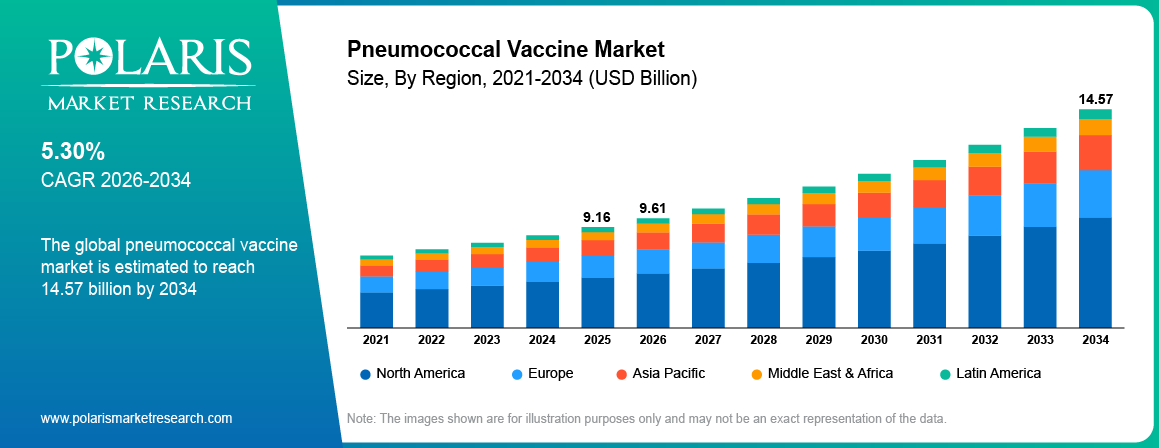
The pneumococcal vaccine market size was valued at USD 9.16 billion in 2025. The market is anticipated to exhibit a CAGR of 5.30% from 2026 to 2034. Increasing cases of pneumococcal disease across all age groups drive the market growth. Also, rising health policies that promote widespread vaccination propel the market expansion.
Market Statistics
Pneumococcal Vaccine Market Key Takeaways
- North America dominated with 40.9% share in 2025. The dominance fueled by its widespread adoption of vaccines.
- In 2025, the Asia Pacific market is projected to register the highest CAGR of 6.8% during the forecast period. Rising investments in vaccine development fuel the growth.
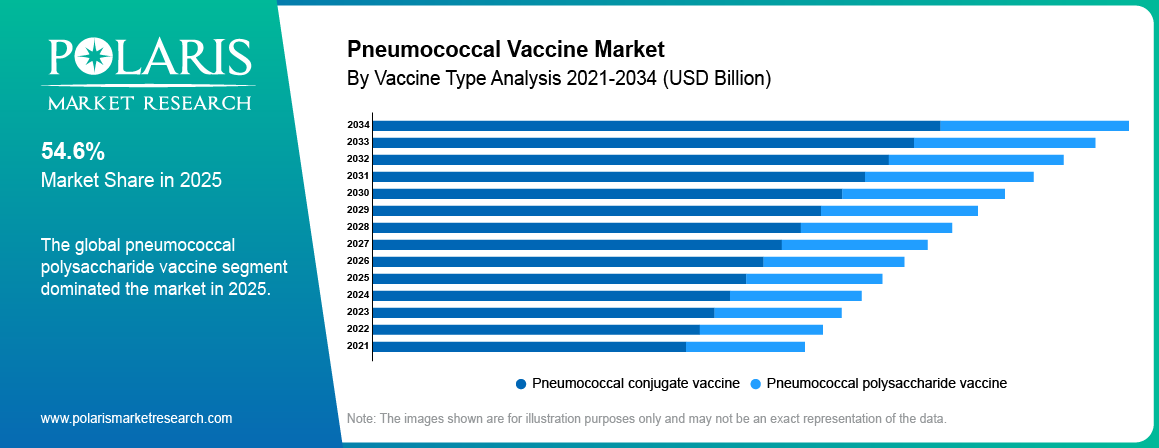
- Pneumococcal polysaccharide vaccine (PPV) led with 54.6% revenue share in 2025. It is driven by its increased use in preventing serious infections among adults.
- Pneumococcal conjugate vaccine (PCV) would register the highest CAGR of 7.2% during the projected period. Advanced pneumococcal conjugate vaccines cover a wider range of Streptococcus pneumoniae. It is driving the segment dominance.
- The Synflorix segment will record the highest CAGR of 7.6% during the projected period, due to its cost-effectiveness.
Note: Figures and projections outlined in this report are the result of Polaris Market Research’s proprietary analytical processes, grounded in the latest available datasets and market observations.
What Are Pneumococcal Vaccines? Types, Uses & Market Role
Pneumococcal vaccines are immunization products. The vaccines are used to protect against infections caused by Streptococcus pneumoniae bacteria. They are used against pneumonia, meningitis, bacteremia, and otitis media. These vaccines are widely used in pediatric and adult immunization programs. The vaccines reduce disease burden and hospitalizations. They minimize mortality associated with pneumococcal infections.
Pneumococcal Vaccine Market Overview
An increase in awareness about pneumococcal Infection and expanded government-sponsored immunization programs are expected to accelerate the pneumococcal vaccine market in the forecast years. For instance, in June 2021, the Odisha government introduced the pneumococcal conjugate vaccine (PCV) as part of its universal immunization program. This strategic move aims to protect 800,000 young children by significantly reducing their risk of pneumonia and meningitis. Such initiatives underscore the increasing global commitment to combating pneumococcal infections and are likely to drive further pneumococcal market expansion in the forecast years.
The formation of various alliances for vaccine distribution is expected to increase demand for pneumococcal vaccines globally, leading to the growth of the pneumococcal vaccine market in the forecast years. For instance, in 2022, GAVI (Global Alliance for Vaccines and Immunization) reported that coverage of the third dose of the pneumococcal conjugate vaccine (PCV3) rose to 70%, up from 56% in 2019-2021 among GAVI's 57 member countries. This increase, surpassing initial estimates, marks a significant milestone in improving PCV coverage and reducing the burden of childhood pneumococcal disease in low-income regions.
Source: Polaris Market Research Analysis
To Understand More About this Research: Download Sample Report
How Pneumococcal Vaccines Work
- A pneumococcal vaccine is administered to introduce safe pneumococcal antigens into the body.
- Pneumococcal antigens are recognized by the immune system as being foreign.
- B cells and T cells become activated to initiate the immune response.
- Antibodies are formed that are specific for Streptococcus pneumoniae.
- Memory cells are formed for future immunity against the bacteria.
- These memory cells act quickly upon exposure to the bacteria in the future.
- The immune response lowers the possibility of serious infection due to the bacteria.
Market Dynamics
Rising Incidence of Pneumococcal Disease Across All Age Groups
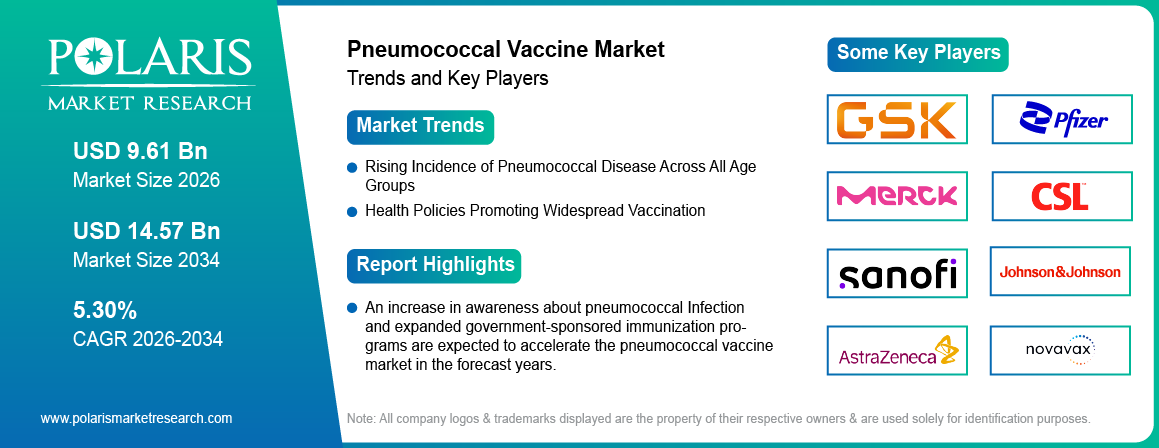
The rising incidence of pneumococcal disease across all age groups is driving the market for pneumococcal vaccines in the forecast years. Increased rates of infections, including severe conditions such as pneumonia, meningitis, and bacteremia, are boosting the demand for effective preventive measures. This increase in disease prevalence, driven by factors like aging populations, underlying health conditions, and antibiotic resistance, underscores the importance of vaccination. As awareness grows and healthcare systems emphasize preventive care, the demand for pneumococcal vaccines is expected to rise, leading to the growth of the pneumococcal vaccines market during the study period.
Health Policies Promoting Widespread Vaccination
The pneumococcal vaccine market is primarily being driven by government initiatives and health policies that promote widespread vaccination. Policies include incorporating pneumococcal vaccines into routine immunization schedules and recommending them for high-risk groups such as the elderly and young children. These actions are leading to a significant increase in vaccine uptake. Additionally, funding programs and public health campaigns are aimed at raising awareness and accessibility, further boosting vaccine adoption. These initiatives not only enhance public health but also stimulate market growth by ensuring broader coverage and consistent demand. As governments continue to prioritize vaccination for disease prevention, the pneumococcal vaccine market is expected to experience substantial growth.
Importance of Pediatric and Adult Immunization Programs
Pediatric Immunization: Childhood immunization remains the cornerstone of the pneumococcal vaccine market. Young children carry a disproportionate share of the global disease burden. The World Health Organization estimates pneumococcal disease causes roughly 1.6 million deaths each year. Of these, 0.7 to 1 million occur in children under five. This is the reason why national vaccination schedules give importance to the vaccination of infants. Pediatric vaccination contributes greatly to the reduction of pneumonia, pneumococcal diseases, and bacterial meningitis among young children. It also contributes to reducing hospitalizations and creating greater community immunity. Pneumococcal conjugate vaccines are included in national immunization schedules, even in those that are supported by GAVI in poor countries.
Adult and Geriatric Immunization: Immunization of adults is increasingly becoming another growth driver. The combination of an aging population and changing guidelines is behind this trend. Indeed, the Advisory Committee on Immunization Practices of the CDC has expanded PCV coverage, reducing the recommended age from 65 to 50 years. This change seeks to prevent disease invasion among this new age group. Adults have increased risk of contracting pneumonia as well as those who suffer from diseases such as COPD, diabetes, and heart diseases. With the increasing number of eligible adults for PCV, doctors are increasingly engaging in "shared clinical decision making," thus making adult immunization a viable growth sector.
Economic Benefits of Pneumococcal Vaccination: Hospitalization, Treatment & Payer Savings
Beyond disease prevention, pneumococcal vaccination generates measurable downstream value for healthcare systems and payers. The introduction of immunization programs reduces cases of pneumococcal disease, hence reducing the burden on acute care settings and shifting healthcare costs from treatment of the disease to its prevention.
- Reduced hospitalization costs: less severe cases of pneumonia, meningitis, and bacteremia that would need to be hospitalized
- Lower treatment expenditure: fewer cases requiring long-term antibiotic therapy and intensive care unit admissions
- Reduced long-term disease burden: low disease burden in the long run due to prevention of vaccine-preventable diseases
- Preventive-care cost efficiency: vaccinations are cheaper than treating an invasive infection. It reinforces public and private payer support for coverage expansion.
Restraint: Vaccine Development, Regulatory Approval & Manufacturing Complexity
The pneumococcal vaccine market faces many challenges due to stringent regulations to develop new vaccines such as lengthy approval processes. These regulations are important for the safety and effectiveness of vaccines. This often leads to time-consuming especially on new vaccine development discouraging potential investors that may hinder the demand for the pneumococcal vaccine market in coming years.
Source: Polaris Market Research Analysis
Pneumococcal Vaccine Market Segmentation Analysis
The market is segmented based on vaccine type, product type, end user, and region.
Pneumococcal Vaccine Market by Vaccine Type
Pneumococcal polysaccharide vaccine (PPV) led with 54.6% revenue share in 2025
The pneumococcal polysaccharide vaccine (PPV) segment held the largest revenue share in the pneumococcal vaccine market. This dominance is largely due to its broad coverage of multiple pneumococcal strains and its established use in preventing serious infections among adults, particularly those with underlying health conditions. The polysaccharide vaccine's proven efficacy in reducing severe disease outcomes leading to the increase in consumption by the majority of the population share.
Pneumococcal conjugate vaccine (PCV) would register the highest CAGR of 7.2% during the projected period.The pneumococcal conjugate vaccine (PCV) offers better in improving the immunity and retaining immunity compared to PPV. Furthermore, the advanced developed pneumococcal conjugate vaccines cover more range of streptococcus pneumoniae driving the segment’s growth.
Comparison Matrix: Pneumococcal Conjugate Vaccine (PCV) vs Pneumococcal Polysaccharide Vaccine (PPSV)
| Feature | Pneumococcal Conjugate Vaccine (PCV) | Pneumococcal Polysaccharide Vaccine (PPSV) |
| Immune Response | Strong, T-cell dependent, long-lasting immune response | Broad serotype coverage with T-cell independent response |
| Primary Use | Infants, children, and high-risk adults | Primarily older adults and high-risk adults |
| Immunological Memory | Develops durable immune memory | Limited immunological memory |
| Pediatric Use | Routinely recommended for children | Limited effectiveness in young children |
| Disease Prevention | Highly effective against invasive pneumococcal disease and pneumonia | Provides broad protection against multiple pneumococcal serotypes in adults |
Source: Polaris Market Research Analysis
Pneumococcal Vaccine Market by Product / Valency
The Synflorix segment is expected to witness the highest growth during the forecast period.
The Synflorix segment will record the highest CAGR of 7.6% during the projected period, due to its cost-effectiveness,mainly due to its cost-effectiveness, Synflorix is particularly favored in countries with budget constraints, boosting its market penetration. This rising demand in developing regions contributes significantly to its rapid growth rate compared to other pneumococcal vaccines.
The Prevnar 13 segment garnered the fastest CAGR in the pneumococcal vaccine market. The fastest share is driven by factors such as being widely available globally. Prevnar 13 caters wider range of age demands as it gets government approval for all types of ages like adults, infants, and children due to its efficient profile.
Pneumococcal Vaccine Use Cases: Childhood Immunization, Adult Vaccination & High-Risk Populations
| Application | Real-World Example | Impact |
| Childhood Immunization Programs | Copy text National immunization programs give pneumococcal conjugate vaccines (PCVs) to infants and young children as part of routine vaccination schedules. | Reduces cases of invasive pneumococcal disease, pneumonia, meningitis, and otitis media while helping herd immunity. |
| Elderly Vaccination Campaigns | Healthcare providers and public health agencies recommend pneumococcal vaccination for adults aged 65 and older through community clinics and seasonal vaccination campaigns. | Lowers the risk of pneumococcal pneumonia, hospitalization, and death among older adults. |
| Prevention of Bacterial Pneumonia | Hospitals and primary care providers vaccinate individuals with chronic respiratory diseases, diabetes, and heart conditions to prevent pneumococcal pneumonia. | Decreases the rate of community-acquired bacterial pneumonia and serious respiratory problems. |
| Hospital Vaccination Initiatives | Hospitals administer pneumococcal vaccines to eligible patients before discharge, particularly those recovering from chronic illnesses or major surgeries. | Improves vaccination coverage, lowers future hospital readmissions, and improves long-term patient outcomes. |
Source: Polaris Market Research Analysis
Pneumococcal Vaccine Technology Trends: Higher-Valency PCVs, Serotype Coverage & Next-Generation Platforms
There is an evolution going on in the pneumococcal vaccine space through higher valency products which will have broad coverage for different types of serotypes. With the approval of Prevnar 20 in the adult segment, some newer products such as Merck's 21-valent V116 (PCV21) of Merck, have been making their way through late stage development. Through industry collaborations such as those made between Sanofi and SK Bioscience, there will be next generation PCVs targeting other serotypes.
- Shift from 13-valent to 15-, 20-, and 21-valent conjugate vaccines
- Expanded serotype coverage targeting strains outside current formulations
- Combination vaccine research spanning pediatric and adult indications
- Regulatory momentum (FDA priority review, EMA evaluation) accelerating launch timelines
- Manufacturing and distribution investment to support broader global access
Source: Polaris Market Research Analysis
Pneumococcal Vaccine Market by Region
The North American region registered the largest share of the global market in 2025
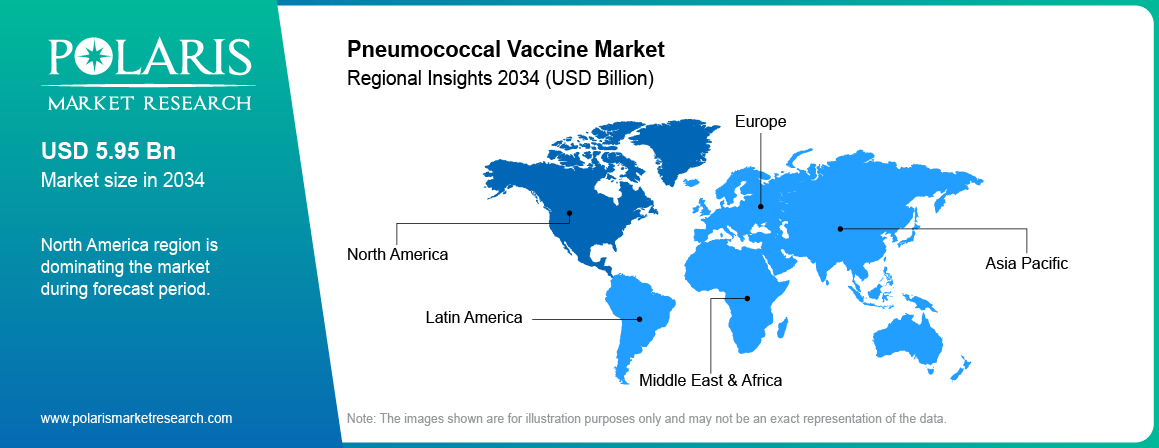
North America dominated with 40.9% share in 2025.The North American region has a strong healthcare infrastructure, widespread early adoption of vaccines, and a growing number of FDA approvals. The area benefits from a strong network of major pharmaceutical companies that drive innovation and market expansion. Additionally, the high level of healthcare access and awareness contributes to the increased uptake of pneumococcal vaccines, solidifying North America's leading position in the global market.
For instance, in June 2021, Pfizer Inc. announced that PREVNAR 20, a pneumococcal 20-valent conjugate vaccine approved by the U.S. FDA for the prevention of invasive pneumococcal disease and pneumonia for adults ages 18 years or older.
Asia Pacific market is projected to register the highest CAGR of 6.8% during the forecast period, this is due to increased investment in vaccine development, a rapidly expanding population, and a rising incidence of pneumococcal infections. Additionally, significant investments in biopharmaceutical research and development are further boosting market expansion in the region, leading to the fastest growth of pneumococcal vaccine market in the region during forecast period.
Source: Polaris Market Research Analysis
Pneumococcal Vaccine Competitive Landscape & Leading Companies
Strategic partnerships to drive the competition
The pneumococcal vaccine market is fragmented. The growing investments in R&D for pneumococcal vaccines and new technology impacting the global market. Moreover, cost reduction in PCV and development of vaccines in middle-income countries drive the pneumococcal vaccine market growth during the forecast period. For instance, in September 2022, Indonesia launched the pneumococcal conjugate vaccine (PCV) nationwide aiming to access PCV all over Indonesia at the lowest price for children.
Leading Pneumococcal Vaccine Companies
- GSK plc
- Pfizer Inc.
- Merck KGaA
- Serum Institute of India Pvt. Ltd.
- CSL Ltd.
- Sanofi S.A.
- Walvax Biotechnology Co., Ltd.
- Beijing Minhai Biotechnology Co., Ltd
- Johnson & Johnson
- AstraZeneca
- Novavax
Pneumococcal Vaccine Market Developments: Approvals, Phase 3 Programs & Partnerships
- May 2026: Pfizer announced advancements in its 25-valent pediatric pneumococcal vaccine candidate into Phase 3 after positive Phase 2 results. The data demonstrated strong immunogenicity, safety, and broader serotype coverage potential.(Source: pfizer.com)
- In January 2025, Sanofi and SK Bioscience announced a new collaboration to develop next-generation pneumococcal conjugate vaccines (PCVs) for both pediatric and adult populations. According to Sanofi, the partnership aims to address invasive pneumococcal disease (IPD) caused by serotypes not included in current vaccines.
- In April 2024, Merck announced results from the STRIDE-10 Phase 3 trial of its investigational V116 pneumococcal vaccine at the ESCMID Global conference in Barcelona. V116, a 21-valent vaccine, demonstrated non-inferior immune responses compared to PPSV23 for shared serotypes and superior responses for additional serotypes. The safety profile was comparable. The FDA and EMA are currently reviewing V116, with the FDA granting priority review and a PDUFA date of June 17, 2024.
Pneumococcal Vaccine Market Future Outlook
The pneumococcal vaccine industry is expected to experience strong growth during the forecast period. The growth will be driven by expanding childhood immunization programs. Increasing adult vaccination initiatives and rising awareness of infectious disease prevention would boost the expansion. The future growth of the market is going to be driven by the next generation of vaccines, which are going to provide greater coverage of the serotypes. The investments in the vaccine research and the increased government involvement into the healthcare sector would lead to new possibilities. Moreover, the expanded immunization coverage in the emerging markets is going to drive the market penetration rates.
Market Segmentation: `
By Vaccine Type Outlook (USD billion, 2021 - 2034)
- Pneumococcal conjugate vaccine
- Pneumococcal polysaccharide vaccine
By Product Outlook (USD billion, 2021 - 2034)
- Prevnar 13
- Synflorix
- Pneumovax23
- Others
By End User Outlook (USD billion, 2021 - 2034)
- Public Sector
- Private Sector
By Regional Outlook (USD billion, 2019 – 2032)
- North America
- US
- Canada
- Europe
- Germany
- France
- UK
- Italy
- Spain
- Netherlands
- Russia
- Rest of Europe
- Asia Pacific
- China
- Japan
- India
- Malaysia
- South Korea
- Indonesia
- Australia
- Rest of Asia Pacific
- Middle East & Africa
- Saudi Arabia
- UAE
- Israel
- South Africa
- Rest of Middle East & Africa
- Latin America
- Mexico
- Brazil
- Argentina
- Rest of Latin America
Report Coverage
The pneumococcal vaccine market report emphasizes key regions across the globe to provide a better understanding of the product to the users. Also, the report provides market insights into recent developments, and trends and analyzes the technologies that are gaining traction around the globe. Furthermore, the report covers an in-depth qualitative analysis pertaining to various paradigm shifts associated with the transformation of these solutions.
The report provides a detailed analysis of the market while focusing on various key aspects such as competitive analysis, vaccine type, product type, distribution channel, and futuristic growth opportunities.
Report Scope
| Report Attributes | Details |
| Market Size Value in 2025 | USD 9.16 billion |
| Market Size Value in 2026 | USD 9.61 billion |
| Revenue Forecast in 2034 | USD 14.57 billion |
| CAGR | 5.30% from 2026 – 2034 |
| Base Year | 2025 |
| Historical Data | 2021 – 2024 |
| Forecast Period | 2026 – 2034 |
| Quantitative Units | Revenue in USD billion and CAGR from 2026 to 2034 |
| Segments Covered |
|
| Regional Scope |
|
| Competitive Landscape |
|
| Report Format |
|
| Customization | Report customization as per your requirements with respect to countries, regions, and segmentation. |
Source: Polaris Market Research Analysis
Pneumococcal Vaccine Market FAQ's
The Pneumococcal Vaccine Market size was valued at USD 9.16 billion in 2025 and is projected to grow to USD 14.57 billion by 2034.
The global market is projected to grow at a CAGR of 5.30% during the forecast period, 2026-2034.
North America held the largest market share in the Pneumococcal Vaccine Market, dominating with a 40.9% share in 2025, fueled by widespread adoption of vaccines in the region.
The key players in the market are GSK plc, Pfizer Inc., Merck KGaA, Serum Institute of India Pvt. Ltd., CSL Ltd., Sanofi S.A., Walvax Biotechnology Co., Ltd., Beijing Minhai Biotechnology Co., Ltd, Johnson & Johnson, AstraZeneca and Novavax.
The Pneumococcal conjugate vaccine (PCV) Type segment is anticipated to experience substantial growth with a significant CAGR in the global market. This growth is due to largely due to PPV’s broad coverage of multiple pneumococcal strains.
The Synflorix segment is projected to record the highest CAGR of 7.6% during the forecast period, due to its cost-effectiveness.
Pneumococcal vaccines are preferred to prevent infections caused by Streptococcus pneumoniae. The vaccines prevent pneumonia, meningitis, bloodstream infections (bacteremia), and certain cases of ear infections.
Pneumococcal vaccine is advisable to be given to infants, people over the age of 65 years, as well as those suffering from chronic diseases and having weak immunity systems.
The effectiveness of pneumococcal vaccines in protecting one from developing infections resulting into invasive pneumococcal disease, pneumonia, and so forth is considerable.
Yes. Pneumococcal vaccines are recommended for adults suffering from some chronic diseases and those with risk factors in order to avoid serious infections caused by pneumococcus.
Pneumococcal vaccine are used in children to prevent life-threatening infections. The vaccines offer community-wide protection through herd immunity.
Download Sample Report of Pneumococcal Vaccine Market
Please fill out the form to request a customized copy of the research report.


