Biochar is getting increased attention worldwide. After all, it helps improve soil and support clean energy. Biochar also enables long-term carbon storage. As interest in biochar grows, farmers and companies are asking an important question. And that is, which production method provides the best mix of low cost and good performance?
This blog explains the main biochar market production methods in a simple way. It also takes a look at their costs and shows how they affect the future competitiveness of the market.
Biochar: Overview
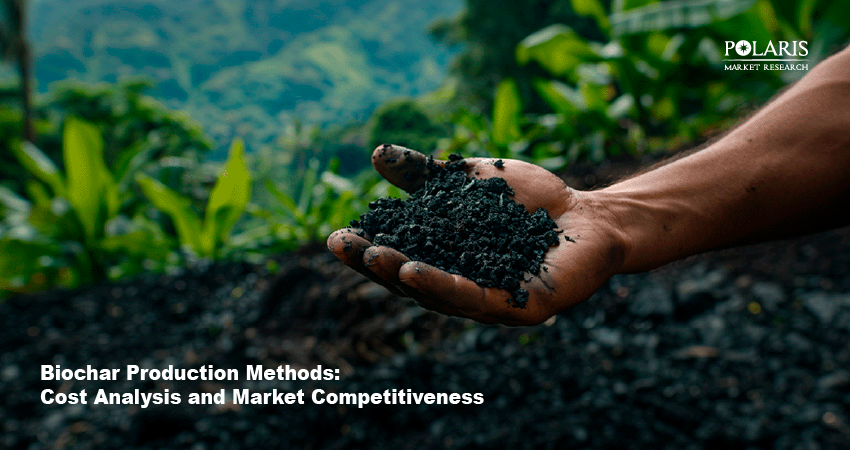
Biochar is a carbon-rich material. It’s made by heating organic waste in a place with very little oxygen. The organic waste can take the form of crop leftovers, animal manure, or pellets from the wood pellets market. The heating method is not like normal burning. This is because the material doesn’t turn to ash here. Instead, it becomes a charcoal-like substance. Biochar can stay in soil for thousands of years.
What makes biochar useful isn’t just how it’s made. But what it can do. Here’s why there’s increased interest in biochar:
- Improves Soil Health: Biochar has tiny holes. These holes work like a sponge. Mixing biochar into soil means the holes allow more helpful microbes to move around. This makes the soil healthier. It also helps plants grow better.
- Reduces Need for Fertilizers: Biochar serves to retain soil nutrients. This reduces the need for fertilizers from the liquid fertilizers market, thereby allowing farmers to save money by reducing pollution.
- Stores Carbon for a Long Time: Plants absorb carbon dioxide as they grow. Usually, carbon goes back to the atmosphere when plants decompose. But turning plant material into biochar locks the carbon in soil for centuries. This helps reduce greenhouse gases.
Biochar Market Metrics
The global biochar market is poised to witness sustained growth. The market for biochar stood at USD 695.68 million in 2025. It is projected to account for a CAGR of 13.40% between 2026 and 2034.
Biochar Production Methods
Slow Pyrolysis
Slow pyrolysis is the most common way to produce biochar. It involves biomass at moderate temperatures for a long time. The steady rise in heat in this method means the material breaks down without burning. This slow process keeps more carbon in solid form. This creates a high amount of biochar. Slow pyrolysis is simple and used in small and large setups.
Cost Factors: Slow pyrolysis equipment is usually affordable. It also uses less energy than high-temperature systems. One big advantage is the high biochar yield. Producers get more biochar from the same amount of biomass. Maintenance here is easy. Also, it doesn’t need highly skilled labor.
Market Competitiveness: Slow pyrolysis offers the best mix of cost and ease of use. It works well for small farms and large industries. This biochar product is of good quality. It's suitable for soil health and carbon credits.
Fast Pyrolysis
Fast pyrolysis heats biomass at very high temperatures within seconds. The quick heating changes the output here. The system produces mostly bio-oil and a small amount of biochar. This makes fast pyrolysis suitable for companies focused on energy or chemical production.
Cost Factors: Fast pyrolysis needs advanced equipment. The method also demands precise control and specialized monitoring systems. More energy is used as the heating needs to be rapid and intense. The method also requires skilled operators.
Market Competitiveness: This method is competitive when companies want multiple products. Businesses focused mainly on biochar may not find it the most cost-effective option.
Gasification
Gasification partly burns biomass at very high temperatures. This creates a fuel gas called syngas. This gas can then be used to generate heat and electricity. As most of the carbon turns into gas, biochar is created in small amounts here.
Cost Factors: Gasification needs a major upfront investment. The system requires strong burners and advanced reactors. Power generators may also be needed. The energy produced can lower some costs. But the small amount of biochar limits profits for companies that rely on biochar sales.
Market Competitiveness: Gasification is suitable for industries that need renewable energy and small amounts of biomass at the same time. However, it’s less competitive for farming or carbon-market applications.
Hydrothermal Carbonization
Hydrothermal carbonization makes use of high-temperature water to break down biomass. It is suitable for wet waste such as food scraps and sewage sludge. This method doesn’t require. So, it’s useful in regions with moisture-rich biomass. The product of hydrothermal carbonization is a coal-like material called hydrochar.
Cost Factors: Hydrothermal carbonization needs strong and pressurized reactors. This makes installation expensive. The method also uses a lot of heat and energy to maintain high pressure and temperature. However, it saves costs by avoiding the need for dry waste.
Market Competitiveness: This biochar market production method is suitable for industries that handle large amounts of food waste. It supports circular economy goals by turning waste into a useful product. This method isn’t as common as pyrolysis. But it’s gaining interest in sustainability-focused markets.
What’s New in the Market?
June 2025: ReGenEarth and RER Capital announced a £100 million green bond to finance UK biochar projects. The bond supports offer a 12.5% annual return and follow the ICMA Green Bond Principles.
May 2025: The joint venture Carbonity, involving SUEZ, Airex Energy, and Groupe Rémabec, launched Canada's first large-scale industrial biochar facility. The facility is based in Port-Cartier, Quebec, and marks a major step towards soil health in North America.
Conclusion
Biochar production is changing fast. Knowing the costs and benefits of each method is important for farmers and businesses. Slow pyrolysis is still the most affordable and efficient method for making large amounts of biochar. However, methods like gasification are useful for specific needs. As demand for sustainable farming grows, the biochar market is expected to keep expanding.

.webp)