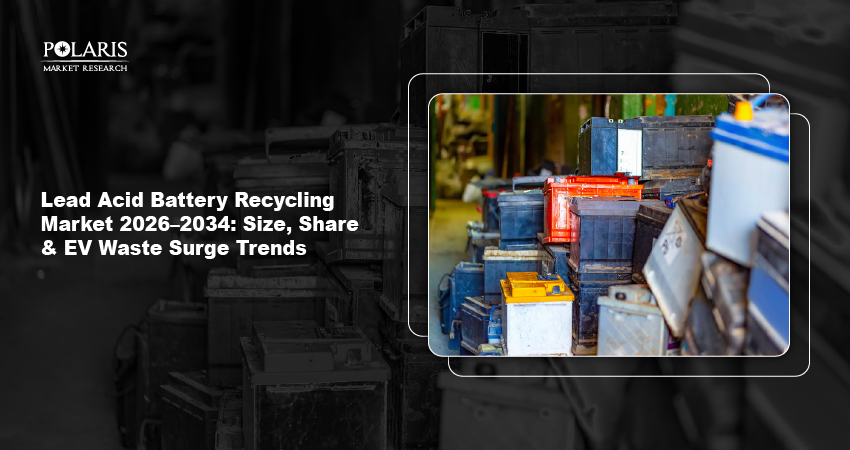
The world throws away over 3 million metric tons of lead acid batteries every year. This number is increasing due to higher use of vehicles and backup power systems. The lead acid battery recycling market aims on collecting used batteries and recovering materials like lead and plastic. It includes recyclers, manufacturers, and waste management companies. This article explains how the market functions, key trends, 2025 regulations, lead acid battery disposal, and EV battery waste management.
What Is the Lead Acid Battery Recycling Market?
The lead acid battery recycling market is deals with collecting used lead acid batteries (LABs), processing them, and selling the recovered materials. These materials include lead, sulfuric acid, and polypropylene plastic. The recycled materials are used again in different sectors. Main sectors are automotive SLI batteries, industrial UPS systems, and telecom backup power. The system works in a closed loop, where old batteries are turned into new ones. Recycling rates are very high, about 99% in the U.S.
Lead Acid Battery Recycling Market Size & Share 2025
Global Market Valuation
The lead acid battery recycling market was valued at USD 16.02 billion in 2025. It is expected to reach USD 26.93 billion by 2034. The market is growing at a CAGR of 5.94% (2026-2034). Growth is due to more battery use and strict recycling rules. Demand for reused lead is rising.
Regional Market Share Breakdown
Asia-Pacific has the largest market share because of high battery use and strong recycling activity. China held leading place in secondary lead smelting capacity. North America has the strongest regulatory compliance and well developed recycling systems. Europe is growing because of the EU Battery Regulation 2023. Asia-Pacific grows the fastest. North America concentrates on strict rules, and Europe is fueled by policy changes and sustainability goals.
Key Growth Drivers Fueling the Market Through 2034
EV Battery Waste Surge — The New Recycling Catalyst
Electric vehicles use is growing fast. This reduces the use of lead acid batteries in new vehicles. But many hybrid and start-stop vehicles still depend on these batteries. As these vehicles get older, a large number of used LABs enter the waste stream. Millions of units are expected from such fleets in the coming years. OEMs play a key role. Their take-back mandates support collect used batteries and send them to licensed recyclers.
Stricter Environmental Regulations Driving Compliance Demand
Governments are imposing strict rules for battery disposal and recycling. In the U.S., EPA regulations like the Resource Conservation and Recovery Act (RCRA) 1976 are compulsory. Europe obeys the EU Battery Directive 2023. India has E-Waste Management Rules 2022. These rules fuel the demand for certified recyclers. Firms avoid fines by proper disposal. Extended Producer Responsibility (EPR) also pushes producers to manage battery waste.
Rising Lead Commodity Prices Boosting Recycler Margins
Recycling lead costs less than mining new lead. Secondary lead is about 35–40% cheaper to produce. Recyclers’ margins are being boosted by higher lead prices. Trends from the London Metal Exchange reflect this increase. This makes recycling more economically viable choice for companies.
Challenges Facing the Lead Acid Battery Recycling Industry
Informal Sector Competition and Illegal Smelting
In many developing countries, informal recyclers handle used batteries. They operate at lower costs than licensed operators. This creates price pressure and market imbalance. These practices are unsafe and harmful to the environment. Illegal smelting releases toxic lead. According to WHO, about 1 in 3 children have unsafe lead levels. This is commonly linked to informal recycling. Global Battery Alliance is working to promote safe and formal recycling systems.
Lithium-Ion Substitution Risk
Lithium-ion batteries are slowly replacing lead acid batteries in new vehicles and backup systems. This may reduce demand over the long term. On the other hand, most vehicles in use today yet depend on lead acid batteries. Around 97% of the global fleet depends on them. As a result, recycling demand is projected to remain steady for the next 15–20 years. The transition will be slower rather than immediate.
Competitive Landscape — Who Are the Major Players?
Clarios — Global company with strong presence in North America and Europe. Works on closed-loop battery recycling. Recently announced expansion of recycling capacity in the U.S.
Gravita India Ltd. — Asia-based company with operations in many countries. Concentrates on lead recycling and battery scrap processing.
Ecobat — Large recycler with operations in Europe and the U.S. Works in lead recovery and refining. Has expanded plant capacity in recent years.
Aqua Metals — U.S.-based company. Uses electrochemical process instead of traditional smelting. Aims on cleaner recycling methods.
Battery Solutions — Operates largely in North America. Offers battery collection and recycling services with concentration on safe handling.
The market has both global and regional players. Many organizations are rising capacity and improving recycling options.
What Does the EV Waste Surge Mean for Investors and Recyclers?
Investment Opportunities in Secondary Lead Processing
Investors are showing preference in secondary lead processing. Private equity firms are investing in licensed smelters. Governments are helping this sector. In the U.S., the Inflation Reduction Act (IRA) 2022 provides funding support. Europe helps projects under the EU Green Deal. Facilities with ISO 14001 certification often get better contracts. This creates strong opportunities for new and existing players.
Technology Innovations Reshaping Recycling Economics
New technologies are changing how batteries are recycled. Hydrometallurgical processing is an option to traditional smelting. It is cleaner and more efficient. Organizations such as Aqua Metals use ionic purification technology. Automation in battery disassembly is rising. It minimizes labor costs and improves efficiency. These changes will shape the market in the coming times.
FAQs
What is the recycling rate for lead acid batteries?
Around 99% of lead acid batteries in the U.S. are recycled. They are one of the most recycled consumer products.
Why is the lead acid battery recycling market growing?
Growth is driven by strict regulations and rising lead prices. It is also increasing due to more used batteries from aging vehicles.
What are lead acid batteries used for?
They are used in automotive SLI systems and industrial UPS. They are also used in telecom backup power and renewable energy storage.
Conclusion & Market Outlook
The lead acid battery recycling market is expected to grow steadily in the coming years. Demand is supported by increasing battery use and strict regulations. The EV shift creates a paradox, as older vehicle fleets continue to generate large volumes of battery waste. This supports near-term recycling supply. Regulations also favor licensed operators over informal players. By 2034, the market is likely to see stable demand and better recycling systems. Download the full market report or speak to a market analyst.