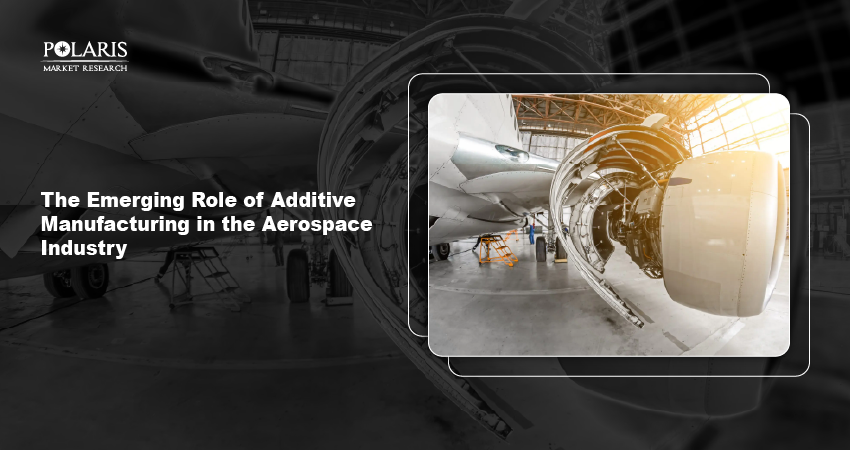
Most of us are fascinated by aircraft and spacecraft, but we do not realize the efforts, research, and advancement that go into their manufacturing. The aerospace industry is always undergoing innovations to make aircraft and spacecraft lighter, safer, and more efficient. The aircraft parts are not only extraordinarily complex but also need to be structurally sound and meet the highest quality assurance standards.
In order to reduce costs and overcome traditional manufacturing challenges, the aerospace industry is moving from conventional manufacturing processes to additive manufacturing to produce complex parts with efficiency. The adoption of AM in aerospace is no longer limited to prototyping but now also supports full-scale production.
What is Additive Manufacturing?
Additive manufacturing (AM) is a manufacturing process that builds parts layer by layer from a computer-based design file. This is in contrast to traditional manufacturing, where the parts have to be cut out of a solid block. AM allows the material to be added only in case of necessity, thus leading to quicker manufacturing and reduced costs. Using AM in aerospace, engineers use advanced printers to create parts from digital models. Compared to traditional manufacturing processes, AM has advantages such as less waste, faster design iteration times, more complex internal structure designs, and fewer parts needed for tooling.
Benefits of Additive Manufacturing for Aerospace
The manufacturers in the modern aviation industry have the burden of trying to minimize weight, enhance fuel efficiency, and shorten the production cycles. It is at this point that AM benefits come into play:
- Lightweight construction: 3D printed aerospace constructions employ optimized designs that do not reduce weight at the expense of strength.
- Design flexibility: Engineers can now design complex structures not possible before with the aid of AM. This enhances aerodynamics and integration of the system.
- Shortened production time: AM saves a lot of production time compared to the conventional manufacturing procedures.
- Economy in costs: Less material is wasted, and fewer processes are undertaken in the assembly process, making the process less expensive.
- Optimization of supply chain: Since the parts are produced on demand, it decreases the inventory needs and also facilitates decentralized manufacturing.
Types of Aerospace Components Produced with 3D Printing
The use of 3D printing has expanded across multiple aircraft systems. Today, manufacturers are able to produce both structural and non-structural components. Some of the common 3D printed aerospace parts include:
- Engine components
- Structural brackets and supports
- Cabin interiors
- Heat exchangers and ducts
- Tools and fixtures
Materials Used in Aerospace Additive Manufacturing
The choice of materials is vital in the production of aerospace components. The materials used should be able to withstand high temperatures, pressure, and mechanical load, and yet remain intact and strong, and should be able to serve the purpose they were made for. The most widespread materials in aerospace additive manufacturing are as follows:
- Titanium Alloys: They offer advantages of strength-to-weight ratios, and they can resist corrosion.
- Aluminum Alloys: This type of material is most frequently used to design objects that are lightweight and need to be used in a corrosion-resistant environment.
- Nickel-Based Super Alloys: This type of material is most commonly used.
Certification and Regulatory Requirements
Certification is one of the most important aspects of aerospace manufacturing. The manufacturers need to make sure that the components meet the strict safety and performance standards before deployment. Regulatory bodies such as the Federal Aviation Administration (FAA) and the European Union Aviation Safety Agency (EASA) oversee the certification process. Key requirements for passing the checks for certifications include:
- Material traceability and consistency
- Mechanical and structural testing
- Process validation and repeatability
- Documentation and quality assurance
Leading Applications and Case Studies
Major players in the aerospace manufacturing have already switched to additive manufacturing. Some of the leading applications and case studies include:
- Engine manufacturing: Manufacturing an engine is no easy job; multiple nozzles, inlets, and outlets with complex geometry. Additive manufacturing has made the job easier; it can design complex engine parts with ease, reduce weight, and do so in less time than traditional methods.
- Space exploration: 3D printing is increasingly used by space agencies to print complex components of rockets and spacecraft, where precision and accuracy are very important.
- Aircraft interiors: Aircraft require light interiors to enhance efficiency and to minimize cost; through 3D printing, manufacturers come up with light parts to enhance fuel efficiency and minimize operational costs.
Future Trends in Aerospace Additive Manufacturing
With the additive manufacturing market expected to grow to USD 215.49 Billion by 2034, there is a high growth potential for the future of aerospace. This growth will be shaped by several trends:
- Integration with digital systems: Additive manufacturing, properly combined with the sophisticated software platforms, would not only enhance design but also enhance the efficiency of production.
- Expansion capabilities: Aerospace manufacturing companies are always on the lookout for new alloys and composites that will enhance performance and durability.
- Increased adoption: More and more suppliers are adopting 3D printing technologies to meet the increasing demand for production.
- Sustainability programs: In addition to strict compliance with the regulations, ensuring material strength and lightweight as well as cost-efficiency, aerospace manufacturers should also ensure that their products are sustainable. This involves the minimization of waste of materials and energy to contribute to the environment.
Challenges and Solutions in Aerospace 3D Printing
Despite the many advantages of 3D printing in aerospace, there are certain challenges, such as:
- High investment: Even if the profit margins are high, there is a significantly high investment for advanced equipment and materials.
- Material limitations: Not all materials are suitable for 3D printing, and this is why there is a lot of research has been done in the advanced materials field to address these issues.
- Certification complexity: There are so many strict checks before the certification is issued, and these strict regulatory requirements mean low adoption. However, standardization efforts aim to streamline the certification process.
- Skill gaps: Additive manufacturing requires a specialized skill set and training. Collaboration with research institutes can help bridge this gap.
With a projected CAGR of 23.9%, additive manufacturing is the backbone of the next generation of aerospace innovation. For precise data on material adoption, regulatory hurdles, and competitive benchmarking, rely on Polaris Market Research to inform your next strategic move.
Frequently Asked Questions
What is additive manufacturing in aerospace?
The term additive manufacturing in aerospace is defined as the creation of aerospace components using advanced 3D printing techniques through which different layers are added on top of each other to create aerospace components.
How is 3D printing used in the aerospace industry?
The use of 3D printing in the aerospace industry involves production of engine parts, structural parts, tooling parts, and prototype parts using advanced 3D printing processes which enable the production of complex designs and also reduce wastage.
What materials are used for 3D printed aerospace parts?
Common materials include titanium alloys, aluminum alloys, nickel-based superalloys, and high-performance polymers. These materials offer strength, heat resistance, and durability, making them suitable for critical aerospace components and high-stress operating environments.
What are the benefits of additive manufacturing for aircraft?
Additive manufacturing reduces component weight, improves fuel efficiency, lowers material waste, and shortens production cycles. It also enables design flexibility and part consolidation, which reduces assembly complexity and enhances overall aircraft performance.
How are 3D printed aerospace parts certified?
Aerospace parts undergo strict certification processes involving testing, quality validation, and compliance with regulatory standards such as FAA and EASA guidelines. Manufacturers must ensure consistency, traceability, and structural integrity before approval for use.
What is the market size for aerospace additive manufacturing?
The aerospace additive manufacturing market is expanding rapidly due to increased adoption of lightweight components and advanced materials. According to industry estimates, it is expected to witness strong growth through 2030, driven by innovation and demand.