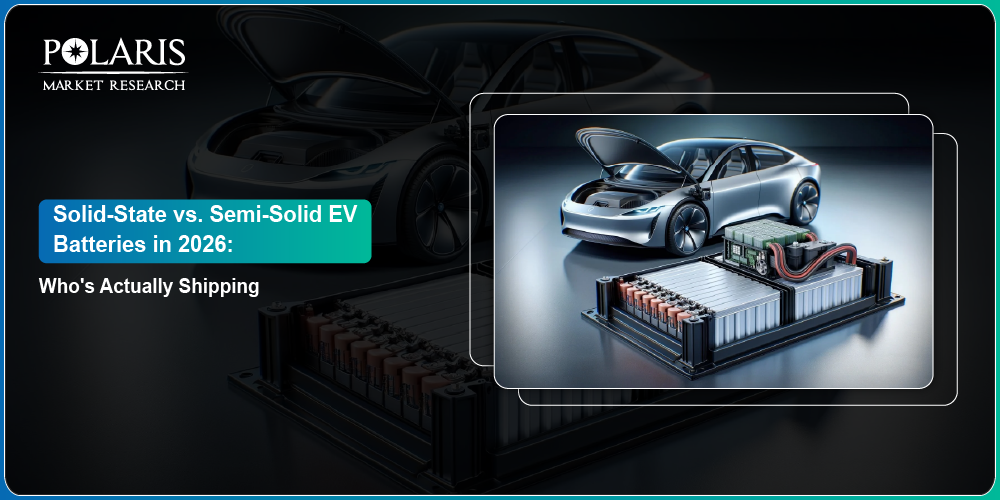
Semi-solid battery cells are already being used in some production electric vehicles. In comparison, a true solid-state EV battery 2026 is still in the testing and validation stage. This is the biggest difference between the two technologies today.
Many companies have announced progress in solid-state batteries. But most are still working on safety testing, durability, and large scale manufacturing. Semi-solid batteries have reached the market earlier. They are easier to produce using existing battery manufacturing processes.
That distinction matters for carmakers and battery makers, affecting production schedules, costs and future vehicle planning. In this blog we compare solid-state and semi-solid EV batteries, explain how they differ and review what is actually shipping in 2026.
What's the Difference Between Solid-State and Semi-Solid Batteries?
Both batteries are designed to improve electric vehicle performance, but they are not the same.
A semi-solid battery EV still uses some liquid electrolyte. The amount is much lower than in a regular lithium-ion battery. This means that it is easier to produce with today’s battery factories. It also delivers better performance and better safety than traditional batteries.
A solid-state battery works differently. They have a solid material instead of a liquid electrolyte. That can make them safer, with less chance of leaks and overheating. They also can pack in more energy for the same space. That means an EV can go further on a single charge.
The big difference is in the stage of development. Semi-solid batteries are already in use in a few production vehicles. Real solid-state batteries are still being tested and validated before mass production.
With advances in EV battery technology, users will experience improved performance from both battery types in 2026. Another key use case is enhanced safety and enabling future EV range and charging innovation.
Which Manufacturers Are Shipping Semi-Solid Batteries Today?
Production Milestones in China's Semi-Solid Rollout
China is leading the early rollout of semi-solid battery EV technology. A few Chinese automakers have already launched vehicles with semi-solid battery packs. These batteries have higher energy density than conventional lithium-ion batteries, but use manufacturing processes that are easier to scale. This has supported companies bring the technology to the market faster. Battery makers in China are also increasing the production capacity to meet the growing demand. Their progress suggests that semi-solid batteries are moving from research to commercial application. For many automakers, this is a crucial step in the development of EV battery technology in 2026.
Stellantis, Factorial, and Quasi-Solid-State Cell Validation
Outside China, most companies are still testing advanced battery technologies. Stellantis and Factorial are working together on quasi-solid-state battery cells for future EVs. They want to improve energy density, charging speed, battery life, and safety. To check their performance and reliability the batteries are being tested in different conditions. They are still in the validation stage. They are not yet ready for mass production. Even so, the work by these solid-state battery manufacturers is moving the technology forward. It is helping the industry prepare for better batteries and supporting future EV range and charging innovation in the coming years.
Which Automakers Are Still in the Validation Stage?
BMW, Mercedes, and Samsung SDI / Solid Power Partnerships
Many automakers are still testing solid-state batteries before bringing them to the market. BMW is working with Solid Power to validate battery cells for future electric vehicles. Through different partnerships Mercedes-Benz is also testing next generation battery technologies. Samsung SDI continues to develop and evaluate solid-state battery cells for future use. The companies are checking battery safety, durability, charging performance, and reliability. This process takes time because the batteries must perform well in real driving conditions. While some semi-solid battery EV models are already available. These companies are still focused on testing before moving to mass production.
Toyota's 2027–2028 Solid-State Production Timeline
Toyota is continuing its work on solid-state batteries. The company has said it aims to start commercial production around 2027 or 2028. Before that happens, it still has to complete testing and prepare for large scale manufacturing. The aim is to boost driving range, cut charging time and enhance the reliability of the batteries. Like other solid-state battery makers, Toyota is taking a cautious approach before rolling out the technology. The evolution of EV battery technology will be closely watched in 2026 and beyond to power future EV range and charging innovation.
What Performance Gains Should Buyers Actually Expect?
Solid-state batteries are expected to outperform current lithium-ion batteries, one of the improvements being higher energy density, which means the battery can store more energy in the same space. It can help increase the driving range without making the battery much bigger.
Many companies also say future batteries could charge from 10% to 80% in about 10 to 15 minutes. Faster charging is a key part of EV range and charging innovation. But these numbers mostly come from company tests.
Real-world performance may vary by road conditions. Charging rate and range will vary based on driving conditions, weather and vehicle. That is why independent testing is important.
Some solid-state battery manufacturers have shared energy density figures of more than 400 Wh/kg. Most of these batteries are still under testing. As EV battery technology 2026 moves forward, buyers should look at verified test results instead of depending only on launch-day claims.
What's Holding Back Full Solid-State Commercialization?
Solid-state batteries are promising, but large scale production is still a challenge. One major issue is manufacturing. Companies need to produce large numbers of battery cells with consistent quality. That is not easy yet.
Cost is another concern. The batteries use new materials and production methods, making them more expensive than today’s lithium-ion batteries.
The supply chain is also a work in progress. Many battery designs use lithium-metal anodes, which are hard to scale up. Some raw materials are also limited, making them harder to source. These are key issues for many solid-state battery manufacturers.
In comparison, semi-solid battery EV technology is easier to produce with existing battery factories. That is why it has reached production vehicles earlier. As the EV battery technology 2026 continues to evolve, better manufacturing methods and a stronger supply chain will be important for future EV range and charging innovation.
What's the 2026–2028 Outlook for EV Battery Chemistry?
Polaris Market Research says the next few years will have different types of batteries used in the EV market. LFP batteries will remain a popular choice because they are cheap and reliable. More semi-solid battery EV models are also expected as production increases. Solid-state batteries will come slowly, with a limited number of premium vehicles to start. A lot of solid state battery companies are still in the production and testing phase. Sodium ion batteries are another possible option in development, but wider adoption is not expected before 2031. As the EV battery technology in 2026 evolves, the automakers will still be choosing the battery chemistry based on cost, type of vehicle and performance requirements.
Frequently Asked Questions
Should I wait for solid-state batteries before buying an EV?
There is no need to wait. Modern EVs already have good range and charging performance. Solid state batteries are still under development and it will take time before they are widely available.
Are semi-solid batteries safer than lithium-ion?
Semi-solid batteries have less liquid electrolyte than conventional lithium-ion batteries, which can support to lower the risk of overheating. But safety depends on the design and manufacturing process of the battery.
When will solid-state EV batteries be mainstream?
A handful of cars could get solid-state batteries in the next few years. But it’s going to be a while before they go into mass production. Most companies are still trying them out before they go into more widespread use.
The EV battery industry is changing quickly, with new battery technologies moving closer to commercial use every year. To explore market size, growth trends, company profiles, and future forecasts, read the latest EV Battery Market report from Polaris Market Research.

 Parts and Components Manufacturers.jpg)