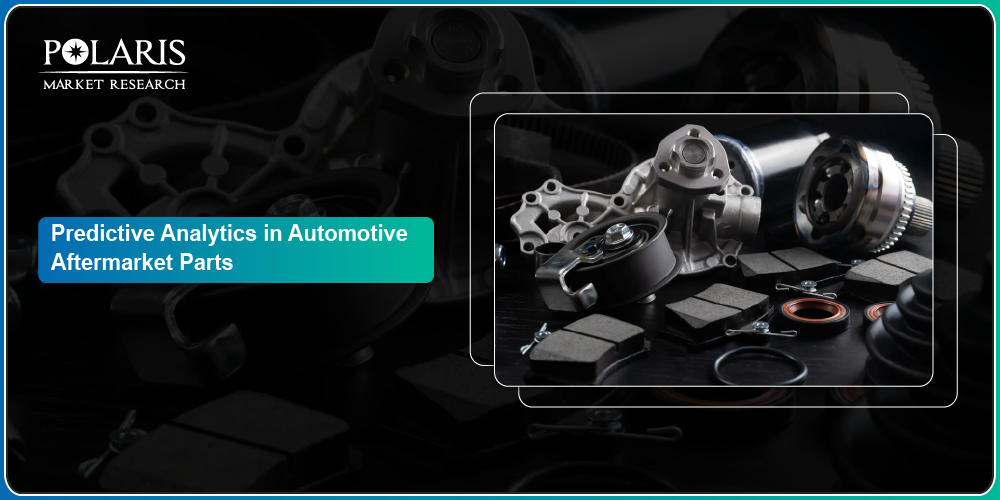
Excess inventory is becoming a costly problem for automotive parts manufacturers. According to Polaris Market Research, the global automotive aftermarket market was valued at USD 480.72 billion in 2025. It is projected to reach USD 676.78 billion by 2034. With the market growing, managing inventory is getting harder. Many companies still stock parts based on previous sales trends. In real life though, demand doesn’t always follow previous trends. EV adoption is changing replacement cycles. Product catalogs keep getting bigger. Customer preferences are changing faster than ever too.
Predictive analytics in the automotive aftermarket uses machine learning algorithms and historical sales data to forecast demand, optimize stock levels, and identify excess inventory before it builds up. This supports businesses make inventory decisions with greater confidence. Instead of reacting to issues later, teams can spot demand changes earlier. Better forecasting helps smoother operations, lower inventory costs, and stronger demand forecasting for automotive aftermarket parts across the supply chain.
What Is Predictive Analytics in the Automotive Aftermarket?
Predictive analytics automotive aftermarket supports businesses predict future demand. It uses data instead of assumptions. Companies analyze past sales and current market signals. This supports planners make better inventory decisions.
Several data sources support these forecasts. These include POS transactions and vehicle registration trends. Seasonal buying patterns are also important. Repair order histories add useful service data. Some systems also track economic indicators. Together, these inputs create a clearer demand picture.
Predictive models look to the future, whereas traditional planning is more reactive. Traditional methods tend to react when issues have happened. Predictive systems identify patterns much earlier. This allows businesses to act faster.
Many solutions in the AI in automotive aftermarket industry 2026 focus on forecasting accuracy. Simple machine learning models are often used. These include regression models and neural networks. The goal remains the same. Improve planning and support demand forecasting for automotive aftermarket parts.
How It Differs from Traditional Inventory Management
Traditional methods depend heavily on past records. Predictive systems use live and historical data. This difference can affect the outcome of inventory planning.
| Factors | Traditional Approach | Predictive Approach |
| Data Source | Historical sales data | Multiple connected data sources |
| Lead Time | Reactive planning | Early demand signals |
| Accuracy | Lower forecasting accuracy | Higher forecasting accuracy |
| Waste Risk | Higher excess inventory risk | Lower inventory risk |
| Cost Impact | Increased carrying costs | Better inventory efficiency |
Many companies use automotive parts inventory optimization software to improve planning. These systems support faster decisions. They also contribute to real time inventory visibility for automotive manufacturers. Better visibility often leads to better inventory control.
The Inventory Waste Problem in Aftermarket Parts Manufacturing
Inventory waste remains a daily challenge for many aftermarket manufacturers. Parts often stay in storage longer than expected. Some products move slowly. Others may not move at all. As inventory sits longer, storage costs increase. Working capital also remains locked in unsold stock.
The situation becomes more complex as SKU counts grow. Today's aftermarket serves vehicles from many model years. A single warehouse may support vehicles that are more than 15 years apart. Each vehicle requires different replacement parts. Keeping the right balance is not easy.
Demand can also change without much warning. Winter tires may sell faster during colder months. Coolant products can see higher demand during extreme temperatures. These patterns are not always consistent from year to year.
Vehicle transitions add another layer of pressure. Demand for some older parts starts to slow. Newer vehicle models create demand for different components. This makes inventory planning harder than before.
Many businesses use inventory management for automotive parts manufacturers to gain better control over stock levels. Better planning also supports SKU rationalization in aftermarket parts, helping companies reduce unnecessary inventory and free up warehouse space.
How EV Adoption Is Reshaping Parts Demand Patterns
The shift toward electric vehicles is changing parts demand across the aftermarket. Some familiar replacement parts are no longer needed as often. Oil filters, spark plugs, and exhaust components are common examples.
At the same time, new categories are gaining attention. Battery-related components require greater support. Thermal management systems are becoming more important. Demand for ADAS sensors is also increasing.
These changes create challenges for planners. Past sales data does not always reflect future demand. What sold well before may not perform the same way today. That makes forecasting more difficult.
Companies focused on aftermarket parts supply chain optimization are looking for better ways to track these shifts. Many are also adopting ERP predictive analytics integration for auto parts to improve planning decisions. Better visibility helps businesses respond to changing vehicle technologies and market demand.
5 Ways Predictive Analytics Reduces Inventory Waste for Manufacturers
1. Demand Forecasting at the SKU Level
Not every part sells the same way. Some products leave the warehouse quickly. Others remain on shelves for much longer. This makes planning difficult when thousands of SKUs must be managed.
Predictive models study sales history, POS transactions, vehicle registrations, and weather data. They look at each SKU separately rather than creating one general forecast. This improves demand forecasting for automotive aftermarket parts and helps planners understand what products will likely be needed.
With better forecasts, companies can avoid ordering too much inventory. They can also reduce the chances of running out of fast-moving parts. The result is a better balance between supply and demand.
2. Seasonal and Cyclical Demand Modeling
Demand changes throughout the year. Some products sell more during winter. Others see stronger demand during warmer months. These shifts can make inventory planning challenging.
Predictive models learn from several years of sales data. They identify recurring patterns and seasonal cycles. This helps businesses prepare before demand changes occur.
For example, colder regions may see higher demand for batteries, tires, and brake components during winter. These patterns are not always visible in simple spreadsheets. Data-driven forecasting provides a clearer picture of what may happen next.
3. SKU Rationalization and Slow-Mover Detection
Almost every warehouse has products that rarely move. These items take up space and increase storage costs. Over time, some become difficult to sell.
Predictive systems help businesses spot these products earlier. This supports SKU rationalization in aftermarket parts and helps prevent inventory from becoming dead stock.
Once slow-moving products are identified, companies have several options. They can reduce future orders, run promotions, bundle products, or move inventory to another location. Many businesses also use ABC-XYZ classification alongside forecasting tools to better understand inventory performance.
4. Supplier Lead Time Optimization
Inventory problems are not always caused by demand. Supplier delays can create challenges as well. When delivery times become unpredictable, businesses often carry extra stock as a safety measure.
Predictive tools examine supplier performance together with demand patterns. This creates a more realistic inventory plan.
Businesses focused on inventory management for automotive parts manufacturers can reduce unnecessary safety stock while maintaining availability. Many also use ERP predictive analytics integration for auto parts to connect forecasting with purchasing activities. This helps teams make decisions with better information.
5. Real-Time Inventory Visibility Across Distribution Networks
Many manufacturers operate through multiple warehouses and distribution centers. One location may have excess inventory while another struggles with shortages.
Predictive systems make these gaps easier to identify. Teams can shift stock between locations before service levels are affected.
Companies working on aftermarket parts supply chain optimization use these insights to place inventory where it is most likely to be needed. Many platforms also support real-time inventory visibility for automotive manufacturers through cloud-based dashboards. This gives operations teams a better view of inventory across the network and helps reduce unnecessary stock accumulation.
Technology Stack — What Tools Are Manufacturers Using?
Manufacturers use different tools for inventory planning. Some companies add forecasting functions to their ERP systems. Others prefer separate demand planning platforms. Supply chain analytics tools are also widely used.
These systems pull information from different sources. ERP platforms, WMS software, telematics data, and OEM service bulletins are common examples. Better data connections usually lead to better planning.
Many businesses use automotive parts inventory optimization software to improve inventory control. Some also adopt ERP predictive analytics integration for auto parts to connect forecasting with purchasing and inventory processes.
Technology is also becoming easier to access. Tools that were once used mainly by large companies are now available to many mid-sized manufacturers through cloud platforms.
| Factors | On-Premise Deployment | Cloud-Based Deployment |
| Setup Time | Longer | Faster |
| Upfront Cost | Higher | Lower |
| Scalability | Limited | Easier |
| Maintenance | Internal team | Provider managed |
| Updates | Manual | Automatic |
| Accessibility | Local access | Remote access |
Implementation Roadmap for Aftermarket Manufacturers
Many manufacturers do not start with a large rollout. Most begin with a smaller project and expand over time.
Phase 1 — Data Readiness Audit
The first step is reviewing existing data. ERP records, inventory information, and POS data should be checked carefully. Missing data and duplicate records can create forecasting issues later. Clean data helps produce better results.
Phase 2 — Pilot on a High-Volume SKU Cluster
A pilot project helps reduce risk. Many companies start with their top-selling products. A common choice is the top 20% of SKUs by revenue. This makes it easier to compare forecasts with actual demand and measure accuracy.
Phase 3 — Scale and Integrate
After a successful pilot, the system can be expanded to more products. Forecasting can then be connected with purchasing and inventory processes. This helps teams make decisions faster and improves coordination across departments.
FAQ — Predictive Analytics for Automotive Aftermarket Parts
Q1. What data is needed to implement predictive analytics in automotive aftermarket inventory?
Historical sales data is the foundation. Most businesses use two to three years of records. Other inputs include vehicle registration data, POS transactions, supplier lead times, and seasonal demand patterns. Detailed SKU and location data generally improve forecast accuracy.
Q2. How much inventory waste can predictive analytics realistically reduce?
Industry benchmarks suggest excess inventory can be reduced by 20% to 35%. Some manufacturers also report working capital improvements of 15% to 25% after implementation. Results vary depending on data quality, forecasting maturity, and inventory complexity.
Q3. Is predictive analytics only viable for large manufacturers?
No. Cloud-based forecasting platforms have reduced adoption costs. Mid-sized manufacturers with established ERP systems can implement predictive capabilities without building their own machine learning infrastructure. This makes deployment more practical for a wider range of businesses.
Q4. How does EV adoption affect predictive analytics models for aftermarket parts?
Forecasting models must adapt to changing demand patterns. Demand for combustion-related parts may decline, while EV-specific components may grow. Vehicle population data helps forecasting systems reflect these shifts more accurately.
Q5. What is the difference between predictive analytics and predictive maintenance in this context?
Predictive maintenance vs predictive analytics supply chain solutions focus on different goals. Predictive maintenance helps prevent equipment failures. Predictive analytics helps forecast future inventory demand, including what parts may be needed, where, and when.
Conclusion
Excess inventory remains a costly challenge for automotive parts manufacturers. As product portfolios expand and demand patterns shift, relying on traditional forecasting becomes increasingly risky. Manufacturers that delay adoption are not only losing margin through excess stock and write offs. They are also losing competitive ground as faster moving competitors improve supply chain agility and inventory performance. Predictive analytics provides a more informed approach to planning. Explore Polaris Market Research reports on the Automotive Aftermarket for in depth data, industry trends, and future forecasts.