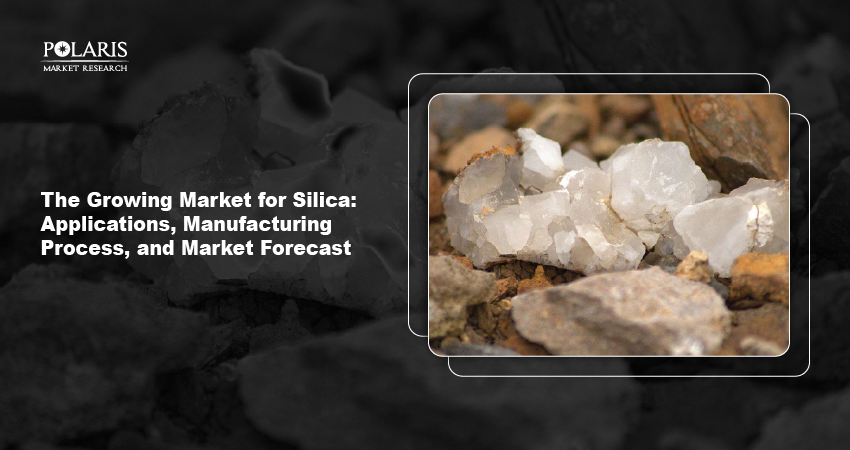
Silica is a naturally occurring, widely used compound made up of oxygen and silicon. Found in almost everything ranging from glass to concrete, it also naturally occurs in many foods such as fruits, vegetables, cereals, and even mineral water. For industrial use, it is used in construction, glassmaking, and manufacturing to provide strength and durability. Silica also acts as a semiconductor and has wide applications in the electronic industry, and its chemical properties make it ideal for use in filtration systems and pharmaceuticals. Another application of silica (in gel form) is moisture control and preservation in packaging, which ensures the product stays fresh longer.
The increasing demand for silica across sectors has boosted the global demand. Polaris Market Research states that the silica market has experienced a growth of $45.66 billion in 2025, and is expected to expand with a CAGR of 7.90% by 2034. This increase is an indication of the ever-increasing significance of silica application in the old and the new industries.
Understanding Silica (Silicon Dioxide)
Silica or silicon dioxide is a natural mineral that is present in sand, quartz, and rocks. It is available in crystalline and amorphous forms, applicable to various industrial applications.
Its most important properties are:
- High thermal stability
- Strong chemical resistance
- Hardness and durability
- Electrical insulation capabilities
These properties render industrial silica crucial in industries that need strength, heat resistance, and durability. The fact that silica is versatile means that it can be used as a performance enhancer and as a raw material.
Key Applications of Silica
Silica has a wide range of applications in various industries. Its versatility and affordability make it a better material for mass production and specialized applications.
Construction Industry Applications
Silica finds extensive application in cement, concrete, and mortar. It enhances strength, decreases permeability, and increases durability. Fine silica particles are also useful in high-performance concrete that is used in bridges and commercial buildings.
Glass Manufacturing
One of the most important uses of silicon dioxide is in glass production. Silica is the key ingredient of flat glass, container glass, and specialty glass. Transparency and strength are determined by its purity.
Foundry Applications
Silica sand is used as a mold in metal casting because it is highly stable with a high melting point. It guarantees accuracy in casting operations and helps guarantee uniform quality in production.
Chemical Industry Uses
Silica is applicable in the manufacture of silicones, adhesives, sealants, and coatings. It is also used in catalysts and filtration systems. These silica applications are used in the manufacture of industrial and consumer products.
Silica Manufacturing Process
The silica manufacturing process goes through various steps that convert raw materials into a form of industrial products. Every phase guarantees cleanliness, reliability, and performance.
Extraction and Mining
The source of silica is mainly the quartz sand and sandstone formations. The mining is geared towards high-purity reserves to satisfy industrial specifications.
Washing and Purification
Washing of silica raw material is done to eliminate impurities like clay, silt, and organic material. This is done to enhance quality and meet the industrial specifications.
Crushing and Grading
The material is smashed and separated into various particle sizes. This grading process enables the manufacturers to customize silica to meet certain uses, such as glassmaking or construction.
Sintering and Processing
In advanced applications, the silica can be subjected to thermal or chemical treatment. These processes produce high-purity or engineered products, such as specialty silica, which have high-performance industry applications.
Industrial Silica Demand Drivers
The growing demand for industrial silica in the world markets is motivated by several factors:
- Layers of construction: Cement and concrete are in demand as a result of the high rate of urbanization.
- Electronics growth: Silica helps in the production of semiconductors and glasses.
- Automotive manufacturing: Applied to paint coatings, tires, and glass.
- Demand in the energy sector: Solar panels are based on high-purity silica.
These tendencies emphasize the fact that the applications and use of silicon dioxide are not limited to the conventional industries, but new ones are also emerging.
Specialty Silica Market Trends ($8.2B in 2026)
The increase in specialty silica is an indication of the transition to high-performance materials. It is estimated that the specialty silica market would have attained $8.2 billion by 2026 due to innovation and enhanced usage.
Specialty silica includes:
- Precipitated silica
- Fumed silica
- Silica gel
These materials have superior characteristics like better reinforcement, absorption, and surface modification. These engineered products are becoming more and more important in industries like personal care, food processing, and advanced coatings.
Regional Market Analysis
Asia-Pacific Growth Dynamics
Asia-Pacific continues to be the fastest-growing region in the silica market. The demand is driven by countries like China and India due to infrastructure development and expansion in manufacturing.
Factors responsible for growth are:
- Large-scale construction projects
- Expanding automotive production
- Increasing electronics manufacturing
This growth of the region contributes to the growth of silica usage around the world, particularly in the high-volume industries.
Market Forecast ($45.66B in 2025, 7.90% CAGR through 2034)
According to the estimates given by Polaris Market Research, the silica market has reached $45.66 billion in 2025, with the market projected to grow steadily to 2034 at a CAGR of 7.90%.
This silica market prediction represents:
- Increasing needs in high-performance materials.
- Expansion of renewable energy.
- More advanced technology in manufacturing.
Future Outlook and Opportunities
Innovation, sustainability, and high material science are the future of the silica industry. Emerging trends include:
- Creation of ultra-high-purity silica in electronics.
- Increase in green construction materials.
- Growth of specialty silica in personal care and health care.
- More use of energy storage and solar technologies.
With the development of industries, industrial silica is going to remain a backbone in supporting contemporary manufacturing and infrastructure.
Frequently Asked Questions
1. What is silica, and what is it made of?
Silica is a naturally occurring compound made of silicon and oxygen, commonly found as silicon dioxide (SiO?). It exists in forms such as quartz, sand, and minerals, and serves as a key raw material in many industries.
2. What are the main uses of silicon dioxide in industry?
Silicon dioxide is widely used in glass manufacturing, construction materials, electronics, paints, and coatings. It also plays a role in filtration, rubber production, and as a key input in semiconductors.
3. How is industrial silica manufactured?
Industrial silica is produced through mining and processing natural quartz deposits or by chemical synthesis. The process includes crushing, washing, purification, and sometimes thermal or chemical treatment to achieve the desired purity and properties.
4. What is the current silica market size and forecast?
According to Polaris Market Research, the silica market is experiencing steady growth driven by rising demand in the construction, electronics, and automotive sectors, with strong expansion expected over the next decade.
5. What is specialty silica, and what are its applications?
Specialty silica refers to engineered forms like precipitated or fumed silica. It is used in rubber reinforcement, personal care products, food processing, and high-performance coatings due to its unique physical and chemical properties.
6. Which regions have the highest demand for silica products?
Asia-Pacific leads global demand for silica products due to strong industrial growth, followed by North America and Europe. These regions benefit from construction activity, automotive production, and the expansion of the electronics manufacturing sector.


.webp)