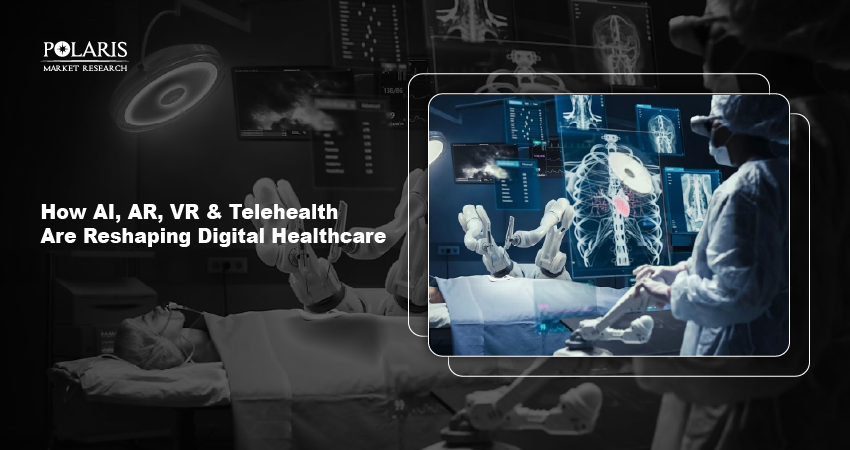
Many surgeons already use high-resolution microscopes and cameras for performing surgeries precisely, but there is always a need for better visual information apart from all the sophisticated equipment. This gap can be bridged by using AI in healthcare, machine learning, augmented reality, virtual reality, and spatial computing. Telemedicine is revolutionizing healthcare by enabling remote diagnosis, monitoring, and personalized treatment plans. These innovations help healthcare providers to provide faster diagnosis, improve treatment accuracy, and expand access to care. As many people worldwide are opting for online healthcare options, the digital health market is poised for continued growth.
This growth in adoption for healthcare AI applications, advanced visualisation tools, and remote healthcare platforms shows how technology is reshaping medical care delivery. In this blog, we will discuss AI in healthcare, why patients are more inclined towards digital healthcare solutions, challenges, and the future outlook of digital healthcare.
Understanding Healthcare Digital Transformation
Digital transformation in healthcare refers to the shift from traditional medical systems to technology-enabled care models that are curated for every individual to treat the accurate cause. Hospitals are increasingly relying on digital platforms, cloud systems, artificial intelligence, and connected devices to improve healthcare services for all.
Many technologies work together to enable this transformation:
- AI in healthcare for diagnostics and predictive analytics
- Telehealth technology for remote consultations and monitoring
- Augmented reality in healthcare for surgical visualization
- Virtual reality in medical training for clinical education
- Cloud-based electronic health records (EHR)
Pandemic-Driven Acceleration of Telemedicine Adoption
COVID-19 forced healthcare professionals and patients to adopt telemedicine worldwide. Healthcare providers needed new ways to deliver care while limiting physical contact between patients and medical staff. As a result, hospitals and clinics quickly expanded their use of telehealth technology. Several changes took place during this period, such as:
- Remote consultations became common for non-emergency care
- Digital monitoring tools helped track chronic diseases
- AI-based tools supported faster diagnosis and triage
These changes helped strengthen the digital healthcare trend as both patients and medical professionals recognised the convenience and efficiency of remote healthcare services.
Telehealth Technology & Remote Patient Monitoring Systems
Most people confuse telehealth with telemedicine and use them interchangeably, but they have a slight difference. Telemedicine refers to remote clinical services such as virtual doctor consultations, whereas telehealth technology is an umbrella that covers digital communication, remote monitoring, health apps,s and electronic medical records.
Remote patient monitoring is helping doctors monitor their patients remotely with the use of wearable devices and connected sensors that can collect their health data and send it directly to the medical professionals. Some of the examples of remote patient monitoring devices include:
- Smart heart rate monitors
- Blood glucose monitoring systems
- Connected blood pressure devices
- Fitness and activity trackers
Why Patients Prefer Digital Healthcare Solutions
Patients nowadays are more inclined towards digital healthcare services as they offer convenience, easy accessibility, and faster medical support. Many factors contribute to the rise of digital healthcare solutions and the growth of digital healthcare trends, including:
- Convenience: Patients find it easier to schedule virtual consultations through mobile devices without having to take efforts to drive to the center.
- Faster Diagnosis: Advanced AI applications in healthcare help doctors to review medical images and identify potential health issues quickly.
- Cost-Effective: Digital consultations often reduce travel expenses and waiting times.
- Improved Access: Remote or rural areas can benefit significantly from telehealth technology, as it can connect them with specialists located far away.
Global Trends in Digital Health Adoption
Digital health technologies have been introduced regionally depending on healthcare policies, infrastructure, and the level of investments.
United States
The United States is a trendsetter in the sphere of digital-health due to a high level of investment in healthcare technology. Analogies of AI are used in hospitals to provide care to patients, record digital data, and monitor patients remotely. Telehealth services have experienced a tremendous increase in both the public and private healthcare systems.
Europe
The European nations focus on the safety of data and rules. Medical care practitioners combine telehealth technology and AI applications without compromising patient-data protection integrity.
Asia?Pacific
The markets in Asia-Pacific are undergoing a high rate of digital health transformation. The governments of such countries as Japan, South Korea, and India are the active promoters of telemedicine systems, artificial intelligence-based diagnostics, and online hospital infrastructure.
AI in Healthcare: Transforming Diagnostics & Predictive Care
Artificial intelligence enhances the accuracy of diagnosis and treatment plans. AI systems process massive amounts of medical data and identify patterns, which can be used by clinicians. Several major uses of AI are already deployed in hospitals and research laboratories, such as:
- Medical Imaging Analysis: AI algorithms look at X-rays, CT scans, and MRI images and identify abnormalities more quickly than conventional methods.
- Predictive Analytics: Machine-learning models evaluate patient data to guess risks of an illness to assist in prevention care plans.
- Clinical Decision Support: Artificial intelligence-based systems assist physicians with the task of selecting treatment options, relying on patient history and research outcomes.
- Optimization of Hospital Operations: The use of AI systems addresses workflow, patient scheduling, and resource allocation to ensure that the providers can provide the correct diagnosis and care plans.
Augmented Reality in Healthcare: Surgical Precision & Patient Education
Augmented reality in healthcare provides doctors with digital overlays that enhance their view of a patient’s anatomy during procedures. This technology improves surgical accuracy and supports better clinical outcomes. Key applications include:
- AR -Assisted Surgeries: Surgeons can see inside the body in real-time and follow complicated surgery.
- Vein Detection Tools AR: Allows nurses to find veins when they are performing injections or blood draws.
- Surgical Planning: Physicians apply AR models to see organs before surgery.
- Patient Education: Professionals present the patients with interactive 3D models in order to explain conditions and treatments, which enhance communication and accuracy.
Virtual Reality in Medical Training, Rehabilitation & Therapy
Virtual reality in medical training has become a valuable tool for medical education. VR simulations allow medical students and surgeons to practice procedures in realistic environments without risk to patients. Key applications include:
- Surgical Simulations: Train to practice complicated surgery using VR.
- Medical Education: Interactive training, which enhances clinical competence and retention.
- Rehabilitation Therapy: VR exercises are used to assist stroke or injured patients in walking again.
- Mental Health Treatment: VR programs cure anxiety, PTSD, and chronic pain. VR training improves the effectiveness of learning and reduces the cost of conventional training.
Challenges & Future Outlook of Digital Healthcare
Despite strong progress in healthcare digital transformation, several challenges remain.
- Integration Costs: Hospitals must invest heavily in digital infrastructure, software systems, and training programs.
- Cybersecurity Risks: Digital healthcare platforms must protect sensitive patient information from cyber threats.
- Regulatory Compliance: Healthcare organizations must comply with privacy regulations such as HIPAA and GDPR.
- Workforce Training: Medical professionals require training to use advanced technologies effectively.
Despite these challenges, the future of digital healthcare remains promising. Several emerging innovations continue to shape the industry:
- AI-powered hospitals with advanced healthcare AI applications
- AR-assisted surgical procedures using augmented reality in healthcare
- Advanced simulation labs powered by virtual reality in medical training
- Expanding global telemedicine adoption supported by advanced telehealth technology
FAQs
What is AI in healthcare, and how does it work?
AI in healthcare uses machine learning and data analysis to process medical records, images, and clinical data. It helps doctors diagnose diseases, predict outcomes, and improve treatment planning.
How is virtual reality in medical training used today?
Virtual reality in medical training allows students and surgeons to practice procedures in simulated environments. It improves surgical skills, reduces training risks, and enhances clinical learning without direct patient involvement.
What is augmented reality in healthcare?
Augmented reality in healthcare overlays digital information onto real-world environments. Surgeons use AR tools to visualize anatomy during procedures, improving accuracy, guidance, and real-time decision-making.
What is telehealth technology, and how does it support telemedicine adoption?
Telehealth technology enables remote consultations through video calls, digital platforms, and mobile applications. It supports telemedicine adoption by improving access to healthcare, reducing travel time, and expanding patient monitoring capabilities.
What are the top digital healthcare trends in 2025?
Key digital healthcare trends in 2025 include artificial intelligence diagnostics, telehealth expansion, wearable health devices, personalized medicine, and digital health records integration to improve patient care and operational efficiency.
How are healthcare AI applications improving hospitals?
Healthcare AI applications help hospitals analyze medical data, detect diseases early, optimize workflows, and support clinical decision-making. These tools improve patient outcomes, reduce diagnostic errors, and increase operational efficiency.