Lifestyles of individuals across the globe have changed. There has also been a rise in the number of older adults worldwide. As such, more individuals are experiencing conditions such as stroke affecting the blood vessels in the brain. These issues require prompt attention and treatment, as even small delays can permanently affect a person’s life. And that’s where neurovascular devices help.
But what are neurovascular devices actually used for? And how do they support early diagnosis? We’ve created a detailed blog on the neurovascular devices market to answer all these questions. Let’s start!
Neurovascular Devices: Overview
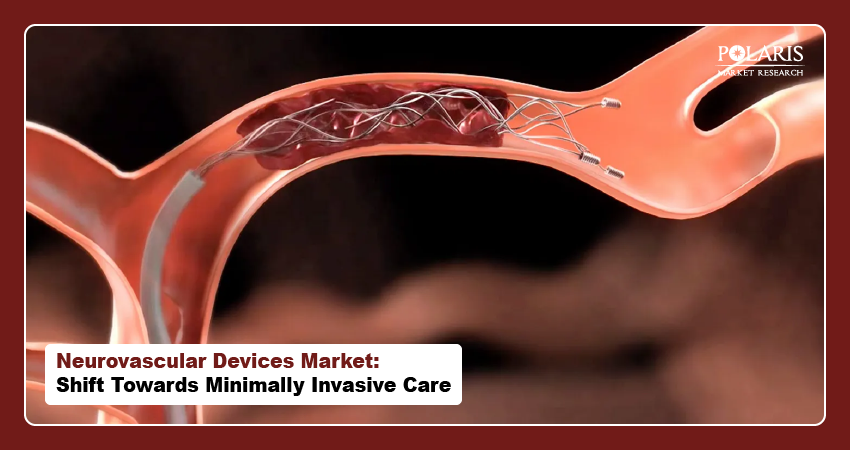
Neurovascular devices are medical devices used to treat conditions affecting the blood vessels of the brain and spinal cord. These problems take the form of stroke, aneurysms, AVMs, and blocked vessels. Neurovascular devices usually don’t necessitate large cuts that need open surgery. Instead, doctors use them with minimally invasive methods. A tiny opening is made in the leg or the wrist to insert the devices and guide them through the blocked vessels to the brain.
Brain vessels are delicate. As such, neurovascular devices are made to be precise and flexible. They are mainly used for restoring normal blood flow and stopping bleeding. These devices also protect the brain from further damage. Neurovascular devices are now an essential part of modern neurology and neurosurgery.
Importance of Neurovascular Devices
Brain-related vascular problems are on the rise around the world. This has resulted in neurovascular devices becoming highly important. Conditions like stroke affect millions of people every year. These issues are also a major cause of disability. As many of these issues happen suddenly, getting the right treatment quickly is needed. Neurovascular devices help doctors with fast and safe treatment of these emergencies.
Here's why the use of these devices is on the rise:
- Individuals are recognizing stroke symptoms earlier, meaning patients reach hospitals sooner.
- Use of treatment options from the minimally invasive surgery market has increased.
- Healthcare facilities have improved imaging tools, allowing better visualization of blood vessels.
- There is more investment in research focused on brain health.
- Advanced training in endovascular procedures is being given to doctors.
Market Metrics
Our assessment of the neurovascular devices market reveals the market to witness sustained growth during the projection period, 2025 to 2034. The market for these devices stood at USD 7.28 billion in 2024. It is expected to account for a CAGR of 5.9% over the forecast period.
Types of Nuerovascular Devices
Aneurysm Coils
Aneurysm coils are flexible metal spirals used in the treatment of an aneurysm. As a refresher, an aneurysm is a balloon-like bulge in a brain blood vessel. Doctors insert a thin tube into the bloodstream to place the coils inside the aneurysm. Once inside, the coil helps the blood clot and seal the aneurysm from the inside. This method avoids open brain surgery and reduces complications.
Stents and Flow Diverters
Stents and flow diverters are small mesh tubes. Stents support weak or narrowed blood vessels and help maintain normal blood flow. They are usually used with coils for strengthening the vessel around an aneurysm. Flow diverters redirect blood away from the aneurysm instead of filling it with coils. Reduced pressure on the bulge shrinks and heals the aneurysm.
Thrombectomy Devices
Thrombectomy devices are used in the treatment of ischemic strokes, which occur when an artery in the brain is blocked. A catheter is used for guiding these devices to the blockage. After this, the clot is either grabbed or trapped in a small mesh. This allows doctors to pull it out. Thrombectomy devices help restore blood flow at a quick pace.
Embolic Protection Devices
Small pieces of plaque may break free during brain procedures. This may lead to new blockages. Embolic protection devices from the neurovascular devices market prevent this by functioning as small filters placed inside the blood vessel while the doctor operates. That way, any loose particles can be caught and removed at the end of the procedure. This helps reduce the risk of stroke during treatment.
Uses of Neurovascular Devices
Stroke Treatment
Stroke is a common condition where neurovascular devices are used. If a blood clot blocks an artery, doctors make use of thrombectomy devices to remove it and restore blood flow. If the cause of the stroke is bleeding, coils or stents are used to seal the bleeding area. These tools allow faster treatment and greatly improve recovery.
Treating Arteriovenous Malformations (AVMs)
AVMs are tangled and abnormal blood vessels in the brain. They can lead to headaches or seizures. Neurovascular devices help block or reduce abnormal blood flow. That way, they reduce the risk of complications and make treatments safer.
Improving Diagnosis with Imaging Support
Imaging systems, such as those from the magnetic resonance imaging market, and neurovascular tools work closely together. Microcatheters and guidewires move through tiny brain vessels while doctors watch their progress on the screen. This helps them find the exact problem and treat it with high accuracy.
What’s New in Neurovascular Devices Market?
September 2025: Siemens Healthineers announced a strategic partnership with Stryker. According to Siemens Healthineers, the partnership will focus on the development of a robotic system for neurovascular interventions.
February 2025: Stryker revealed the acquisition of Inari Medical. With the strategic move, Stryker aims to expand its interventional endovascular portfolio and improve its peripheral vascular capabilities.
Conclusion
Neurovascular treatment has evolved immensely in recent years. The introduction of improved materials, along with new high-tech devices, has enhanced neurosurgery in terms of greater safety and accuracy. Collaboration among hospitals, companies that make medical devices, and research organisations has led to a greater speed at which new products are introduced into clinical practice. An increased understanding of the significance of brain health and the timely administration of treatment will result in increased demand for the use of neurovascular devices in the future.