Arrhythmias (irregular beats) and bradycardia (dangerously slow heartbeats) are heart rhythm disorders. Today, these disorders are affecting millions worldwide. These conditions can cause dizziness, fatigue, or even sometimes lead to sudden cardiac arrest. Tiny and life-saving devices called cardiac pacemakers come to the rescue in this situation. They are implanted under the skin. These pacemakers act like an internal metronome and regulate the heart's rhythm. They keep the heart in a steady and strong condition.
Now the pacemaker market is going through rapid technological advances. Leadless pacemakers, wireless charging, and AI driven monitoring are some of the technological advancements observed by pacemaker market. These devices are smaller, smarter, and longer lasting than ever. The cardiac pacemaker market is booming with rapid innovations.
What Is A Cardiac Pacemaker?
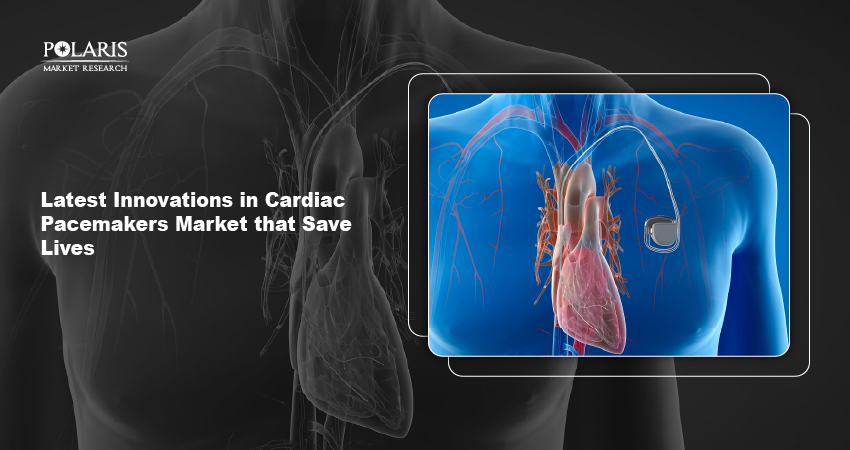
A small and implantable device which keeps the heart beating at a healthy rhythm is referred to as a cardiac pacemaker. It can be described as a smartphone smaller than a credit card. The cardiac pacemaker is surgically placed under the skin. It is located near the collarbone. The device monitors and fixes irregular heartbeats. A cardiac pacemaker is a backup coach, which keeps the heart's rhythm steady and strong.
How Does a Pacemaker Work?
The cardiac pacemaker has three main parts.
- Pulse generator: This part is considered as the brain of the pacemaker. It is a tiny computer that decides when to act.
- Battery: The battery lasts for 5–15 years. Innovations have added age to the battery for more than 20 years with innovations like wireless recharging.
- Leads: These are thin and insulated wires. They carry signals to the heart. Technological advancements have introduced leadless designs. They are fully wireless and implanted directly into the heart via a catheter.
Working of Pacemaker in Simple Terms
- Sensing: The pacemaker tracks user’s heart's beats. The beats are observed via tiny sensors. The device helps when it senses a pause or slow rhythm.
- Pacing: It sends a safe and tiny electric nudge to the heart muscle. The pacemaker makes it beat normally. These pulses are safe and painless. They mimic your heart's natural signals.
Why Pacemakers Are Needed?
Pacemakers treat specific rhythm issues.
- Bradycardia: When the heart beats too slowly, under 60 times per minute, the condition is referred to as bradycardia. This condition causes tiredness, dizziness, or even sometimes fainting. A pacemaker is essential to speed the heartbeat. It keeps humans energized and safe.
- Heart Block: Heart block is a condition that occurs when electrical signals get stuck traveling from the upper to the lower heart chambers. The condition slows or stops beats. For a steady rhythm, a pacemaker fixes the path.
- Atrial Fibrillation: The upper heart quivers speedily while the lower chambers beat too slowly in this condition. A pacemaker gives the bottom a boost. This boost is required to stop tiredness, dizziness, fainting, or heart risks.
Types of Pacemaker
Based on type, the cardiac pacemaker market is segmented into single-chamber pacemakers, dual-chamber pacemakers, biventricular pacemakers, and leadless pacemakers.
- Single-Chamber Pacemakers: Just one heart chamber gets signals via this type of pacemaker. Usually, it gives signals to the right ventricle (bottom right). Single-chamber pacemakers are ideal for simple slow heartbeats like bradycardia. It is suitable when only one spot needs help.
- Dual-Chamber Pacemakers: It works perfectly with two chambers. The chambers are the right atrium (top) and right ventricle (bottom). Dual-chamber pacemakers work in a team to copy heart's natural beat sequence. These chambers are ideal for complex issues and give smoother blood flow.
- Biventricular Pacemakers: It paces both bottom chambers at once. It is effective for heart failure patients. Biventricular pacemakers boost the pumping power of the heart. The pacemaker offers benefits such as swelling reduction, comfortable breathing, and it improves energy.
- Leadless Pacemakers: This device is tiny and in the shape of a capsule. Leadless pacemakers is inserted straight into the heart via a leg vein. This pacemaker has less infection risk, and it does not have visible scars. The battery in the pacemaker lasts for a long run.
Pacemaker Implantation Procedure
Before surgery for implanting a pacemaker, pre-tests are required. Tests like ECG are carried out and blood work is monitored. The cardiologist studies all medications and the history of the patient. Blood thinner medications are stopped before the surgery. 6–8 hours of fasting is mandatory before the surgery.
Doctors give local anesthesia to numb the collarbone area. The patient remains awake during surgery, but because of anesthesia, they do not feel any pain. During surgery, a small cut is made to insert leads through a vein into the heart. After this, the device is placed under the skin. The complete surgery takes 1–2 hours.
This implantation restores a steady heart rhythm. A pacemaker reduces symptoms like fatigue, fainting, or breathlessness. It helps patients live life actively. The surgery has rare risks such as 1–2% infection, lead displacement, or minor bleeding. Complications can be lowered with antibiotics, careful placement, and follow ups.
Latest Innovations in Cardiac Pacemaker Technology
The world's smallest pacemaker is Micra. It is a leadless gem. The pacemaker is implanted directly in the heart via a catheter. It has a super-low infection risk. Earlier pacemakers banned MRIs. Now, advanced pacemaker models let patients get these vital scans. This technological update has become a step to open the door for better diagnostics.
Now pacemakers can connect to apps via Bluetooth. It can be monitored wirelessly. Doctors can track data remotely. It helps to spot issues early. Rhythm problems can be predicted with AI-driven technologies. Healthcare market research shows a great boom, with technological advancements and leadless devices growing at almost 15% yearly.
Global Cardiac Pacemaker Market Overview
The cardiac pacemaker market is booming rapidly. The market growth is driven by surging aging populations, increasing prevalence of heart diseases, and rising incidence of congestive heart failure. Technological advancements are fueling the growth. Leadless devices are the gem in the cardiac pacemaker market. The market is growing 6–8% yearly as innovations save lives. Technological research fuels R&D investments. It teams up between MedTech and electronics firms. The advancement is accelerating the development of AI-enabled pacemakers and wireless monitors.
Challenges in Cardiac Pacemaker Industry
Pacemakers can be hard to access as they have high device costs and uneven insurance coverage. New releases can be slowed as strict FDA approvals and long clinical trials are needed for pacemakers. Battery replacement is required after 7–15 years. But the latest innovations like wireless charging aim to fix the battery replacement issue. Thus, high cost of pacemaker and stringent regulatory approval process hinder the cardiac pacemaker market expansion.
Future of Cardiac Pacemakers
Fully biological pacemakers can be influenced by gene therapy. The patient’s own cells help form biological pacemakers. Battery-free ones might harvest energy from heartbeats. For real time data, wearable and app based pacemakers can be useful. It will shift to preventive care that spots issues early. All these factors are expected to create lucrative opportunities for the cardiac pacemaker market in the coming years.
Frequently Asked Questions
-
How does a pacemaker work in simple terms?
A pacemaker is like a tiny coach for the heart. A cardiac pacemaker senses slow or skipped beats. This information sends painless electric nudges via wires. It makes the heart muscle contract and beat steadily.
-
What are the main types of pacemakers?
Single-chamber pacemaker, dual-chamber pacemaker, biventricular or CRT pacemaker, and leadless pacemakers are the main types of pacemakers. Each fits specific rhythm needs.
-
What are the early signs you need a pacemaker?
Frequent fatigue, dizziness, or fainting are the early signs that one may need a pacemaker. Shortness of breath, chest discomfort, heart palpitations, and confusion in elderly people are also signs of the need for a pacemaker.
-
Is pacemaker surgery risky?
Pacemaker surgery is generally safe and low-risk. The surgery is carried out under local anesthesia in 1–2 hours with a small incision. In 2–5% of cases, infection, bleeding, or lead shifts happen as common risks. Serious issues are rare.
-
Can I live a normal life with a pacemaker?
Yes, most people do! Patients can exercise, work, travel, and enjoy hobbies after healing. Strong magnets, contact sports, and heavy chest strain should be avoided. Regular checkups keep it running smoothly.
Final Thoughts
From simple fixes to smart innovations, cardiac pacemakers have evolved. They are smaller, safer, and smarter with AI and leadless designs. Pacemakers have the ability to restore energy when someone is suffering from cardiac rhythms or heart failure. The future of the cardiac pacemaker market looks steady and strong with innovations like biological pacemakers emerge.