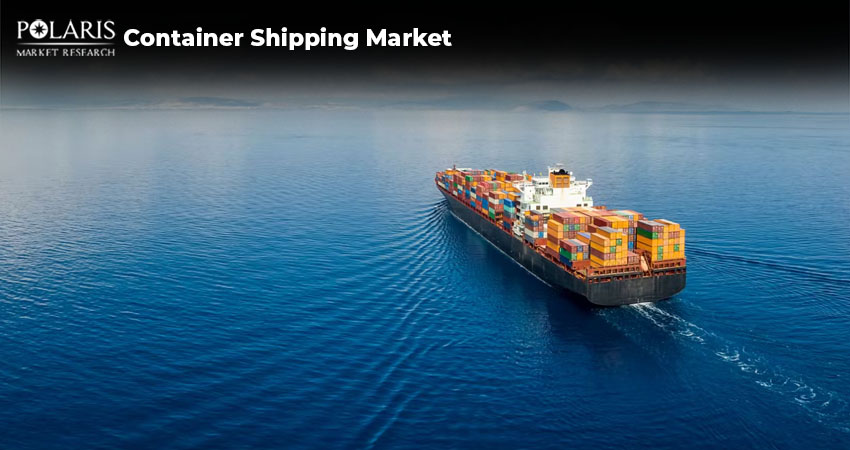
Container shipping is highly important in global trade systems. It allows for the movement of goods across continents in an efficient and cost-effective way. Over 90% of the transportation of trade goods happens via sea. There are massive vessels to carry standardized containers, ensuring scalability. With rising globalization and the expansion of e-commerce, the demand for containerized cargo transport is growing at a rapid pace.
Containerization has improved global logistics efficiency by enabling bulk transportation. In this blog, we will explore the essentials of container shipping and how it has evolved over the years. The key companies in the container shipping market and top trends shaping its development have also been covered.
What Exactly Is Container Shipping?
Container shipping refers to the method of transporting goods across oceans and land using standardized metal boxes called shipping containers. These containers protect the contents from damage while allowing for efficient handling and transfer between ships, trucks, and trains. It essentially forms the backbone of global trade by moving large volumes of goods across all continents with reliability and precision.
Why is Container Shipping Important?
Container shipping is a crucial business because it significantly reduces costs, improves efficiency, and enhances global trade by allowing for standardized, easily transferable cargo units. This ultimately facilitates faster and more reliable delivery of goods across the globe. Here are a few reasons why container shipping is important.
Cost Effectiveness: Standardization of container sizes lowers handling costs, enabling economies of scale and making shipping more affordable.
Efficiency: Containers can be quickly loaded and unloaded at ports, reducing turnaround times and improving overall logistics.
Intermodal Transport: Containers can be easily transferred between ships, trucks, and trains without needing to unpack cargo, streamlining the entire supply chain.
Security: Containers protect goods from damage and theft during transit due to their secure design.
Environmental Benefits: Modern container ships are designed to improve fuel efficiency and reduce carbon emissions.
How Has Container Shipping Evolved?
Before containerization, cargo was transported in break-bulk form, meaning each item had to be loaded and unloaded individually. This led to inefficiencies and high costs, with land shipping being one of the first methods used to transport goods. Land shipping was used to transport goods within a country or across borders.
The origins of containerization date back to the late 18th century in England, where coal was transported in wooden containers. The modern era of containerization began in the 1950s with Malcolm McLean. His innovation of using standardized containers revolutionized global trade by significantly reducing handling costs and shipping time.
How Are Technological Advancements Changing Container Shipping?
Over the decades, the industry has embraced digitalization, automation, and sustainability initiatives. Some of the key advancements are explained below.
Automated Container Terminals (ACTs): ACTs use computerized systems to manage the movement of containers in a port. ACTs aim to improve efficiency and productivity by reducing costs and time spent on manual handling.
Smart Containers: A smart container is a type of container that is equipped with solutions from the IoT technology market. This means it has sensors that collect real-time data about its location, cargo temperature, humidity, and other critical parameters throughout the supply chain by transmitting this information to a secure cloud-based platform.
Green Shipping: Green shipping refers to a set of practices and technologies used to minimize the environmental impact of transporting containers by sea.
Which Are the Leading Container Shipping Market Companies?
Mediterranean Shipping Company (MSC)
MSC was founded in 1970 in Naples, Italy. Their headquarters are based in Geneva, Switzerland. MSC overtook Maersk as the top container shipping company in 2022. The company offers end-to-end shipping solutions, including inland transportation and logistics services.
Maersk Line
Maersk Line is a Danish giant headquartered in Copenhagen, Denmark, that was founded in 1928. The company's operations expanded during World War I. The company is investing in green fuel technologies to achieve carbon neutrality by 2040.
China Ocean Shipping Company (COSCO)
COSCO Shipping Lines is based in Shanghai, China, and operates in hundreds of ports and countries worldwide. It was founded in 1961 and offers services such as freight forwarding, terminal services, and shipbuilding. It has several headquarters in cities like Sydney, Tokyo, Seoul, Singapore, and Beijing.
Evergreen Marine Corporation (EMC)
EMC was founded in 19668 and started as a second-hand general cargo ship. Nowadays, it is a major player in trans-Pacific routes. It is globally known for its green-colored vessels. Its headquarters are located in Taipei, Taiwan.The company is also operational in the container transshipment market.
Ocean Network Express (ONE)
ONE was founded in 2017 by the merger of Kawasaki Kisen Kaisha (“K” LINE), Mitsui O.S.K. Lines (MOL), and Nippon Yusen Kaisha (NYK). The company's global headquarters are in Singapore. ONE's services include transportation between Europe and North America, Africa and Asia, Asia and Latin America, and more.
Other major container shipping market companies are:
Hapag-Lloyd: Hapag-Lloyd is a German international container shipping and transportation company. It focuses on global container liner shipping and provides worldwide cargo transportation services.
Evergreen Marine: The company offers a vast network of marine transportation services globally. It is known for its large fleet and green-colored containers.
HMM: HMM offers a vast range of integrated logistics services. The company operates a worldwide network that connects logistics facilities and provides end-to-end service.
PIL: PIL uses standardized metal containers to transport various types of cargo on vessels and via inland transportation.
ZIM Integrated Shipping: The company operates a large fleet of container ships. It relies primarily on chartered vessels rather than owning them.
What Are Emerging Container Shipping Trends?
Digital Transformation: Blockchain and the implementation of IoT sensors enhance transparency in real-time cargo tracking and monitoring. Additionally, the utilization of solutions from the artificial intelligence (AI) and machine learning platforms market is being done for predictive analytics and better decision-making.
Green Shipping and Sustainability: The development of cleaner alternative fuel options such as biofuels, hydrogen, or ammonia-powered ships and technologies to minimize emissions, is gaining popularity. Furthermore, the utilization of renewable energy sources for powering ships is being studied, too.
Automation and AI Integration: Smart ports and AI-driven logistics are projected to enhance operational efficiency. Autonomous ships are being tested to reduce human errors and optimize fuel consumption.
Expansion of Trade Route: The Arctic route, which was opened due to melting ice, may reduce shipping time between Asia and Europe. Companies are exploring alternative routes to bypass congested ports and geopolitical risks.
What Are Challenges Faced by Market Participants?
Labor Shortages
With fewer workers, ships face delays at ports as containers cannot be efficiently loaded or unloaded, resulting in missed sailings and longer wait times. Moreover, aging workforces and port strikes threaten operational continuity.
Cybersecurity Vulnerabilities
With the ongoing digitization of the shipping industry, vulnerabilities in cybersecurity present an increasing risk. When shipping firms embrace advanced technologies to enhance operations, they become vulnerable to cyber-attacks that can interrupt communication, jeopardize confidential data, or even halt deliveries completely.
Conclusion
The container shipping market has more to it than just moving boxes. It’s the backbone of globalization, enabling the movement of goods from smartphones to soybeans to reach global markets across continents efficiently. As the industry evolves, digitalization, automation, and green shipping initiatives will play a crucial role in shaping its future. For businesses and consumers alike, understanding this sector’s dynamics is crucial in an era where trade winds never cease shifting.