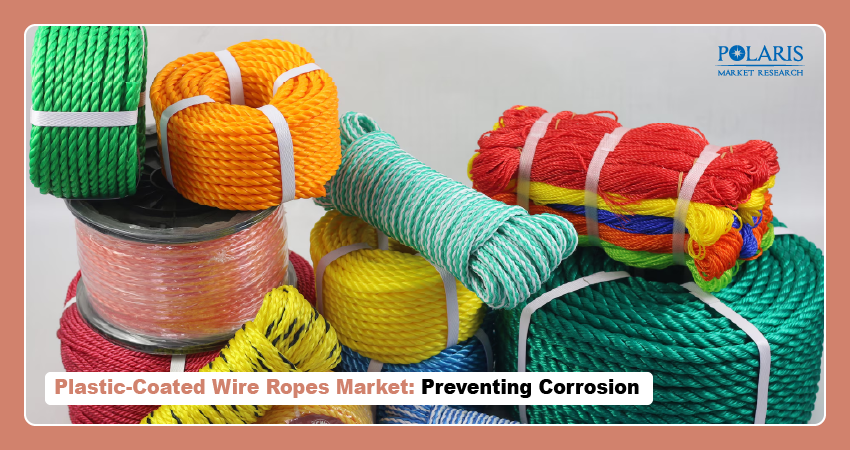
Wire ropes are essential components of various industries. They are used for both aesthetic and functional applications. Modern industries are demanding wire ropes that have improved performance and longevity. This has led to the introduction of plastic-coated wire ropes.
But what actually are plastic-coated wire ropes? And what’s led to their increased adoption? Keep reading as we cover all that you need to know about the rapidly evolving plastic-coated wire ropes market.
What Are Plastic-Coated Wire Ropes?
Plastic-coated wire ropes are steel wire ropes that have a protective outer layer of plastic. The outer layer can be made of nylon, polyurethane, or polyethylene. The center carries multiple strands of high-strength steel wires. These wires are twisted together to form a rope. The plastic layer serves as a protective jacket, strengthening the rope. It also reduces friction and protects the rope against corrosion.
The steel core in plastic-coated wire ropes offers the main pull strength. The plastic coating adds other benefits, such as resistance to weather and chemicals. Another notable thing about the plastic coating is that it reduces the risk of cuts or injuries by preventing direct contact with steel strands.
Where’s the Market Headed?
Our assessment of the plastic-coated wire ropes market reveals the market to witness sustained growth. The market for these wire ropes stood at USD 1.40 billion in 2024. It is expected to account for a CAGR of 6.5% between 2025 and 2034.
Urbanization is rising globally. This has created an increased demand for construction activities. Construction works such as cranes and bridges need strong plastic-coated wire ropes. The plastic-coated wire ropes market is also benefiting from the growing deployment of these ropes in the marine and offshore sectors.
What are Steps for Manufacturing Plastic-Coated Wire Ropes?
Wire Drawing: The manufacturing process begins with steel rods being drawn through a rolling die. The rolling die is shaped to yield smaller and smaller wire diameters. The wires will make up the construction of each strand of rope.
Stranding and Closing: The drawn wires are then twisted together into strands with either a metallic or fibre core, whereupon the strands are twisted around the core. The strength and flexibility of the rope are controlled by the number of strands, and strands per twists along the strand.
Cleaning and Pretreating: Prior to coating application, the wire rope is cleaned of dirt, grease, and other impurities in order to help with coating adhesion.
Plastic Coating Application: Once the wire rope has been cleaned, it is then run through an extrusion machine where it either has molten plastic added to the wire rope, or it is coated in such a way that no forces pull on the cable. Thicknesses will depend on the application.
Cooling and Finishing: Once bonding for the plastic coating has occurred, it continues through a cooling segment to solidify the coating, then is cut to the required length and specifications.
What Are Types of Plastic Coatings for Wire Ropes?
Polyvinyl Chloride
PVC grades from the polyvinyl chloride (PVC) market are widely used for coated wire ropes. PVC is general-purpose and cost-effective. It’s also available in various colors. So, it can be dyed to match primary colors like blue and red. PVC can also be used for specific color variants such as forest green and olive. The low-friction surface of PVC makes it resistant to abrasion. PVC can also resist damage from continuous exposure to UV light. Furthermore, the material can completely resist water.
Nylon
Nylon is another popular option for coated wire ropes. The ability to resist abrasion is higher for nylon than for PVC. Also, its high hardness allows it to resist impact. The strength of nylon makes it suitable for applications that have constant tension or friction. Furthermore, the flexible nature of nylon means it can cycle without tearing.
Black Finish
Black finish cables are made by applying a powder coating from the powder coatings market. The weather and damage resilience of powder coatings aren’t the same as those of plastic coatings. But they help in preserving the metal underneath. The matte finish of powder coatings makes them desirable for entertainment applications such as a concert stage or theatre.
Polypropylene
Plastic or polypropylene-impregnated cables have specialized coatings. They are particularly used for harsh environments where internal abrasion or condensation can’t be accepted. This coating type is used in heavy industries and marine environments.
What’s New in Plastic-Coated Wire Ropes Market?
WireCo’s Lazerlift: A New Standard for Hoist Ropes
WireCo introduced Lazerlift at Bauma Munich 2025. Lazerlift is a new kind of rope meant for heavy lifting. It is meant for large cranes used in construction and wind energy. It also finds applications in other demanding applications. The rope is built to last longer and can handle heavy loads in a safe way.
Lazerlift has been shown to remain strong under high pressure in both lab tests and real crane work. This is highly important for modern industrial applications. Today’s industries use taller, heavier structures that place greater stress on lifting equipment.
WireCo’s engineers say that Lazerlift makes operations reliable. It also reduces the time it takes for maintenance and allows cranes to work in an efficient manner. With the new rope, WireCo continues to strengthen its position in creating dependable hoist ropes and the plastic-coated wire ropes market.
To Sum It Up
Plastic-coated wire ropes enable several applications across industries. They combine the strength of steel with plastic’s protective qualities to provide a safe solution. With rising focus on sustainability and user safety, the plastic-coated wire ropes market demand is expected to rise in the years to come.