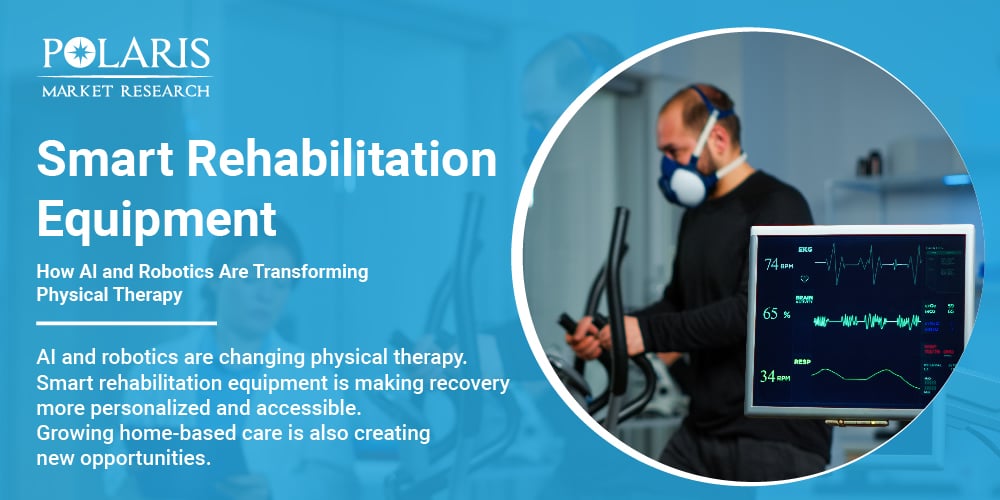
Physical therapy is moving beyond clinics. Patients can now use smart rehabilitation equipment at home. Robotic exoskeletons help support movement and mobility. AI-powered devices can guide exercises and track recovery. These technologies are making rehabilitation more personalized and connected. They also help therapists monitor patient progress. This shift from clinic-based care to home-based recovery is driving new opportunities in the rehabilitation equipment market. AI and robotics are becoming important tools in modern physical therapy.
What’s Changing in Rehabilitation Equipment?
Rehabilitation equipment is becoming smarter and more connected. During recovery robotic rehabilitation devices help patients perform controlled movements. Robotic exoskeletons can assist people to walk and enhance mobility.
Sensor-driven feedback systems track movement, balance, and exercise performance. They give therapists useful data about patient progress. AI physical therapy devices can also adjust exercises based on individual needs.
Another major shift is the growth of home rehab equipment. For therapy outside of clinics patients can use connected devices. These tools help in regular physical activity and remote monitoring. Rehabilitation is becoming more personalized, data-driven and accessible with advancement of technology.
Key Growth Drivers
The demand for smart rehabilitation equipment is growing. Several factors are supporting this growth. For advanced rehabilitation solutions an aging population, rising chronic conditions, and the shift toward home-based care are creating new demand.
Aging Population & Chronic Condition Prevalence
The global aging population is increasing the need for rehabilitation. For mobility problems, injuries and age-related conditions older adults may require treatment. Chronic diseases can also affect movement and physical function. During recovery robotic rehabilitation systems can support patients. These technologies are becoming useful in hospitals, rehabilitation centers and other care settings. They can help with better movement and controlled support during therapy.
Shift from Clinic-Based to Home-Use Devices
Rehabilitation is also moving into the home. Patients want flexible options that reduce frequent clinic visits. To continue exercises in a familiar setting home rehab equipment helps patients. Connected devices can also collect data and share progress with therapists. AI physical therapy devices can provide personalized exercise support and feedback. This makes home-based rehabilitation more convenient and supports continuous recovery.
Applications Across Care Settings
In different care settings smart rehabilitation equipment is used. Robotic rehabilitation devices help patients recovering from a stroke practice repetitive movements to improve their mobility. These devices can help with exercises involving the arms, legs and walking.
Smart devices for orthopedic rehabilitation are developed to help patients recover from injuries or surgeries. They help in controlled exercises and monitor movements during rehabilitation.
Neurological rehabilitation is concerned with disorders of the brain and nervous system. AI-enabled physical therapy devices track patient movements and provide feedback during exercises. These developments enable customized therapy in hospitals, rehabilitation centers, and home care settings.
Adoption Challenges
Smart rehabilitation technology offers many benefits, but some challenges can slow its adoption. Robotic rehabilitation devices can be expensive. To invest in advanced systems smaller clinics may find it difficult. Insurance reimbursement is another challenge. Limited coverage can make these devices less affordable for patients.
To use new technologies clinicians also need proper training. They need to know how to use the devices and read the patient data. AI physical therapy devices may also need regular software updates, and technical support. Patients may have difficulty using home rehab equipment without professional guidance in home settings. To achieve wider adoption these challenges need to be addressed.
Market Outlook, 2026–2034
The rehabilitation equipment market is set for steady growth through 2034. According to Polaris Market Research’s PM5676 report, the global market was valued at USD 19.76 billion in 2026. It is projected to reach USD 37.15 billion by 2034. The market is expected to grow at a CAGR of 8.2% from 2026 to 2034.
Technological advances are supporting this growth. Robotics, artificial intelligence, wearables and home-based rehabilitation are attracting attention. The increasing demand for customized and accessible therapy is also opening new opportunities.
FAQs
What's changing in physical therapy technology?
Physical therapy is becoming more digital and personalized. AI enabled devices can track movements and provide timely feedback. Robotic devices can assist with walking, strength and mobility exercises. Wearable sensors and connected devices can assist therapists in tracking patient progress. These technologies can assist in clinic and home-based rehabilitation.
Are robotic rehab devices covered by insurance?
Coverage for rehabilitation devices may differ depending on the device, treatment, medical condition, and insurance company. Some insurance plans do cover rehabilitation devices if they are medically necessary and prescribed by a healthcare professional. The rules for insurance coverage also differ by country and policy. To purchasing or using a robotic rehabilitation device patients should consult their insurance plan prior.
Can rehabilitation robots be used at home?
Yes, there are rehabilitation robots made for home use. These machines can help with exercises, training movements and recovery. But patients may need some guidance from a therapist before using them. Proper training helps ensure safe and effective use. To monitor progress remotely home-based robotic systems can also allow therapists.
Conclusion
AI and robotics are changing physical therapy. Smart rehabilitation equipment is making recovery more personalized and accessible. Growing home-based care is also creating new opportunities. To explore market size, growth trends, and key developments, read the full Rehabilitation Equipment Market report from Polaris Market Research.