Battery demand is growing across electric vehicles, energy storage, and electronics. This is pushing companies to explore new battery technologies. As one such option sodium-ion batteries are getting more attention. They use sodium instead of lithium. Sodium is widely available and can help diversify battery supply chains. China is also increasing its sodium-ion battery production. To wider commercial use this is helping the technology move closer. Still, sodium-ion batteries have some limits. Their energy density is lower than lithium-ion batteries. So, they may not replace lithium-ion batteries everywhere. Instead, they could become useful in applications where cost and material availability are more important.
What Are Sodium-ion Batteries?
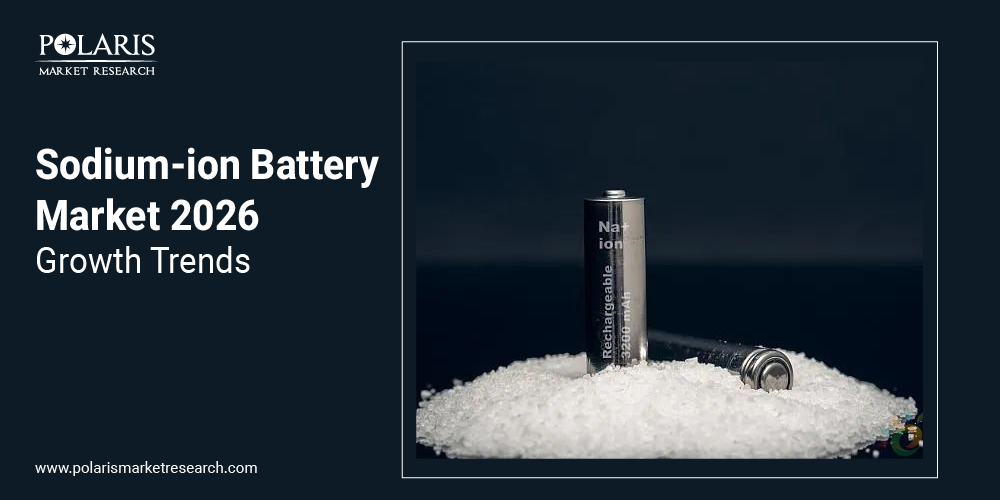
To store and release energy sodium-ion batteries are rechargeable batteries that use sodium ions. Their basic working process is similar to lithium-ion batteries. During charging, sodium ions move between the battery electrodes. During use, the ions move back and produce electricity.
The only difference is the material used. Lithium is in lithium-ion batteries. Sodium-ion batteries use sodium as the energy source. Sodium is widely available. It can also be found in common sources such as salt. This makes it an interesting option for battery makers.
Sodium-ion batteries can also use aluminium current collectors in some designs. This can help reduce the use of certain materials. However, sodium ions are larger than lithium ions. This affects battery energy density. As a result, sodium-ion batteries usually store less energy for the same weight. This makes them better suited to some uses than others.
Key Growth Drivers
The sodium-ion battery market is gaining attention for several reasons. Raw material availability and growing production are two major factors.
Lower Raw Material Cost and Abundance
Lithium-ion batteries depend on materials such as lithium, graphite, nickel, and cobalt. The exact materials depend on the battery chemistry. The prices of these materials can change. Supply problems can also affect battery production costs.
Sodium is much more largely available than lithium. It can be sourced from many parts of the world. This creates an opportunity to build a more diverse battery supply chain. Sodium-ion batteries can also reduce the need for some costly materials. Some chemistries do not require nickel or cobalt.
But sodium-ion batteries are not automatically cheaper. The overall cost is also influenced by manufacturing, battery design, production volume and supply chains. Manufacturers may be able to lower costs further as production grows.
China’s Manufacturing Scale-Up
China is a major battery manufacturing hub. It is also investing in sodium-ion battery technology. Chinese battery companies are developing new sodium-ion cells and battery systems. For electric vehicles and energy storage they are testing them.
China already has large battery factories and established supply chains. This gives manufacturers an advantage when increasing production. Higher production can help improve manufacturing processes. Over time it can also help reduce costs.
The technology still needs further development. Manufacturers are working to improve energy density, charging, durability, and overall performance.
Where Sodium-ion Batteries Fit Best
Sodium-ion batteries may work well in applications where weight is not the main concern. Grid storage is one important area. Renewable energy sources such as solar and wind do not produce electricity at the same level all the time.
Battery storage can help store extra electricity. It can then provide that electricity when it is needed. Sodium-ion batteries could be used for these systems. Their lower energy density may not be a major issue in stationary storage.
Low-cost electric vehicles are another possible use. Sodium-ion batteries may be suited for smaller vehicles and applications that don’t need to go as far on a charge. They may also be used as back-up power. To provide power during outages commercial buildings, industrial sites, and other facilities can use batteries.
It is not the intention to replace lithium-ion batteries in all applications. Instead, sodium-ion batteries can serve areas where their cost and performance make sense.
Trade-offs vs. Lithium-ion
Sodium-ion batteries have some clear benefits. But they also have limitations. The biggest difference is energy density. For the same weight lithium-ion batteries generally store more energy.
This is important for electric vehicles. A vehicle needs a battery that can provide enough energy without adding too much weight. Sodium-ion batteries may need to be larger or heavier to provide the same amount of energy.
Cost is another factor. Sodium is abundant, but the battery still needs to be manufactured at scale. Production costs can remain high while the technology is developing. Performance is also an area of improvement. Manufacturers are working on better energy density, charging speed, lifespan, and temperature performance.
The supply chain of lithium ion batteries is also mature. They are mass produced over many years. Because of this, sodium-ion batteries are more likely to complement lithium-ion batteries in the near term rather than replace them completely.
Sodium-ion Battery Market Outlook, 2026–2034
The sodium-ion battery market is growing quickly. According to Polaris Market Research, the global market was valued at USD 1.73 billion in 2025. The market is projected to reach USD 12.30 billion by 2034. This represents a CAGR of 24.4% from 2026 to 2034. The market is estimated at USD 2.14 billion in 2026.
Research will remain important. Companies are working to improve battery performance, safety, efficiency, and lifespan. Into more commercial applications these improvements can help sodium-ion batteries move.
FAQs
Are sodium-ion batteries a real alternative to lithium?
Yes. Sodium-ion batteries are a developing alternative to lithium-ion batteries. They use widely available sodium and may offer cost benefits. However, lower energy density limits their use in some applications.
Are sodium-ion batteries used in EVs today?
Yes. Sodium-ion batteries are being used in selected EVs, mainly in China. They are suitable for some low-cost vehicles where range and battery weight are less important.
Why is China leading sodium-ion battery production?
China has a strong battery manufacturing industry and established supply chains. Its large production capacity and investment in sodium-ion technology are helping the market grow.
Conclusion
Sodium-ion batteries are becoming an important alternative in the battery industry. They offer a way to use more widely available raw materials. They could also support lower-cost energy storage and electric vehicles. However, they still face challenges in energy density and production costs. Sodium-ion batteries could find a larger role in the global battery market as technology improves.
Explore the full Sodium-ion Battery Market report by Polaris Market Research for market forecasts, key trends, regional insights, and competitive analysis through 2034.