Breathing is something that we often don’t think much about. But for many people globally, it can be a daily struggle. Conditions such as asthma and COPD make it hard for patients to get enough air. As the population grows and respiratory diseases increase, the need for breathing support has increased. Respiratory care devices are needed to diagnose problems and support breathing in case of emergencies.
This blog post explains all you need to know about respiratory care devices, from essentials to types. It also sheds light on the respiratory care devices companies shaping the respiratory care devices market landscape.
Understanding Respiratory Care Devices
Respiratory care devices include tools and machines that help people breathe better. These devices are used to diagnose breathing problems and provide treatment. They also support patients who can’t breathe on their own. Respiratory care devices help track how well the lungs are working. These devices are present in hospitals, clinics, and emergency settings. The main function of these devices is to make sure the body gets enough oxygen and to keep breathing safe.
Did you know? The rising aging population worldwide has resulted in increased prevalence of respiratory diseases and their associated comorbidities. This has resulted in increased demand for the respiratory care devices market. According to our assessment, the market for these devices is projected to account for a CAGR of 8.8% from 2023 to 2032.
Types of Respiratory Care Devices
Ventilators
Ventilators are machines that help patients breathe when their lungs can’t work properly on their own. They are used in intensive care units, during severe infections or major surgeries. Modern ventilators are advanced and allow better control over the airflow. Respiratory care devices companies also offer portable versions that allow long-term patients to receive support at home.
Inhalers and Nebulizers
Inhalers are small, hand-held devices. They send medicines directly into the lungs. Inhalers are commonly used for COPD and asthma. Nebulizers turn liquid medicine into mist that’s easier to inhale. Both of them help in controlling symptoms and improving breathing.
Oxygen Concentrators
These devices take oxygen from room air and deliver it to patients whose oxygen levels are low. Home oxygen concentrators are needed for individuals with chronic lung conditions. Portable models are available to enable the free movement of patients.
CPAP and BiPAP Machines
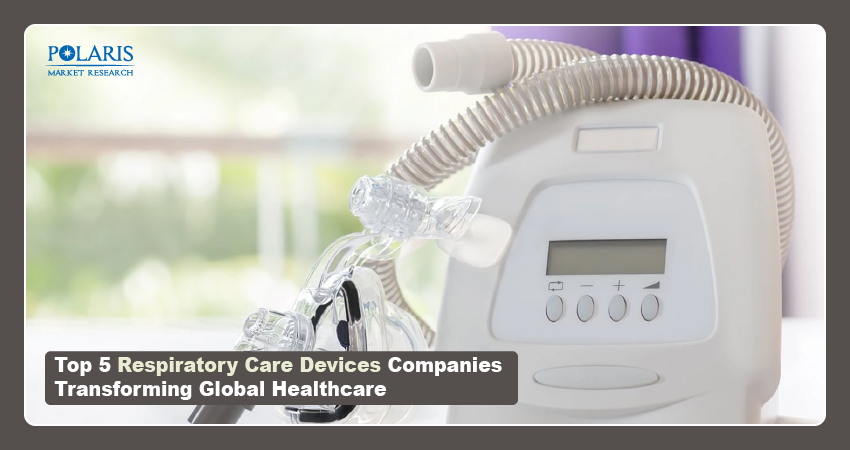
These machines are a part of the sleep apnea devices market. As a refresher, sleep apnea is a condition where breathing stops during sleep. CPAP provides a constant air flow to keep the airway open. BiPAP offers different pressures for inhaling and exhaling. CPAP and BiPAP machines help reduce fatigue and improve sleep quality.
Diagnostic Devices
Diagnostic devices take the form of spirometers, peak flow meters, and capnographs. They allow doctors to measure lung function and diagnose diseases like asthma. They are also used for tracking the progress of treatments.
Which Companies Provide Respiratory Care Devices?
Chart Industries
Chart Industries manufactures respiratory care devices under its CAIRE brand. Its portable liquid oxygen system allows improved patient mobility by providing up to 24 hours of continuous oxygen delivery. The company’s stationary oxygen concentrators can be used in facility and in-home settings. Its portable oxygen concentrators operate on battery power to provide oxygen therapy on the go. The company also offers related accessories such as flow meters and humidifiers to complete the therapy setup.
Dragerwerk
Dragerwerk manufactures respiratory care devices for hospitals and emergency services use. Its product portfolio includes intensive care ventilators, anesthesia workstations, transport ventilators, and monitoring systems. The company’s specialized ventilators and incuwarmer systems support lung and brain-protective ventilation for infants. Dragerwerk also offers safety equipment, including respiratory protective equipment, for use in hazardous industrial environments or emergency services.
Fisher & Paykel Healthcare
Fisher & Paykel Healthcare designs products for acute and chronic respiratory care. Its product portfolio includes various devices and consumables for adult, pediatric, and neonatal patients. These devices are intended for hospitals and home settings. Humidification systems by Fisher & Paykel Healthcare provide heated and humidified gases for patients receiving mechanical ventilation. Its nasal high flow therapy systems are integrated flow generator-humidifiers that deliver high flows of blended air and oxygen.
Hamilton Medical
Hamilton Medical provides intelligent mechanical ventilators and respiratory care devices for all patient groups. Its products are intended for use in various clinical settings. The main focus of the company is on the ventilators market and integrated accessories. Its ventilators have a standardized user interface and come with advanced technologies such as adaptive support ventilation. Its accessories range includes humidifiers, nebulizers, and consumables.
Inogen
Inogen offers portable and at-home oxygen concentrators. Its portable oxygen concentrators (POCs) use pulse dose technology. They deliver a bolus of oxygen at the beginning of every breath. This helps improve efficiency and battery life. Inogen’s stationary concentrators are designed for continuous flow oxygen delivery in a home environment. Its stationary concentrators are noted for being one of the lightest home concentrators available in the respiratory care devices market.
What’s New in Respiratory Care Devices Market?
Improving CPAP Comfort with F&P Nova Nasal Mask
Fisher & Paykel Healthcare introduced the F&P Nova Nasal Mask in Australia and New Zealand in March 2025. The purpose of launching this product was to help improve comfort for users of CPAP therapy who suffer from obstructive sleep apnea (OSA). The mask's design has been developed over many years of research. The main emphasis for the design of this mask was to allow a better fit and for the user to feel more comfortable while using it. A major feature of the mask is its unique SwingFit headgear, which can be readily adjusted. A RollFit cushion conforms to the user's breathing pattern, reducing pressure on the nose. Early results from clinical tests indicate that users have reported that the mask is more stable and easier to use. The launch of the Nova Nasal Mask reinforces Fisher & Paykel Healthcare’s commitment to providing CPAP solutions that are patient-friendly.
Conclusion
In the present time, the respiratory care devices market is becoming increasingly relevant in relation to current trends and advancements in healthcare. The devices provide an opportunity for patients with chronic forms of respiratory conditions to be independently treated and to aid their recovery during acute infective episodes. The shift toward home-based healthcare service delivery presents opportunities for significant growth for many respiratory care device companies. A number of the leading firms involved in developing respiratory care devices are now working to enhance their products and solutions using advanced technologies that provide patients with greater levels of control and choice regarding their treatment options.