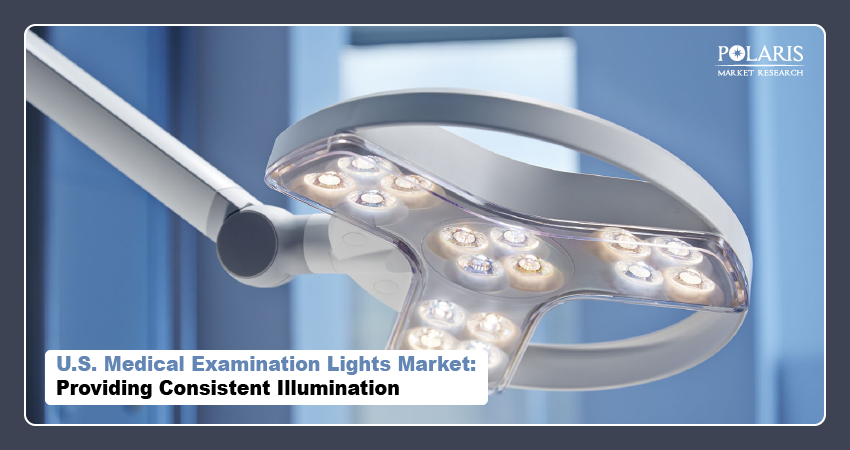
When you think of healthcare, lighting may seem like a small part of the sector. However, it is highly important for accuracy and overall treatment quality. Medical examination lights are specially made for use in hospitals and clinical settings. These lights provide clear and bright light for proper patient assessment.
Modern examination lights have witnessed significant evolution. They make use of LED and other technologies that stay cool and give accurate colors. This blog explores the basics of medical examination lights and their working. It also sheds light on the key factors shaping the U.S. medical examination lights market landscape.
What Are Medical Examination Lights?
Medical examination lights are special lights made to provide bright and shadow-free lighting in healthcare settings. These lights are different from normal room lights. They provide a focused beam that allows doctors to see fine details such as skin texture and wound edges.
Medical examination lights must stay bright without getting too hot. This is because excess heat can lead to patient discomfort. High heat may also be a distraction for healthcare professionals. Modern examination lights typically make use of LEDs, owing to their energy-efficient and long-lasting nature.
Examination lights from the medical examination lights market are present in regular exam rooms, emergency departments, and minor procedure rooms. They are also a part of dental clinics and dermatology clinics. The ability of these lights to provide clear illumination makes them essential in healthcare settings.
How Medical Examination Lights Work?
- Light Source: As mentioned earlier, most modern examination lights make use of LEDs. These LEDs produce strong light and stay cool. This makes them more comfortable for patients and clinicians.
- Lens and Reflector System: Lens and reflectors are needed for guiding the light into a concentrated beam. This allows doctors to see small details such as skin textures and wound edges without shadows.
- Adjustable Arms and Mounts: Medical examination lights are attached to movable arms. The arms can bend, move, or stretch. That way, clinicians can position the light exactly where it’s required.
- Brightness and Color Control: The brightness and color tone of most medical examination lights can be changed. This makes the lighting suitable for different tasks. It also helps reduce eye strain.
- Heat Management: The use of smart cooling and LED technologies from the LED lighting market prevents the light from getting too hot. This ensures comfort during longer procedures.
What Are Medical Examination Light Types?
The primary types of medical examination lights used across medical facilities are given below:
Wall-Mounted Examination Lights
These examination lights are fixed lighting solutions. They provide consistent and shadow-free illumination. Wall-mounted examination lights are suitable for use in areas with limited space. These lights are also adjustable, meaning the healthcare provider can have the intensity and angle needed. These examination lights can be found in clinics and diagnostic rooms.
Ceiling-Mounted Examination Lights
The suspension of these examination lights is done from the ceiling. As such, they are able to provide broad light coverage. The design of ceiling-mounted examination lights ensures that there isn’t any clutter on the floor space. They are used in environments where hygiene and movement are important, such as ICUs and emergency rooms.
Mobile Examination Lights
Mobile examination lights offer the benefit of mobility. These examination lights are mounted on wheels, making movement across the room easy. The flexible nature of these lights means they are used in various clinical applications, such as wound dressing and minor procedures.
Head-Mounted Examination Lights
These lights involve the use of a headgear by the physician on which they are mounted. Head-mounted examination lights follow the examiner’s line of sight. This makes sure that the specific area of interest stays illuminated.
What’s Driving Market Demand in the U.S.?
Our assessment of the U.S. medical examination lights market reveals that the market is expected to witness sustained growth. The market for medical examination lights in the U.S. stood at USD 94.28 million in 2024. It is projected to account for a CAGR of 2.3% between 2025 and 2034.
The prevalence of chronic diseases and lifestyle-related ailments is on the rise in the U.S. This has led to increased demand for advanced medical examination lighting solutions. Growing healthcare spending and the presence of advanced healthcare infrastructure also benefit the U.S. medical examination lights market expansion.
How AI is Shaping Medical Examination Lights?
Artificial intelligence (AI) is being used in the U.S. medical examination lights market to optimize performance. AI analyzes both the clinical workflow and lighting requirements for clinical use to ensure that clinical examination lights provide consistent, efficient illumination at all times. Adaptive light control by AI enables users to dynamically adjust the intensity and color temperature of their lights. The use of AI-based diagnostics detects electrical faults and any degradation of the light emitting diodes (LEDs) far in advance of any potential failures. Furthermore, using AI technology improves clinical staff's ability to interact with one another by enabling hands-free control of the lights and automatic adjustment of the light angle.
Conclusion
Medical examination lights do more than brighten the room. They are important tools that enable healthcare providers to work safely and accurately. Using flexible designs and modern LED technology, these examination lights provide comfortable illumination during medical exams. They enable clinicians to see fine details and perform quick assessments. With improving healthcare standards, the U.S. medical examination lights market will be essential for providing high-quality care.

.png)