
Aesthetic Exosomes Market Size, Share, Growth Analysis Report, 2026-2034
REPORT DETAILS
Aesthetic Exosomes Market Summary
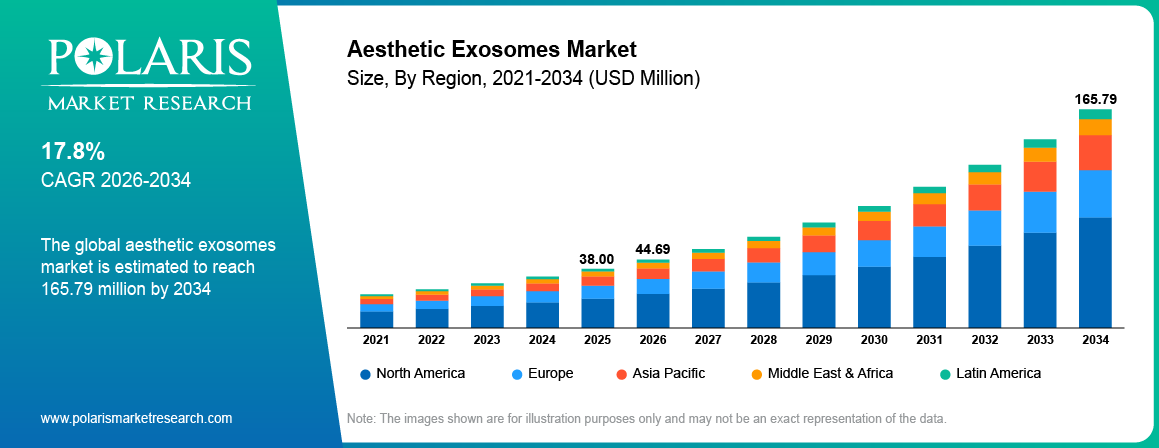
The global aesthetic exosomes market is estimated around USD 38.00 million in 2025, with consistent growth anticipated during 2026–2034. Growth is driven by rising demand for non-invasive aesthetic treatments and increasing spending on premium skincare solutions across global markets. The market is projected to grow at a CAGR of 17.8% during the forecast period.
Market Statistics
Key Takeaways
- Anti-aging segment dominated the market, accounting for nearly 45.60% market share in 2025 owing to consumers' growing interest in looking young and youthful.
- Human segment dominated in 2025, accounting for nearly 47.80% market share due to high use in premium aesthetic treatments.
- Clinics segment led in 2025, contributing approximately 51.20% market share owing to strong patient inflow for cosmetic procedures.
- Synthetic products are anticipated to show the fastest growth, with a CAGR of nearly 13.40% during the projected timeline owing to rising demand for consistency and standardization in substitutes.
- The hair growth segment is projected to grow at the fastest CAGR of around 14.10% during the forecast period due to rising cases of hair thinning and increasing demand for non-surgical restoration solutions.
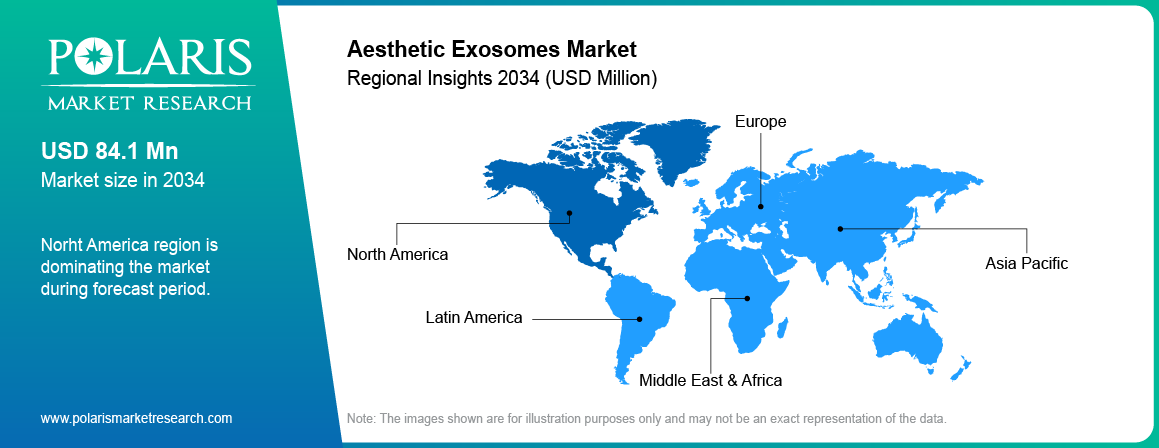
- North America accounted for the major share of revenues, holding nearly 42.70% market share in 2025 owing to its robust clinic infrastructure and early adoption of modern cosmetic treatments.
Industry Dynamics
- Growing inclination toward non-surgical rejuvenation is boosting the demand for aesthetic exosomes.
- Rising disposable income is increasing spending on luxury skincare and cosmetic services.
- Limited regulatory clarity across countries delays wider product commercialization.
- There is an increasing inclination towards scientifically proven and customized skincare products.
What Are Aesthetic Exosomes?
Aesthetic exosomes are exosomes utilized in cosmetic and regenerative therapy for repairing skin, collagen formation, hydrating effects, and skin rejuvenation. These nano-sized particles are derived from stem cells or other biological sources and carry proteins, lipids, and growth signals that help improve cellular communication. They are widely used in facial treatments, microneedling procedures, post-laser recovery, and hair restoration applications. Rising consumer demand for non-invasive beauty treatments is supporting interest in aesthetic exosomes.
The aesthetic exosomes market supply chain includes exosome sourcing, purification, formulation development, regulatory review, and distribution through clinics, medspas, and dermatology centers. There are developments within the manufacturing sector towards sterilized preparation processes, standardized production techniques, and scientifically proven formulas for practitioners. Manufacturers have also been diversifying their product offerings to include products designed to address anti-aging, pigmentation, and hair follicle conditions. Advancements in formulation, delivery, and combinations drive product differentiation in the market.
Source: Polaris Market Research Analysis
To Understand More About this Research:Download Sample Report
The initial market for aesthetic exosomes began when advanced aesthetic clinics embraced regenerative skincare therapies. The first group of consumers who showed interest in these kinds of products was rich people who had the need for fast healing and regrowth of the skin after surgery. Adoption expanded further as practitioners reported better treatment outcomes and as awareness of cell-based cosmetic solutions increased. The market is now moving toward broader commercial use with rising clinic partnerships, product launches, and growing acceptance of science-backed aesthetic treatments.
Drivers & Opportunities
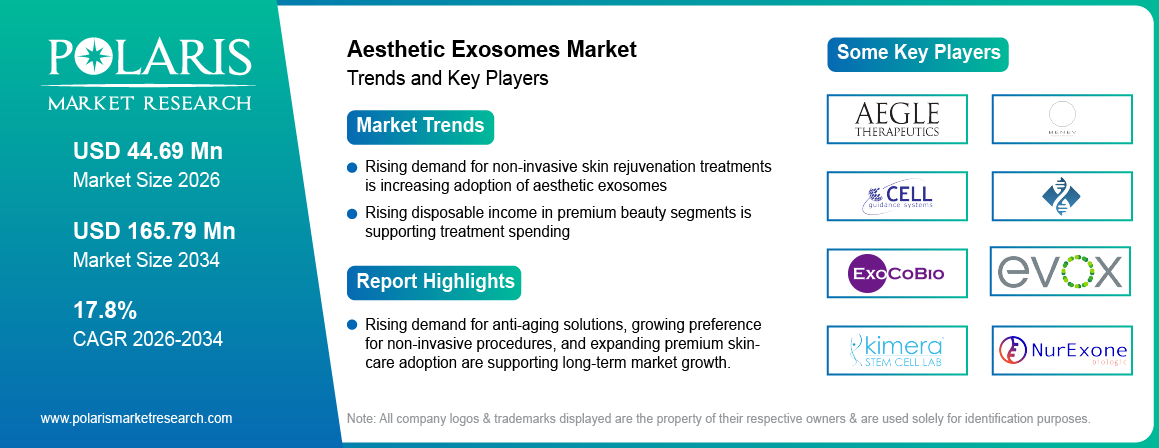
Rising demand for non-invasive skin rejuvenation treatments is increasing adoption of aesthetic exosomes: Patients are moving towards aesthetic procedures which helps them improve their skin without undergoing any surgery or even a lengthy healing period. For example, in January 2026, Dr Batra’s introduced XODerma, an innovative non-surgical procedure involving exosomes for skin rejuvenation and aimed at improving the firmness, texture, and radiance of the aesthetic patient’s skin. Aesthetic exosomes have gained popularity for their rejuvenative effect on patients’ faces during facial rejuvenation and microneedling and even after laser procedures.
Rising disposable income in premium beauty segments is supporting treatment spending: The high expenditure by customers on innovative skincare and cosmetological procedures is positively influencing the demand for premium aesthetic procedures. According to the U.S. Energy Information Administration, global personal disposable income is expected to increase from USD 10,677 in 2025 to USD 13,116 in 2035 – thus, indicating a near 23% increase in purchasing power parity terms.[Source: www.eia.gov] Urban consumers are showing stronger interest in science-backed therapies that offer visible results. This trend is helping clinics introduce higher-value exosome treatment packages.
Restraints & Challenges
Limited regulatory clarity across countries is slowing commercial expansion: Regulatory pathways for exosome-based aesthetic products differ across markets, which creates approval and commercialization challenges. Product classification standards also vary between cosmetic and biologic categories. This trend has been slowing down the expansion plans of multiple companies.
Opportunity
Personalized exosome formulations for skincare are enabling high pricing: Personalized exosome solutions for skincare concerns like aging, hyperpigmentation, hydration, and scalp care are being developed by companies. In September 2025, Naolys pioneered the use of ExoCell, which is the latest technology platform for plant-derived exosomes, enabling customized regenerative skincare formulations based on particular skincare issues. The customized solutions not only enhance the experience of the patients but also facilitate the positioning of services by clinics at higher price points. This opportunity is supporting product innovation and higher revenue potential across the market.
Source: Polaris Market Research Analysis
Segmental Insights
This report offers detailed coverage of the aesthetic exosomes market source, application, and end user to help readers identify the fastest expanding and most attractive demand segments.
By Source
-
Human
Human segment dominated in 2025, accounting for nearly 47.80% market share due to strong adoption in premium aesthetic treatments and higher compatibility with regenerative skincare applications. The use of exosomes derived from humans is preferred by clinics when it comes to facial care, wound healing, and hair growth procedures. Clinical outcomes have increased demand in this segment.
-
Synthetic
Synthetic products are anticipated to show the fastest growth, with a CAGR of nearly 13.40% during the projected owing to rising demand for consistency and standardization in substitutes. Manufacturers are now investing in research related to exosome-like vesicle engineering, ensuring better uniformity as well as minimal sourcing problems. This has resulted in its increasing applications across different aesthetic uses.
By Application
-
Anti-aging
Anti-aging segment dominated the market, accounting for nearly 45.60% market share in 2025 owing to consumers' growing interest in looking young and youthful. as consumers have a high demand for skincare therapy that reduces wrinkles, firms up the skin, and increases collagen production. In November 2025, Pluri Inc., collaborated with Miss Universe Skincare to release exosome skincare regenerative therapy products for the global aesthetic industry. Aesthetic practices are incorporating exosomes into premium facials to enhance skin texture and elasticity. Rising aging-conscious consumer groups are supporting segment demand.
-
Hair Growth
The hair growth segment is projected to grow at the fastest CAGR of around 14.10% during the forecast period due to rising cases of hair thinning and increasing demand for non-surgical restoration solutions. Exosomes have become increasingly popular for scalp treatment products that promote healthy follicles and increase hair density.
By End User
-
Clinics
Clinics segment led in 2025, contributing approximately 51.20% market share owing to the influx of patients for cosmetic surgeries as well as availability of more number of specialty aestheticians. Dermatology clinics and cosmetic clinics continue to play a major role for exosome skin and hair treatment procedures. Strong repeat treatment demand is supporting segment growth.
-
Medspas
The medspas segment is projected to grow at the fastest CAGR during the forecast period due to rising consumer preference for convenient wellness-based beauty settings. MedSpas are increasingly incorporating exosome facials into their luxury skincare offerings. Increasing demand from urban consumers is boosting this category.
Source: Polaris Market Research Analysis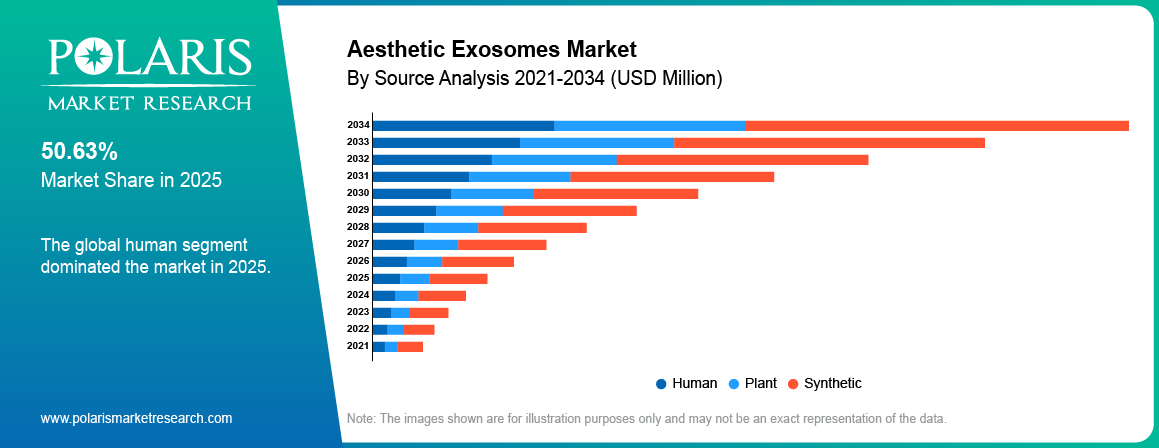
Regional Analysis
North America Market Assessment
North America accounted for the major share of revenues, holding nearly 42.70% market share in 2025, owing to the presence of well-developed healthcare facilities, high expenditure on cosmetic services, and early adoption of beauty regenerative medicine. According to statistics from the American Society of Plastic Surgeons, the number of minimally invasive skin rejuvenation procedures was estimated at 3.70 million in 2024, which increased from 3.50 million in 2023 by 6%.[Source: www.plasticsurgery.org]This is due to established clinics, advanced technology, and need for minimally invasive surgery, the US has become the market leader in the region.
Asia Pacific Aesthetic Exosomes Market Insights
Asia Pacific projected to register the fastest CAGR during the forecast period owing to rising disposable income, beauty-conscious consumers, and expanding medical aesthetics infrastructure. South Korea and Japan represent significant opportunities for growth in terms of skincare practices and receptiveness towards state-of-the-art cosmetic treatments. For example, in February 2025, Brexogen entered into an agreement to license its technology to BMI Korea with the aim of hastening the commercialization process of exosome treatment technology and enhancing the range of applications in aesthetic regeneration. There is also a surge in demand for skin rejuvenation treatments among affluent consumers in China and India.
Europe Aesthetic Exosomes Market Overview
Europe is as an emerging market driven by increasing consumer demand for high-end skincare and aesthetics that require professional care. There have been increasing instances of the utilization of advanced regenerative technology in countries like Germany, France, and UK. The regulation of products in Europe continues to be strict although this negatively affects their launch; however, it ensures the improvement of treatment outcomes. There is also rising consumer preference for scientifically proven safe products.
Source: Polaris Market Research Analysis
Competitive Landscape & Key Players
The aesthetics exosome market is relatively fragmented, featuring players from the biotech sector, skin care companies, and regenerative medical businesses competing against each other for market supremacy through their clinical and aesthetic offerings. Some of the factors contributing to success in this market include product purity, clinical effectiveness, safety measures, and brand reputation.
Participants in the industry are Kimera Labs, ExoCoBio Inc., Benev Company Inc., Aruna Bio, RoosterBio Inc., Direct Biologics LLC, Aegle Therapeutics, Evox Therapeutics Ltd., ReNeuron Group plc, Cell Guidance Systems, Xsome Biotech, NurExone Biologic Inc., and others.
Innovation & Strategic Moves
Key competitive strategies include:
- Product innovation in purified and potent exosome formulations are crucial competitive differentiator.
- Aging reversal therapy, skin renewal therapy, and hair regrowth services have been increasing in their number.
- Working in collaboration with clinics, medical spas, and dermatological chains will contribute to market expansion.
- Funding research efforts has contributed to building trust between consumers and physicians.
- The shift towards Asia Pacific and Europe regions has led to increased revenues
- Building strategic alliances and acquiring businesses will lead to competitive advantages.
Premium Insights & Future Trends
AI + Exosomes
AI will facilitate better formulation design through better mapping of ingredients and personalizing treatment regimes. In December 2024, BIONET used AI-driven exosome research to optimize skincare and aesthetic applications while expanding into global regenerative beauty markets. AI skincare tools are helping clinics match exosome therapies with skin type, age profile, and treatment goals. This trend is supporting faster innovation and stronger treatment outcomes.
Luxury Aesthetic Market Influence
Luxury skincare and premium aesthetic brands are increasing interest in exosome-based treatments for high-end consumers. Specialized clinics are positioning their aesthetic exosomes as innovative aging solutions based on personalized regimes. The consumer desire for expensive cosmetic treatments is driving them to adopt premium products.
Future Trends
- Integration of AI into the process helps in formulating new exosomes and customizing treatments.
- Luxury skincare lines further drives adoption of premium exosome treatments
- Personalized beauty treatments are increasingly becoming value propositions in advanced aesthetics.
- Innovation in delivery formats is supporting stronger brand differentiation.
Key Players
- Aegle Therapeutics
- Aruna Bio
- Benev Company Inc.
- Cell Guidance Systems
- Direct Biologics LLC
- ExoCoBio Inc.
- Evox Therapeutics Ltd.
- Kimera Labs
- NurExone Biologic Inc.
- ReNeuron Group plc
- RoosterBio Inc.
- Xsome Biotech
Industry Developments
- March 2026: EMA Aesthetics launched BLŪPRIN at AMWC Monaco, introducing a regenerative exosome platform focused on traceable sourcing, safety, and performance in aesthetic applications. [source: www.usatoday.com]
- April 2026: BioRestorative Therapies partnered with Dr. David J. Goldberg to advance clinical adoption of aesthetic exosome-based regenerative skincare solutions. [source: www.globenewswire.com]
Aesthetic Exosomes Market Segmentation
By Source Outlook (Revenue, USD Million, 2021-2034)
- Human
- Plant
- Synthetic
By Application Outlook (Revenue, USD Million, 2021-2034)
- Anti-aging
- Hair Growth
- Skin Repair
By End User Outlook (Revenue, USD Million, 2021-2034)
- Clinics
- Hospitals
- Medspas
By Regional Outlook (Revenue, USD Million, 2021-2034)
- North America
- US
- Canada
- Europe
- Germany
- France
- UK
- Italy
- Spain
- Netherlands
- Russia
- Rest of Europe
- Asia Pacific
- China
- Japan
- India
- Malaysia
- South Korea
- Indonesia
- Australia
- Vietnam
- Rest of Asia Pacific
- Middle East & Africa
- Saudi Arabia
- UAE
- Israel
- South Africa
- Rest of Middle East & Africa
- Latin America
- Mexico
- Brazil
- Argentina
- Rest of Latin America
Aesthetic Exosomes Market Report Scope
| Report Attributes | Details |
| Market Size in 2025 | USD 38.00 Million |
| Market Size in 2026 | USD 44.69 Million |
| Revenue Forecast by 2034 | USD 165.79 Million |
| CAGR | 17.8% from 2026 to 2034 |
| Base Year | 2025 |
| Historical Data | 2021–2024 |
| Forecast Period | 2026–2034 |
| Quantitative Units | Revenue in USD Million and CAGR from 2026 to 2034 |
| Report Coverage | Revenue Forecast, Competitive Landscape, Growth Factors, and Industry Trends |
| Segments Covered |
|
| Regional Scope |
|
| Competitive Landscape |
|
| Report Format |
|
| Customization | Report customization as per your requirements with respect to countries, regions, and segmentation. |
Source: Polaris Market Research Analysis
Aesthetic Exosomes Market FAQ's
The global market size was valued at USD 38.00 Billion in 2025 and is projected to grow to USD 165.79 Billion by 2034.
North America accounted for the major share of revenues, holding nearly 42.70% market share in 2025 due to advanced healthcare infrastructure and high demand for premium non-invasive treatments.
Major applications include anti-aging treatments, skin repair procedures, hair growth therapies, and post-procedure recovery solutions.
A few of the key players in the market are Kimera Labs, ExoCoBio Inc., Benev Company Inc., Aruna Bio, RoosterBio Inc., Direct Biologics LLC, Aegle Therapeutics, Evox Therapeutics Ltd., ReNeuron Group plc, Cell Guidance Systems, Xsome Biotech, NurExone Biologic Inc., and others.
Key drivers include rising demand for non-surgical rejuvenation, increasing disposable income, and growing interest in regenerative beauty treatments.
Major demand comes from aesthetic clinics, dermatology centers, medspas, and cosmetic treatment providers.
The market outlook remains strong due to rising personalization trends, product innovation, and expanding adoption across premium beauty segments.
Download Sample Report of Aesthetic Exosomes Market
Please fill out the form to request a customized copy of the research report.


