
Regenerative Medicines Market Size,Share Reach Analysis, 2026-2034
REPORT DETAILS
Regenerative Medicines Market Summary
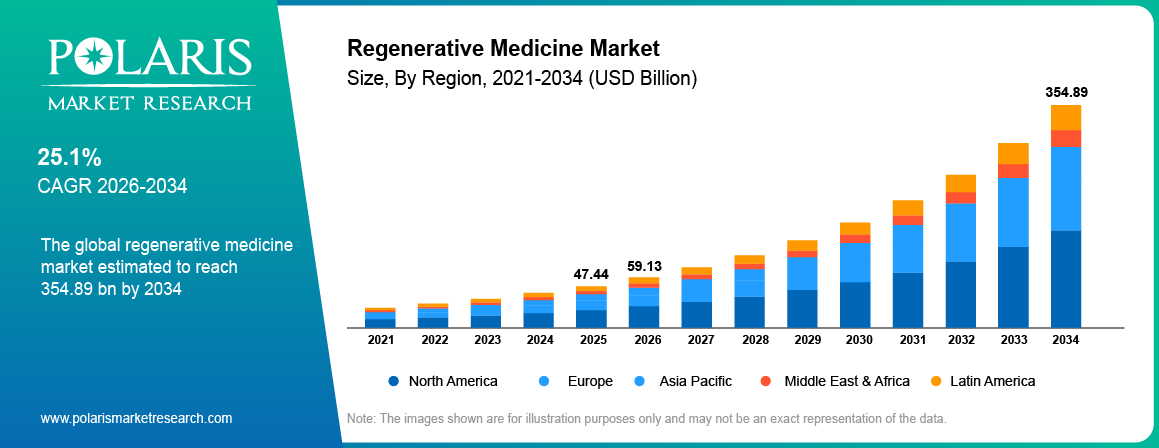
The regenerative medicines market size was valued at USD 47.44 billion in 2025. The market is expected to register a CAGR of 25.1% from 2026 to 2034. Rising advancements in stem cell therapies and tissue engineering, and the rising shift toward personalized medicine drive the industry expansion. Further, market players are investing in new facilities to expand their market reach and strengthen their presence, fueling the market growth.
Market Statistics
Key Takeaways
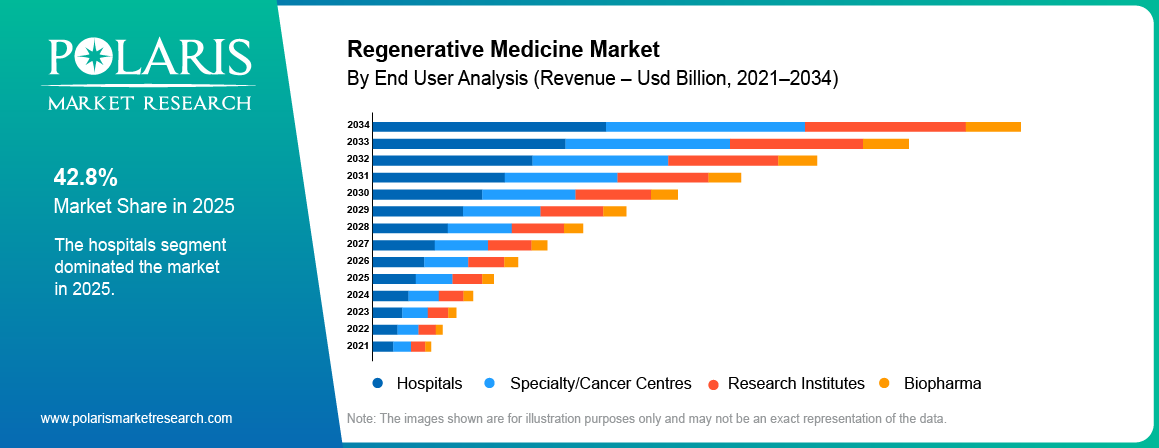
- North America dominated with a 41.98% share in 2025, supported by strong research in universities and institutes for advancements in stem cell therapies and tissue engineering.
- The Asia Pacific market is expected to record a 28.4% CAGR during the forecast period, due to rising focus on stem cell research.
- The market in India is projected to record the fastest CAGR of 29.6% during 2026–2034. The growth will be driven by rising investment in biotech, clinical research, and government support.
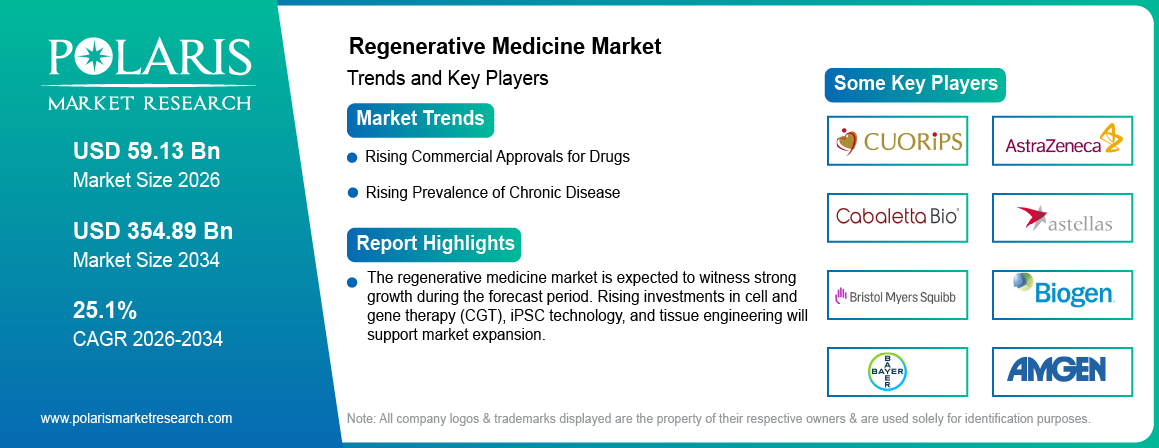
- By product, cell therapy led the market with a 46.67% share in 2025. The dominance is attributed to better outcomes, lower relapse rates, and helping people get better faster.
- By application, oncology held a 33.23% share in 2025, due to targeted tissue repair for cancer treatment.
Note: Figures and projections outlined in this report are the result of Polaris Market Research’s proprietary analytical processes, grounded in the latest available datasets and market observations.
What is regenerative medicine?
Regenerative medicine is a medical field focused on repairing, replacing, or regenerating injured cells, tissues, and organs. Through cell, gene, tissue engineering, and biomaterials technology, regenerative medicine targets the underlying cause of disease. Essentially, regenerative medicine helps the body to repair itself.
The market is progressing from scientific research into commercial therapies. In March 2026, Japan approved the world's first iPS cell derived products. These were Amchepry from Sumitomo Pharma for the treatment of Parkinson's Disease and ReHeart from Cuorips for severe heart failure. In the U.S., the FDA is creating accelerated approval pathways for personalized gene therapies. Payers are also experimenting with new risk-sharing agreements for single-use therapies, which can cost over USD 2 million.
There are three drivers behind the demand for regenerative medicine. Firstly, with an increasing global burden of chronic and age-related diseases, there is a need for durable, potentially curative treatments. Secondly, new technologies such as CRISPR gene editing, allogeneic cell therapy, 3D bioprinting market and AI cell modelling are expanding the reach of possible treatments. Finally, manufacturing is a key bottleneck in regenerative medicine. viral vector manufacturing market, plasmid DNA manufacturing market, and GMP cell processing will dictate the cost and availability of therapies.
How Does Regenerative Medicine Work?
- Collect: Healthy biological cells/tissues can be taken from a patient or donor. These can include stem cells e.g. Mesenchymal Stem Cells (MSC) and Induced Pluripotent Stem Cells (iPSC).
- Engineer: The cells can be altered/enhanced so they have increased regenerative capability. Sophisticated techniques such as Cell and Gene Therapy (CGT) and CRISPR Cas9 can enhance functionality.
- Expand: Cells are expanded in a controlled environment to increase the number of cells to provide sufficient cells for treatment.
- Formulate: Cells and/or tissues are formulated. Biologics/scaffolding can also be attached to make the cells/tissues an appropriate treatment.
- Administer: The treatment is administered to the patient. This can be via injection/infusion/surgery depending on the type of disease and treatment.
- Regenerate: Cells/biologicals can be used to help regenerate damaged tissues. They can also help replace unhealthy cells and support organ regeneration. Improving functionality of the affected part of the body and helping manage chronic diseases.
Regenerative Medicine vs Traditional Treatment
| Factor | Regenerative Medicine | Traditional Treatment |
| Goal | Repair or replace damaged tissue; address root cause | Manage symptoms or slow progression |
| Treatment pattern | Often one-time or few doses | Ongoing, often lifelong dosing |
| Product type | Living cells, genes, engineered tissue | Small-molecule drugs, devices, surgery |
| Upfront cost | Very high regenerative medicine cost | Lower per dose |
| Lifetime cost | Potentially lower if durable | Accumulates over time |
| Evidence base | Shorter follow-up; long-term monitoring required | Long established |
Source: Polaris Market Research Analysis
The regenerative medicine market is flourishing due to a global surge in the aging population. With age-related ailments on the rise, there's an increasing demand for regenerative medicine's innovative therapeutic solutions. Stem cell therapy market, tissue engineering, and gene therapy, integral to this field, hold promise for treating degenerative diseases. As the elderly population seeks advanced healthcare, regenerative medicine stands out, offering solutions for age-related health challenges. This trend signifies a transformative shift towards regenerative healthcare approaches tailored to the needs of an aging demographic.
AI Impact on Regenerative Medicine Market
- Integration of AI provides lucrative opportunities for research in the field of regenerative medicine.
- In drug discovery, researchers use AI tools to gain insights into the drug target’s potential effectiveness and function, which saves their time and resources.
- The technology analyzes chemical structures and properties of potential drug candidates. This helps identify potential safety concerns in the drug discovery process and lowers the risk of adverse effects.
Market Dynamics
Driver: Rising Commercial Approvals for Drugs
An increase in commercial approvals for regenerative medicines drives the market growth. In March 2026, two treatments utilizing IPSC therapy were conditionally approved in Japan: ReHeart and AMCHEPRY for treating heart failure and Parkinson's disease, respectively. In November 2025, Itvisma was approved in the U.S. for the treatment of spinal muscular atrophy. Finally, Fayuvi was approved for MPS IIIA in September 2026. This is increasing confidence within the Cell and Gene Therapy (CGT) space and driving more investment into advanced therapies.
Driver: Rising Prevalence of Chronic Disease
An increased prevalence of chronic diseases helps drive demand for regenerative medicine. Diseases such as diabetes, heart failure, Parkinson's disease, and spinal muscular atrophy can cause long-term destruction of tissues and organs within the body. Traditional treatments are mostly aimed at controlling the symptoms. However, there may not be a solution to the damage caused. Regenerative medicine is providing novel treatments for patients by repairing damaged tissue, regenerating organs, and cell and gene therapy. An aging population means the market is also being driven by an increased need for long-term treatment.
Driver: Increased Acceptance of Gene Therapy
The regenerative medicine market is surging due to the expanding acceptance of gene therapy. This transformative approach involves manipulating genes to treat or prevent diseases, gaining momentum as advancements in molecular biology unfold. Increased comprehension of genetic disorders and growing regulatory approvals elevate confidence in gene therapy, driving acceptance among clinicians and patients. Addressing genetic abnormalities at their core, gene therapy stands as a promising force, propelling research, investments, and overall market growth, reshaping the medical landscape for previously incurable diseases.
Restraint: High Treatment and Manufacturing Cost
The high cost of regenerative medicine treatments is a major challenge for market growth. Cell and gene therapy treatments require high-level technology, expertise, and specialist GMP manufacturing facilities. The processes, including cell harvesting, genetic modification, testing, and storage, involve increased costs. The cost of using high-cost biologics, viral vectors, and specialist equipment contributes to the high cost of these treatments. This makes it challenging to gain access to these therapies in developing countries.
Restraint: Limited Reimbursement and Stringent Regulation
Limited reimbursement coverage and strict regulatory requirements are restricting the adoption of regenerative medicine. Many treatments are high cost and therefore difficult for patients to afford without insurance coverage. Payers also require strong clinical data to approve treatments. The regulatory bodies such as FDA CBER, EMA, and Japan MHLW/PMDA require detailed data on the safety and efficacy of treatments. Delays from long approval times, complicated testing, and regulations can increase the cost of development.
Challenge: Complex Regulatory Pathways
Complex regulatory pathways pose challenges to the regenerative medicine market, impeding the development and commercialization of innovative therapies. Stringent global frameworks demand adherence to safety, efficacy, and ethical standards, resulting in prolonged timelines and substantial financial investments. Collaborative efforts among industry stakeholders, regulators, and researchers are essential for navigating these intricate pathways. Evolving regulations introduce uncertainties, influencing investment decisions and impeding market growth. Streamlining regulatory processes and enhancing international harmonization are imperative to foster innovation, ensure patient access to transformative therapies, and unlock the global potential of regenerative medicine.
Opportunity: Increasing use of Allogeneic Therapies
The increasing use of allogeneic therapies is expected to create new opportunities in the regenerative medicine market during the forecast period. As cells are taken from healthy donors, they can be developed for several patients. It reduces the time and complexity of individual patient therapies. Allogeneic therapies also allow large-scale production under GMP conditions and therefore can be supplied commercially. Improvements in mesenchymal stem cells (MSC), cell storage, and quality control are also enhancing their potential to treat chronic wounds and cartilage damage.
Opportunity: Advancements in iPSC and In Vivo Technologies
Advancements in iPSC and In Vivo technologies are creating opportunities for the regenerative medicine market growth. iPSC technology enables different cell types to be developed to replace damaged cells and repair tissues. In vivo technologies allow genetic modifications to occur within the patient. Improvements in CRISPR Cas9, AAV, and In vivo CAR-T are helping develop new treatments. These could simplify manufacturing processes, increase accessibility of therapy, and help regenerate organs.
Manufacturing & Supply Chain: Plasmid DNA, Viral Vectors, and GMP
Manufacturing and supply chain play an important role in the regenerative medicine market. Viral vector and plasmid DNA are key materials used in the development of cell and gene therapy (CGT). They help deliver genetic instructions into cells to support treatment development. Their production requires specialized facilities and strict quality checks. Good Manufacturing Practice (GMP) ensures that these materials and therapies are produced safely and consistently. Reliable supply chains and specialized CDMO are essential for meeting growing commercial demand.
Regenerative Medicine Technology Landscape
| Attribute | Cell Therapy | Gene Therapy | Tissue Engineering |
| How it works | Living cells transplanted or engineered (CAR-T, MSC, iPSC-derived) | Adds, replaces, or edits genes (AAV, lentiviral vector, CRISPR) | Scaffolds, matrices or cell sheets that rebuild tissue |
| Example approved products | Kymriah, Yescarta, Carvykti, Amchepry | Zolgensma / Itvisma, Elevidys, Casgevy | MACI, Apligraf, Integra Dermal Regeneration Template, ReHeart |
| Main indications | Blood cancers, Parkinson's, GvHD, autoimmune (emerging) | Rare genetic disease (SMA, DMD, sickle cell disease) | Cartilage, chronic wounds, burns, heart failure |
| Manufacturing model | Autologous (per patient) or allogeneic (batch) | Vector production; plasmid DNA dependent | Batch production; device-like |
| Cost profile | High (≈USD 0.4–0.5 m for CAR-T) | Very high (often > USD 2 m one-time) | Low to moderate; procedure-based |
| Commercial maturity | Commercial; largest share (46.67%) | Commercial, rapidly expanding | Mature in wound care; early in organs |
Source: Polaris Market Research Analysis
Regenerative Medicines Market Segmentation
By Product Analysis
The cell therapy segment held the largest regenerative medicine market share of 46.67% in 2025. Cell therapy provides diverse healthcare advantages. Utilizing cells like mesenchymal stem cells, it proves vital for tissue healing and regeneration in injuries and degenerative conditions. Offering personalized treatment, it tailors interventions based on an individual's medical condition and genetics. Autologous cell therapy minimizes side effects and rejection risks, ensuring safety. Its versatility spans across treating neurological disorders, cardiovascular diseases, autoimmune conditions, and cancers. With potential for long-term results, reduced relapse risk, and faster recovery, cell therapy emerges as a transformative force in precision medicine, thereby driving the cell therapy market
Products Comparison
| Segment | 2025 Position | Key Growth Driver | Key Restraint |
| Cell therapy | Largest product (46.67%) | CAR-T expansion, autoimmune indications, iPSC approvals | Autologous manufacturing cost |
| Gene therapy market | CAGR 27.8% | Rare-disease approvals; FDA individualized pathway | Price, payer budgets, durability data |
| Tissue engineering | CAGR 23.6% | Chronic wounds, cartilage repair, bioprinting | Reimbursement changes for skin substitutes |
| Oncology | Largest application (33.23%) | Approved CAR-T products; label expansions | Treatment-center capacity |
| Musculoskeletal | CAGR 24.6% | Aging population, sports injury | Mixed clinical evidence |
| Asia Pacific | Fastest-growing (28.4% CAGR) | Japan conditional approvals; China, Korea, India investment | Regulatory diversity |
Source: Polaris Market Research Analysis
By Application Analysis
The oncology segment accounted for 33.23% of the regenerative medicine market size in 2025. Regenerative medicine excels in precision tissue regeneration, offering targeted repair for organs affected by cancer. Stem cell therapies demonstrate versatility in regenerating specific tissues damaged by cancer, enhancing comprehensive healing. The tailored nature of regenerative approaches facilitates personalized treatment strategies, optimizing interventions based on an individual's unique genetic and molecular profile. By selectively targeting cancer cells, regenerative techniques minimize treatment side effects, contributing to holistic post-cancer recovery. The integration of innovative gene therapies and the potential for artificial organ creation further underscore regenerative medicine's transformative impact on cancer care, promising more effective and individualized treatment modalities.
The musculoskeletal segment is expected to record a CAGR of 24.6% during the forecast period. The increasing prevalence of musculoskeletal disorders, osteoarthritis, and sports-related injuries is increasing demand within this segment. Regenerative medicine solutions in the form of regenerating cartilage tissue, bone, and tissue can be offered. Furthermore, increasing applications of stem cells, biologicals, and scaffolding within musculoskeletal regenerative medicine boost segment growth.
Wound care is expected to grow at a CAGR of 23.8% during the forecast period. Increasing prevalence of diabetes, chronic wounds, and diabetic foot ulcers is increasing demand for regenerative medicine solutions. Regenerating skin tissue within wound care can be achieved with regenerative medicine, allowing quicker healing. Increasing applications of stem cell therapies, biologicals, and engineered tissue bolster segment growth.
Cardiovascular is expected to record a CAGR of 26.4% during the forecast period. Increasing prevalence of heart disease and ischemic cardiomyopathy is increasing demand for new therapeutic options. Regenerative medicine can help regenerate damaged cardiac tissue and improve function within the heart. Increasing research into stem cell therapies, tissue engineering, and organ regeneration within the cardiovascular field is further increasing growth within this segment.
Neurology is expected to grow at a CAGR of 27.2% during the forecast period. Increasing prevalence of neurological disorders such as Parkinson’s disease and spinal muscular atrophy is increasing demand for more advanced therapeutic options. Cell and gene therapeutics can enable new ways to manage the underlying cause of disorders. Increasing research in clinical trials and approvals for novel treatments within the neurology segment is further increasing growth within this area.
By End User Analysis
Hospitals accounted for 42.8% of revenue share in 2025. Increasing patient numbers, prevalence of chronic diseases, and rising demand for novel treatment options are driving growth in this segment. Hospitals are important in providing cell and gene therapies and regenerative medicine therapies to patients. Improvements to medical infrastructure and availability of specialist personnel support adoption within this segment.
Specialty/cancer centers segment is expected to record a CAGR of 26.8% during the forecast period. Increasing demand for specialty treatments and CAR-T and other cell-based therapies is driving growth within this segment. Specialty and cancer centers provide advanced treatment options and skilled personnel to treat complex conditions. Increasing prevalence of hematologic malignancies and increasing personalization of treatment is further increasing segment growth.
The research institutes segment is expected to exhibit a CAGR of 24.3% during the forecast period. Increasing investments in research within stem cells, tissue engineering, and gene editing fuel the segment growth. Research institutes are key to developing new therapeutic options using technologies such as iPSC, MSC, and CRISPR-Cas9. Increasing collaboration between academic institutions, rising government funding, and growing clinical research activity support the growth of this segment.
Biopharma is expected to register a CAGR of 27.5% during the forecast period. Increasing investment in cell and gene therapeutics (CGT) and advanced biologicals within this segment is driving growth. Biopharmaceutical companies are increasing research and production capabilities to develop novel therapies. Increasing collaborative activity, acquisition and investment in GMP production, and CDMOs is further driving development and commercialization of regenerative medicine products.
Real-World Use Cases
| Area | Use case | Example therapy |
| Oncology | Engineered T cells for relapsed blood cancers | Yescarta, Carvykti |
| Neurology | Dopamine-producing cells implanted for Parkinson's | Amchepry |
| Cardiology | Heart-muscle cell sheets for severe heart failure | ReHeart |
| Orthopaedics | Patient's own cartilage cells grown on a scaffold for knee defects | MACI |
| Wound care & burn care | Bioengineered skin for diabetic foot ulcers and burns | Apligraf, Epicel |
| Rare genetic disease | One-time gene replacement for spinal muscular atrophy | Zolgensma/Itvisma |
Source: Polaris Market Research Analysis
Regenerative Medicines Market Regional Insights
North America Regenerative Medicines Market Trends
In 2025, North America dominated the global market with a 41.98% share. Regenerative medicine in North America is characterized by pioneering research and academic prowess at institutions such as Harvard and MIT, driving advancements in stem cell therapies and tissue engineering. The region's clinical trials, overseen by stringent regulatory bodies like the U.S. FDA, span various regenerative therapies, fostering innovation. Robust collaborations between biotech firms, academia, and pharmaceutical companies accelerate product development, particularly in musculoskeletal and orthopedic applications.
North America's leading position in gene therapies and advanced therapeutic medicinal products reflects its commitment to advanced treatments. Patient advocacy groups play a pivotal role in raising awareness, while the region actively engages in global collaboration, contributing to the establishment of international standards.
Asia Pacific Regenerative Medicines Market Trends
Asia Pacific is expected to experience a CAGR of 28.4% during the forecast period. Asia plays a pivotal role in stem cell research, contributing significantly to the exploration of embryonic stem cells, induced pluripotent stem cells (iPSCs), and adult stem cells. This research delves into understanding differentiation processes for therapeutic applications. Governments in Asia, notably Japan and South Korea, actively support regenerative medicine through strategic initiatives and funding. Collaborative endeavors between academia, industry, and healthcare institutions benefit from this support.
India Regenerative Medicines Market Trends
The India regenerative medicine industry is expected to witness significant growth of 29.6% during the forecast period. The growth will be fueled by a rising prevalence of chronic diseases, increasing healthcare expenditure, and surging investments in medical research. An increasing interest in stem cell research, tissue engineering, and cell and gene therapies (CGT) in this region, along with government support, drives the market growth. Also, increased biotechnology facilities and collaborations between research institutes and biopharmaceutical companies in this region fuel market growth. Availability of skilled personnel and low production costs in India provide growth opportunities in GMP manufacturing and CDMO services.
Europe Regenerative Medicines Market Trends
The European regenerative medicine market is anticipated to witness a CAGR of 23.8% during the forecast period. The growth is fueled by significant government support, a high level of quality healthcare infrastructure, and increasing investment in biotech research. Rising prevalence of chronic diseases and an aging population have led to a higher demand for advanced therapies. Along with support from the European Medicines Agency (EMA), funding and collaborations in research are promoting the development of advanced therapy medicinal products (ATMP). Increasing adoption of cell and gene therapies, along with improving GMP manufacturing practices is further driving this market in this region.
Middle East and Africa Regenerative Medicines Market Trends
The Middle East and Africa market is anticipated to witness a CAGR of 26.2% during the forecast period. This is driven by increasing healthcare investments, rising prevalence of chronic diseases, and improving medical facilities. Governments in this region are focusing on improving advanced healthcare facilities and increasing availability of novel therapies. Increasing interest in stem cell research, tissue repair, and cell and gene therapies in this region is leading to increasing growth opportunities. Collaborations with global biotechnology companies and investment in specialist treatment centers is further driving adoption of regenerative medicine in this region.
Latin America Regenerative Medicines Market Trends
Latin America accounted for a 7.4% share in 2025, driven by increased healthcare spend, increasing prevalence of chronic diseases, and demand for novel advanced therapies. Countries including Brazil and Mexico are investing in biotech research and improving healthcare infrastructure. Increasing interest in stem cell therapies, tissue engineering, and biologics is driving market growth. Initiatives by governments, collaborations in research, and partnerships with global biopharmaceutical companies in this region are encouraging research in this field. Therefore, the increasing adoption of regenerative medicine therapies in this region boost the regional market growth.
Autologous vs Allogeneic Cell Therapy
| Factor | Autologous | Allogeneic ("off-the-shelf") |
| Cell source | Patient's own cells | Healthy donor or iPSC line |
| Turnaround | Weeks (vein-to-vein) | Available on demand |
| Scalability | One batch per patient | One batch treats many patients |
| Immune rejection risk | Low | Needs matching, base editing/prime editing or immunosuppression |
| Examples | Yescarta, Kymriah, MACI | Amchepry, ReHeart, Ryoncil |
Source: Polaris Market Research Analysis
Competitive Insights
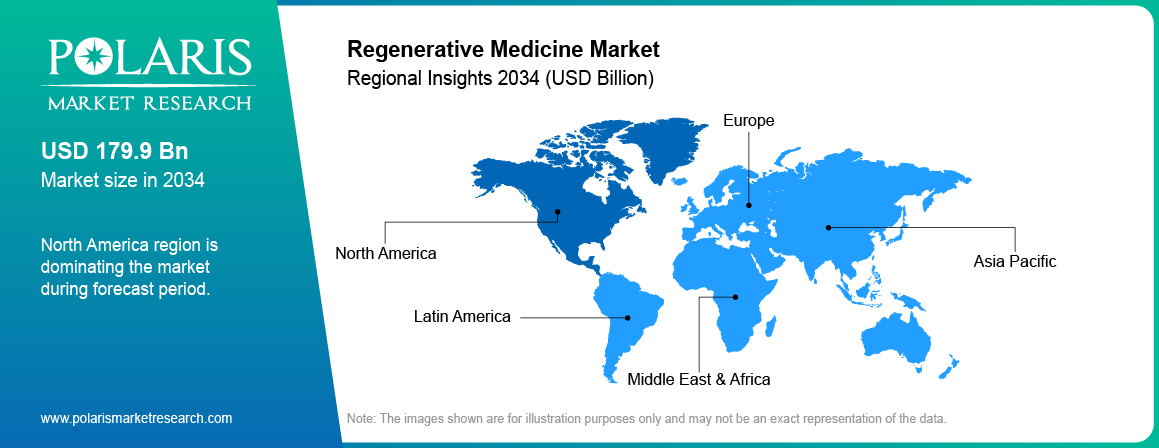
The regenerative medicine market comprises diverse players, and the expected entry of numerous newcomers is poised to intensify competition. Established regenerative medicine companies consistently enhance their technologies to maintain a competitive advantage, placing a strong emphasis on efficiency, dependability, and safety. These entities prioritize strategic initiatives, including forging partnerships, improving product offerings, and participating in collaborative ventures, all with the goal of outperforming their counterparts in the industry. Their primary aim is to secure a substantial regenerative medicine market share.
Vendor Positioning
| Company | HQ | Core Modality | Flagship Regenerative Products | Position |
| Novartis AG | Switzerland | Cell & gene therapy | Kymriah, Zolgensma, Itvisma | Commercial leader |
| Gilead Sciences (Kite) | U.S. | CAR-T | Yescarta, Tecartus | Commercial leader |
| Bristol Myers Squibb | U.S. | CAR-T | Breyanzi, Abecma | Commercial leader |
| Johnson & Johnson | U.S. | CAR-T | Carvykti (with Legend Biotech) | Commercial leader |
| Sarepta Therapeutics | U.S. | Gene therapy | Elevidys | Gene-therapy specialist |
| Vertex Pharmaceuticals | U.S. | Gene editing | Casgevy (with CRISPR Therapeutics) | Gene-editing pioneer |
| Sumitomo Pharma / RACTHERA | Japan | iPSC cell therapy | Amchepry | iPSC first mover |
| Smith+Nephew | UK | Wound & orthopaedic biologics | Grafix | Tissue specialist |
| Vericel | U.S. | Autologous tissue | MACI, Epicel | Tissue specialist |
| Organogenesis | U.S. | Bioengineered wound care | Apligraf, Dermagraft | Emerging leader (M&M) |
| Integra LifeSciences | U.S. | Regenerative matrices | Integra Dermal Regeneration Template | Tissue specialist |
| Mesoblast | Australia | Allogeneic MSC | Ryoncil | Emerging |
Source: Polaris Market Research Analysis
List of Major Regenerative Medicine Companies
- Amgen Inc.
- Astellas Pharma Inc.
- AstraZeneca PLC
- Bayer Aktiengesellschaft (Bayer AG)
- Biogen Inc.
- Bristol Myers Squibb
- Cabaletta Bio, Inc.
- Cuorips Inc.
- F. Hoffmann-La Roche AG
- Gilead Sciences, Inc. (Kite, a Gilead Company)
- Integra LifeSciences Holdings Corporation
- Johnson & Johnson
- Medtronic plc
- Merck KGaA
- Mesoblast Limited
- MiMedx Group, Inc.
- Novartis AG
- Organogenesis Holdings Inc.
- Pfizer Inc.
- Sarepta Therapeutics, Inc.
- Smith+Nephew
- Stryker Corporation
- Sumitomo Pharma Co., Ltd. (including RACTHERA)
- Takeda Pharmaceutical Company Limited
- Vericel Corporation
- Vertex Pharmaceuticals Incorporated
Recent Developments
- November 2026: AGC Biologics added multiple cell therapy projects at its new Yokohama site, including work with the Institute of Science Tokyo on virus-specific T-cell therapy. The company will provide process transfer, preclinical and clinical manufacturing, and development services for stem-cell, exosome, and CAR-T therapies. (Source: globenewswire.com)
- November 2026: HTL Biotechnology inaugurated HTL8, a €15 million pharmaceutical-grade polynucleotide production unit at its Javené site in France. The facility will purify DNA-based biopolymers for regenerative medicine, ophthalmology, and dermatology, supporting rising demand in Asian markets. (Source: prnewswire.com)
- March 2026: Sumitomo Chemical announced that an innovative therapy based on iPS cells had been approved. This was a big step forward in the field of regenerative medicine. This development is one of the first commercialized iPS-based treatments. It shows how advanced cellular technologies are helping to create new treatments (Source: sumitomo-pharma.com)
- February 2026: Sekisui Chemical expanded its regenerative medicine work to include cell therapy-related solutions and technologies to support them. Reflecting rising industry investment in scalable solutions that will help regenerative therapies become more widely used and sold. (Source: sekisuichemical.com)
Future Outlook
The regenerative medicine market is expected to witness strong growth during the forecast period. Rising investments in cell and gene therapy (CGT), iPSC technology, and tissue engineering will support market expansion. Growing commercial approvals, improved GMP manufacturing, and increasing research into organ regeneration will further drive adoption. Advances in gene editing and in vivo platforms are also expected to create new opportunities for market players.
Market Analysis & Report Coverage
The regenerative medicine market report emphasizes key regions across the globe to provide a better understanding of the product to the users. Also, the report provides market insights into recent developments and trends, and analyzes the technologies that are gaining traction around the globe. Furthermore, the report covers in-depth qualitative analysis pertaining to various paradigm shifts associated with the transformation of these solutions.
The report provides detailed analysis of the market while focusing on various key aspects such as competitive analysis, products, applications, and their futuristic growth opportunities.
Research Methodology
- Market estimates are derived using a blend of primary and secondary research, validated through weighted-average and combined top-down/bottom-up modeling approaches.
- Secondary research covers company filings, clinical trial registries, FDA and EMA cell and gene therapy approvals, regenerative medicine research publications, industry journals, and paid third-party databases to build baseline estimates.
- Primary research includes interviews with key industry participants such as cell and gene therapy developers, tissue engineering companies, clinicians, and hospital and research institute procurement professionals, to validate accuracy and capture forward-looking insights.
- Base year considered is 2025, with a forecast provided through 2034; revenues are expressed in USD Billion.
- Parent market is identified as the global biotechnology and advanced therapeutics market; the addressable segment is narrowed using regenerative therapy adoption rates across oncology, musculoskeletal, and other chronic disease indications.
- Bottom-up model aggregates regional regenerative medicine demand across product, application, and end user, validated against vendor revenue disclosures from Novartis, Gilead Sciences, Vertex Pharmaceuticals, Amgen, Medtronic, and others.
- Regional coverage spans North America, Europe, Asia Pacific, Middle East & Africa, and Latin America, further segmented by major countries.
- Projected 25.1% CAGR (2026–2034) reflects weighted analysis of rising chronic disease prevalence, expanding approvals of cell and gene therapies, growing investment in stem cell and tissue engineering research, and supportive regulatory pathways for advanced therapies.
- Findings are cross-validated across multiple estimation methods to ensure consistency, accuracy, and reliability of the final market sizing.
Regenerative Medicine Market Segmentation
By Product Outlook (Revenue – USD Billion, 2021–2034)
- Cell-Based Immunotherapy
- Gene Therapy
- Cell Therapy
- Stem Cell Therapy
- Tissue Engineering
- Others
By Application Outlook (Revenue – USD Billion, 2021–2034)
- Oncology
- Dermatology
- Ophthalmology
- Musculoskeletal
- Cardiovascular
- Immunology
- Others
By End User Outlook (Revenue – USD Billion, 2021–2034)
- Hospitals
- Specialty/Cancer Centres
- Research Institutes
- Biopharma
By Regional Outlook (Revenue – USD Billion, 2021–2034)
- North America
- U.S.
- Canada
- Europe
- Germany
- France
- UK
- Italy
- Spain
- Netherlands
- Russia
- Rest of Europe
- Asia Pacific
- China
- Japan
- India
- Malaysia
- South Korea
- Indonesia
- Australia
- Vietnam
- Rest of Asia Pacific
- Middle East & Africa
- Saudi Arabia
- UAE
- Israel
- South Africa
- Rest of the Middle East & Africa
- Latin America
- Mexico
- Brazil
- Argentina
- Rest of Latin America
Regenerative Medicine Market Report Scope
| Report Attributes | Details |
| Market Size in 2025 | USD 47.44 billion |
| Market Size in 2026 | USD 59.13 billion |
| Revenue Forecast in 2034 | USD 354.89 billion |
| CAGR | 25.1% from 2026 – 2034 |
| Base Year | 2025 |
| Historical Data | 2021 – 2024 |
| Forecast Period | 2026 – 2034 |
| Quantitative Units | Revenue in USD billion and CAGR from 2026 to 2034 |
| Segments Covered |
|
| Regional Scope |
|
| Competitive Landscape |
|
| Report Format |
|
| Customization | Report customization as per your requirements with respect to countries, region, and segmentation. |
Source: Polaris Market Research Analysis
Regenerative Medicines Market FAQ's
The regenerative medicines market report covers key segments, including product, application, end user, and region.
The global regenerative medicine market size is expected to reach USD 354.89 billion by 2034.
Regenerative medicine market is expected to record a CAGR of 25.1% during the forecast period.
North America led the global market with a 41.98% share in 2025.
Advancements in stem cell research are projected to spur product demand, driving the regenerative medicines market growth.
Regenerative medicine repairs, replaces, or regenerates damaged cells, tissues, and organs using cell therapy, gene therapy, tissue engineering, and biomaterials. The methods are used with an aim to restore function rather than manage symptoms.
Cell therapy transfers living cells, such as CAR-T or stem cells, into a patient. Gene therapy modifies, replaces, or silences a faulty gene, either inside the body or in cells edited outside it.
Costs vary widely. Tissue-engineered wound products follow procedure-based reimbursement, while several one-time gene therapies are priced above USD 2 million per patient.
Leading companies include Novartis, Gilead Sciences (Kite), Bristol Myers Squibb, Johnson & Johnson, Sarepta Therapeutics, Vertex Pharmaceuticals, Smith+Nephew, Vericel, Organogenesis, and Sumitomo Pharma.

Download Sample Report of Regenerative Medicines Market
Please fill out the form to request a customized copy of the research report.


