
Appetite Stimulant Market Growth & Industry Trend 2026-2034
REPORT DETAILS
Appetite Stimulant Market Summary
The global appetite stimulant market is estimated around USD 1.71 Billion in 2025,with consistent growth anticipated during 2026–2034. Market growth is driven by rising cancer cachexia cases, increasing geriatric malnutrition, and growing adoption of herbal appetite stimulants. The market is projected to grow at a CAGR of 6.70% during the forecast period.
Market Statistics
Key Takeaways
-
North America dominated the market in 2025, accounting for approximately 41.27% of the total market share due to strong healthcare reimbursement systems and high prescription awareness.
-
Pharmaceutical appetite stimulants dominated the market in 2025, holding nearly 57.84% market share owing to high prescription usage in oncology and chronic care treatment.
-
Oncology segment dominated the market in 2025 with around 38.66% share due to rising cancer-related appetite loss cases and increasing supportive care demand.
-
Homecare segment is projected to register the fastest CAGR of approximately 9.74% during the forecast period owing to rising preference for at-home recovery solutions and remote patient care services.
- Major companies operating in the market include Abbott Laboratories, Pfizer Inc., GlaxoSmithKline plc, Bayer AG, and Himalaya Wellness Company.
Industry Dynamics
- Rising cancer cachexia cases are increasing demand for appetite stimulants.
- Growing elderly population is supporting market expansion.
- Side effects associated with pharmaceutical stimulants remain a major challenge.
- Rising demand for herbal products is creating growth opportunities.
What is Appetite Stimulant?
Appetite stimulants are pharmaceutical drugs or natural products used to increase hunger and improve food intake in patients suffering from appetite loss. These products are widely used in cancer care, geriatric nutrition, HIV treatment, post-surgical recovery, and chronic illness management. Common medications include megestrol acetate, corticosteroids, and cyproheptadine.
Value chain involves the following parties such as suppliers of raw materials, drug companies, herb medication companies, distributors, hospitals, clinics, pharmacies, and home healthcare. Pharmaceutical companies concentrate on prescription medication whereas herb medication companies target over-the-counter medications.
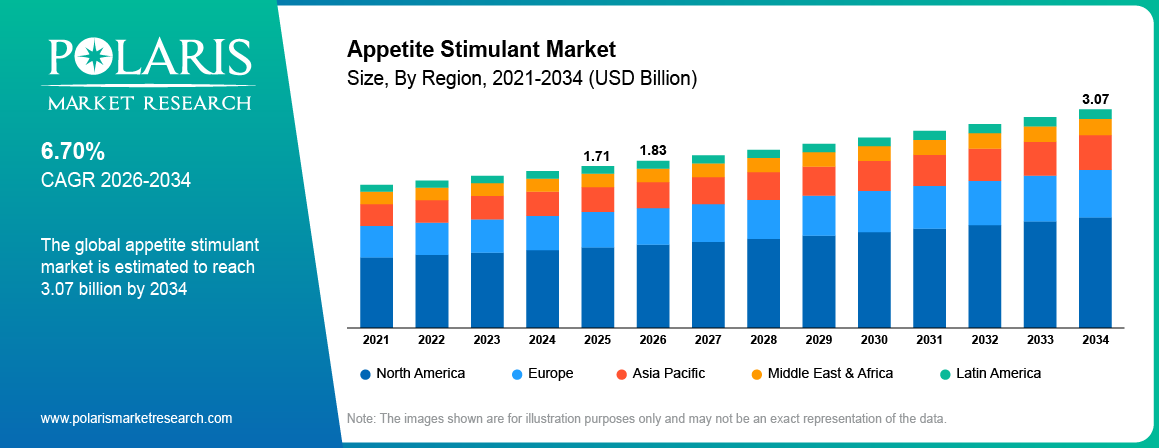
Source: Polaris Market Research Analysis
Market growth drivers are the increase in chronic disease patients, increase in aging populations, greater knowledge about the dangers of malnutrition, and an increase in the utilization of nutritional therapy. Appetite loss is increasingly treated by clinicians which helps fuel demand for the market.
Drivers & Opportunities
Rising Prevalence of Cancer Cachexia Is Increasing Market Demand: Patients undergoing cancer treatment often suffer from loss of appetite as a result of their chemotherapy procedures and advanced stages of treatment. Thus, driving the demand for the appetite stimulant drugs globally. According to the World Health Organization (WHO), cancer was the cause of death in nearly 10 million cases around the world in 2022, thus becoming one of the major causes of death worldwide.Approximately 50% to 80% of patients suffering from advanced stages of cancer develop cachexia, increasing the use of appetite stimulants.
Growing Geriatric Population Is Supporting Market Expansion: The elderly have problems with reduced appetite due to growing chronic illnesses, decreased metabolism, and adverse effects of medications. Globally, the aging population keeps growing in the countries such as US, Japan, Germany, and China thus accelerating the demand for these drugs. The United Nations report states that the global population aged 60 years and older amounted to 1.2 billion in 2025 and is expected to increase to 2.1 billion by 2050.This trend is increasing demand for appetite stimulants in long-term care settings.
Restraints & Challenges
Side Effects Associated with Pharmaceutical Products Are Limiting Market Growth: Prescription appetite stimulants may cause hormonal imbalance, fluid retention, and cardiovascular complications. The side effects deter patients from embracing the medication. Thus, there are delays in approvals from regulatory bodies for new formulation products.
Opportunity
Rising Demand for Herbal Appetite Stimulants Is Creating Growth Opportunities: Consumers are moving away from artificial appetite stimulators to embrace natural appetite stimulators, since they pose fewer adverse effects. There is a significant increase in demand for herbal, cannabidiol and botanical products. For example, in October 2025, Artelo Biosciences stated that the cannabis-based appetite stimulator ART27.13 caused advanced cancer patients to increase body mass by an average of 6.4% during Phase 2 clinical trials.
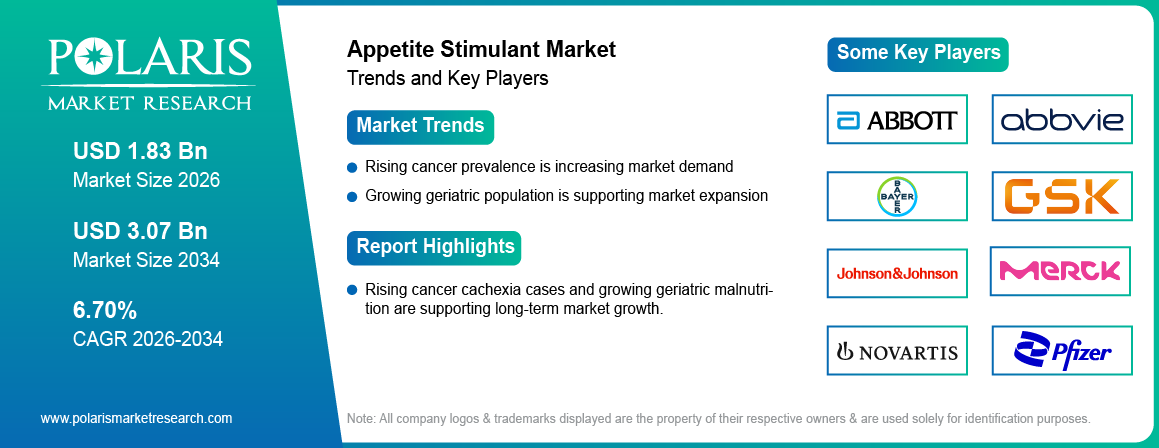
Source: Polaris Market Research Analysis
Segmental Insights
The report provides a comprehensive analysis of the appetite stimulant market by drug type, application and end user to pinpoint the key revenue generating and growth segments.
By Drug Type
-
Pharmaceutical Appetite Stimulants
Based on drug type, the pharmaceutical appetite stimulants segment dominated the market in 2025 due to strong prescription demand in oncology, HIV treatment, and post-surgical recovery. Products such as megestrol acetate and corticosteroids remain widely prescribed in hospitals. Strong clinical effectiveness continues to support segment demand.
-
Herbal/Natural Appetite Stimulants
Based on drug type, the herbal/natural appetite stimulants segment is projected to grow at the fastest CAGR during the forecast period due to increasing consumer preference for natural therapies. Growing OTC availability and lower side effect concerns are supporting adoption.
By Application
-
Oncology
Based on application, the oncology segment dominated the market in 2025 due to rising cancer-related appetite loss cases. Cancer patients frequently require appetite support during chemotherapy and advanced-stage treatment. Rising global cancer burden continues to support segment growth.
-
Geriatric Care
Based on application, the geriatric care segment is projected to grow at the fastest CAGR during the forecast period due to increasing elderly malnutrition cases. Aging populations across developed economies are supporting demand growth.
By End User
-
Hospitals
Based on end user, the hospitals segment dominated the market in 2025 due to high prescription volumes and strong patient inflow. Hospitals remain the primary treatment centers for cancer and chronic disease patients requiring appetite therapies.
-
Homecare
Based on end user, the homecare segment is projected to grow at the fastest CAGR during the forecast period due to rising demand for home-based recovery solutions. Growing telehealth adoption is also supporting segment growth.
Source: Polaris Market Research Analysis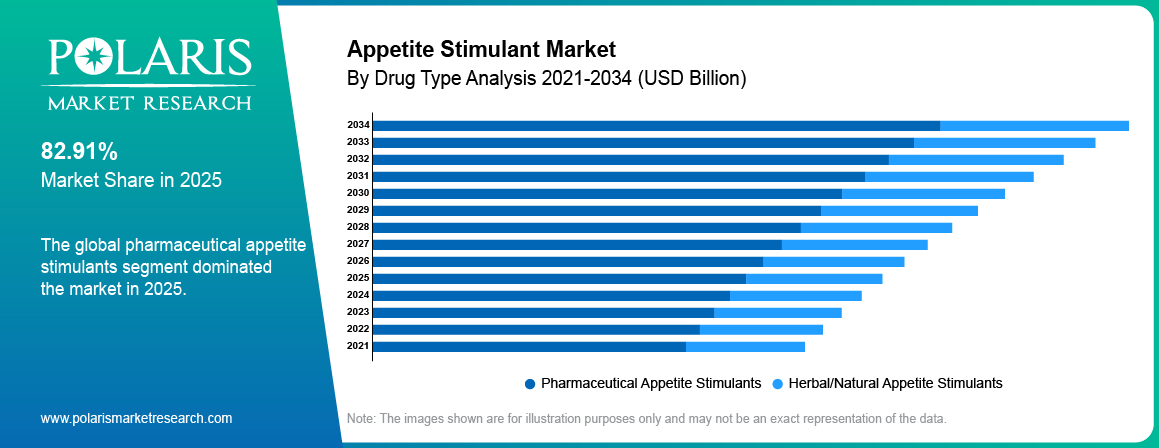
Regional Analysis
North America Appetite Stimulant Market Overview
North America dominated the market in 2025 due to strong reimbursement systems and high awareness regarding malnutrition treatment. The US and Canada continue to witness strong prescription demand. Rising cancer prevalence is supporting regional growth. As per U.S. Centers for Disease Control and Prevention, the US reported 36.7 million new cancer cases, out of which, 3.76 million were non-malignant, with annual increases due to population growth and aging.Additionally, increasing adoption of home healthcare services is further driving market demand in the region.
Europe Appetite Stimulant Market Insights
Europe accounts for a significant market share due to growing elderly population and strong healthcare infrastructure. According to Eurostat, the EU population reached 450.6 million in January 2025, with 22% aged 65 and above, while the median age rose to 44.9 years.Moreover, rising clinical nutrition awareness is supporting regional demand coupled with Increasing government support for elderly care programs.
Asia Pacific Appetite Stimulant Market Overview
Asia Pacific is projected to grow at the fastest CAGR during the forecast period due to rising healthcare access and strong nutraceutical demand. China, India, Japan, and South Korea are key growth markets due to rising chronic disease burden. According to China’s National Health Commission, chronic diseases cause over 80% of deaths in China, with 30+ million elderly diabetes patients and nearly 100 million respiratory disease cases.
Rest of the World Appetite Stimulant Market Insights
Rest of the world is witnessing steady growth due to improving healthcare access and rising awareness regarding nutrition therapies across Latin America and the Middle East & Africa. Brazil, Mexico, Saudi Arabia, UAE, and South Africa remain key markets. Rising investments in hospital infrastructure and chronic disease treatment services are supporting regional demand. The growth in health care expenditure has been further aiding market expansion.
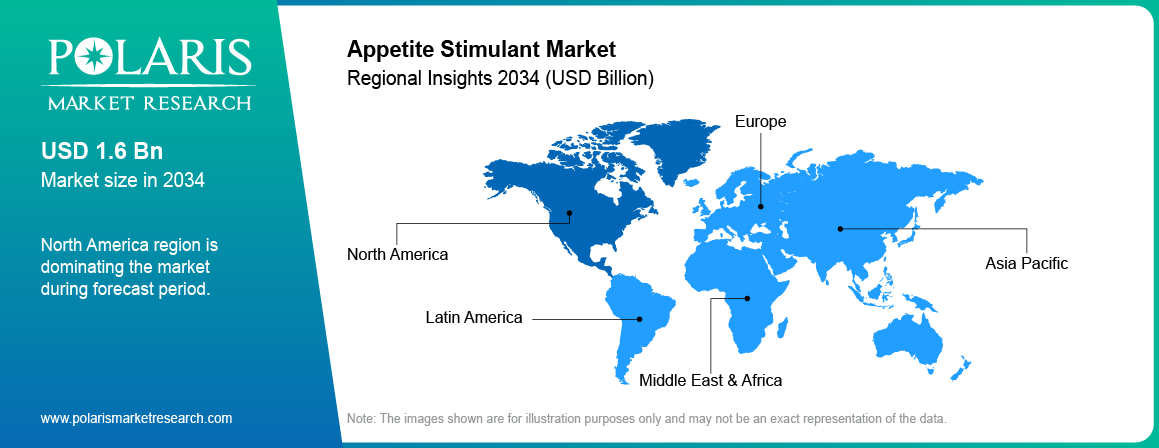
Source: Polaris Market Research Analysis
Competitive Landscape & Key Players
The market is relatively fragmented owing to the presence of pharmaceutical players, nutraceutical players, and regional supplements providers. Important competitive parameters include price, efficacy, regulatory approval, and geographical spread. Product launches, partnerships, acquisitions, and regional expansions are important strategies are followed by the companies.
There are several major players operating in this space, such as Abbott Laboratories, AbbVie Inc., Bayer AG, GlaxoSmithKline plc, Himalaya Wellness Company, Johnson & Johnson, Merck & Co., Inc., Nestlé Health Science, Novartis AG, Pfizer Inc., Sanofi S.A., Teva Pharmaceutical Industries Ltd., and others.
Company Benchmarking Table
| Company | Strength | Strategy |
| Abbott Laboratories | Strong clinical nutrition portfolio | Product integration |
| Pfizer Inc. | Broad pharmaceutical pipeline | R&D expansion |
| GlaxoSmithKline plc | Strong global presence | Geographic expansion |
| Himalaya Wellness Company | Herbal product expertise | Natural product expansion |
| Abbott Laboratories | Strong clinical nutrition portfolio | Product integration |
Source: Polaris Market Research Analysis
Pricing Intelligence
- Appetite stimulants that belong to pharmaceuticals have high-priced positioning owing to prescription consumption and costs associated with regulation.
- Appetite stimulants in the form of herbs occupy a mid-to-lower pricing segment due to their over-the-counter availability.
- There is regional variation in price segments owing to reimbursement, infrastructure, and product availability.
Premium Insights
Pharma and Nutraceutical Convergence
Firms have been integrating their clinical grade appetite stimulants with natural products, targeting an expanded customer base. The strategy presents an opportunity for the development of new products.
Telehealth-Driven Demand
There have been advancements in digital health-care that allow easier access to prescriptions for appetite stimulants through online consultations in remote areas.
AI in Drug Discovery
New AI technology helps to assist organizations in identifying new chemical entities and making clinical trials more efficient. The above mentioned development is expected to help in quicker product launches.
Investor Insights
- Asia Pacific provides ample growth opportunities owing to increasing access to healthcare facilities.
- Nutraceuticals provide an opportunity for high ROI owing to increased consumption of herbal products.
- Mid-sized pharmaceutical companies remain attractive acquisition targets.
- Long-term market demand remains supported by rising aging population globally.
Key Players
- Abbott Laboratories
- AbbVie Inc.
- Bayer AG
- GlaxoSmithKline plc
- Himalaya Wellness Company
- Johnson & Johnson
- Merck & Co., Inc.
- Nestlé Health Science
- Novartis AG
- Pfizer Inc.
- Sanofi S.A.
- Teva Pharmaceutical Industries Ltd.
Industry Developments
- January 2026: Biocodex introduced its innovative product named Fullify as a precise probiotic to help with appetite regulation through the activation of the gut-brain axis. [source: www.businesswire.com]
Appetite Stimulant Market Segmentation
By Drug Type Outlook (Revenue, USD Billion, 2021-2034)
- Pharmaceutical Appetite Stimulants
- Herbal/Natural Appetite Stimulants
By Application Outlook (Revenue, USD Billion, 2021-2034)
- Oncology
- Geriatric Care
- HIV/AIDS
- Pediatric Use
- Post-Surgical Recovery
- Others
By End User Outlook (Revenue, USD Billion, 2021-2034)
- Hospitals
- Clinics
- Homecare
By Regional Outlook (Revenue, USD Billion, 2021-2034)
- North America
- US
- Canada
- Europe
- Germany
- France
- UK
- Italy
- Spain
- Netherlands
- Russia
- Rest of Europe
- Asia Pacific
- China
- Japan
- India
- Malaysia
- South Korea
- Indonesia
- Australia
- Vietnam
- Rest of Asia Pacific
- Middle East & Africa
- Saudi Arabia
- UAE
- Israel
- South Africa
- Rest of Middle East & Africa
- Latin America
- Mexico
- Brazil
- Argentina
- Rest of Latin America
Appetite Stimulant Market Report Scope
| Report Attributes | Details |
| Market Size in 2025 | USD 1.71 Billion |
| Market Size in 2026 | USD 1.83 Billion |
| Revenue Forecast by 2034 | USD 3.07 Billion |
| CAGR | 6.70% from 2026 to 2034 |
| Base Year | 2025 |
| Historical Data | 2021–2024 |
| Forecast Period | 2026–2034 |
| Quantitative Units | Revenue in USD Billion and CAGR from 2026 to 2034 |
| Report Coverage | Revenue Forecast, Competitive Landscape, Growth Factors, and Industry Trends |
| Segments Covered |
|
| Regional Scope |
|
| Competitive Landscape |
|
| Report Format |
|
| Customization | Report customization as per your requirements with respect to countries, regions, and segmentation. |
Source: Polaris Market Research Analysis
Appetite Stimulant Market FAQ's
The global market size was valued at USD 1.71 Billion in 2025 and is projected to grow to USD 3.07 Billion by 2034.
North America emerged as the leader in the market in 2025 owing to favorable prescribing habits and reimbursements.
Major applications include oncology, geriatric care, HIV treatment, and post-surgical recovery.
A few of the key players in the market are BASF SE, Cargill Incorporated, Archer Daniels Midland Company, Jungbunzlauer Suisse AG, Corbion N.V., Eastman Chemical Company, Celanese Corporation, Tate & Lyle PLC, Fuso Chemical Co., Ltd., Henan Jindan Lactic Acid Technology Co., Ltd., Gadot Biochemical Industries Ltd., TTCA Co., Ltd., and others.
Market growth is driven by rising cancer cachexia cases and increasing geriatric malnutrition.
Pharmaceutical appetite stimulants dominated the market in 2025 due to strong clinical usage.
The market outlook remains positive due to rising herbal product demand and improving healthcare access.
Download Sample Report of Appetite Stimulant Market
Please fill out the form to request a customized copy of the research report.


