
Direct-To-Consumer Testing Market Trends Analysis Report, 2026-2034
REPORT DETAILS
Direct-To-Consumer Testing Market Summary
The global direct-to-consumer testing market is estimated around USD 2.29 Billion in 2025,with consistent growth anticipated during 2026–2034. Rising demand for personalized healthcare, increasing adoption of preventative healthcare solutions, and growing awareness regarding hereditary disease testing continue supporting market expansion. The market is projected to grow at a CAGR of 13.9% during the forecast period.
Market Statistics
Key Takeaways
- North America dominated the direct-to-consumer testing market in 2025, accounting for approximately 43.28% of the total market share due to advanced healthcare infrastructure and strong digital healthcare adoption.
- The predictive testing segment dominated the market in 2025, holding nearly 37.64% market share owing to rising demand for hereditary disease risk assessment solutions.
- The SNP chips segment accounted for approximately 48.19% market share in 2025 driven by strong adoption across consumer genomics and ancestry testing platforms.
- The whole genome sequencing segment is projected to register the fastest CAGR of nearly 18.46% during the forecast period due to declining sequencing costs and increasing accessibility of genomic testing services.
- Major companies operating in the market include 23andMe Holding Co., Ancestry.com LLC, Color Health Inc., FamilyTreeDNA, FitnessGenes Ltd., and others.
Industry Dynamics
- Rising focus on preventative healthcare continues increasing consumer adoption of genetic screening solutions.
- AI-powered genomics analytics platforms continue improving genomic interpretation capabilities.
- Data privacy and ethical concerns remain a major market challenge.
- Pharmacogenomics expansion continues creating long-term market opportunities.
What is Direct-To-Consumer Testing?
Direct-to-consumer testing refers to at-home DNA testing services that provide health, ancestry, wellness, and hereditary disease insights directly to consumers without requiring physician involvement. These testing kits are widely used for ancestry tracing, disease risk assessment, nutrition planning, and medication response analysis.
The value chain of this industry involves sampling kits producers, sequencing technologies producers, genomics platform providers, internet-based distributors, labs, and consumers. The firms produce DNA saliva testing kits and analysis software, while the consumers buy the test kits from digital health care web portals.
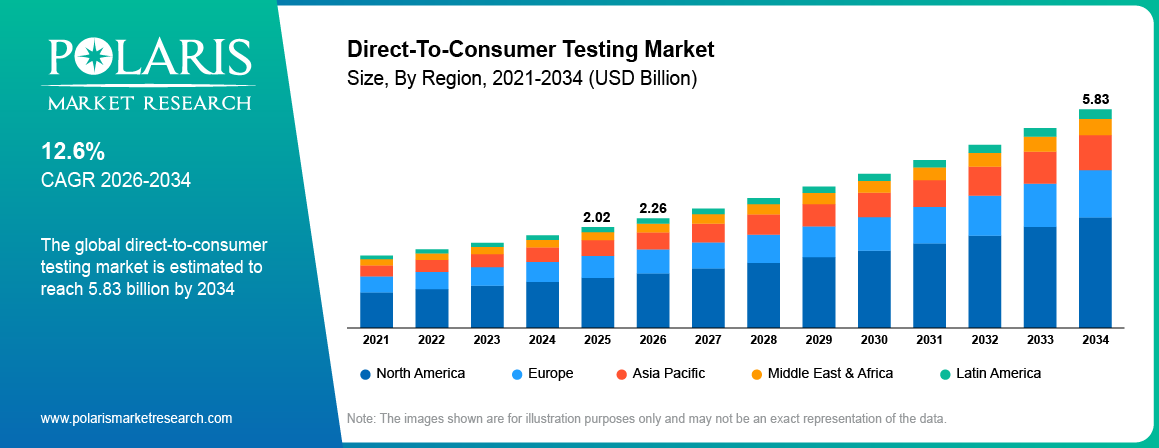
Source: Polaris Market Research Analysis
The market is expanding due to the rising focus on healthcare digitalization, growing demand for personalized medicine, and, concerns regarding preventive health care. Precision medicine, regenerative medicine, and organoids are further driving market growth.
Drivers & Opportunities
Rising Demand for Preventative Healthcare: Consumers are focusing on early disease detection and wellness. D2C genetic tests help people to determine genetic risks and plan their healthcare options. In addition, the increasing cases of chronic diseases is another factor contributing to the usage of such technology in consumer healthcare products. According to World Health Organization, chronic diseases result in 43 million deaths annually, accounted for 75% of total deaths globally, with more cases expected in the future.[Source: www.who.int]
AI and Bioinformatics Advancements: Development in AI and bioinformatics are improving the effectiveness of genomic analysis in consumer genomics platforms. These technologies enhance sequencing results and predictions, providing individualized health recommendations. For example, in March 2026, Basecamp Research launched Trillion Gene Atlas in order to improve genomic data acquisition and develop AI solutions.[ Source: www.prnewswire.com]
Restraints & Challenges
Data Privacy and Ethical Concerns: Issues regarding data security and third-party sharing reduces consumer trust across several regions. Regulatory bodies are implementing strict policies regarding business activities related to DNA data and their storage. Companies are continuously investing in cybersecurity systems to strengthen their security measures.
Opportunity
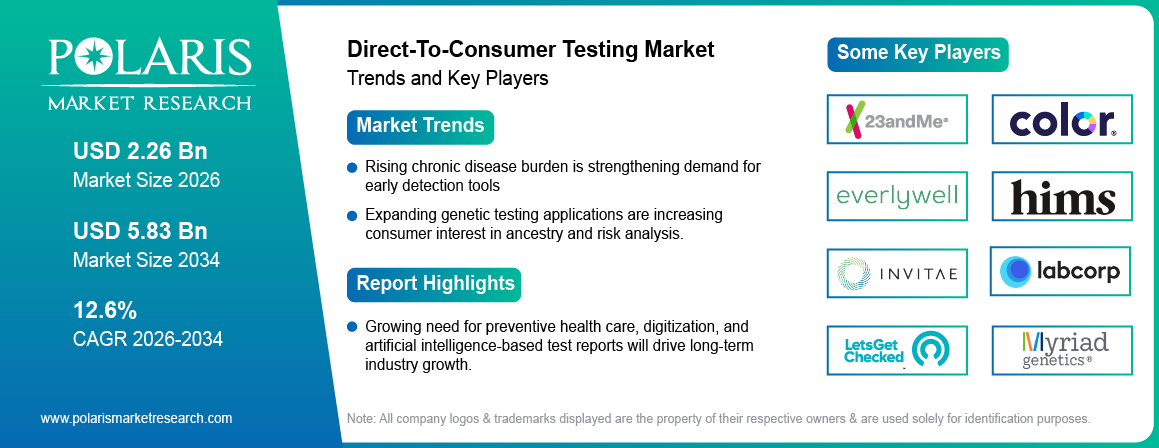
Pharmacogenomics Expansion: Pharmacogenomics is emerging as a major growth opportunity across the direct-to-consumer genetic testing market. In May 2025, Helix expanded its pharmacogenomic testing portfolio with new tests designed to support safer cancer and Alzheimer’s treatments through personalized genetic insights.[Source: www.prnewswire.com] Consumers are increasingly seeking medication compatibility insights and personalized treatment recommendations based on genomic analysis. Growing integration of genomics into precision medicine continues creating long-term growth opportunities for market participants.
Source: Polaris Market Research Analysis
Segmental Insights
The report provides a comprehensive analysis of the DTC testing market by type, technology, application, and distribution channel to pinpoint the key revenue generating and growth segments.
By Type
-
Predictive Testing
The predictive testing segment dominated the market in 2025, holding nearly 37.64% market share due to increasing demand for hereditary disease screening and preventative healthcare planning. Consumers continue using predictive genomics solutions to assess risks associated with cardiovascular diseases, cancer, diabetes, and neurological disorders.
-
Nutrigenomics Testing
In terms of type, the nutrigenomics testing segment is projected to grow at the fastest CAGR during the forecast period due to rising interest in personalized nutrition and wellness optimization. Consumers are utilizing DNA-based diet and metabolism analysis products that enhances their fitness and well-being.
By Technology
-
SNP Chips
The SNP chips segment accounted for approximately 48.19% market share in 2025 due to strong cost efficiency and high scalability across consumer genomics platforms. Testing providers continue adopting SNP chip technology to improve large-scale genomic screening capabilities.
-
Whole Genome Sequencing
The whole genome sequencing segment is projected to register the fastest CAGR of nearly 18.46% during the forecast period due to declining sequencing costs and rising demand for comprehensive genomic analysis. Increasing investments in advanced sequencing technologies continue supporting segment growth.
By Application
-
Health Risk Assessment
Based on application, the health risk assessment segment dominated the market in 2025 due to rising awareness regarding chronic disease prevention and early diagnosis. Consumers are increasingly adopting genetic testing services to evaluate hereditary disease susceptibility and long-term health risks.
-
Ancestry Testing
In terms of application, the ancestry testing segment is projected to grow at the fastest CAGR during the forecast period due to increasing consumer interest in genealogy tracking and ethnicity mapping services. Digital ancestry platforms continue attracting strong adoption among millennials and family history researchers.
By Distribution Channel
-
Online Platforms
Based on distribution channel, the online platforms segment dominated the market in 2025 due to increasing adoption of e-commerce healthcare services and home-based testing solutions. Consumers continue preferring digital ordering systems and online result delivery platforms for convenience and accessibility.
-
Retail Pharmacies
In terms of distribution channel, the retail pharmacies segment is projected to grow at the fastest CAGR during the forecast period due to increasing availability of consumer healthcare products across pharmacy chains. Retail healthcare expansion continues improving accessibility of at-home DNA testing kits.
Source: Polaris Market Research Analysis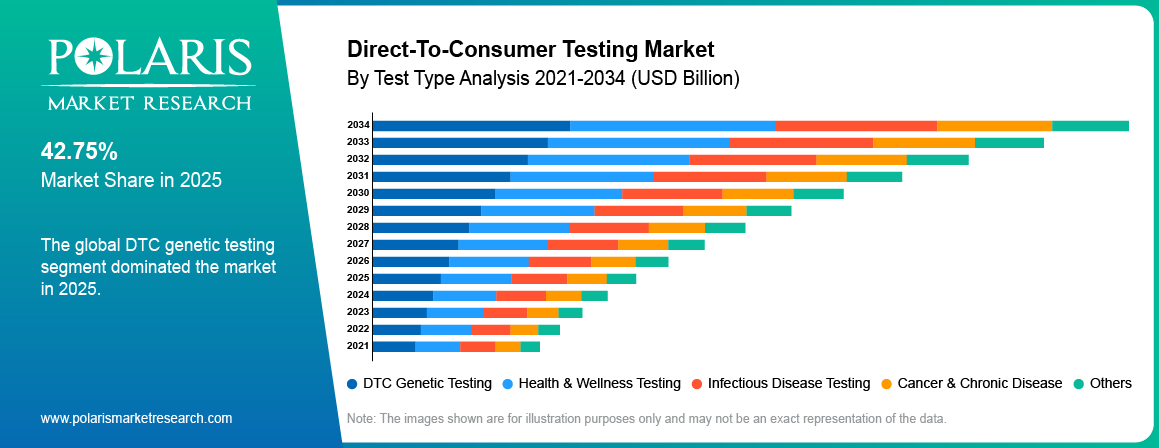
Regional Analysis
North America Direct-to-consumer testing market Overview
North America dominated the direct-to-consumer genetic testing market in 2025 due to advanced healthcare infrastructure, strong consumer awareness, and high digital healthcare adoption across the US and Canada. According to Rock Health, digital health companies secured USD 4 billion in funding in the first quarter 2026, up by USD 1 billion from the previous year.[Source: www.healthcaredive.com] Rising adoption of preventative healthcare solutions and strong presence of genomics companies continue supporting market expansion across the region.
Europe Direct-to-consumer testing market Insights
Europe held a significant market share due to increasing investments in precision medicine and growing awareness regarding hereditary disease testing across Germany, France, and the UK. The European Commission reported that 27 to 36 million people in the EU live with rare diseases, with nearly 80% linked to genetic causes and 70% beginning in childhood.[Source: health.ec.europa.eu] Favorable research initiatives and rising healthcare digitization continue supporting genomics adoption despite strict GDPR-related compliance requirements.
Asia Pacific DTC testing market Insights
Asia Pacific is projected to grow at the fastest CAGR during the forecast period due to expanding biotechnology investments and increasing healthcare modernization across China, India, Japan, and Singapore. In June 2025, Singapore launched a national genetic testing programme to expand early screening and improve access to direct-to-consumer genetic testing services for inherited cholesterol conditions.[Source: www.channelnewsasia.com] Rising middle-class populations and increasing awareness regarding genetic screening continue accelerating regional market growth.
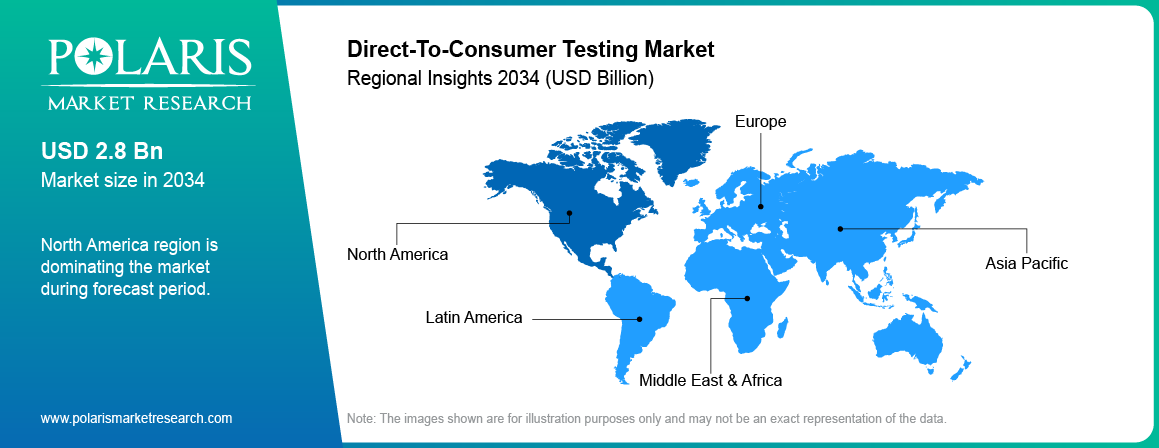
Source: Polaris Market Research Analysis
Competitive Landscape & Key Players
The DTC testing market is moderately fragmented due to the presence of global genomics companies and regional healthcare technology providers. Competition is based on product pricing, AI capabilities, and distribution. Companies are focusing on product innovation, partnership, mergers & acquisitions to strengthen market presence.
The leading players involved in the industry include 23andMe Holding Co., Ancestry.com LLC, Color Health Inc., FamilyTreeDNA, FitnessGenes Ltd., Helix OpCo LLC, Illumina Inc., Mapmygenome India Ltd., MyHeritage Ltd., Nebula Genomics Inc., Orig3n Inc., Veritas Genetics Inc., and others.
Premium Insights
AI-Driven Consumer Genomics
AI-genomic platforms are enhancing predictive healthcare analysis and personalized wellness advice. Machine learning capabilities are becoming more common in companies in order to enhance genomic interpretations.
Precision Medicine Expansion
Precision medicine adoption continues supporting long-term market expansion across consumer healthcare platforms. Strong growth is expected due to regenerative therapies, personalized therapeutics, and organoid commercialization.
Long-Term Outlook
The market is expected to witness strong long-term growth due to increasing adoption of personalized healthcare, declining sequencing costs, and rising integration of AI-powered genomics platforms. Precision medicine initiatives, regenerative healthcare advancements, and digital healthcare expansion continue supporting future market opportunities.
Key Players
- 23andMe Holding Co.
- Ancestry.com LLC
- Color Health Inc.
- FamilyTreeDNA
- FitnessGenes Ltd.
- Helix OpCo LLC
- Illumina Inc.
- Mapmygenome India Ltd.
- MyHeritage Ltd.
- Nebula Genomics Inc.
- Orig3n Inc.
- Veritas Genetics Inc.
Industry Developments
- March 2025: Hydreight launched a personalized genetic testing and wellness solution on its VSDHOne platform for at-home DNA testing and customized health plans. [source: www.globenewswire.com]
Direct-To-Consumer Testing Market Segmentation
By Type Outlook (Revenue, USD Billion, 2021-2034)
- Predictive Testing
- Nutrigenomics Testing
- Carrier Testing
- Pharmacogenomics Testing
- Ancestry Testing
By Technology Outlook (Revenue, USD Billion, 2021-2034)
- SNP Chips
- Whole Genome Sequencing
- Whole Exome Sequencing
- PCR-Based Testing
- Microarray Technology
By Application Outlook (Revenue, USD Billion, 2021-2034)
- Health Risk Assessment
- Ancestry Testing
- Personalized Nutrition
- Medication Response Analysis
- Fitness and Wellness
By Distribution Channel Outlook (Revenue, USD Billion, 2021-2034)
- Online Platforms
- Retail Pharmacies
- Direct Sales
- Healthcare Clinics
By Regional Outlook (Revenue, USD Billion, 2021-2034)
- North America
- US
- Canada
- Europe
- Germany
- France
- UK
- Italy
- Spain
- Netherlands
- Russia
- Rest of Europe
- Asia Pacific
- China
- Japan
- India
- Malaysia
- South Korea
- Indonesia
- Australia
- Vietnam
- Rest of Asia Pacific
- Middle East & Africa
- Saudi Arabia
- UAE
- Israel
- South Africa
- Rest of Middle East & Africa
- Latin America
- Mexico
- Brazil
- Argentina
- Rest of Latin America
Direct-To-Consumer Testing Market Report Scope
| Report Attributes | Details |
| Market Size in 2025 | USD 2.29 Billion |
| Market Size in 2026 | USD 2.60 Billion |
| Revenue Forecast by 2034 | USD 7.38 Billion |
| CAGR | 13.9% from 2026 to 2034 |
| Base Year | 2025 |
| Historical Data | 2021–2024 |
| Forecast Period | 2026–2034 |
| Quantitative Units | Revenue in USD Billion and CAGR from 2026 to 2034 |
| Report Coverage | Revenue Forecast, Competitive Landscape, Growth Factors, and Industry Trends |
| Segments Covered |
|
| Regional Scope |
|
| Competitive Landscape |
|
| Report Format |
|
| Customization | Report customization as per your requirements with respect to countries, regions, and segmentation. |
Source: Polaris Market Research Analysis
Direct-To-Consumer Testing Market FAQ's
The global market size was valued at USD 2.29 Billion in 2025 and is projected to grow to USD 7.38 Billion by 2034.
North America dominated the market in 2025 due to advanced healthcare infrastructure and strong consumer awareness.
Major applications include health risk assessment, ancestry testing, personalized nutrition, and pharmacogenomics analysis.
A few of the key players in the market are 23andMe Holding Co., Ancestry.com LLC, Color Health Inc., FamilyTreeDNA, FitnessGenes Ltd., Helix OpCo LLC, Illumina Inc., Mapmygenome India Ltd., MyHeritage Ltd., Nebula Genomics Inc., Orig3n Inc., Veritas Genetics Inc., and others.
Rising preventative healthcare adoption, AI-powered genomics analytics, and declining sequencing costs continue supporting market expansion.
SNP chips segment dominated the market in 2025 due to strong scalability and cost efficiency.
AI-enabled healthcare platforms, precision medicine adoption, regenerative therapies, and organoid commercialization are expected to support long-term market growth.
Download Sample Report of Direct-To-Consumer Testing Market
Please fill out the form to request a customized copy of the research report.


