
Psoriasis Drug Market Size, Share, Trends & Forecast, 2026-2034
REPORT DETAILS
Psoriasis Drug Market Size & Forecast, 2025-2034
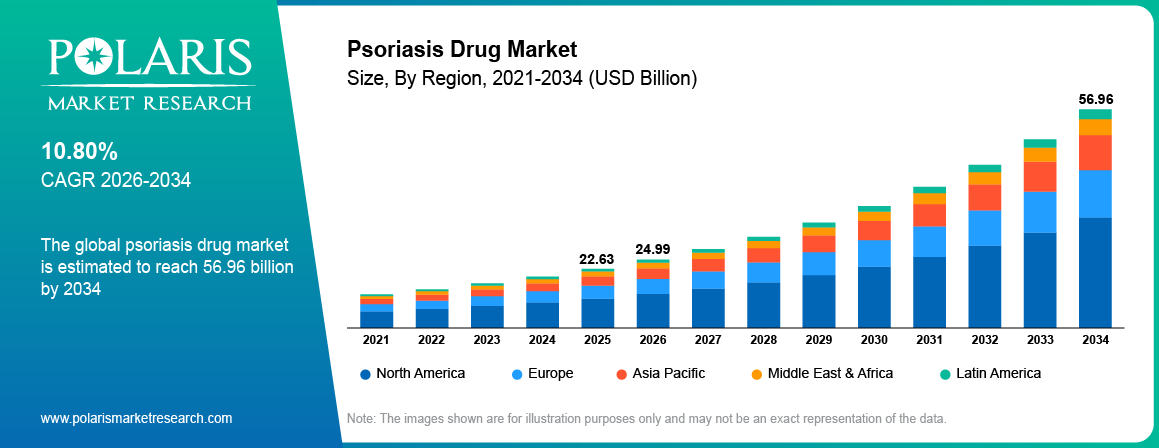
The psoriasis drug market size was valued at USD 22.63 billion in 2025. The market is projected to grow at a CAGR of 10.80% from 2026 to 2034. The market is driven by the growing prevalence of psoriasis worldwide, progress in biologics and biosimilars, and growing awareness of treatment alternatives.
Market Statistics
Psoriasis Drug Market Key Takeaways: Size, Drug Classes, Treatments & Regions
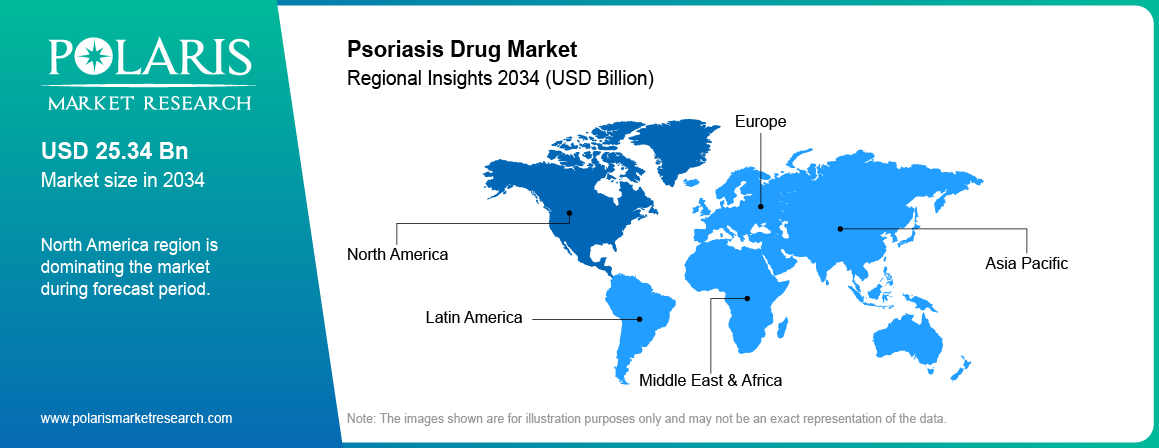
- North America led with a 44.5% share in 2025. This is due to the high prevalence of psoriasis and robust adoption of biologic therapies.
- Asia Pacific is projected to grow at a 10.6% CAGR. Rising prevalence of psoriasis contributes to the demand for psoriasis drugs in the region.
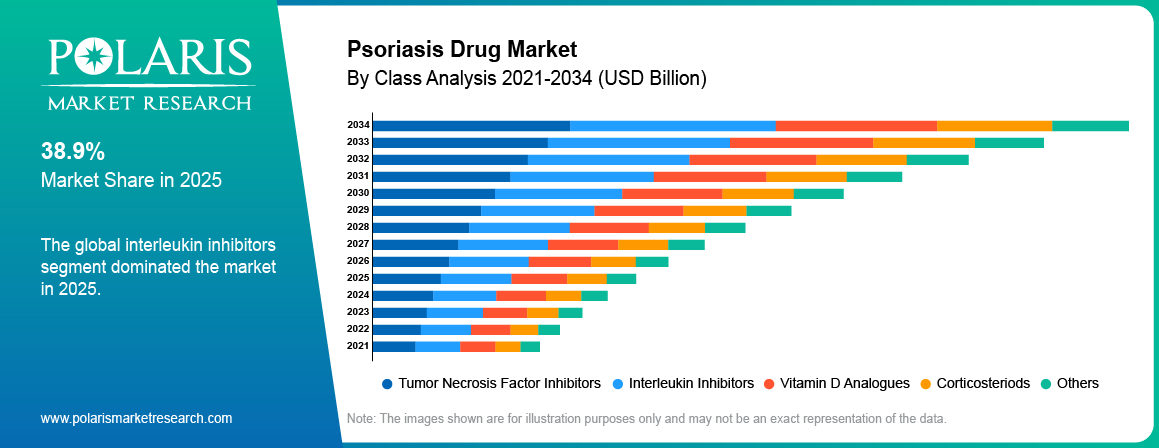
- The interleukin inhibitors segment accounted for a 38.9% share in 2025. This is owing to its high efficacy and targeted action mechanism.
- The biologics segment led with a 62.8% share in 2025. The segment’s leading position is due to the advanced action mechanism of biologics targeting specific immune pathways associated with psoriasis.
- The parenteral segment is projected to grow at a 11.2% CAGR. The segment’s growth is supported by continuous advancements in psoriasis biologic drugs.
Note: Figures and projections outlined in this report are the result of Polaris Market Research’s proprietary analytical processes, grounded in the latest available datasets and market observations.
What Are Psoriasis Drugs? Market Definition, Treatment Scope & Key Drug Types
Psoriasis drugs are medicines used to treat psoriasis, which is a chronic skin condition resulting from hyperactivity of the immune system. The psoriasis treatment consists of inflammation reduction, suppression of excessive skin cell growth, and relief of such symptoms as redness, itching, and flaky skin patches. There are different drugs available for treating this condition depending on its severity.
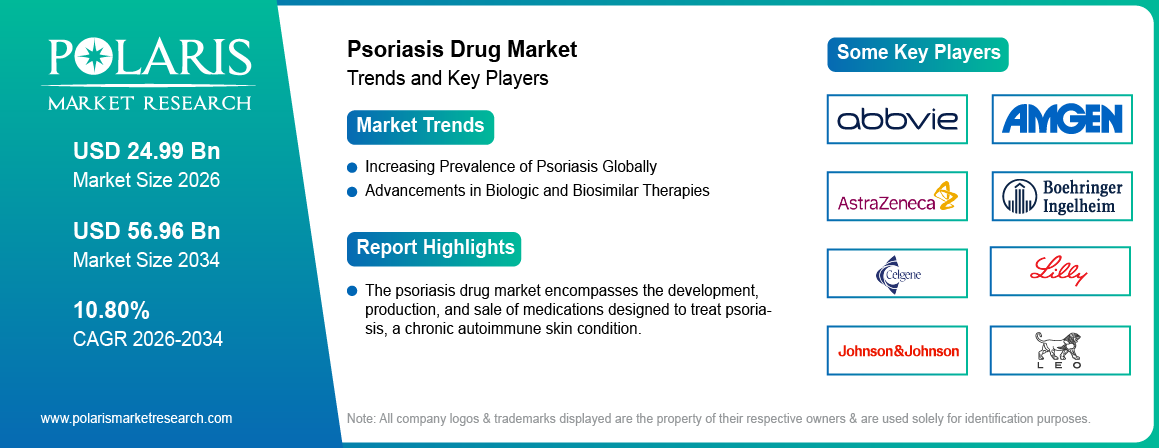
The psoriasis drug market encompasses the development, production, and sale of medications designed to treat psoriasis, a chronic autoimmune skin condition. The market is driven by an increasing prevalence of psoriasis globally, advancements in biologics and biosimilars, and rising awareness of treatment options. Key trends include the growing adoption of targeted therapies, such as interleukin inhibitors, and the integration of hyper personalized medicine approaches to enhance treatment outcomes. The expansion of regulatory approvals for novel drugs and the introduction of innovative topical therapies further contribute to the psoriasis drug market growth. Additionally, investments in research and development are fueling the pipeline for next-generation treatments.
How Psoriasis Treatments Work: Topical, Oral Systemic & Biologic Mechanisms
Diagnosis – The doctors diagnose psoriasis using a physical exam and evaluation of the symptoms.
Severity Evaluation of the Disease – The disease is assessed in terms of its severity and the type that determines what treatment would be best to administer.
Selection of Treatment – Treatment with topical, systemic, or biological agents is used depending on the severity of the condition.
Immune System Blockage – Most drugs work by blocking the action of the overreactive immune system.
Inflammation Suppression – They help in reducing redness, itchiness, and swelling in addition to stopping the overproduction of skin cells.
Symptoms Improvement – There is gradual improvement of the skin lesions and fewer flare-ups.
Source: Polaris Market Research Analysis
To Understand More About this Research: Download Sample Report
Psoriasis Drug Market Dynamics: Drivers, Opportunities, Restraints & Challenges
- The growing existence of psoriasis is a prominent propeller of the market in which there are notable physical and psychological load pushing the demand for productive treatment alternatives.
- The initiation of biologics and biosimilars have revolutionized the market by offering earmarked cures with elevated efficacy as contrasted to conventional systemic drugs thus propelling the market forward.
- The augmentation of consent for new drugs and the initiation of inventive topical therapies additionally open the window of opportunity for the market to grow.
- The high costs associated with medications as it is a lifelong disease has hampered the market growth.
AI in Psoriasis Drug Development: Target Discovery, Trial Design & Treatment Prediction
- AI is making psoriasis drug discovery more effective through the analysis of clinical, genetic, and biomarker information to find potential drug targets.
- Machine learning helps in predicting the effect of a particular therapy on patients, enabling better choices and outcomes.
- The clinical trial process becomes more efficient due to AI because it helps in patient recruitment, treatment efficacy measurement, and safety trend detection.
- Long-term treatment of psoriasis is facilitated through prediction and optimization of treatment.
Biologics vs Oral Systemic vs Topical Psoriasis Treatments
| Feature | Traditional Treatments | Biologics Treatments |
| Type of Treatment | Topical creams, oral medications, corticosteroids | Biologic treatment |
| Target | Manages symptoms and lowers inflammation | Specific immune pathways causing psoriasis |
| Mode of Administration | Topical application, oral administration, or injections | Mostly injections |
| Most Suitable For | Patients with mild or moderate psoriasis | Patients with moderate to severe psoriasis |
| Precision | Broad suppression of immune system | Targeted immune modulator |
| Treatment Outcome | Helps manage symptoms | Offers better disease control |
Source: Polaris Market Research Analysis
Psoriasis Drug Market Drivers & Growth Opportunities
Global Psoriasis Burden Expands the Treated Patient Population
The rising prevalence of psoriasis is a major driver for the psoriasis drug market demand.As highlighted in a report by the International Federation of Pharmaceutical Manufacturers and Associations (IFPMA), approximately 125 million people worldwide are affected by psoriasis(source: ifpma.org).This chronic condition is associated with significant physical and psychological burdens, driving demand for effective treatment options. The increasing awareness of psoriasis as a systemic inflammatory disease requiring medical intervention further accelerates market growth. Health initiatives and campaigns by organizations such as the World Psoriasis Day program are also instrumental in highlighting the need for accessible and advanced therapeutic solutions.
IL-23/IL-17 Biologics and Biosimilars Reshape Psoriasis Treatment
The introduction of biologics and biosimilars has transformed the psoriasis drug market by offering targeted treatments with higher efficacy and fewer side effects compared to traditional systemic drugs. Biologic therapies, particularly interleukin (IL) inhibitors and tumor necrosis factor-alpha (TNF-α) inhibitors, are gaining widespread acceptance in clinical practice. For instance, IL-17 inhibitors have demonstrated significant improvements in symptom management, with studies showing up to 90% improvement in Psoriasis Area and Severity Index (PASI) scores. The development and approval of biosimilars have further enhanced patient accessibility to these therapies by reducing treatment costs, particularly in developing regions. Hence, the advancements in biologic and biosimilar therapies are expected to boost the psoriasis drug market development during the forecast period.
Precision Dermatology and Treatment Sequencing Improve Psoriasis Outcomes
Personalized medicine is becoming a focal point in psoriasis treatment, driven by advancements in genomics and molecular diagnostics. Researchers have identified various genetic markers and immune pathways associated with psoriasis, enabling the development of tailored therapies. For instance, pharmacogenomic studies are helping predict patient responses to specific drugs, thereby improving treatment outcomes. The American Academy of Dermatology (AAD) has emphasized the importance of integrating personalized approaches in clinical practice to address diverse patient needs effectively. This trend is further supported by collaborations between pharmaceutical companies and academic institutions to innovate precision treatments for psoriasis. Thus, a growing emphasis on personalized medicine is projected to propel the psoriasis drug market growth during the forecast period.
Targeted Oral Therapies, TYK2 Inhibitors and Non-Steroidal Topicals Drive Innovation
Innovation in the development of psoriasis drugs is currently aimed at providing drugs that have greater efficacy and lesser adverse reactions. There are next-generation biological drugs being developed that specifically target certain components of the immune system associated with psoriasis. There are new oral medications that offer additional choices for patients, particularly those that prefer oral treatment over injectable therapy. Biosimilar drugs have made advanced therapy more affordable. Combination therapy and drug delivery studies are being conducted in order to improve the efficiency of treatment. New developments in immunology and personalized medicine have enabled doctors to select appropriate therapies for patients. It is expected that market growth will be positively influenced by this shift.
Teledermatology, Image AI and Remote Monitoring Support Psoriasis Management
Digital health technologies are enhancing the process of psoriasis management and monitoring. Teledermatology enables patients to be examined by dermatologists virtually, thus providing them with more access to specialist services. Mobile health apps enable patients to keep track of their symptoms and flare-ups as well as monitor the effect of treatment. Remote monitoring technologies make it possible for physicians to monitor their patients' condition without having to visit clinics regularly. Artificial intelligence is now also employed to assist with the analysis of skin images. Digital platforms provide notifications and educational materials that promote adherence to psoriasis treatment market protocols.
Source: Polaris Market Research Analysis
Psoriasis Drug Market Segmentation & Segment Insights
Psoriasis Drug Market by Drug Class / Mechanism
The psoriasis drug market, by class, is segmented into tumor necrosis factor (TNF) inhibitors, interleukin (IL) inhibitors, vitamin D analogues, corticosteroids, and others. The interleukin inhibitors segment holds the largest market share posing highest growth rate during forecast period. primarily due to their high efficacy and targeted mechanism of action in managing moderate-to-severe psoriasis cases. These drugs, including interleukin-6 (IL-6) inhibitors, IL-17, IL-23, and IL-12/23 inhibitors, have demonstrated significant clinical success in achieving long-term remission and improving patients’ quality of life. The increasing adoption of biologic therapies and consistent advancements in IL inhibitors are key factors contributing to their dominance in the market.
The interleukin inhibitors segment is registering the highest growth rate, driven by the expansion of research and development activities and the approval of new-generation therapies. Growing awareness of these therapies’ superior efficacy and safety profiles is influencing treatment paradigms, particularly in developed markets. Furthermore, the vitamin D analogues and corticosteroids segments remain vital for the treatment of mild-to-moderate psoriasis and as combination therapies, ensuring sustained demand across various regions. The others segment, comprising emerging therapies, is also witnessing innovation, with new drugs in the pipeline aiming to address unmet clinical needs.
Psoriasis Drug Market by Treatment Modality
The psoriasis drug market, by treatment, is segmented into topicals, systemic, and biologics. The biologics segment holds the largest market share, driven by their advanced mechanism of action targeting specific immune pathways associated with psoriasis. These treatments, particularly interleukin inhibitors and tumor necrosis factor (TNF) inhibitors, have become the standard for managing moderate-to-severe cases due to their high efficacy and long-term safety. The increasing adoption of biologics is further supported by a growing number of regulatory approvals, enhanced accessibility through biosimilars, and expanded usage in emerging markets.
The biologics segment is also registering the highest growth rate within the psoriasis drug market, propelled by ongoing innovations and the introduction of next-generation therapies. These advancements are meeting the demand for more personalized and effective treatments, with physicians increasingly recommending biologics for patients unresponsive to conventional therapies. Meanwhile, topical treatments remain integral to managing mild cases and as part of combination regimens, maintaining steady demand. Systemic treatments, including traditional oral drugs, continue to serve as a critical option for patients with moderate disease severity or those who prefer non-injectable solutions, ensuring their relevance across various patient demographics.
Psoriasis Drug Market by Route: Oral, Subcutaneous, IV & Topical
The psoriasis drug market segmentation, by route of administration, includes oral, parenteral, and topical. The parenteral segment holds the largest market share, driven by the widespread adoption of biologic therapies, which are predominantly delivered through injections. This route offers high bioavailability and ensures precise targeting of immune pathways, making it a preferred choice for managing moderate-to-severe psoriasis cases. The increasing availability of biosimilars and patient-friendly delivery systems, such as pre-filled syringes and auto-injectors, further boosts the adoption of parenteral treatments.
The parenteral segment is also experiencing the highest growth rate in the psoriasis drug market, supported by continuous advancements in biologic drugs and expanding regulatory approvals worldwide. Meanwhile, topical treatments maintain consistent demand, particularly for mild psoriasis cases and combination regimens. Oral administration remains relevant for patients preferring noninvasive options and for systemic treatments such as immunosuppressants, which are integral to managing specific patient populations. Together, these segments ensure diverse therapeutic options tailored to varying disease severities and patient preferences.
Psoriasis Drug Market by Distribution Channel: Hospital, Specialty, Retail & Online Pharmacies
The psoriasis drug market, by distribution channel, is segmented into hospital pharmacies, retail pharmacies, and others. The hospital pharmacies segment holds the largest market share due to their pivotal role in dispensing advanced therapies such as biologics and managing patients with moderate-to-severe psoriasis. These settings provide comprehensive care, including specialized consultations and access to injectable treatments that require professional administration. The presence of hospital-linked specialty pharmacies further enhances patient adherence to prescribed regimens, supporting the dominance of this segment.
The hospital pharmacies segment is also registering the highest growth rate, driven by the increasing prevalence of severe psoriasis cases requiring biologic treatments and the rising number of healthcare facilities globally. Retail pharmacies maintain significant relevance for the distribution of topical therapies and oral medications, catering to patients suffering from mild-to-moderate disease severity. The others segment, which includes online pharmacies, is witnessing gradual growth due to the convenience and accessibility they offer, particularly in urban areas and regions with well-established digital infrastructures. This diverse distribution network ensures the availability of psoriasis treatments across different patient needs and geographies.
Clinical Treatment Applications of Psoriasis Drugs
| Use Case | Purpose |
| Plaque Psoriasis Treatment | Lessens plaques, redness, and scaling in plaque psoriasis. |
| Treatment of Psoriatic Arthritis | Maintains joint health and reduces swelling while controlling disease progression. |
| Prevention of Flare-Ups | Decreases the occurrence and intensity of psoriasis flare-ups. |
| Chronic Disease Management | Treats symptoms and manages the disease in the long run. |
| Skin Inflammation Reduction | Limits inflammation and improves skin appearance. |
| Improving Quality of Life | Assists patients in managing their symptoms and carrying out daily activities. |
Source: Polaris Market Research Analysis
Source: Polaris Market Research Analysis
Psoriasis Drug Cost, Biosimilar Access & Reimbursement
Psoriasis treatment can be costly, particularly if the treatment involves biologics that are required for an extended period of time. Such treatments can prove quite costly to the extent of being inaccessible in some countries or for patients who do not have adequate insurance. The costs involved in treatment will also differ depending on the reimbursement structure adopted by each country. Biologics for psoriasis are helping reduce treatment costs and improve the availability of advanced treatments. There are also novel oral treatments that are providing patients with better and cost-effective solutions. Programs and initiatives by governments will continue to play an integral role in making treatments accessible.
Psoriasis Drug Market Regional Analysis: North America, Europe, Asia Pacific, Latin America & MEA
North America Led the Psoriasis Drug Market with 44.5% Share in 2025
By region, the study provides psoriasis drug market insights into North America, Europe, Asia Pacific, Latin America, and the Middle East & Africa. North America holds the largest share of the global psoriasis drug market revenue, primarily driven by the high prevalence of psoriasis, advanced healthcare infrastructure, and strong adoption of biologic therapies. The region benefits from significant investments in research and development, leading to the rapid approval and commercialization of innovative treatments. Additionally, the presence of key market players and favorable reimbursement policies support the dominance of North America. The US, in particular, accounts for a substantial portion of the regional market due to its well-established dermatology sector and high patient awareness regarding advanced treatment options.
Europe represents a significant market for psoriasis drugs, driven by a high prevalence of the condition and increasing adoption of biologic therapies. Countries such as Germany, the UK, and France lead the Europe psoriasis drugs market share, supported by robust healthcare systems and government initiatives to improve access to advanced treatments. The region's strong focus on research and development, particularly in biologics and biosimilars, further fuels market growth. Additionally, rising patient awareness and growing emphasis on personalized medicine contribute to the expanding adoption of innovative therapies in Europe.
Asia Pacific Psoriasis Drug Market to Grow at 10.6% CAGR
The Asia Pacific psoriasis drug market is experiencing rapid growth due to increasing healthcare expenditure and a rising prevalence of psoriasis, particularly in densely populated countries such as China and India. Improved access to healthcare services and the growing presence of pharmaceutical companies in the region are key drivers. Moreover, a shift toward biologics and targeted therapies, supported by expanding regulatory approvals, is enhancing treatment options for patients. Government initiatives to improve dermatology care such as dermatology devices and growing awareness campaigns about psoriasis are further strengthening the market in this region.
Source: Polaris Market Research Analysis
Psoriasis Drug Value Chain & Treatment Ecosystem
The psoriasis treatment ecosystem comprises different stakeholders who are involved in managing the condition. Dermatologists and rheumatologists diagnose the condition and determine treatment for the patients. Hospitals, clinics, and pharmacies supply medication for the treatment of psoriasis. The pharmaceutical and biotechnology industries create new treatment products through the process of research and testing. Patient advocacy organizations play an important role in spreading awareness regarding the condition among people. Regulatory bodies ensure that the new treatment products are effective and safe before approving them.
Psoriasis Drug Market Competitive Landscape & Leading Companies
The psoriasis drug market features several key players actively developing and marketing treatments for psoriasis. A few companies include AbbVie Inc.; Amgen Inc.; Johnson & Johnson Services, Inc.; Novartis AG; Eli Lilly and Company; AstraZeneca plc; Celgene Corporation (a subsidiary of Bristol-Myers Squibb); UCB S.A.; Merck & Co., Inc.; Boehringer Ingelheim International GmbH; Pfizer Inc.; LEO Pharma A/S; Biogen Inc.; Dr. Reddy's Laboratories; and Takeda Pharmaceutical Company Limited.
These companies offer a range of therapeutic options, including biologics, oral systemic treatments, and topical agents, catering to varying patient needs. For instance, AbbVie's Skyrizi has shown significant sales growth, indicating strong market acceptance. Johnson & Johnson's Tremfya has expanded its indications, enhancing its market presence. Novartis AG continues to be a significant player with its portfolio of psoriasis treatments. The competitive landscape is characterized by continuous research and development efforts, leading to the introduction of innovative therapies aimed at improving efficacy and patient quality of life.
Strategic initiatives such as mergers and acquisitions, partnerships, and collaborations are common as companies seek to expand their market share and global reach. The focus on personalized medicines and targeted therapies is driving competition, with firms investing in advanced biologics and biosimilars to meet the evolving demands of psoriasis treatment. Additionally, efforts to improve patient access through affordability programs and navigating regulatory landscapes are critical components of competitive strategies in this market.
AbbVie Inc. is a significant participant in the psoriasis drug market, with a strong portfolio that includes Skyrizi (risankizumab) and Humira (adalimumab). These drugs are widely used for the treatment of moderate-to-severe psoriasis. In June 2026, AbbVie announced the European Commission (EC) approval for SKYRIZI (risankizumab). The company stated that the approval is for the treatment of children and adolescents six years of age and older with moderate to severe plaque psoriasis(source: prnewswire.com).
Johnson & Johnson is another prominent company in the psoriasis drug market, with products such as Tremfya (guselkumab) being key contributors to its portfolio. Tremfya is an interleukin-23 inhibitor approved for the treatment of moderate-to-severe plaque psoriasis. In May 2026, Johnson & Johnson announced that the U.S. FDA approved a supplemental Biologics License Application (sBLA). The sBLA is to include evidence in the TREMFYA (guselkumab) label for the inhibition of progression of structural joint damage in adults with active psoriatic arthritis(source: jnj.com).
Leading Psoriasis Drug Companies by Marketed Franchise & Pipeline
- AbbVie Inc.
- Amgen Inc.
- AstraZeneca
- Boehringer Ingelheim International GmbH
- Celgene Corporation (a subsidiary of Bristol-Myers Squibb)
- Eli Lilly and Company
- Johnson & Johnson Services, Inc.
- LEO Pharma A/S
- Merck & Co., Inc.
- Novartis AG
- Pfizer Inc.
- Sanofi S.A.
- Sun Pharmaceutical Industries Ltd.
- Takeda Pharmaceutical Company Limited
- UCB S.A.
Psoriasis Drug Market Future Outlook: Oral Targeted Therapies, Biologics, Topicals & Biosimilars
The market for psoriasis drugs is projected to expand due to the increasing demand for improved medications. There will be further market expansion due to biologic drugs, interleukin inhibitors, as well as new oral medicines. Advancements in research contribute to developing better and more accurate medications that benefit patients. The affordability of biosimilars ensures that the therapy becomes more available. Improvements in the availability of health care, as well as approval of new medications, are contributing towards market expansion.
Recent Psoriasis Drug Approvals, Pipeline Milestones & M&A, 2025-2026
- March 2026: Johnson & Johnson announced the U.S. FDA approval of ICOTYDE (icotrokinra), an interleukin-23 (IL-23) receptor antagonist. The company stated that ICOTYDE has been approved for the treatment of moderate-to-severe plaque psoriasis in patients 12 years of age and older weighing at least 40 kg and who are candidates for phototherapy or systemic therapy.(source: jnj.com)
- February 2026: Vanda Pharmaceuticals Inc. announced US FDA acceptance of its Biologics License Application (BLA) for imsidolimab for the treatment of Generalized Pustular Psoriasis (GPP). The company stated that the target action date for the application is December 12, 2026.(source: prnewswire.com)
- In March 2025, SFA Therapeutics presented two head-to-head preclinical studies of its oral psoriasis candidate, SFA-002, at the American Academy of Dermatology Annual Meeting in Orlando, Florida.
Market Segmentation
By Class Outlook
- Tumor Necrosis Factor Inhibitors
- Interleukin Inhibitors
- Vitamin D Analogues
- Corticosteriods
- Others
By Type
- Psoriatic Arthritis
- Plaque Psoriasis
- Others
By Treatment Outlook
- Topicals
- Systemic
- Biologics
By Route of Administration Outlook
- Oral
- Parenteral
- Topical
By Distribution Channel Outlook
- Hospital Pharmacies
- Retail Pharmacies
- Others
By Regional Outlook
- North America
- US
- Canada
- Europe
- Germany
- France
- UK
- Italy
- Spain
- Netherlands
- Russia
- Rest of Europe
- Asia Pacific
- China
- Japan
- India
- Malaysia
- South Korea
- Indonesia
- Australia
- Vietnam
- Rest of Asia Pacific
- Middle East & Africa
- Saudi Arabia
- UAE
- Israel
- South Africa
- Rest of Middle East & Africa
- Latin America
- Mexico
- Brazil
- Argentina
- Rest of Latin America
Psoriasis Drug Market Report Scope, Segmentation & Forecast Period
| Report Attributes | Details |
| Market Size Value in 2025 | USD 22.63 billion |
| Market Size Value in 2026 | USD 24.99 billion |
| Revenue Forecast by 2034 | USD 56.96 billion |
| CAGR | 10.80% from 2026 to 2034 |
| Base Year | 2025 |
| Historical Data | 2021–2024 |
| Forecast Period | 2026–2034 |
| Quantitative Units | Revenue in USD billion and CAGR from 2026 to 2034 |
| Report Coverage | Revenue Forecast, Market Competitive Landscape, Growth Factors, and Trends |
| Segments Covered |
|
| Regional Scope |
|
| Competitive Landscape |
|
| Report Format |
|
| Customization | Report customization as per your requirements with respect to countries, regions, and segmentation. |
Source: Polaris Market Research Analysis
How is the report valuable for an organization?
Workflow/Innovation Strategy
The psoriasis drug market has been segmented into detailed segments of class, type, treatment, route of administration, and distribution channels. Moreover, the study provides the reader with a detailed understanding of the different segments at both the global and regional levels.
Growth/Marketing Strategy
The psoriasis drug market growth and marketing strategies focus on innovation, strategic collaborations, and expanding treatment access. Companies are heavily investing in research and development to introduce advanced biologics and targeted therapies, addressing unmet clinical needs. Strategic partnerships, licensing agreements, and acquisitions are being leveraged to enhance market presence and accelerate product pipelines. Additionally, expanding patient awareness campaigns and providing financial assistance programs aim to improve treatment accessibility and adherence. Geographic expansion into emerging markets further supports long-term growth by addressing underserved patient populations.
Psoriasis Drug Market FAQ's
The psoriasis drug market size was valued at USD 22.63 billion in 2025 and is projected to grow to USD 56.96 billion by 2034.
The market is projected to register a CAGR of 10.80% during the forecast period.
North America held the largest share of the market in 2025.
A few notable companies include AbbVie Inc.; Amgen Inc.; Johnson & Johnson Services, Inc.; Novartis AG; Eli Lilly and Company; AstraZeneca plc; Celgene Corporation (a subsidiary of Bristol-Myers Squibb); UCB S.A.; Merck & Co., Inc.; Boehringer Ingelheim International GmbH; Pfizer Inc.; LEO Pharma A/S; Biogen Inc.; Dr. Reddy's Laboratories; and Takeda Pharmaceutical Company Limited.
The interleukin inhibitors segment accounted for the largest share of the market in 2025.
The biologics segment accounted for the largest share of the market in 2025.
Psoriasis drugs are pharmaceutical treatments designed to manage and alleviate the symptoms of psoriasis, a chronic autoimmune condition characterized by the rapid buildup of skin cells, leading to scaling, inflammation, and redness. These drugs target various aspects of the disease, including immune system modulation and skin cell turnover reduction. Psoriasis drugs are available in multiple forms, such as topical treatments (e.g., corticosteroids and vitamin D analogues), systemic medications (e.g., immunosuppressants), and biologics (e.g., tumor necrosis factor inhibitors and interleukin inhibitors). They aim to reduce flare-ups, control symptoms, and improve the quality of life for patients.
A few key trends in the market are described below: Shift Toward Biologic Therapies: Increasing adoption of biologics, such as interleukin inhibitors, for their targeted approach and higher efficacy in treating moderate-to-severe psoriasis. Rising Focus on Personalized Medicine: Growing emphasis on tailoring treatments based on genetic, immune, and patient-specific factors to improve outcomes. Expansion of Biosimilars: Development and approval of biosimilars to enhance affordability and accessibility of biologic treatments in various regions. Advancements in Drug Delivery Systems: Introduction of patient-friendly delivery methods, such as auto-injectors and topical sprays, to improve convenience and compliance.
A new company entering the psoriasis drug market could focus on developing innovative biologics or biosimilars to address the growing demand for targeted therapies. Prioritizing research in emerging areas, such as oral biologics or small molecules with fewer side effects, could provide a competitive edge. Additionally, leveraging advanced drug delivery systems to improve patient convenience and compliance can differentiate offerings. Collaborating with digital health platforms for remote monitoring and personalized treatment solutions could enhance patient engagement. Expanding access in underserved regions and providing cost-effective alternatives, such as biosimilars, can further help capture market share.
Companies manufacturing, distributing, or purchasing psoriasis drugs and related products and other consulting firms must buy the report.
Download Sample Report of Psoriasis Drug Market
Please fill out the form to request a customized copy of the research report.


