
Physiological Saline Market Size, Report Insights, Global Report, 2026-2034
REPORT DETAILS
Physiological Saline Market Summary and Key Statistics
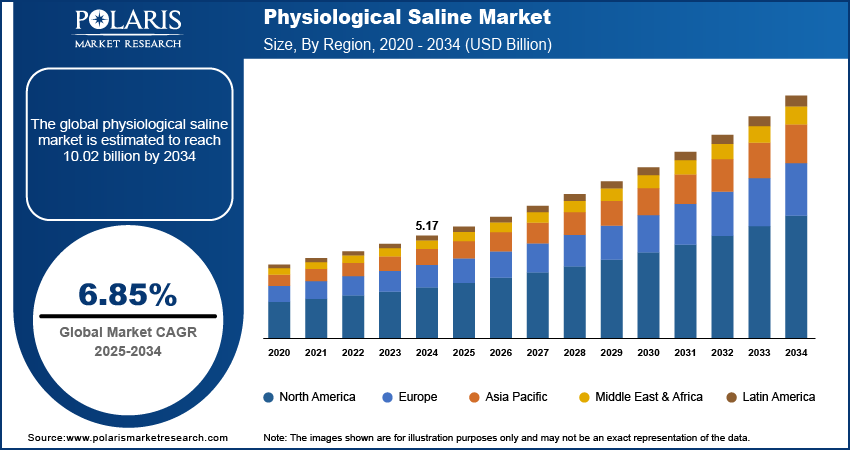
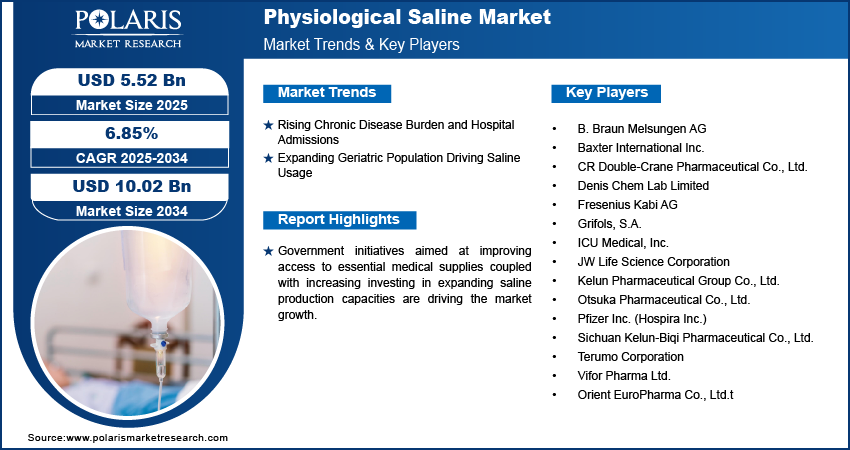
The global physiological saline market size was valued at USD 5.52 billion in 2025, growing at a CAGR of 6.85% from 2026 to 2034. Rising chronic disease burden and hospital admissions along with expanding geriatric population is propelling the market growth.
Market Statistics
Key Takeaways
- North America held the largest market share of 34.0% in 2025, boosted by the growth of outpatient care services and home healthcare facilities.
- The U.S. led the market in North America with 84.5% share in 2025, due to the growing incidence of chronic diseases and rising hospitalizations.
- Asia Pacific is expected to grow fastest at a CAGR of 8.10% with the growing cases of infectious and chronic diseases resulting in more hospitalizations.
- India played a major role in growth at a CAGR of 9.60% within the region fueled by high population growth and investments in healthcare facilities.
- The isotonic physiological saline segment dominated the market with a share of 58.0% in 2025, fueled by its extensive application for intravenous therapy, rehydration, and overall fluid replacement.
- Hospitals led the market with a share of 55.0% in 2025, driven by the large number of intravenous therapies, surgical procedures, and critical care treatments involving saline solutions.
Note: Figures and projections outlined in this report are the result of Polaris Market Research’s proprietary analytical processes, grounded in the latest available datasets and market observations.
Industry Dynamics
- Increasing disease burden and growing hospitalizations are generating demand for physiological saline.
- Growing geriatric population is driving the market growth, as elderly patients need intravenous fluids repeatedly for treatment and hydration purposes.
- Elevated production cost is a major constraint, fueled by stringent quality control, compliance with regulations, and specialized manufacturing.
- Smart infusion and monitoring equipment provides opportunities for growth, allowing real-time tracking of fluid administration, enhanced safety, and operations effectiveness.
What does the Physiological Saline Market Includes?
The physiological saline industry consists of sterile salt solution products designed to duplicate the osmotic balance of body fluids for medical and clinical use. They are used extensively in hospitals, clinics, and laboratories for wound washing, intravenous infusion, nasal wash, and medicine dilution. Improved packaging, sterilization services, and formulation technologies are enhancing product safety, shelf life, and convenience. Increasing demand for infusion therapies, increasing surgeries, and the development of healthcare infrastructure are propelling market growth across the globe.
The market of physiological saline is driven by initiatives of the government to enhance access to critical medical devices and improve healthcare infrastructure. Public health initiatives and policy actions are promoting the availability of quality saline solutions in clinics, hospitals, and emergency care units, fostering the market growth.
Source: Polaris Market Research Analysis
Pharmaceutical firms and medical care providers are also investing in increasing saline manufacturing capacity to address rising demand. The investments involve upgrading manufacturing plants, compliance with regulations, and optimizing supply chain networks, which contribute to product availability and reliability.
Physiological Saline vs Ringer’s Lactate vs Dextrose Solutions
Intravenous (IV) fluid therapy plays a critical role in maintaining hydration, electrolyte balance, and hemodynamic stability. Thus, it is increasing used across hospitals, emergency care centers, and outpatient settings. Physiological Saline (Normal Saline), Ringer’s Lactate, and Dextrose Solutions serve different clinical purposes. Their use depends on their electrolyte composition, osmolarity, and therapeutic objectives. Physiological saline is one of the most commonly used fluids due to its broad compatibility. However, its alternatives such as Ringer’s Lactate and dextrose-based solutions are increasingly preferred for specific hydration and metabolic requirements.
Comparison Matrix: Physiological Saline vs Ringer’s Lactate vs Dextrose Solutions
| Parameter | Physiological Saline (Normal Saline) | Ringer’s Lactate | Dextrose Solutions |
| Composition | Contains 0.9% sodium chloride (Na⁺ and Cl⁻) dissolved in sterile water | Balanced electrolyte solution containing sodium, chloride, potassium, calcium, and lactate | Contains glucose (dextrose) in sterile water, available in different concentrations such as 5%, 10%, or higher |
| Electrolyte Profile | High chloride concentration; no potassium, calcium, or buffer components | More closely resembles plasma electrolyte composition with added buffering capacity | Limited electrolytes; primarily provides glucose and free water after metabolism |
| Primary Hydration Purpose | Rapid restoration of extracellular fluid volume and prevention of dehydration | Volume replacement with improved electrolyte balance and reduced chloride load | Provides hydration along with energy supply and correction of low blood glucose |
| Fluid Replacement Capability | Effective for fluid resuscitation and maintaining intravascular volume | Effective for fluid resuscitation, especially when balanced electrolyte replacement is required | Mainly supports maintenance hydration and metabolic support rather than aggressive volume expansion |
| Emergency Care Use | Widely used in trauma, blood loss, dehydration, shock management, and initial resuscitation | Commonly used in trauma, burns, surgery, and fluid resuscitation where balanced crystalloids are preferred | Used in hypoglycemia management, nutritional support, and selected emergency metabolic conditions |
| Clinical Applications | IV fluid replacement, medication dilution, wound irrigation, electrolyte correction, kidney-related care | Perioperative fluid therapy, dehydration, burns, gastrointestinal fluid losses, critical care | Hypoglycemia treatment, calorie supplementation, neonatal care, and prevention of ketosis |
| Advantages | Low cost, widely available, compatible with many medications and blood products | Better electrolyte balance, closer to physiological plasma composition | Provides immediate glucose availability and supports energy requirements |
| Limitations | Excessive use may contribute to hyperchloremic metabolic acidosis and fluid overload | Not suitable for some patients requiring strict potassium or calcium control | Excess glucose may cause hyperglycemia and requires monitoring |
| Market Position | Dominant IV fluid category due to extensive hospital and emergency usage | Growing demand due to preference for balanced fluids | Specialized demand driven by metabolic and nutritional applications |
Source: Polaris Market Research Analysis
Drivers & Opportunities
What are the Factors Driving the Growth?
Rising Hospital Admissions and Chronic Disease Burden Drive Saline Demand:
Growing prevalence of chronic diseases and hospitalizations are affecting the demand for intravenous saline solutions. A July 2026, U.S. Centers for Disease Control and Prevention report stated that 694,708 deaths due to heart disease, 622,832 due to cancer, 171,427 due to stroke, 148,408 due to chronic lower respiratory diseases, and 95,229 due to diabetes occured in the U.S. These numbers demonstrate the significant clinical workload imposed by chronic and complicated diseases that undergo continual medical treatment. Increasing rates of treatment for heart disease, cancer, diabetes, and respiratory diseases are driving demand for hospital, emergency room, and infusion center usage. Physiological saline is necessary in all these environments for replacement of fluids and electrolytes, to administer drugs by intravenous way, to dilute injectable medicines, and to preserve intravenous accessibility, and this fact is contributing to the growth of the market. (Source: cdc.gov)
Growing Geriatric Population Increases IV Saline Utilization:
Physiological saline demand is also growing due to an aging population as elderly people need more medical care and clinical support. A September 2026, US Census Bureau report stated that 10.5% of the world population were people aged 65 years and older in 2025, with the proportion of older population exceeding that of children aged five years and younger for the first time. The elderly population is anticipated to comprise 19.6% of the total population by 2060, indicating a substantial long-term demographic transition. An aging population is said to have higher rates of cardiovascular, metabolic, renal, and other chronic illnesses which are recurred medical care. Therefore the increase rates of hospital admission, surgery, i.v. medication, treatment of dehydration and supportive care in elderly patients are expected to contribute the clinical use of the solutions of physiological saline. (Source: census.gov)
Sustainable Manufacturing & Packaging Trends
The market is expected to increasingly adopt sustainable manufacturing practices. Healthcare providers and manufacturers are emphasizing reducing environmental impact while maintaining stringent sterility standards. Companies would invest in recyclable IV packaging materials, lightweight containers, and PVC-free alternatives. It will help them minimize plastic waste and improve recyclability. There are rising advancements in sterile production technologies, including automated aseptic filling, energy-efficient cleanroom systems, and optimized sterilization processes. They would help manufacturers improve efficiency and reduce resource consumption. Additionally, manufacturers would implement smart manufacturing practices to minimize production waste and enhance quality control. Hospitals are moving toward greener healthcare solutions. Thus, these sustainability-focused initiatives are expected to become important factors influencing supplier selection.
Source: Polaris Market Research Analysis
Which Segments Contributed to the Expansion Opportunities?
Physiological Saline Market, by Concentration
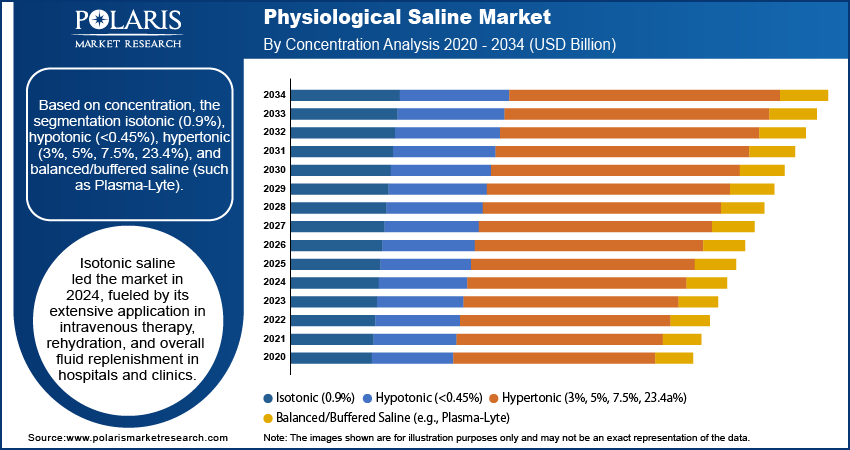
On the basis of concentration, the market for physiological saline is divided into isotonic (0.9%), hypotonic (<0.45%), hypertonic (3%, 5%, 7.5%, 23.4%), and balanced/buffered saline (such as Plasma-Lyte). Isotonic saline led the market in 2025 with a share of 58.0%, fueled by its extensive application in intravenous therapy, rehydration, and overall fluid replenishment in hospitals and clinics.
Hypertonic saline is anticipated to grow rapidly at a CAGR of 5.80% during the forecast period, driven by its use in critical care management, cerebral edema treatment, and customized medical procedures.
Physiological Saline Market, by Packaging Type
Based on packaging type, the market is segmented into plastic IV bags, glass bottles, ampoules & vials, and pre-filled syringes. In 2025, plastic IV bags dominated the market with 47.0% share due to its cost savings, light weight, and convenience in use in emergency care and hospitals.
Ampoules are projected to at a fast pace of 6.30% during the forecast period, as they are used for accurate dosing in critical care and laboratory use.
Physiological Saline Market, by End User
On the basis of end user, the market is divided into hospitals, ambulatory surgery centers, dialysis centers, home healthcare & EMS, and clinics & others. Hospitals accounted for the largest share accounting for 55.0% in 2025 owing to the large number of intravenous therapies, surgical procedures, and critical care treatments involving saline solutions.
Home healthcare are anticipated to register robust growth at a CAGR of 8.60% during the forecast period, led by the growing movement towards outpatient care, home infusion therapies, and emergency medical services.
Source: Polaris Market Research Analysis
Physiological Saline Market Regional Analysis
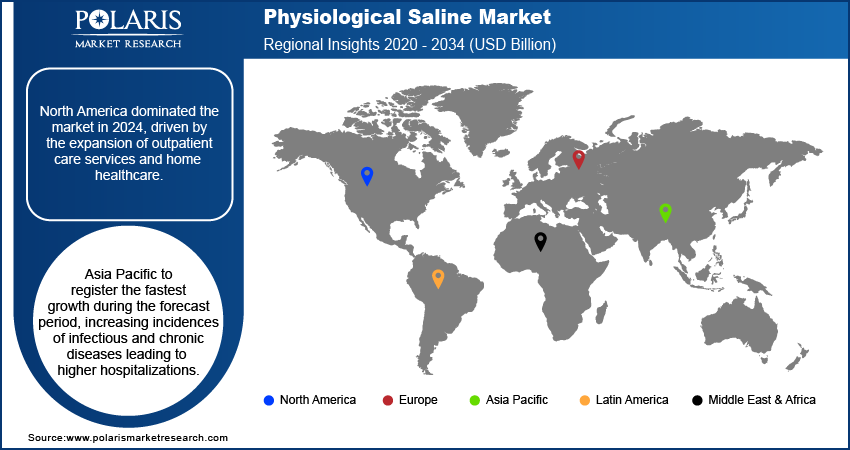
In 2025, North America lead the physiological saline market with a share of 34.0% driven by the growth of outpatient care services and home healthcare. The presence of high volume of surgical procedures and sophisticated medical facilities within the region are adding to steady intravenous fluid usage for patient care.
U.S. Physiological Saline Market Size and Trends
In 2025, the North America U.S. had the largest share of the market of 85.4%, owing to increasing prevalence of chronic diseases and number of hospitalization. The established hospital infrastructure and high number of surgeries and emergency cases in the country are driving the use of physiological saline. Furthermore, the increasing use of intravenous therapies, such as hydration, drug delivery, and perioperative care, is enhancing the demand for the market. Growing expenditure in healthcare and availability of advanced treatment facilities are further propelling the market growth.
Asia Pacific Physiological Saline Market Size and Trends
The Asia Pacific region is experiencing fast growth at a CAGR of 8.10% during the forecast period, due to the rising cases of infectious and chronic diseases resulting in increased hospitalization, which further increases demand for physiological saline. The region is also experiencing growth in production capacities by local and global pharmaceutical industries to cater to increasing healthcare demands.
India Physiological Saline Market Size and Growth
Owing to a high population growth and healthcare infrastructure investment, India captured 20.5% market share in the Asia Pacific. The growing establishment of hospitals, diagnostic centers, and emergency care facilities are driving up the demand for intravenous fluids in the nation. Increasing rates of chronic and infectious diseases are also leading to more patient admissions and treatments. In addition, development in government schemes to enhance accessibility to healthcare and medical infrastructure are also driving the adoption of physiological saline solutions.
Europe Physiological Saline Market Size and Trends
Europe held significant market share of 27.0% in 2025. Increasing use of home healthcare services and outpatient treatment programs is generating consistent demand for physiological saline solutions. Well-developed hospital networks and sophisticated healthcare infrastructure in countries provide consistent usage, and initiatives to enhance patient care in home and outpatient environments continue to foster growth in the market.
Source: Polaris Market Research Analysis
Physiological Saline Market Competitive Landscape
The physiological saline market is fragmented, with numerous regional and global players focusing on manufacturing high-purity, sterile, and ready-to-use saline solutions for diverse clinical applications. Continuous investments in advanced production technologies, stringent quality control, and compliance with regulatory standards are enhancing product safety, consistency, and shelf life. Collaborations with hospitals, clinics, and healthcare distributors are strengthening supply chains and improving market reach across various regions.
Key Players
- B. Braun Melsungen AG
- Baxter International Inc.
- CR Double-Crane Pharmaceutical Co., Ltd.
- Denis Chem Lab Limited
- Fresenius Kabi AG
- Grifols, S.A.
- ICU Medical, Inc.
- JW Life Science Corporation
- Kelun Pharmaceutical Group Co., Ltd.
- Otsuka Pharmaceutical Factory, Inc.
- Pfizer Inc. (Hospira Inc.)
- Sichuan Kelun-Biqi Pharmaceutical Co., Ltd.
- Terumo Corporation
- Vifor Pharma Ltd.
- Orient EuroPharma Co., Ltd.
Physiological Saline Industry Developments
January 2025: Yuyu Pharmaceutical released an over-the-counter (OTC) physiological saline nasal spray called "Kozal Es Nazal Spray Solution." The saline can be used to help manage nasal health. (Source: mk.co.kr)
Physiological Saline Market Segmentation
By Concentration Outlook (Revenue, USD Billion, 2021–2034)
- Isotonic (0.9%)
- Hypotonic (<0.45%)
- Hypertonic (3%, 5%, 7.5%, 23.4%)
- Balanced/Buffered Saline (e.g., Plasma-Lyte)
By Packaging Type Outlook (Revenue, USD Billion, 2021–2034)
- Plastic IV Bags
- Glass Bottles
- Ampoules & Vials
- Pre-filled Syringes
By End User Outlook (Revenue, USD Billion, 2021–2034)
- Hospitals
- Ambulatory Surgery Centres
- Dialysis Centres
- Home Healthcare & EMS
- Clinics & Others
By Regional Outlook (Revenue, USD Billion, 2021–2034)
- North America
- U.S.
- Canada
- Europe
- Germany
- France
- UK
- Italy
- Spain
- Netherlands
- Russia
- Rest of Europe
- Asia Pacific
- China
- Japan
- India
- Malaysia
- South Korea
- Indonesia
- Australia
- Vietnam
- Rest of Asia Pacific
- Middle East & Africa
- Saudi Arabia
- UAE
- Israel
- South Africa
- Rest of Middle East & Africa
- Latin America
- Mexico
- Brazil
- Argentina
- Rest of Latin America
Physiological Saline Market Report Scope and Segmentation
| Report Attributes | Details |
| Market Size in 2025 | USD 5.52 Billion |
| Market Size in 2026 | USD 5.89 Billion |
| Revenue Forecast by 2034 | USD 10.02 Billion |
| CAGR | 6.85% from 2026 to 2034 |
| Base Year | 2025 |
| Historical Data | 2021–2024 |
| Forecast Period | 2026–2034 |
| Quantitative Units | Revenue in USD Billion, Volume in Kilotons and CAGR from 2026 to 2034 |
| Report Coverage | Revenue Forecast, Competitive Landscape, Growth Factors, and Industry Trends |
| Segments Covered |
|
| Regional Scope |
|
| Competitive Landscape |
|
| Report Format |
|
| Customization | Report customization as per your requirements with respect to countries, regions, and segmentation. |
Source: Polaris Market Research Analysis
Physiological Saline Market FAQ's
The global market size was valued at USD 5.52 billion in 2025 and is projected to grow to USD 10.02 billion by 2034.
The global market is projected to register a CAGR of 6.85% during the forecast period.
North America held the largest market share of 34.0% in 2025
A few of the key players in the market are B. Braun Melsungen AG, Baxter International Inc., CR Double-Crane Pharmaceutical Co., Ltd., Denis Chem Lab Limited, Fresenius Kabi AG, Grifols, S.A., ICU Medical, Inc., JW Life Science Corporation, Kelun Pharmaceutical Group Co., Ltd., Otsuka Pharmaceutical Factory, Inc., Pfizer Inc. (Hospira Inc.), Sichuan Kelun-Biqi Pharmaceutical Co., Ltd., Terumo Corporation, Vifor Pharma Ltd., and Orient EuroPharma Co., Ltd.
The isotonic physiological saline segment dominated the market with a share of 58.0% in 2025.
The ampoules segment is projected to witness the fastest growth at a CAGR of 6.30% during the forecast period.
Download Sample Report of Physiological Saline Market
Please fill out the form to request a customized copy of the research report.


