
Theranostics Market Opportunity, Growth Analysis Report, 2026-2034
REPORT DETAILS
Global Theranostics Market Summary
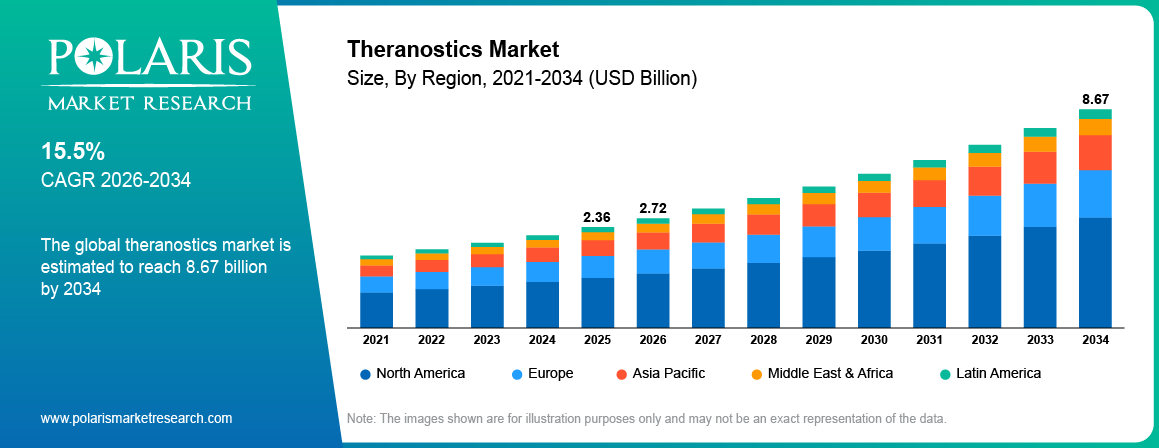
The theranostics market size was valued at USD 2.36 billion in 2025. The market is projected to grow from USD 2.72 billion in 2026 to USD 8.67 billion by 2034, exhibiting a CAGR of 15.5% during 2026–2034.
Market Statistics
Theranostics Market Key Takeaways
- North America held the largest revenue share of 46.2% in 2025. The dominance is fueled by the strong presence of advanced healthcare infrastructure and high adoption of precision medicine.
- The Asia Pacific theranostics market is expected to register the highest CAGR of 17.0% during the forecast period. The rapid development of healthcare infrastructure and rising prevalence of chronic diseases boost the growth.
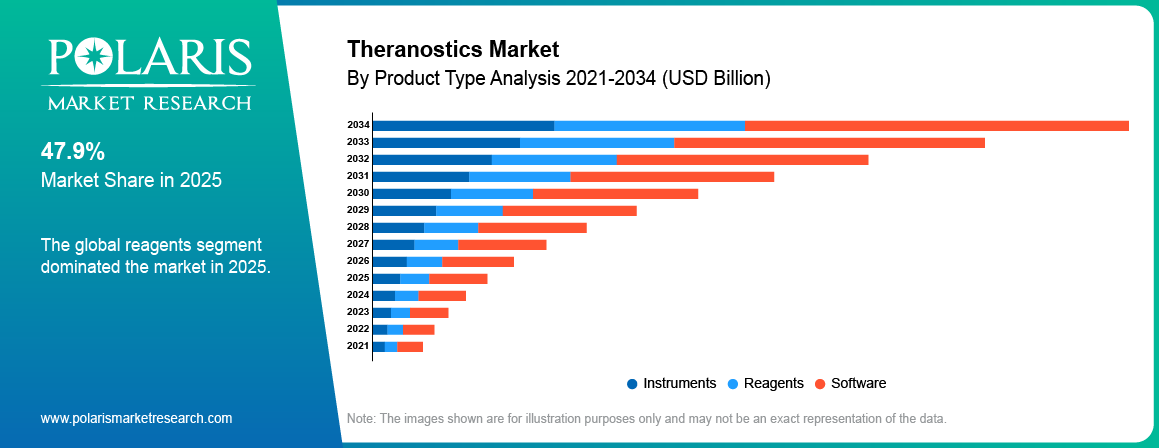
- The reagents segment dominated with 47.9% share in 2025. This is attributed to the critical role they play in diagnostic tests, including biomarker assays and molecular diagnostic applications.
- The oncology segment led the market with 62.7% share in 2025. It is propelled by the rising prevalence of cancer globally and the increasing adoption of targeted therapies for the disease treatment.
- The hospital segment held the largest share of 48.3% in 2025. Hospitals play a key role in patient care. They can integrate advanced diagnostic and therapeutic technologies.
Note: Figures and projections outlined in this report are the result of Polaris Market Research’s proprietary analytical processes, grounded in the latest available datasets and market observations.
What are Theranostics?
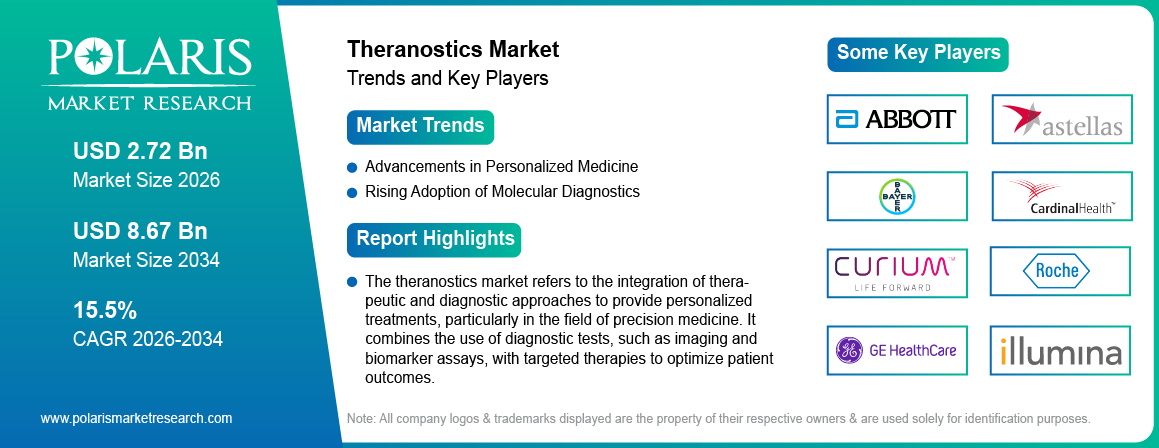
The theranostics market refers to the integration of therapeutic and diagnostic approaches to provide personalized treatments, particularly in the field of precision medicine. It combines the use of diagnostic tests, such as imaging and biomarker assays, with targeted therapies to optimize patient outcomes.
Difference Between Theranostics Vs Traditional Treatment Approaches
| Aspect | Theranostics | Traditional Treatment Approaches |
| Treatment Approach | Personalized and targeted based on patient-specific biomarkers and diagnostics | Generalized treatment protocols applied broadly across patient populations |
| Precision Level | High precision with data-driven therapy selection | Lower precision with limited personalization |
| Diagnosis & Therapy | Integrates diagnostics and therapeutics into a single approach | Diagnosis and treatment are typically conducted separately |
| Treatment Effectiveness | Improves treatment accuracy and patient outcomes | May result in variable effectiveness among patients |
| Side Effects | Reduces unnecessary exposure to ineffective therapies | Higher risk of side effects due to non-targeted treatments |
| Technology Usage | Relies on molecular imaging, biomarkers, and advanced analytics | Primarily depends on conventional imaging and standard clinical practices |
| Clinical Decision-Making | Supports real-time and evidence-based treatment adjustments | Treatment modifications are often slower and less individualized |
Source: Polaris Market Research Analysis
Key drivers of the theranostics market demand include advancements in personalized medicine, increasing demand for precision healthcare, and the growing adoption of molecular diagnostics and biomarkers in clinical settings. Additionally, the development of innovative technologies, such as companion diagnostics and targeted drug delivery systems, is contributing to market growth. Theranostics market trends indicate a rising focus on the use of theranostics in oncology, where it has shown promise in improving treatment efficacy and reducing side effects.
To Understand More About this Research: Download Sample Report
Market Dynamics
Driver: Advancements in Personalized Medicine
One of the key drivers of the theranostics market development is the continued advancements in personalized medicine. The shift toward precision healthcare, which tailors treatments based on an individual's genetic makeup, lifestyle, and other factors, has led to an increasing demand for targeted therapies and diagnostics. This personalized approach improves treatment efficacy and minimizes adverse effects. The development of genomic and molecular diagnostic tools enables more accurate identification of disease biomarkers. In oncology, precision therapies based on genetic profiling have shown significant potential in improving treatment outcomes. According to a report from the National Cancer Institute, personalized therapies have been shown to increase the survival rate for some cancer types by up to 30%. This growing focus on individualized treatment plans is expected to continue driving the theranostics market growth.
Driver: Rising Adoption of Molecular Diagnostics
The increasing adoption of molecular diagnostics is another major driver behind the theranostics market growth. Molecular diagnostics allow for the detection and monitoring of specific biomarkers associated with diseases at the molecular level, which can be critical for early diagnosis and targeted treatment. As technologies improve and become more widely accessible, the integration of molecular diagnostics with therapeutic options is expanding, propelling market expansion.
Opportunity: Technological Innovations in Companion Diagnostics
Technological innovations in companion diagnostics (CDx) are significantly influencing the theranostics market opportunities. Companion diagnostics are tests designed to predict the effectiveness of a specific therapeutic intervention, ensuring that the right patient receives the right treatment. The development of more advanced companion diagnostic tests, which use genetic, genomic, or proteomic markers to determine the most suitable therapy, is expanding rapidly. The approval of several targeted therapies, such as those used in oncology for breast cancer or lung cancer, has been closely linked with the use of companion diagnostics to ensure therapeutic efficacy. This rise in approval and use of CDx is driving the demand for integrated theranostics, particularly as precision medicine becomes more prominent in clinical practices.
Opportunity: Increasing Integration of AI & Data Analytics in Theranostics
Artificial intelligence (AI) and data analytics are significantly enhancing the theranostics market. The technologies are used to improve diagnostic accuracy, treatment planning, and personalized care delivery. AI-driven platforms can analyze molecular imaging, genomic profiles, and patient data. It helps identify biomarkers and predict treatment responses more efficiently. Advanced analytics support optimized radiopharmaceutical dosing and real-time disease monitoring. It leads to faster clinical decision-making. These technologies also help reduce diagnostic errors and enhance workflow efficiency. This enables precision medicine approaches. Healthcare providers are increasingly adopting digital and AI-enabled solutions. This way, AI and data analytics would accelerate innovation and strengthen the effectiveness of theranostic applications globally.
Segment Insights
Theranostics Market Assessment by Product Type
The theranostics market, based on product type, is segmented into instruments, reagents, and software. Among these, the reagents segment held the largest market share of 47.9% in 2025, primarily due to the critical role they play in diagnostic tests, including biomarker assays and molecular diagnostic applications. Reagents are essential for performing the various diagnostic tests that guide the development of personalized therapeutic strategies. This segment benefits from the increasing demand for precision medicine, as well as advancements in molecular diagnostics. The growth of the reagents segment is further supported by the ongoing development of new biomarker-based assays that enable more accurate disease detection, particularly in oncology.
The software segment is registering the highest growth of 15.4% during the forecast period within the theranostics market, driven by the increasing reliance on data analytics and artificial intelligence to interpret diagnostic results and inform treatment decisions. Software platforms that integrate diagnostic information with therapeutic protocols are becoming essential for providing personalized care. These platforms enhance the efficiency of theranostics procedures, helping clinicians make more informed decisions. The software segment is expected to continue its rapid expansion as healthcare systems increasingly adopt digital technologies to optimize patient outcomes.
Theranostics Market Assessment by Application
The theranostics market, by application, is segmented into oncology, neurology, cardiology, and infectious diseases. The oncology segment dominated the theranostics market share of 62.7% in 2025 due to the increasing prevalence of cancer globally and the growing adoption of targeted therapies for the disease treatment. Theranostics has gained significant traction in oncology, particularly through the use of molecular diagnostics to identify genetic mutations, enabling personalized treatment plans. Advances in cancer diagnostics and the development of targeted therapies that are paired with companion diagnostics have significantly contributed to the segment’s dominant position. The use of theranostics in oncology is expected to continue expanding, driven by ongoing research and the increasing availability of personalized cancer treatments.
The neurology segment, while smaller in comparison, is registering the fastest growth at a CAGR of 15.3% during the forecast period. The rise in neurodegenerative diseases, such as Alzheimer's and Parkinson's, combined with the development of diagnostic tools for early detection and personalized treatment, is driving this growth. Advances in imaging technologies and molecular biomarkers for neurological disorders are key factors fueling the demand for theranostics in this segment.
Theranostics Market Evaluation by Technology
The theranostics market, based on technology, is segmented into genomics, proteomics, metabolomics, and biomarkers. The genomics segment accounted for a major market share of 48.3% in 2025 due to the growing demand for genomic-based diagnostics and targeted therapies. The ability to sequence and analyze an individual's genetic makeup enables the identification of specific biomarkers associated with various diseases, particularly in oncology. Genomic technologies, such as next-generation sequencing (NGS), have revolutionized the approach to precision medicine, allowing for more accurate diagnoses and the development of personalized treatment strategies. The widespread adoption of genomic diagnostics in clinical settings is expected to continue supporting the dominance of this segment, particularly as the cost of genomic testing continues to decrease, making it more accessible to healthcare providers.
The proteomics segment is registering the fastest growth of 15.8%, fueled by advancements in technologies that enable the detailed study of proteins and their functions in disease processes. Proteomics plays a critical role in identifying novel biomarkers and understanding disease mechanisms, which is vital for the development of targeted therapies. The increasing integration of proteomic analysis with diagnostic and therapeutic tools is propelling the segment growth, with healthcare systems focusing on improving the precision of disease detection and treatment outcomes.
Theranostics Market Assessment by End User
The theranostics market, by end user, is segmented into hospitals, diagnostic laboratories, and research institutes. The hospital segment dominated the theranostics market revenue with 48.3% share in 2025, driven by the central role hospitals play in patient care and their ability to integrate advanced diagnostic and therapeutic technologies. Hospitals are increasingly adopting theranostics solutions to offer personalized treatments, particularly in areas such as oncology and cardiology, where precision medicine has proven to be highly effective. The integration of theranostics tools, including molecular diagnostics and imaging technologies, enables hospitals to provide more accurate diagnoses and tailor treatment plans to individual patients, improving overall clinical outcomes. This growing trend toward personalized medicine in hospitals is expected to boost the segment's market position.
The diagnostic laboratories segment is registering the fastest growth of 15.9%, fueled by the rising demand for early disease detection and personalized treatment strategies. The growing prevalence of chronic diseases and the increasing reliance on diagnostic testing for early intervention are key factors driving the growth of the segment. Additionally, the expansion of diagnostic services in developed and emerging markets supports the rapid adoption of theranostics in laboratories.
Regional Outlook
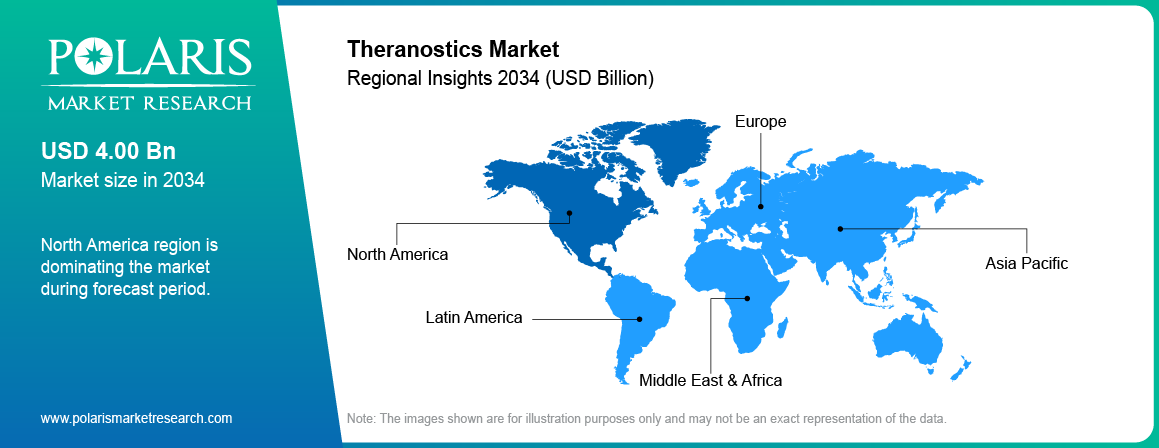
By region, the report provides theranostics market insight into North America, Europe, Asia Pacific, Latin America, and the Middle East & Africa. North America dominated the largest theranostics market share of 46.2% in 2025, primarily driven by the strong presence of advanced healthcare infrastructure, high adoption of precision medicine, and significant investments in research and development. The region benefits from the widespread availability of molecular diagnostics, companion diagnostics, and targeted therapies, particularly in oncology. The presence of major pharmaceutical and biotechnology companies, along with favorable regulatory policies supporting personalized medicine, further strengthens market growth. Additionally, increasing cancer prevalence and the rising demand for early disease detection contribute to the theranostics market expansion in the region.
Europe is a significant market for theranostics capturing 28.0% share in 2025, driven by increasing investments in precision medicine, strong regulatory support, and the rising prevalence of chronic diseases such as cancer and neurological disorders. Countries such as Germany, the UK, and France are at the forefront of theranostic adoption, benefiting from well-established healthcare infrastructures and ongoing research initiatives. The region has witnessed a growing emphasis on integrating companion diagnostics with targeted therapies, particularly in oncology. Additionally, government initiatives promoting biomarker research and personalized treatment approaches are further supporting theranostics market expansion.
The Asia Pacific theranostics market is registering the fastest growth of 17.0%, fueled by the rapid development of healthcare infrastructure, increasing prevalence of chronic diseases, and growing investments in biotechnology and molecular diagnostics. Countries such as China, Japan, and India are leading the region’s expansion due to rising healthcare expenditures and greater adoption of precision medicine. The increasing availability of advanced diagnostic technologies and government support for personalized medicine initiatives are further driving market growth. Additionally, the rising demand for early disease detection and targeted therapies is accelerating the adoption of theranostics across the region.
Competitive Analysis Report
The theranostics market comprises several active companies contributing to advancements in personalized medicine. A few notable participants include Advanced Accelerator Applications; Bayer AG; GE HealthCare Technologies Inc.; Siemens Healthineers AG; Cardinal Health, Inc.; Lantheus Holdings, Inc.; Curium Pharma; Abbott Laboratories; Thermo Fisher Scientific Inc.; Astellas Pharma Inc.; F. Hoffmann-La Roche AG; and Illumina, Inc.
These companies are actively engaged in developing and commercializing theranostic solutions, integrating diagnostic and therapeutic capabilities to enhance patient outcomes. For instance, Siemens Healthineers AG has expanded its molecular imaging portfolio through strategic acquisitions, such as the recent purchase of Advanced Accelerator Applications from Novartis AG. Similarly, Lantheus Holdings, Inc. has strengthened its position in the market by acquiring global rights to Life Molecular Imaging's novel radiopharmaceuticals, aiming to broaden its oncology offerings.
In this competitive landscape, companies are focusing on innovation and strategic collaborations to maintain and grow their market presence. Investments in research and development are pivotal, with an emphasis on creating targeted therapies and companion diagnostics. Additionally, partnerships and acquisitions are common strategies to enhance product portfolios and expand geographic reach. As the demand for personalized medicine continues to rise, these companies are well-positioned to address the evolving needs of healthcare providers and patients.
Thermo Fisher Scientific Inc., headquartered in Waltham, Massachusetts, is a global company in life sciences and clinical research, offering a comprehensive portfolio of analytical instruments, laboratory reagents, consumables, and diagnostic solutions. Formed in 2006 through the merger of Thermo Electron and Fisher Scientific, the company has since expanded its capabilities through strategic acquisitions such as Life Technologies Corporation and PPD. Thermo Fisher serves diverse sectors, including pharmaceuticals, biotechnology, healthcare, and environmental sciences. The company contributes to theranostics market through advanced technologies such as polymerase chain reaction (PCR), immunohistochemistry (IHC), in situ hybridization (ISH), and next-generation sequencing (NGS). These tools are critical for identifying biomarkers and tailoring treatments for diseases such as cancer.
GE HealthCare Technologies Inc., a prominent global provider of medical technology, pharmaceutical diagnostics, and digital healthcare solutions, is dedicated to advancing personalized and connected care. With a legacy of over 100 years, the company serves more than one billion patients annually, supported by an installed base of over four Billion devices. GE HealthCare invests over $1 billion annually in research and development, driving innovation across its four key business segments: Imaging, Advanced Visualization Solutions (AVS), Patient Care Solutions (PCS), and Pharmaceutical Diagnostics (PDx). Its offerings span diagnostic imaging systems such as CT, MRI, and molecular imaging, as well as AI-enabled digital solutions that enhance clinical insights and operational efficiency. GE HealthCare’s commitment to theranostics reflects its broader focus on precision medicine, where real-time diagnostics are paired with tailored treatments to improve outcomes for complex diseases like cancer.
List of Key Companies
- Abbott Laboratories
- Advanced Accelerator Applications
- Astellas Pharma Inc.
- Bayer AG
- Cardinal Health, Inc.
- Curium Pharma
- F. Hoffmann-La Roche AG
- GE HealthCare Technologies Inc.
- Illumina, Inc.
- Lantheus Holdings, Inc.
- Siemens Healthineers AG
- Thermo Fisher Scientific Inc.
Industry Developments
- March 2026: OncoLux Inc. ("OncoLux") and Mayo Clinic entered into a know-how agreement. With this deal, the companies emphasize on advancing optical theranostics in robotic bronchoscopy. (Source: PRNewswire)
- May 2025: ITM secured up to USD 262.5 Billion in debt financing from Blue Owl Capital to expand ITM-11 manufacturing capacity in preparation for its commercial launch. (Source: itmradiopharma.com)
- April 2025: Telix entered into a distribution agreement with Cardinal Health for Gozellix, integrating ARTMS QUANTM systems across Cardinal’s network to enable localized gallium-68 production. (Source: telix.com)
Market Segmentation
By Product Type Outlook (Revenue – USD Billion, 2021–2034)
- Instruments
- Reagents
- Software
By Application Outlook (Revenue – USD Billion, 2021–2034)
- Oncology
- Neurology
- Cardiology
- Infectious Diseases
By Technology Outlook (Revenue – USD Billion, 2021–2034)
- Genomics
- Proteomics
- Metabolomics
- Biomarkers
By End User Outlook (Revenue – USD Billion, 2021–2034)
- Hospitals
- Diagnostic Laboratories
- Research Institutes
By Regional Outlook (Revenue – USD Billion, 2021–2034)
- North America
- US
- Canada
- Europe
- Germany
- France
- UK
- Italy
- Spain
- Netherlands
- Russia
- Rest of Europe
- Asia Pacific
- China
- Japan
- India
- Malaysia
- South Korea
- Indonesia
- Australia
- Vietnam
- Rest of Asia Pacific
- Middle East & Africa
- Saudi Arabia
- UAE
- Israel
- South Africa
- Rest of Middle East & Africa
- Latin America
- Mexico
- Brazil
- Argentina
- Rest of Latin America
Theranostics Market Report Scope
| Report Attributes | Details |
| Market Size in 2025 | USD 2.36 Billion |
| Market Value in 2026 | USD 2.72 Billion |
| Revenue Forecast by 2034 | USD 8.67 Billion |
| CAGR | 15.5% from 2026 to 2034 |
| Base Year | 2025 |
| Historical Data | 2021–2024 |
| Forecast Period | 2026–2034 |
| Quantitative Units | Revenue in USD Billion and CAGR from 2026 to 2034 |
| Report Coverage | Revenue Forecast, Market Competitive Landscape, Growth Factors, and Trends |
| Segments Covered |
|
| Regional Scope |
|
| Competitive Landscape |
|
| Report Format |
|
| Customization | Report customization as per your requirements with respect to countries, regions, and segmentation. |
Source: Polaris Market Research Analysis
How is the report valuable for an organization?
Workflow/Innovation Strategy: The theranostics market has been broadly segmented on the basis of product type, application, technology, and end user. Moreover, the study provides the reader with a detailed understanding of the different segments at both the global and regional levels.
Growth/Marketing Strategy: Companies in the theranostics market focus on expanding their product portfolios through research and development, strategic collaborations, and acquisitions to strengthen their presence in precision medicine. Investments in biomarker discovery, molecular diagnostics, and targeted therapies drive innovation and market growth. Regulatory approvals and reimbursement policies play a crucial role in market expansion, influencing the adoption of theranostics solutions. Additionally, partnerships between pharmaceutical companies, diagnostic firms, and healthcare providers help in integrating theranostics into clinical practice. Market players also emphasize geographic expansion, particularly in emerging markets, to tap into the growing demand for personalized medicine.
Theranostics Market FAQ's
The theranostics market size was valued at USD 2.36 billion in 2025 and is projected to grow to USD 8.67 billion by 2034.
The market is projected to register a CAGR of 15.5% during the forecast period.
North America held the largest revenue share of 46.2% in 2025.
The theranostics market comprises several active companies contributing to advancements in personalized medicine. A few notable participants include Advanced Accelerator Applications; Bayer AG; GE HealthCare Technologies Inc.; Siemens Healthineers AG; Cardinal Health, Inc.; Lantheus Holdings, Inc.; Curium Pharma; Abbott Laboratories; Thermo Fisher Scientific Inc.; Astellas Pharma Inc.; F. Hoffmann-La Roche AG; and Illumina, Inc.
The reagents segment dominated with 47.9% share in 2025.
The oncology segment led the market with 62.7% share in 2025.
Theranostics is a medical approach that combines diagnostic testing and targeted therapy to provide personalized treatment for patients. It involves using specific diagnostic tools, such as molecular imaging and biomarker analysis, to identify disease characteristics and then applying tailored therapies based on these findings. This approach is widely used in oncology, neurology, and other fields to improve treatment precision, minimize side effects, and enhance patient outcomes. By integrating diagnostics and therapy, theranostics enables real-time monitoring of treatment effectiveness and allows for adjustments to optimize patient care.
A few key trends in the market are described below: Advancements in Molecular Imaging and Biomarkers – Growing use of PET, SPECT, and advanced biomarkers for precise disease diagnosis and treatment monitoring. Increased Adoption of Companion Diagnostics – Rising integration of companion diagnostics with targeted therapies to enhance personalized treatment strategies. Expansion of Radiotheranostics – Increasing use of radiopharmaceuticals in cancer treatment, particularly in prostate and neuroendocrine tumors. Growth in AI and Digital Health Integration – Adoption of artificial intelligence and machine learning for improved data analysis, diagnostic accuracy, and treatment planning.
A new company entering the theranostics market must focus on developing advanced molecular diagnostics, AI-driven data analysis, and next-generation biomarker-based therapies to enhance precision medicine. Investing in radiotheranostics, particularly in oncology applications, could provide a competitive edge due to the increasing demand for targeted radiopharmaceuticals. Strategic collaborations with pharmaceutical and biotechnology firms can accelerate product development and market access. Additionally, prioritizing regulatory compliance and reimbursement strategies will facilitate adoption in clinical settings. Expanding into emerging markets with cost-effective solutions can further strengthen market positioning and growth potential.
Companies manufacturing, distributing, or purchasing theranostics-related products and other consulting firms must buy the report.
Download Sample Report of Theranostics Market
Please fill out the form to request a customized copy of the research report.


