
Immunotherapy Drugs Market Size, Share, Trends & Forecast, 2026-2034
REPORT DETAILS
Immunotherapy Drugs Market Size & Forecast, 2025-2034
The global immunotherapy drugs market size was valued at USD 327.74 billion in 2025. It is expected to record a CAGR of 15.00 % from 2026 to 2034. Increasing prevalence of cancer drives the growth of the market. Rising emphasis on research and development in combination therapies propels the market development.
Market Statistics
Key Takeaways
- North America dominated the global market with 43.7% share in 2025, due to the rising investments in research and technological advancements in biotechnology.
- The U.S. led the regional market with 71.8% revenue share in 2025. This is fueled by rising awareness and acceptance of immunotherapies for treating various conditions.
- The Asia Pacific immunotherapy drugs industry is anticipated to record the highest CAGR of 11.6% during the forecast period. The growth is attributed to rapid advancements in healthcare infrastructure.
- The antibody drugs segment held the largest share of 49.5% in 2025. Antibody drugs have proven efficacy in managing various conditions, such as cancers and autoimmune diseases. This factor supports the segment dominance.
- The cancer segment dominated the market with 52.8% share in 2025. The segment dominance is propelled by the promising results of immunotherapy in various cancer treatments.
Note: Figures and projections outlined in this report are the result of Polaris Market Research’s proprietary analytical processes, grounded in the latest available datasets and market observations.
Industry Dynamics
- Increasing prevalence of cancer across the world drives the market growth.
- Rising advancements in precision medicines fuel the expansion of the industry.
- Regulatory hurdles and approval delays hinder the growth of the market.
- Strong clinical pipeline of biologics is expected to create lucrative opportunities in the market during the forecast period.
- Growing investments in oncology R&D would lead to new industry trend in the coming years.
Introduction to Immunotherapy Drugs
Immunotherapy medications can be defined as the medications that help to boost or inhibit the immune system. These medications are used to treat diseases like cancers, infections, and autoimmune disorders. The medication helps in increasing the effectiveness of the immune system in targeting and destroying the unwanted agents or cells.
Growing prevalence of cancer and autoimmune diseases and advancements in biotechnology drive market growth. Also, development of targeted therapies, including monoclonal antibodies and CAR-T cells will fuel market development. Increasing R&D investments by the government and industry players boost the industry growth. It is also attributed to favorable regulatory policies and growing treatment awareness.
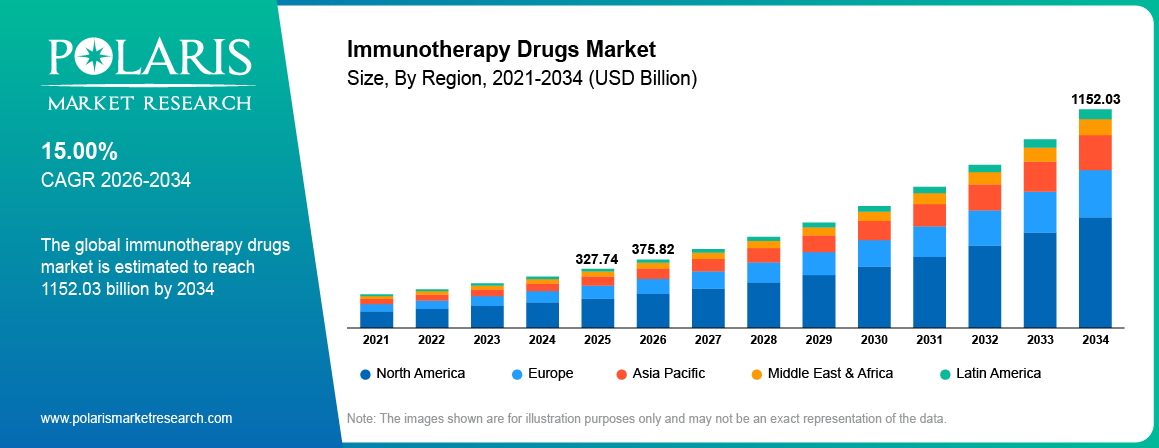
Source: Polaris Market Research Analysis
To Understand More About this Research: Download Sample Report
How Immunotherapy Drugs Work
- Immunotherapy drug can be administered via infusion, injection, or oral drugs.
- This treatment help activate or boost natural immune mechanisms of the body.
- Cancer cells have distinct markers that the immune cells recognize.
- Activated T-cells start multiplying and become more effective at eliminating abnormal cells.
- Immune cells destroy the cancer cells and reduce harm to healthy cells.
- Memory immune cells stay in the body to give long-term immunity against the disease recurrence.
Comparison Between Immunotherapy vs Chemotherapy
| Feature | Immunotherapy | Chemotherapy |
| Mechanism | Activates the immune system to fight disease | Directly kills rapidly dividing cells |
| Specificity | Highly targeted toward immune pathways or cancer cells | Non-selective, affecting both cancerous and healthy cells |
| Side Effects | Generally fewer and immune-related | Often more severe due to damage to healthy cells |
| Duration of Response | Can provide long-term immune protection | Usually offers a temporary treatment effect |
| Innovation | Primarily based on biologics and advanced immune therapies | Primarily based on cytotoxic drugs that destroy cancer cells |
Source: Polaris Market Research Analysis
The demand within this industry is expanding due to the growing global incidence of cancer. According to the World Health Organization (WHO), cancer is one of the leading causes of death, with an estimated 19.3 million new cases and nearly 10 million cancer-related deaths in 2020. Similarly, according to the International Agency for Research on Cancer, in 2022, nearly 20 million new cancer cases and 9.7 million cancer-related deaths were reported, with projections for 2040 reaching 29.9 million cases and 15.3 million deaths globally. Thus, cancer cases are rising, and there is an escalating demand for new and effective treatment options that do not respond well to conventional treatments. Immunotherapy's ability to harness the body's immune system to target and destroy cancer cells specifically has made it a highly sought-after solution, fuelling increased interest and investment in the industry.
The surge in demand for immunotherapy drugs is prompting pharmaceutical companies and research institutions to accelerate the development and commercialization of new therapies. For instance, in April 2024, researchers at The University of Texas MD Anderson Cancer Center developed engineered peptides that enhance immune system activation against cancer, offering a promising new direction for immunotherapy drug development. These advanced drug developments in immunotherapy, compared to conventional treatments, are propelling the immunotherapy drugs market expansion.
Immunotherapy Drugs Market Dynamics: Drivers, Opportunities, Restraints & Challenges
Advances in Checkpoint Inhibitors, Cell Therapy and Bispecific Antibodies Drive Immunotherapy Growth
Advancements in research and development are significantly driving the immunotherapy drugs market growth by continually introducing new and effective treatment options. Innovations such as CAR-T cell therapy, which involves modifying a patient's T cells to target cancer cells, have shown remarkable success in treating certain types of cancer. For instance, in March 2024, the FDA approved Bristol Myers Squibb’s Breyanzi (lisocabtagene maraleucel) as the first CAR T cell therapy for adults with relapsed or refractory chronic lymphocytic leukemia or small lymphocytic lymphoma.
Immune checkpoint inhibitors, which block proteins that prevent immune cells from attacking cancer, are enhancing treatment outcomes and offering new hope for patients with previously hard-to-treat cancers. The development of personalized vaccines tailored to individual patient's unique cancer profiles is a targeted and effective therapy. These approaches are expanding the range of treatment options available and also improving the efficacy and precision of cancer treatments, thereby driving the growth of the immunotherapy market and offering new possibilities for patient care.
Immunotherapy Combination Regimens Expand Across Earlier Lines of Cancer Treatment
Combination therapies, integrating immunotherapy with other treatment modalities such as chemotherapy or targeted therapies, have shown a significant enhancement in treatment efficacy by leveraging the strengths of different therapeutic approaches. These combinations overcome resistance mechanisms and improve overall outcomes for patients. This strategy has been particularly effective in treating cancers that are less responsive to single-agent therapies, offering a more comprehensive approach to fighting the disease. For instance, in April 2024, the FDA approved the combination of N-803 with BCG for treating BCG-unresponsive non-muscle-invasive bladder cancer, based on the QUILT 3.032 clinical trial led by UCLA, which demonstrated enhanced survival and efficacy. This combination of drugs for treating particular cancer diseases drives the immunotherapy drug market.
This combined approach expands the immunotherapy drugs market and provides clinicians with a more versatile toolkit for managing complex cancer cases. It allows for personalized treatment plans tailored to individual patient needs, improving the chances of successful outcomes and potentially leading to better survival rates. As a result, the adoption of combination therapies continues to drive market growth.
Challenges & Restraints in the Immunotherapy Drugs Market
Although there is a significant growth trajectory, there are still certain structural issues that may influence the adoption of the therapy.
- High Treatment Costs: Immunotherapies are much more costly compared to conventional drug options, which reduces access to cost-sensitive health-care systems.
- Severe Immune-Related Side Effects: Certain drugs induce immune-associated side effects that needed to be managed.
- Complex Manufacturing of Biologic Therapies: CAR-T and antibodies are produced in a complicated way that necessitates special manufacturing and specific resources.
- Regulatory Approval Complexities: New biological methods have to undergo a more complicated regulatory process compared to small molecules.
- Limited Response Rates in Some Cancers: There are certain cancers that do not respond well to the treatment. Therefore, the efficacy of the immunotherapy is reduced.
These factors collectively moderate the pace of adoption, even as clinical and commercial interest in immunotherapy continues to rise.
Source: Polaris Market Research Analysis
Immunotherapy Drugs Market Segmentation & Segment Insights
Immunotherapy Drugs Market by Therapy Type: Antibodies, Checkpoint Inhibitors, Cell Therapies, Cytokines & Vaccines
The global immunotherapy drugs market segmentation, based on type, includes antibody drugs, inhibitor drugs, interferons and interleukins, vaccines, and others. The antibody drugs segment held the largest share due to their proven efficacy in treating a variety of conditions, including cancers and autoimmune diseases. Monoclonal antibodies have shown significant success in targeting specific antigens on cancer cells or immune cells, leading to effective and precise treatment with reduced off-target effects. This effectiveness, combined with their broad application across different types of cancers and chronic diseases, has cemented their dominant position in the market.
Advancements in antibody engineering, such as the development of bispecific antibodies and antibody-drug conjugates, have further enhanced their therapeutic potential and efficacy. For instance, in February 2024, researchers at the University of Pennsylvania developed switchable bispecific antibodies using FDA-approved immunotherapy drugs, which offer a promising advancement in cancer treatment by minimizing on-target off-tumor toxicity and reducing immune system overactivation. Further, an established market presence and a strong pipeline of new antibody drugs in development continue to drive growth in this segment, sustaining its role in the market.
Immunotherapy Drugs Market by Indication: Cancer, Autoimmune, Inflammatory & Other Diseases
The global immunotherapy drugs market segmentation, based on application, includes cancer, autoimmune and inflammatory diseases, hematology, osteology, neurology, and others. The cancer segment dominated the market and is anticipated to continue its dominance over the forecast period due to its high unmet medical needs and the significant impact of new therapies. Traditional cancer treatments often have limitations, creating a strong demand for innovative approaches. Immunotherapy has demonstrated promising results across various cancer types, such as melanoma and lung cancer, leading to increased interest and investment in this field.
Advancements in research, successful regulatory approvals, and substantial funding have accelerated the development and adoption of cancer immunotherapy. The growing global incidence of cancer further drives the market, making it the largest segment in the market.
Real-World Applications of Immunotherapy Drugs
| Application | Real-World Use Case |
| Cancer Treatment | Used for cancers like lung cancer, breast cancer, melanoma, and leukemia by boosting the immune system to target cancerous cells. |
| Autoimmune Disease Management | Immunotherapy medicines are used to manage immune function in autoimmune diseases like rheumatoid arthritis, multiple sclerosis, and lupus. |
| CAR-T Cell Therapy | Personalized CAR-T treatments are used to treat various types of blood cancers like leukemia and lymphoma. |
| Preventive Cancer Vaccines | Cancer vaccines specifically target viruses that cause cancers, such as HPV and hepatitis B virus. Vaccines play an important role in lowering the probability of developing specific cancer. |
| Combination Therapy | Immunotherapy is often used in combination with chemotherapy, targeted treatment, or radiation for improved results. |
| Next-Generation Clinical Trials | Clinical studies are being conducted on new immune checkpoint inhibitors, bispecific antibodies, and immunotherapy. |
Source: Polaris Market Research Analysis
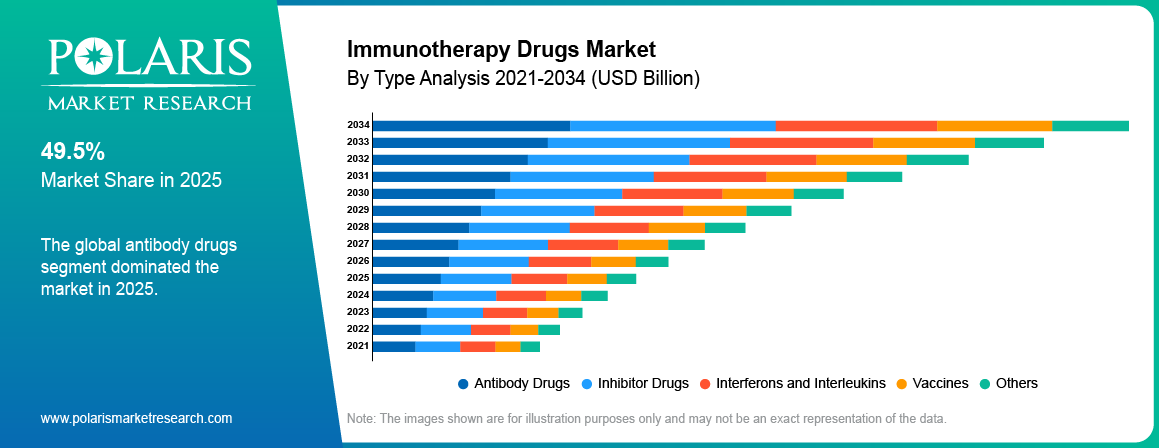
Source: Polaris Market Research Analysis
Advanced Technologies in Immunotherapy
These immunotherapeutic drugs will be developed using new core technology platforms, which increase precision, duration of action and response rate.
- CAR-T Cell Engineering: T cells taken from a patient are genetically engineered for recognizing specific cancer antigens and destroying them, achieving remission in particular types of blood cancer.
- Immune Checkpoint Blockade Therapy: Targets regulatory proteins such as PD-1, PD-L1 and CTLA-4 responsible for boosting immune function by inhibiting its action against tumor cells.
- Bispecific Antibodies: Two distinct antigens can be bound simultaneously by bispecific antibodies, making them direct immune cells to tumor cells with less off-target toxicity.
- mRNA Cancer Vaccines: Instructions for the synthesis of specific tumor antigens are delivered to the body to develop personalized and fast-response therapy.
- Artificial Intelligence for Immunotherapy Drug Discovery: Machine Learning will find new potential antigen targets to speed up drug discovery.
- Personalized Tumor Antigen Targeting: This therapy is personalized based on the profile of mutations of a tumor in a patient.
All these platforms will be contributing to the change of cancer therapy from broad spectrum to precise immunotherapy, which is expected to be the future until 2034.
Immunotherapy Drugs Market Regional Analysis: North America, Europe, Asia Pacific, Latin America & MEA
North America Immunotherapy Drugs Market: Checkpoint, CAR-T and Bispecific Adoption
North America immunotherapy drugs market held the largest share of the global market in 2025. This approximate share of more than 40% is primarily due to the high prevalence of cancer and a robust healthcare infrastructure. For instance, the Canadian Cancer Statistics Report in 2022 indicated that approximately 233,900 people were diagnosed with cancer, and over 1.5 million people in Canada are living with or beyond cancer. The significant incidence of cancer in the region drives demand for effective treatment options, while the well-established healthcare system supports advanced research and development. This infrastructure facilitates the rapid approval and adoption of new therapies, enhancing market growth.
Substantial investments in research and technological advancements in biotechnology have led to innovative immunotherapy solutions. The increasing awareness and acceptance of these therapies among healthcare providers and patients further contribute to their widespread adoption, solidifying North America’s leadership in the industry.
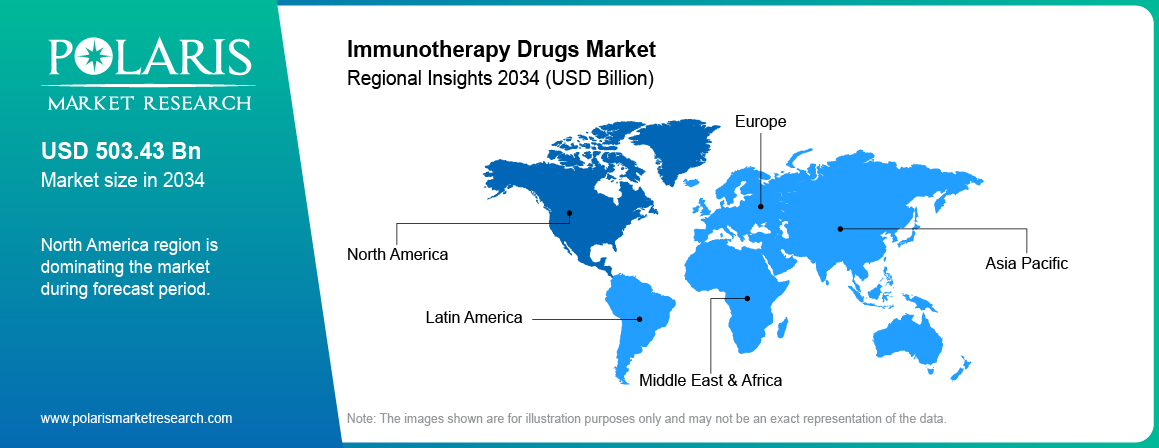
Source: Polaris Market Research Analysis
Asia Pacific Immunotherapy Drugs Market: China, Japan, India and Regional Clinical Development
Asia Pacific immunotherapy drugs market is anticipated to grow at the fastest rate due to rapid advancements in healthcare infrastructure, which are essential for the development and distribution of innovative therapies. Additionally, there is a high incidence of diseases, particularly cancer, that are effectively treated with immunotherapy. This growing demand for effective treatment options is further supported by a robust pipeline of clinical trials and research initiatives focusing on immunotherapy, making the region a significant player in this market.
For instance, The Asia Pacific Vaccine and Immunotherapy Congress (APVIC) 2025 took place from May 14 to 17. The event was organized by Immunotherapy@Brisbane, Eradicate Cancer, the Melbourne Immunotherapy Network (MIN), and Australasian Immunotherapy and Vaccine Development. This congress brought together experts in immunotherapy and vaccine research for networking, learning, and collaboration. It provided an opportunity for leaders in the field to share ideas, discuss the latest advancements, and work together towards improving cancer treatment and vaccine development.
Regional Market Trends
| Region | Market Position | Key Growth Driver |
| North America | Largest shareholder | Strong biotech ecosystem, high cancer prevalence, rapid FDA approvals |
| Europe | High adoption | Established oncology treatment infrastructure and reimbursement frameworks |
| Asia Pacific | Market with highest CAGR | Rising cancer burden and expanding clinical research activity |
| Latin America | Emerging adoption | Gradual healthcare infrastructure improvements and rising diagnosis rates |
| Middle East & Africa | Emerging market | Improving access to advanced oncology care and growing investment in healthcare systems |
Source: Polaris Market Research Analysis
Innovation Trends (Pipeline & Next-Gen Therapies)
The next wave of immunotherapy innovation is centered on improving durability, accessibility, and combinability of treatment approaches.
- Next-Generation Checkpoint Inhibitors (LAG-3, TIGIT): Target additional immune checkpoints beyond PD-1/CTLA-4 to overcome resistance seen with first-generation inhibitors.
- Personalized Cancer Vaccines: Cancer vaccines that are constructed using the mutation profile of a cancer patient.
- Combination Immunotherapy Treatment Plans: Treatment plans that combine immunotherapy with other forms of cancer therapy including chemotherapy, targeted therapy, and biologic drugs.
- Off-the-Shelf CAR-T Therapy: CAR-T therapy produced in advance to be used without the need for manufacturing for a particular patient.
- mRNA-Based Immunotherapies: Expanding beyond vaccines into broader immune-modulating applications for oncology.
These innovation vectors are expected to define competitive differentiation among leading players through the 2025–2034 forecast period.
Immunotherapy Drugs Market Competitive Landscape & Leading Companies
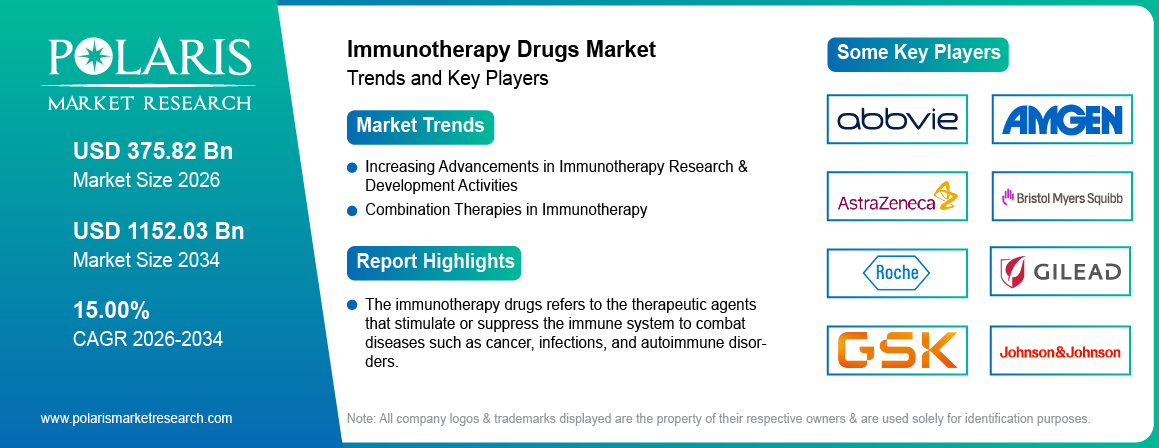
Leading market players are investing heavily in research and development in order to expand their product lines, which will help the market grow even more. Market participants are also undertaking a variety of strategic activities to expand their global footprint. Important immunotherapy drugs market developments include new product launches, contractual agreements, mergers and acquisitions, higher investments, and collaboration with other organizations. To expand and survive in a more competitive and rising market climate, the immunotherapy drugs industry must offer cost-effective products.
Manufacturing locally to minimize operational costs is one of the key business tactics used by manufacturers in the global immunotherapy drugs industry to benefit clients and increase the market sector. In recent years, the immunotherapy drugs industry has offered some technological advancements. The immunotherapy drugs market key players include Abbvie Inc.; Amgen Inc.; AstraZeneca; Bristol-Myers Squibb Company; F. Hoffman-La Roche Ltd.; Gilead Sciences, Inc.; GSK PLC; Johnson & Johnson Services, Inc.; Merck & Co., Inc.; Novartis AG; Pfizer Inc.; Sanofi; Takeda Pharmaceutical Company Limited; and Teva Pharmaceutical Industries Ltd.
AbbVie Inc. is a biopharmaceutical company that specializes in research and development of innovative therapies across various therapeutic areas, including immunology, oncology, and neuroscience. The company has a diverse product portfolio featuring major drugs such as Humira, Skyrizi, and Botox. It is also advancing treatments for autoimmune diseases, cancer, and neurological disorders. In February 2024, AbbVie and OSE Immunotherapeutics partnered to develop OSE-230 for chronic inflammation, with AbbVie securing global rights and OSE receiving up to $713 million in payments and royalties.
AstraZeneca plc is a biopharmaceutical company headquartered in Cambridge, England, specializing in the discovery, development, and commercialization of prescription drugs. The company focuses on various therapeutic areas, including oncology, cardiovascular, respiratory, and neurological diseases, and has a diverse product portfolio that includes biologics and vaccines. In June 2024, AstraZeneca's drug, IMFINZI (durvalumab), was approved in the US for advanced or recurrent mismatch repair deficient endometrial cancer.
Leading Immunotherapy Drug Companies by Modality and Product Portfolio
- Abbvie Inc.
- Amgen Inc.
- AstraZeneca
- Bristol-Myers Squibb Company
- F. Hoffman-La Roche Ltd.
- Gilead Sciences, Inc.
- GSK PLC
- Johnson & Johnson Services, Inc.
- Merck & Co., Inc.
- Novartis AG
- Pfizer Inc.
- Sanofi
- Takeda Pharmaceutical Company Limited
- Teva Pharmaceutical Industries Ltd.
Recent Immunotherapy Drug Approvals, Pipeline Updates & Partnerships, 2025-2026
- May 2026: Roche Pharma launched Tecentriq (atezolizumab), a first subcutaneous immunotherapy for lung cancer. Tecentriq is an under-the-skin injection. It takes approximately seven minutes to administer, whereas conventional intravenous infusions stretch on for several hours.(Source: economictimes.indiatimes.com)
- March 2025: Bayer entered into a global licensing agreement with China-based Puhe BioPharma for an experimental oral cancer therapy, a PRMT5 inhibitor targeting MTAP-deleted tumors. While financial terms were not disclosed, Bayer has initiated Phase I clinical trials for the candidate.
What is the Future of the Immunotherapy Drugs Market?
The immunotherapy drugs industry is expected to witness strong growth during the forecast period. Expanding applications in oncology will fuel the market expansion. Increasing adoption of precision medicine is expected to boost the market growth in the coming years. The industry is experiencing continuous innovations in CAR-T therapies, checkpoint inhibitors, and cancer vaccines. These advancements will fuel future expansion during the projected period. However, high costs and complex manufacturing will remain key challenges. Moreover, immunotherapy is expected to become a cornerstone of future cancer treatment globally.
Immunotherapy Drugs Market Segmentation by Therapy Type, Indication, Route, End User & Region
By Type Outlook
- Antibody Drugs
- Inhibitor Drugs
- Interferons and Interleukins
- Vaccines
- Others
By Application Outlook
- Cancer
- Autoimmune and Inflammatory Diseases
- Hematology
- Osteology
- Neurology
- Others
By Route of Administration Outlook
- Intravenous
- Subcutaneous
- Oral
- Others
By End User Outlook
- Hospitals
- Long-Term Care Facilities
- Others
By Regional Outlook
- North America
- US
- Canada
- Europe
- Germany
- France
- UK
- Italy
- Spain
- Netherlands
- Russia
- Rest of Europe
- Asia Pacific
- China
- Japan
- India
- Malaysia
- South Korea
- Indonesia
- Australia
- Vietnam
- Rest of Asia Pacific
- Middle East & Africa
- Saudi Arabia
- UAE
- Israel
- South Africa
- Rest of Middle East & Africa
- Latin America
- Mexico
- Brazil
- Argentina
- Rest of Latin America
Immunotherapy Drugs Market Report Scope, Segmentation & Forecast Period
| Report Attributes | Details |
| Market Size Value in 2025 | USD 327.74 billion |
| Market Size Value in 2026 | USD 375.82 billion |
| Revenue Forecast in 2034 | USD 1152.03 billion |
| CAGR | 15.00% from 2026 – 2034 |
| Base Year | 2025 |
| Historical Data | 2021 – 2024 |
| Forecast Period | 2026 – 2034 |
| Quantitative Units | Revenue in USD billion and CAGR from 2026 to 2034 |
| Report Coverage | Revenue Forecast, Market Competitive Landscape, Growth Factors, and Industry Trends |
| Segments Covered |
|
| Regional Scope |
|
| Competitive Landscape |
|
| Report Format |
|
| Customization | Report customization as per your requirements with respect to countries, regions, and segmentation. |
Source: Polaris Market Research Analysis
Immunotherapy Drugs Market FAQ's
The global immunotherapy drugs market size was valued at USD 327.74 billion in 2025 and is anticipated to reach at USD 1,152.03 billion in 2034.
The global market is projected to grow at a CAGR of 15.00% during the forecast period, 2026-2034.
North America had the largest share in the global market.
The key players in the market are Abbvie Inc.; Amgen Inc.; AstraZeneca; Bristol-Myers Squibb Company; F. Hoffman-La Roche Ltd.; Gilead Sciences, Inc.; GSK PLC; Johnson & Johnson Services, Inc.; Merck & Co., Inc.; Novartis AG; Pfizer Inc.; Sanofi; Takeda Pharmaceutical Company Limited; and Teva Pharmaceutical Industries Ltd.
The antibody drugs category dominated the market in 2025
The cancer had the largest share in the global market.
Main immunotherapy drugs types are immune checkpoint inhibitors, CAR-T cell therapies, and cancer vaccines. Cytokines, monoclonal antibodies, and immune system modulators are other types. They enhance the body's ability to detect and destroy cancer cells.
Immunotherapy is a treatment approach used for lung cancer, melanoma, breast cancer, kidney cancer, and bladder cancer. Also, other cancers that immunotherapy can treat include lymphomas, leukemias, head and neck cancers, and certain types of colorectal cancers.
Download Sample Report of Immunotherapy Drugs Market
Please fill out the form to request a customized copy of the research report.


