
Mycoplasma Testing Market Size, Global Analysis Report, 2026-2034
REPORT DETAILS
Mycoplasma Testing Market Summary
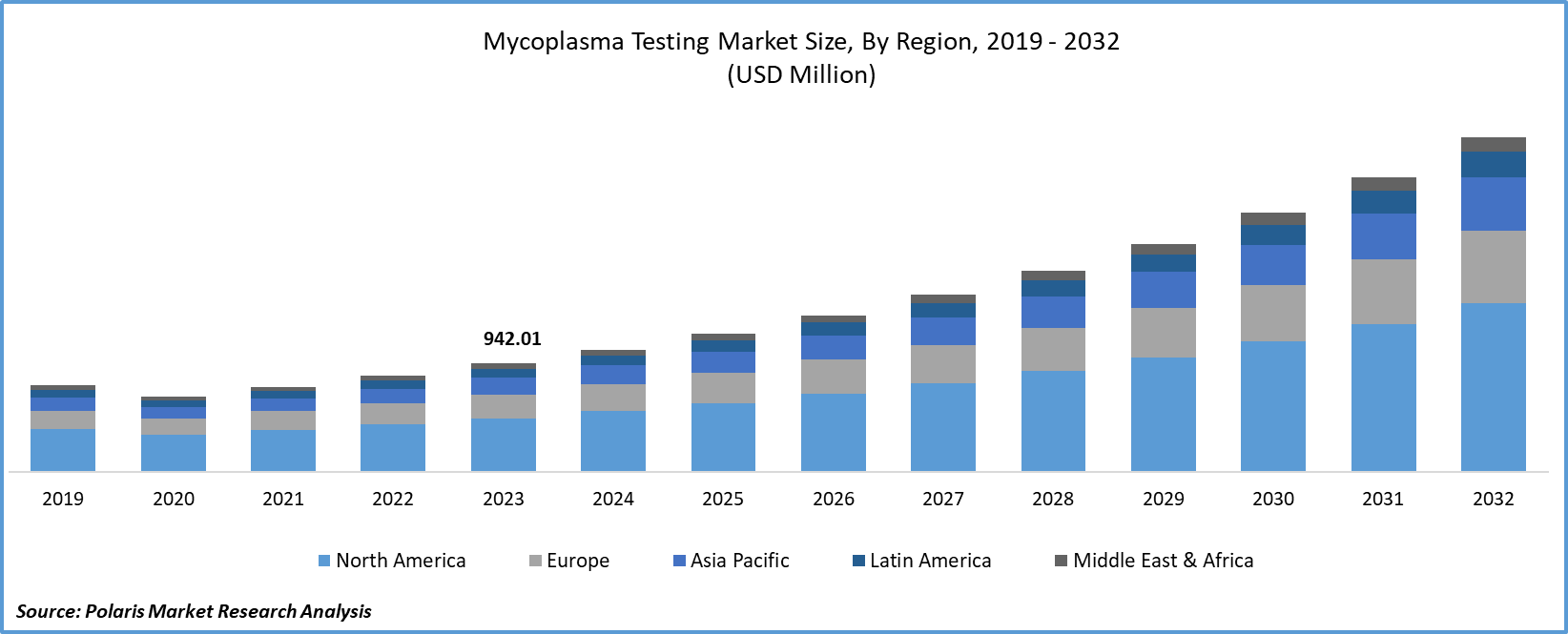
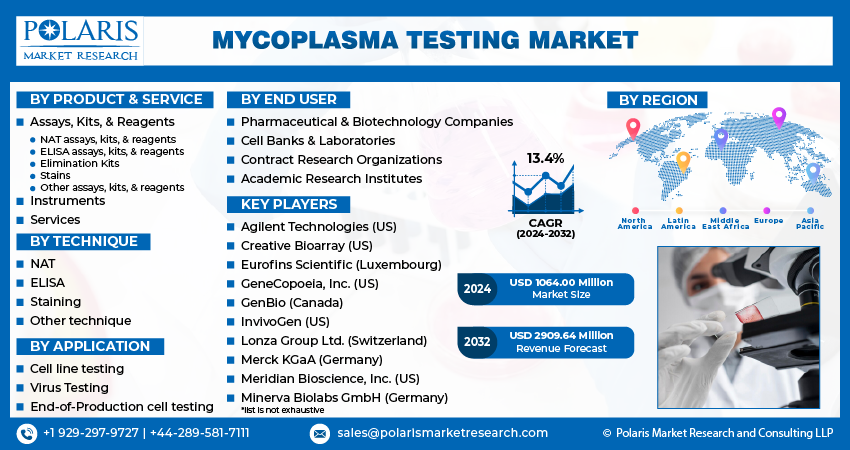
The global mycoplasma testing market was valued at USD 1.13 billion in 2025 and is expected to grow at a CAGR of 12.03% from 2026 to 2034. The market is growing due to heightened biopharmaceutical production and stringent contamination control standards.
Market Statistics
Key Takeaways
- North America led with a 39.0% revenue share in 2025. The presence of a robust healthcare infrastructure contributes to the region’s leading market position.
- Asia Pacific is projected to witness rapid growth at a 13.88% CAGR. This is due to the presence of major players focusing on dependable medicines and therapies.
- The assays, kits, and reagents segment held 57.0% share in 2025. The rising development of new therapies contributes to the segment’s growth.
- The NAT (nucleic acid amplification) segment led with a 26.22% share in 2025. This is owing to the various benefits of NAT.
- The cell line testing segment held a significant market share of 50.0% in 2025. The segment’s dominance is attributed to the continuous rise in the use of cell cultures.
Note: Figures and projections outlined in this report are the result of Polaris Market Research’s proprietary analytical processes, grounded in the latest available datasets and market observations.
Industry Dynamics
- An increase in research studies exploring mycoplasma detection is impacting the market expansion favorably.
- The rising incidence of mycoplasma-related health issues is driving the need for mycoplasma testing.
- The rapid adoption of PCR-based automation is creating several market opportunities.
- High costs of specialized testing kits may present challenges.
AI Impact on Mycoplasma Testing Market
- AI is crucial for increasing both precision and speed of detection in mycoplasma test analysis through lab test data analysis.
- AI makes it possible to detect contamination promptly by identifying patterns that would normally be missed in human detection.
- AI aids laboratories in the automation of testing processes, hence ensuring efficiency.
- AI contributes to the good management of data in laboratories.
Mycoplasma is a microorganism known to cause respiratory tract infections and sexually transmitted diseases in humans. The increasing prevalence of respiratory and sexually transmitted infections is highlighting the importance of mycoplasma testing across pharmaceutical, biotechnology, and food-manufacturing settings. Continuous research focused on developing compatible, rapid, and highly sensitive testing tools is further supporting market growth.
Source: Polaris Market Research Analysis
To Understand More About this Research: Download Sample Report
The rising disease burden is increasing the need for accurate molecular assays capable of distinguishing mycoplasma infections from conditions presenting similar symptoms. Rapid and sensitive testing enables earlier diagnosis, supports appropriate treatment decisions, and reduces the risk of disease transmission. Furthermore, the growing adoption of PCR-based assays and automated detection platforms is improving laboratory efficiency and strengthening mycoplasma testing market growth.
Growth Drivers
Rising Research Studies Exploring Mycoplasma Detection
The growing knowledge about the effect of certain microorganisms in disrupting body functions is showcasing the importance of ensuring the contaminant-free laboratory environment at the time of therapeutics development. Moreover, the increasing studies working on creation of effective mycoplasma detection tools are anticipated to showcase significant growth opportunities in the coming years.
The Growing Incidence of Mycoplasma-Related Health Issues
Food and healthcare sectors showing emphasis on promoting consumer safety. This shift is significantly supporting the demand for mycoplasma testing, driven by growing prevalence of health problems driven by the intake of mycoplasma-contaminated medicine, therapies, and food products.
Restraining Factors
The Unwillingness to Adopt New Technological Solutions
The higher costs of deploying testing infrastructure, along with the need to adopt new technological innovations, are expected to restrain mycoplasma testing market growth. Academicians and researchers are anticipated to show reluctance to embrace the latest innovations, due to the familiarity and convenience of traditional methods, embarking on a significant obstacle to the expansion of the mycoplasma testing market.
FDA, USP & EMA Compliance Standards
Regulatory compliance is very important in the area of mycoplasma testing, especially when developing biologicals, vaccines, cellular therapy, or any type of biopharmaceuticals. Regulatory agencies, including the FDA, USP, and EMA, require that these tests be validated in the laboratories of these companies to ensure the safety of the consumer and the consistency of all the batches produced. Guidelines for contamination testing, validation, documentation, and quality control during production are provided by regulations. As the use of biologicals becomes more widespread, the need for a validated test becomes even greater.
Source: Polaris Market Research Analysis
PCR-Based Testing vs Traditional Culture Testing
| Parameters | Molecular PCR Testing | Conventional Culture Testing |
| Detection Rate | Enables rapid detection of contamination with shorter testing times | Necessitates lengthy incubation periods before obtaining results |
| Sensitive | Can detect even minimal contamination of the sample | Less sensitive than other advanced molecular techniques |
| Testing Turnaround Time | Yields results at a faster rate due to faster process | Takes longer for results to be yielded because of culture conditions |
| Accurate | Yields highly accurate results on mycoplasma contamination | Yields accurate results; however, can be affected by slow-growing cultures |
| Automated | Adaptable to automation in laboratories | Easier to perform manually than in an automated setting |
| Accepted by Regulators | Generally accepted in testing regulations and quality control | Long history of usage with widespread acceptance by regulators |
Report Segmentation
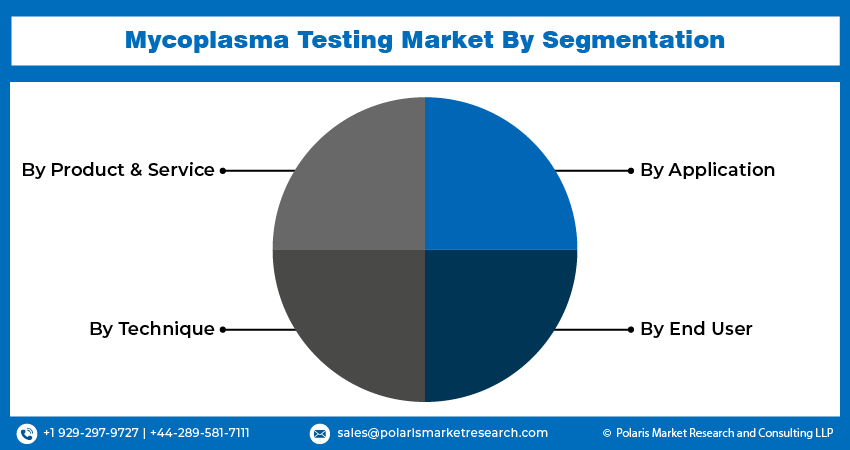
The market is primarily segmented based on product & service, technique, application, end user, and region.
| By Product & Service | By Technique | By Application | By End User | By Region |
|
|
|
|
|
Source: Polaris Market Research Analysis
By Products & Services Analysis
Assays, Kits, & Reagents Segment dominated the market in 2025
The assays, kits, and reagents segment held 57.0% share in 2025. This is attributable to the rising new development of therapeutics, primarily cell and gene, contributing to the need for kits, reagents, and assays to test the presence of mycoplasma, as it can mislead the therapeutic results.
The instruments segment is expected to witness 12.45% CAGR during 2026-2034, largely attributable to the increasing demand for accurate, fast, and cost-effective testing solutions in the marketplace. The potential of instruments in efficiently determining the presence of harmful bacteria in medicines is gaining attention in the pharmaceutical space, as it plays a major role in promoting the safety and efficacy of cell-based therapies.
By Technique Analysis
Nat Segment Witnessed the Largest Market Share in 2025
The NAT (nucleic acid amplification) segment registered for the largest market share of 26.22% in 2025 and is expected to continue its market position throughout the study period. The multiple advantages of NAT, including robustness, sensitivity, and faster results, are contributing to the increased adoption of this technology in mycoplasma testing.
The ELISA (enzyme-linked immunosorbent assay) segment is expected to grow fastest at a CAGR of 10.35% over the next few years. This is due to the rapid increase in demand for cell banks. It is widely used in laboratory tests to identify antibodies in blood against mycoplasma pneumoniae.
By Application Analysis
Cell Line Testing Segment Held the Significant Market Revenue Share in 2025
The cell line testing segment held a significant market share of 56.0% in revenue in 2025, which was highly accelerated due to the continuous rise in the use of cell cultures. The growing research and development activities in the production and manufacturing of medicines necessitate the need to employ mycoplasma testing, driving substantial investments in cell line testing.
The end-of-production cell testing segment is expected to register significant growth at a CAGR of 12.03% over the study period. This is primarily driven by its ability to check for bacterial contamination in the production of medicines, thereby, creating effective and safe pharmaceutical solutions to the patients.
Source: Polaris Market Research Analysis
By End User Analysis
Pharmaceutical & Biotechnology Companies Segment Registered a Dominant Share in 2025
The Pharmaceutical & Biotechnology Companies segment witnessed a dominant share of 47.0% in 2025. This is highly attributable to the growing investments in the development of cell and gene therapies, for the multiple health problems. The growing focus on new therapeutics development is likely to fuel the demand for bacteria testing tools, including mycoplasma.The contract research organizations segment is expected to register significant growth in the next few years, driven by the rising establishment of contract research organizations. They are specialized in offering services in the development, production, and testing of biopharmaceutical products, which will significantly boost the demand for mycoplasma testing tools in the long run.
Regional Insights
North America Region Registered the Largest Share of the Global Market in 2025
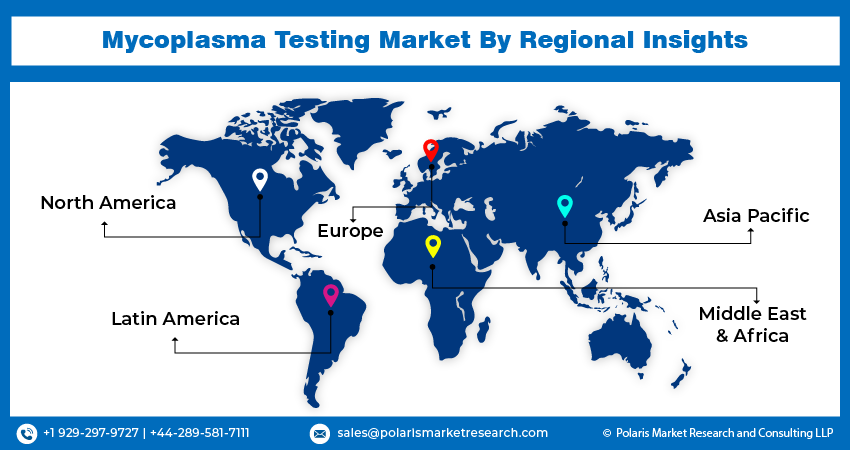
The North America region held the dominant share of 39.0% in 2025. This dominance is attributed to its robust healthcare and biopharmaceutical infrastructure and the presence of major regulatory agencies, particularly the U.S. Food and Drug Administration. Stringent biologics safety requirements encourage pharmaceutical and biotechnology companies to conduct routine contamination testing across research, manufacturing, and product-release workflows. Furthermore, strong investments in cell and gene therapy development, advanced testing laboratories, and the early adoption of rapid molecular testing technologies reinforce the region’s market leadership.
The Asia Pacific region is poised to be the fastest-growing region, registering a CAGR of 13.88% during the forecast period. Growth is driven by the expansion of biopharmaceutical manufacturing, increasing cell-based research, and the rising focus of market participants on producing safe and reliable medicines and therapies. For instance, in December 2025, Thermo Fisher Scientific’s PPD business highlighted advances in mycoplasma detection through the MycoSEQ Plus Mycoplasma Detection Kit. The solution employs TaqMan-based molecular technology and can detect more than 200 mycoplasma species, supporting faster and more reliable contamination control in biopharmaceutical workflows. The increasing adoption of such advanced testing solutions is expected to create significant opportunities across Asia Pacific. (Source: ppd.com)
Source: Polaris Market Research Analysis
Key Market Players & Competitive Insights
Some of the major players operating in the global market include American Type Culture Collection; bioMérieux SA; Bionique Testing Laboratories, Inc.; Biotools B & M Labs, S.A.; Charles River Laboratories International, Inc.; Creative Bioarray (US); Eurofins Scientific; GeneCopoeia, Inc.; InvivoGen; Lonza Group Ltd.; Merck KGaA; Minerva Biolabs GmbH; Sartorius AG; SGS S.A.; Thermo Fisher Scientific Inc
The market for cell line, virus, and biologics testing is highly fragmented, with competition spanning global conglomerates and specialized niche laboratories. Thermo Fisher Scientific, Merck KGaA, Lonza, Sartorius, and Charles River Laboratories dominate through broad portfolios, scale, and integrated instrumentation-plus-assay offerings. Eurofins Scientific and SGS S.A. compete strongly in outsourced testing services, leveraging extensive laboratory networks and regulatory accreditation.
Specialists such as American Type Culture Collection, Bionique Testing Laboratories, BioTools B&M Labs, Minerva Biolabs, and BioMérieux differentiate through focused expertise in mycoplasma detection, cell bank characterization, and NAT/ELISA-based assays. Creative Bioarray and GeneCopoeia compete on customized cell line and reagent solutions, while InvivoGen targets immunology and cell culture research.
Key competitive factors include regulatory compliance, turnaround time, assay sensitivity, and pricing. Consolidation and demand for rapid, validated contamination testing are intensifying rivalry, pressuring smaller players to innovate or partner to retain market share.
Key Companies
- American Type Culture Collection
- bioMérieux SA
- Bionique Testing Laboratories, Inc.
- Biotools B & M Labs, S.A.
- Charles River Laboratories International, Inc.
- Creative Bioarray (US)
- Eurofins Scientific
- GeneCopoeia, Inc.
- InvivoGen
- Lonza Group Ltd.
- Merck KGaA
- Minerva Biolabs GmbH
- Sartorius AG
- SGS S.A.
- Thermo Fisher Scientific Inc
Recent Developments in the Industry
- April 2026: bioMérieux announced the launch of the BIOFIRE SPOTFIRE molecular testing solution. According to bioMérieux, the solution is designed specifically for the pharmaceutical and biopharmaceutical industries. This platform provides rapid mycoplasma detection to improve decision-making and enhance quality control (QC) workflows. (source: biomerieux.com)
- January 2026: bioMérieux announces the acquisition of Accellix. The company stated that the acquisition will help elevate pharmaceutical quality control and accelerate advanced therapies. (source: biomerieux.com)
- April 2025: Lonza introduced a redesigned operating model built around three dedicated CDMO platforms, aiming to enhance operational efficiency and strengthen support functions such as quality control and facility scale-up. (Source: lonza.com)
Report Coverage
The mycoplasma testing market report emphasizes on key regions across the globe to provide better understanding of the product to the users. Also, the report provides market insights into recent developments, trends and analyzes the technologies that are gaining traction around the globe. Furthermore, the report covers in-depth qualitative analysis pertaining to various paradigm shifts associated with the transformation of these solutions.
The report provides detailed analysis of the market while focusing on various key aspects such as competitive analysis, product & service, technique, application, end user and their futuristic growth opportunities.
Report Scope
| Report Attributes | Details |
| Market size value in 2025 | USD 1.13 Billion |
| Market size value in 2026 | USD 1.26 Billion |
| Revenue forecast in 2034 | USD 3.14 Billion |
| CAGR | 12.03% from 2026 – 2034 |
| Base year | 2025 |
| Historical data | 2021 – 2024 |
| Forecast period | 2026 – 2034 |
| Quantitative units | Revenue in USD Billion and CAGR from 2026 to 2034 |
| Segments covered |
|
| Regional scope |
|
| Competitive Landscape |
|
| Report Format |
|
| Customization | Report customization as per your requirements with respect to countries, region, and segmentation. |
Source: Polaris Market Research Analysis
Mycoplasma Testing Market FAQ's
The global mycoplasma testing market size is expected to reach USD 3.14 Billion by 2034
Key players in the market are AAmerican Type Culture Collection; bioMérieux SA; Bionique Testing Laboratories, Inc.; Biotools B & M Labs, S.A.; Charles River Laboratories International, Inc.; Creative Bioarray (US); Eurofins Scientific; GeneCopoeia, Inc.; InvivoGen; Lonza Group Ltd.; Merck KGaA; Minerva Biolabs GmbH; Sartorius AG; SGS S.A.; Thermo Fisher Scientific Inc
North America led with a 39.0% revenue share in 2025.
Mycoplasma Testing Market exhibiting the CAGR of 12.03% during the forecast period.
The Mycoplasma Testing Market report covering key segments are product & service, technique, application, end user and region.
Download Sample Report of Mycoplasma Testing Market Size, Global Analysis Report, 2026-2034
Please fill out the form to request a customized copy of the research report.


