
Smart Indoor Gardening System Market Growth & Revenue Analysis 2026 - 2034
REPORT DETAILS
Smart Indoor Gardening System Market Summary
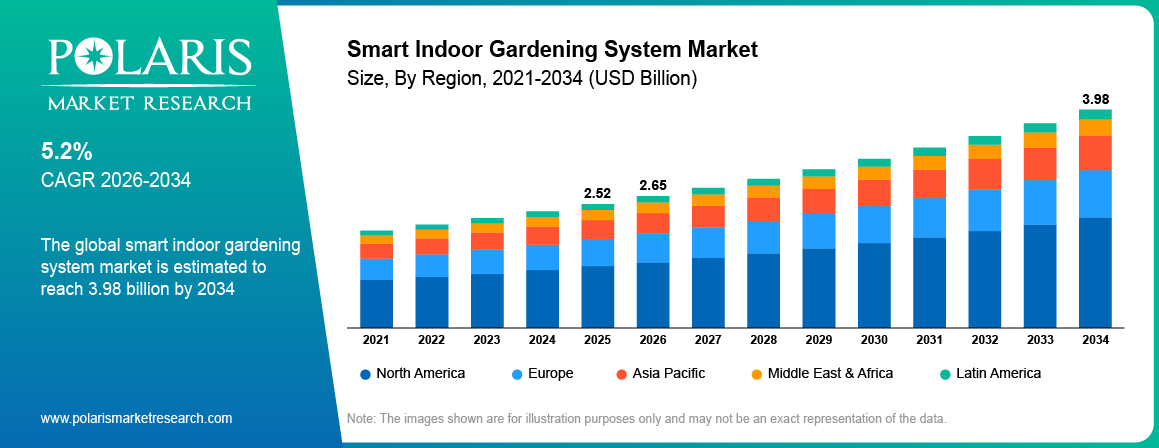
The global smart indoor gardening system market is estimated around USD 2.52 Billion in 2025,with consistent growth anticipated during 2026–2034. Expansion is driven by rapid urbanization, increasing adoption of smart home technologies, and rising consumer preference for fresh, home-grown produce. The market is projected to grow at a CAGR of 5.2% during the forecast period.
Market Statistics
Key Takeaways
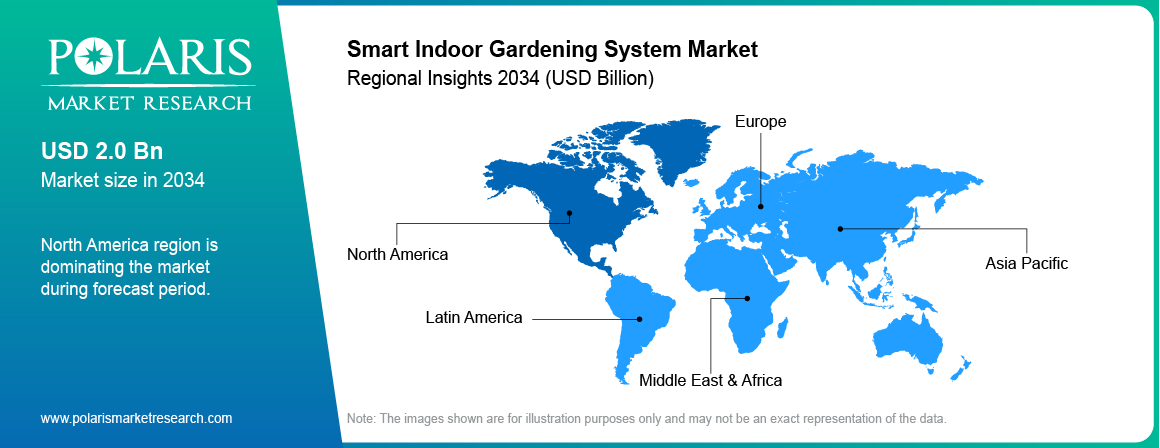
- North America dominated the smart indoor gardening system market, accounting for approximately 37.90% market share.
- Asia Pacific is projected to grow at a rapid pace, registering a CAGR of approximately 13.85% during the forecast period.
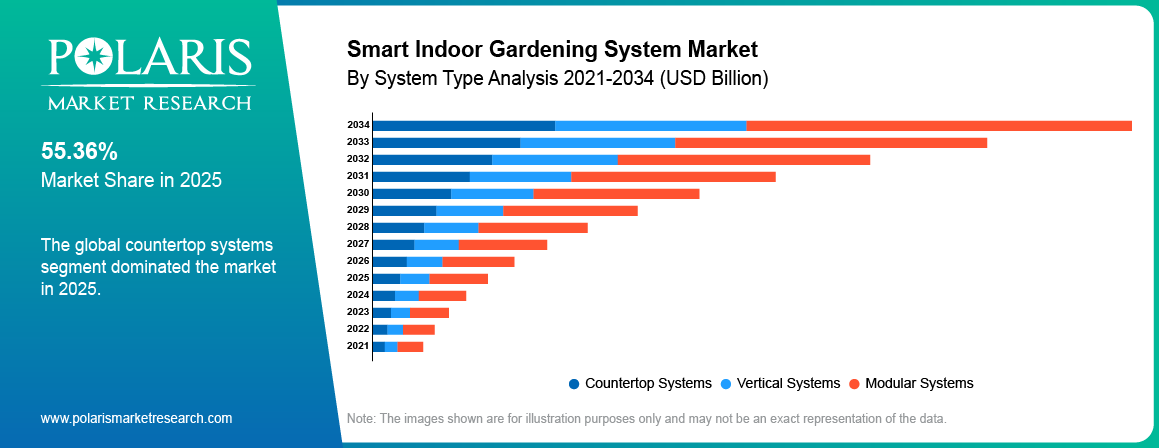
- Countertop systems held the largest market share, accounting for approximately 34.60% due to their compact design and ease of use.
- Hardware dominated the market, contributing approximately 41.25% market share driven by demand for smart devices and sensors.
- Residential category was leading the market, holding approximately 38.70% market share due to rising adoption of home-based indoor gardening solutions.
Industry Dynamics
- Rapid urbanization is increasing demand for compact indoor gardening solutions in apartments and high-rise living spaces.
- Rising health and wellness trends are strengthening demand for fresh, pesticide-free produce grown at home.
- High upfront investments and consumables costs are hindering its acceptance by cost-conscious consumers.
- The use of advanced technologies such as AI and IoT presents promising opportunities for indoor gardening.
What is included in the Smart Indoor Gardening System market?
The smart indoor gardening system market reflects rising demand for convenient, technology-driven food cultivation solutions across urban environments. Smart indoor gardening system is an automated garden which allows people to cultivate plants indoors through control and automation.
The intelligent technology for indoor gardening utilizes aeroponics and hydroponics, which help grow plants without soil by means of nutrient water and air mist environments, respectively. The sensors used in the system are used to control light, moisture, temperature, and nutrients, making sure that the plant grows optimally in smart indoor gardens.
Source: Polaris Market Research Analysis
To Understand More About this Research:Download Sample Report
The significance of smart indoor gardening systems is increasingly becoming evident as modern life becomes more convenient and sustainable. This allows growing herbs, vegetables, and microgreens consistently throughout the year with the same high level of quality. The increasing trend toward home automation products is contributing to the development of plant growth control systems.
Drivers & Opportunities
Rapid Urbanization Across the Globe: The rise in the density of population in urban areas is lowering the availability of conventional farming and garden land. The shortage of balconies and backyards in urban areas is creating a need for indoor growing systems for apartment and skyscraper buildings. According to estimates from UN Population Fund, the urban population is expected to exceed 5 billion people globally by 2030. This trend is promoting the use of hydroponics and indoor gardening equipment, thus fueling the market growth.
Health and Wellness Trends: The rise of consumer interest in organic eating and avoidance of any chemicals in regular diet has raised the need for organically grown herbs, vegetables, and microgreens. JP Morgan Private Bank projected that expenditures for health & wellness across the world is estimated to reach USD 8.99 trillion by 2028. The use of smart gardening technology ensures an ideal environment where organic and healthy produce grow. This is leading to increasing use of indoor gardening systems within the home, where there is a preference for freshness and quality food.
Restraints & Challenges
High Initial Investment and Costly Consumables: The sophisticated technology that is used in the process of smart indoor gardening makes it more costly to implement. This includes costs related to equipment such as lighting, sensors, and watering systems. This becomes a barrier for people with lower income levels from purchasing these systems.
Opportunity
AI-driven Predictive Gardening: The convergence of AI and IoT is enhancing the efficiency of crop monitoring, nutrient enhancement, and maintenance processes in indoor gardening systems. Real-time forecasting helps the system perform modifications concerning lighting, watering, and fertilizer supply. For instance, in January 2026, iGarden company presented its AI-powered ecosystem at CES that incorporated real-time analytics, AI vision, and smart device connectivity for automated maintenance. This development highlights growing adoption of intelligent systems, which is expanding use cases in smart homes and kitchen gardening.
Technology & System Analysis
Hydroponics vs Aeroponics vs Soil Systems
The hydroponic gardening system is prevalent in the market due to its capability of providing high yields using less amounts of water. The hydroponic system eliminates the need for soil and ensures faster growth and yields.
Aeroponics is gaining traction as an advanced alternative, where roots are suspended in air and supplied with nutrient mist. The method helps improve oxygen supply, speeding up the growth process and enhancing efficiency.
Soil farming remains popular among those moving from manual farming to smart gardening. The technology is simple to understand and incorporates automation, however, it is less effective than hydroponics and aeroponics.
Technology Stack
Indoor gardening technologies in contemporary times employ various types of technologies that facilitate automatic plant cultivation. The basic elements of such technology include:
- LED grow lights that automatically adjust the intensity and wavelength of light for optimal photosynthesis
- IoT sensors that track moisture, temperature, and nutrient content of plants
- Automated watering systems that ensure accurate watering cycles
- AI in gardening that makes predictions regarding plant health, cycles, and nutrient requirements
- Mobile apps that provide remote monitoring and control functions
The combination of artificial intelligence and the Internet of Things improves efficiency by making data-driven decisions regarding plant cultivation and minimizing manual effort.
Smart Home Integration
Integration of these systems with smart home automation ecosystem are enhancing their capabilities. Platforms such as Amazon Alexa and Google Home allow users to control lighting, irrigation, and monitoring systems through voice commands or centralized dashboards.
Smart indoor gardening systems work on automation, thereby making it compatible with other home automation trend, boosting adoption among technologically savvy individuals and city dwellers.
Source: Polaris Market Research Analysis
Segmental Insights
This report offers detailed coverage of the smart indoor gardening system market by system type, component, and application to help readers identify the fastest expanding and most attractive demand segments.
By System Type
-
Countertop systems
Countertop systems held largest market share in smart indoor gardening systems owing to widespread acceptance of indoor herb garden kits in residences. This is due to smart planter systems are easy to set up and include lighting and watering facilities.
-
Vertical systems
Vertical systems are projected to grow rapidly propelled by the rising requirement for space-saving, productive indoor farming technology. Vertical systems cultivate crops on different levels, making them ideal for urban homes and businesses.
By Component
-
Hardware
Hardware dominated the market due to its role in forming the basis of indoor gardening devices including LED growing lights, sensors, irrigation systems, and intelligent planters. The revenue is largely derived from devices, where upfront systems purchase dominates.
-
Consumables
Consumables represent the fastest-growing segment as users continually need seed pods, nutrients, and growth media. The consumables segment forms the bedrock of the subscription-based business model.
By Application
-
Residential
Residential category was leading the market driven by consumer acceptance of smart indoor gardens. These gardens are popular in households owing to their convenience, sustainability, and provision of access to crops throughout the year.
-
Commercial
Commercial is the fastest-growing application due to rising adoption in restaurants, hotels, and retail spaces. Businesses use smart indoor gardening systems for on-site production, supply chain control, and branding through hyper-local produce.
Source: Polaris Market Research Analysis
Regional Analysis
North America Smart Indoor Gardening System Market Assessment
North America dominated the indoor farming market is driven by strong adoption of smart home technologies and high consumer awareness in the US. Integration between IoT-based devices and application-controlled monitoring system makes it easy to adopt the use of smart gardening solutions indoors. Nearly, 30% of US internet homes possess more than three smart home devices, and this is making it easier to adopt gardening systems within such a conducive environment. This trend continues to strengthen the smart indoor gardening market in the region.
Europe Smart Indoor Gardening System Market Overview
Europe smart gardening market is growing steadily fueled by sustainability-driven demand and eco-friendly initiatives. Consumers are paying attention to decreasing food waste and developing home food production systems. Sustainable living policies by the government and energy-saving technologies are aiding implementation. Countries like Germany and the Netherlands are motivating urban farming and green innovations.
Asia Pacific Smart Indoor Gardening System Market Insight
Asia Pacific is projected to grow at a rapid pace during the forecast period, supported by rapid urbanization and rising disposable income across China and India. Rise in density levels within urban areas has led to difficulty for people accessing conventional agricultural activities, and thus the need for indoor gardens arises. UN-Habitat estimates that the urban population in Asia to grow by 50 percent by 2050, accounting for an additional 1.2 billion people. Growing middle-class consumption and interest in smart home devices are further supporting regional demand.
Source: Polaris Market Research Analysis
Key Players & Competitive Analysis Report
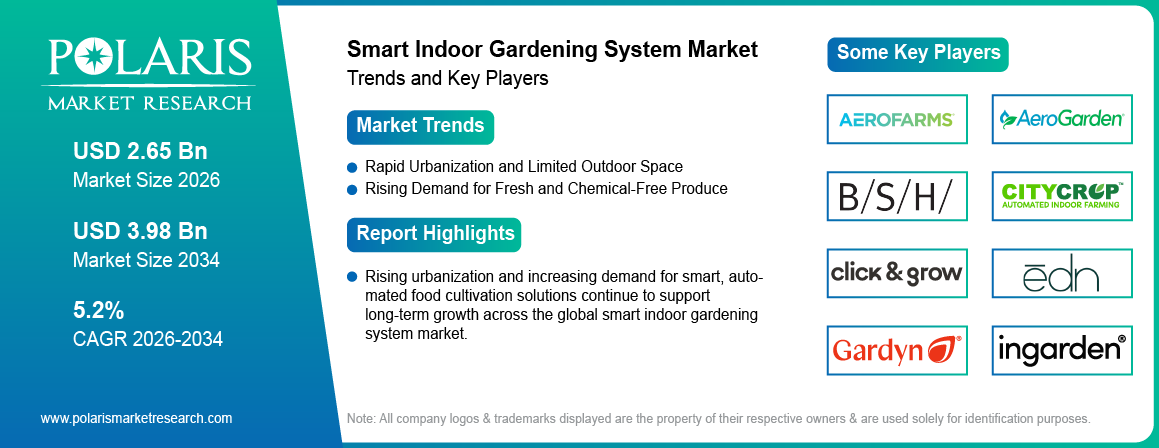
The competitive landscape of the smart indoor gardening system market reflects strong participation from consumer-focused indoor gardening manufacturers, agri-tech startups, and appliance-integrated solution providers offering automated, connected growing systems. Smart indoor gardening firms differentiate their products based on convenience, degree of automation, and efficiency in their output.
Key players operating in the smart indoor gardening system market include AeroFarms LLC, AeroGarden (The Scotts Miracle-Gro Company), AVA Technologies Inc., BSH Home Appliances Group (Robert Bosch GmbH), CityCrop Automated Indoor Farming P.C., Click & Grow LLC, ēdn Inc., Gardyn Inc., iFarm, ingarden Inc., JOICOM Corp., Metropolis Farms Canada, Moistenland LLC, Natufia Labs, and Plantui Oy.
Pricing, Consumer Behavior & Buying Insights
-
Pricing Trends & Cost Structure
The price of the smart indoor gardening system is highly dependent on the type of system, its automation capacity, and brand positioning. While the basic countertop models are cheaper, the higher-end multi-plant models that have fully automated systems are highly priced.
Core cost components include:
- Purchase price of the equipment (lights, sensors, framework)
- Energy used by the smart lighting
- Replacement costs for pumps, filters, etc.
- Supplies including nutrient capsules, seed pods, and growing mediums
The indoor hydroponic system cost is comparatively high owing to more automation and precision control, however it ensures higher yield efficiency and faster growth rate of plants.
-
Subscription & Consumables Model
The decision-making process in purchasing an intelligent indoor gardening solution is evaluated based on convenience, level of automation, and efficiency in their output. It is preferable to choose devices that are controlled from an application, have artificial intelligence, and are easy to maintain.
-
Consumer Buying Factors
Buyers evaluating the best smart indoor gardening system consider ease of use, automation level, and yield efficiency. System with app-controlled functions, artificial intelligence-driven advice, and low-maintenance design is preferred.
Future Outlook & Emerging Trends
-
Future of Smart Indoor Gardening Systems
The future outlook of the market for intelligent indoor gardens is expected to witness growth driven by urbanization, need for fresh produce, and interest in growing their own food in a household setting. Increasing affordability and usability of technology are expected to lead growing adoption.
-
Role of AI & Automation
The use of AI-based systems is anticipated to become a crucial part of this development. The use of artificial intelligence with IoT makes predictions about plant maintenance possible, self-regulating, and monitoring systems become possible, leading to better results in terms of predictability and reduced human participation.
-
Expansion into Commercial & Smart Cities
The use of intelligent indoor gardens is slowly shifting from private usage to public use areas such as offices and restaurants. Its integration with initiatives for future smart agriculture helps localize produce generation.
Key Players
- AeroFarms LLC
- AeroGarden (The Scotts Miracle-Gro Company)
- AVA Technologies Inc.
- BSH Home Appliances Group (Robert Bosch GmbH)
- CityCrop Automated Indoor Farming P.C.
- Click & Grow LLC
- ēdn Inc.
- Gardyn Inc.
- iFarm
- ingarden Inc.
- JOICOM Corp.
- Metropolis Farms Canada
- Moistenland LLC
- Natufia Labs
- Plantui Oy
Smart Indoor Gardening System Market Trends, Pricing & Future Outlook
-
Emerging Market Trends (clean label, plant-based shift)
Some of the trends that have affected the smart indoor gardening system market include the increasing demand for clean labels and plant-based compounds. The smart indoor gardening system is popular for food, nutraceuticals, and cosmetics as it has natural properties and functions. Innovation within the enzyme market has boosted extraction effectiveness and product formulation for particular applications.
-
Smart Indoor Gardening System Pricing Trends & Cost Analysis
Smart indoor gardening system prices differ according to their degree of purity and activity. The prices of pharmaceutical-grade enzymes are higher owing to sophisticated production processes. The availability of raw materials, particularly pineapples, is crucial in determining prices.
-
Future Market Outlook (2030)
The smart indoor gardening systems forecast report that the growth in industry is anticipated due to higher demand from the segments of supplements, functional foods, and personal care products. Advancements in technology is expected to boost the efficiency of production, depending on the availability and price trends of raw materials.
Industry Developments
- October 2025: Gardyn introduced Studio 2, the latest version of its indoor garden using hydroponics technology and aimed at people living in small houses. It features improved automation capabilities and AI technology to provide proper care to plants. [Source: www.businesswire.com]
Smart Indoor Gardening System Market Segmentation
By System Type Outlook (Revenue, USD Billion, 2021-2034)
- Countertop Systems
- Vertical Systems
- Modular Systems
By Component Outlook (Revenue, USD Billion, 2021-2034)
- Hardware
- Software
- Consumables
By Application Outlook (Revenue, USD Billion, 2021-2034)
- Residential
- Commercial
- Institutional
By Regional Outlook (Revenue, USD Billion, 2021-2034)
- North America
- US
- Canada
- Europe
- Germany
- France
- UK
- Italy
- Spain
- Netherlands
- Russia
- Rest of Europe
- Asia Pacific
- China
- Japan
- India
- Malaysia
- South Korea
- Indonesia
- Australia
- Vietnam
- Rest of Asia Pacific
- Middle East & Africa
- Saudi Arabia
- UAE
- Israel
- South Africa
- Rest of Middle East & Africa
- Latin America
- Mexico
- Brazil
- Argentina
- Rest of Latin America
Smart Indoor Gardening System Market Report Scope
| Report Attributes | Details |
| Market Size in 2025 | USD 2.52 Billion |
| Market Size in 2026 | USD 2.65 Billion |
| Revenue Forecast by 2034 | USD 3.98 Billion |
| CAGR | 5.2% from 2026 to 2034 |
| Base Year | 2025 |
| Historical Data | 2022–2024 |
| Forecast Period | 2026–2034 |
| Quantitative Units | Revenue in USD Billion and CAGR from 2026 to 2034 |
| Report Coverage | Revenue Forecast, Competitive Landscape, Growth Factors, and Industry Trends |
| Segments Covered |
|
| Regional Scope |
|
| Competitive Landscape |
|
| Report Format |
|
| Customization | Report customization as per your requirements with respect to countries, regions, and segmentation. |
Source: Polaris Market Research Analysis
Smart Indoor Gardening System Market FAQ's
The global market size was valued at USD 2.52 Billion in 2025 and is projected to grow to USD 3.98 Billion by 2034.
North America dominated the market due to extensive penetration of smart home technology, high tech-savviness, and high levels of consumer awareness.
Residential users account for the largest share due to growing demand for home-grown herbs and vegetables.
Key companies include AeroFarms LLC, AeroGarden (The Scotts Miracle-Gro Company), AVA Technologies Inc., BSH Home Appliances Group (Robert Bosch GmbH), CityCrop Automated Indoor Farming P.C., Click & Grow LLC, ?dn Inc., Gardyn Inc., iFarm, ingarden Inc., JOICOM Corp., Metropolis Farms Canada, Moistenland LLC, Natufia Labs, and Plantui Oy.
Growth is driven by growing urbanization, increasing health consciousness, and growing use of smart home technology.
Trends include AI-driven gardening, IoT integration, vertical farming systems, and subscription-based consumables.
These systems require low maintenance with automated watering, lighting, and nutrient control.
ROI comes from savings on grocery costs and consistent access to fresh produce over time.
Yes, they are designed for compact spaces and are ideal for apartments and urban homes.
Download Sample Report of Smart Indoor Gardening System Market
Please fill out the form to request a customized copy of the research report.


