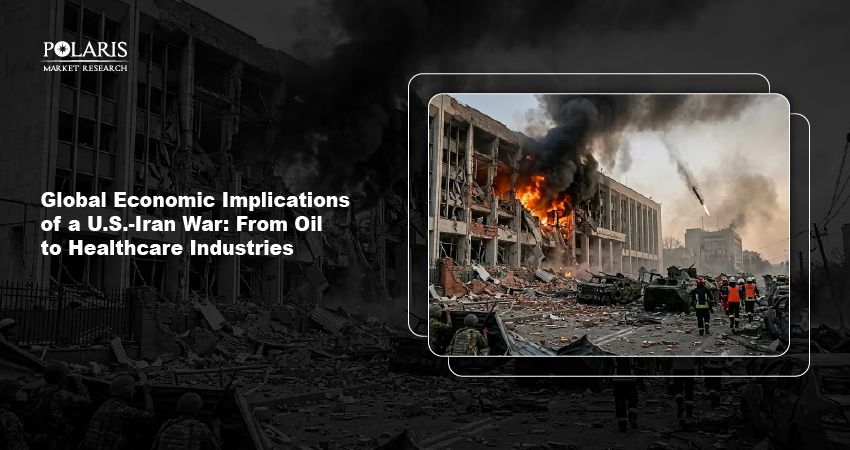
Long-standing tensions between the U.S. and Iran escalated into direct military conflict in early 2026. On February 28, 2026, U.S. and Israeli airstrikes targeted strategic locations in major cities of Iran. In response, Iran launched ballistic missiles and drones at Israeli territory and U.S. military bases across the Gulf, including in Qatar, the UAE, Kuwait. and Bahrain. The actions taken by both countries are changing the geopolitical landscape of the Middle East.
Why Studying the Impact of U.S.-Iran War Matters for Global Markets?
The Middle East plays an important role in global energy supply and trade routes. Escalating tensions between the U.S. and Iran have been creating uncertainty across various industries across the world. The conflict adversely affects global financial markets and energy prices. Recent events, like U.S. and Israeli strikes and Iranian responses, have caused market fluctuations in several countries. It has created an unstable environment for investors, business leaders, and policymakers.
War Impact on Major Industries
- Oil and Gas: Oil and gas is one of the major markets significantly affected by the conflict. Disruptions around the Strait of Hormuz, a key narrow passage between Oman and Iran, can sharply decrease the global supply of oil and Liquefied Natural Gas (LNG). The government of Qatar urged shipowners to temporary withdraw maritime activities. Prolonged supply disruption would lead to energy insecurity across the world. It would increase the prices of oil and gas. Import-dependent economies in Asia, especially China and India, are expected to see widened deficits and currency pressures.
- Aerospace & Defense: Airlines are suspending or diverting flights in and out of airports in Tel Aviv, Dubai, Doha and other international hubs in the region. Further, airspace shutdowns over Iran and Central Asia extended flight times, increased fuel consumption, and disrupted cargo/passenger flows. Airspace closures and flight cancellations imposed operational strain. It could raise war-risk insurance premiums for airlines. The ongoing disruptions in aviation affect global airline capacity and costs.
- Shipping & Global Trade: The geopolitical conflict has led to risk to maritime routes. The risks include damage to tankers and rerouting. The industry is witnessing an increase in freight costs and war-risk insurance for global shipping. Shipment delays, increased insurance premiums, and higher logistics costs are expected to have adverse impact on global trade flows, if the tension persist.
- Automotive and Manufacturing: Rising insurance/shipping costs are causing delays in auto and manufacturing supply chains. It is increasing lead times and production costs. Higher freight and rerouting costs from the Middle East are projected to indirectly squeeze profit margins in sectors such as automotive, industrials, and FMCG.
- Petrochemicals, Chemicals, and Materials: Increasing geopolitical risks and uncertainty significantly increased logistics and insurance costs for raw materials. Disruptions in exports of methanol, sulfur, and other chemicals hindered feedstock supplies.
- Banking & Financial Services: The war is leading to an increase in market risk and volatility. It is prompting flight-to-safety investment. The crisis is also affecting credit and lending dynamics in riskier markets.
- Travel and Tourism: Governments of countries across the Middle East have imposed restrictions on the movement of citizens and tourists. People are advised to avoid unnecessary travel. Also, various hotels have been evacuated for safety reasons.
- Healthcare Industry: Healthcare supply chains, especially for essential medicines, medical devices, and raw materials, are vulnerable to disruptions caused by the war. Port closures, shipping delays, and rising transport costs increase drug prices. It also creates shortages. Similar pattern is observed in other prolonged conflicts. The tension raises production and compliance costs for the pharmaceutical sector. It forces companies to change their supply chains strategies. The uncertainty leads to a rise in regulatory and inflation pressures. It causes increase in drug prices and healthcare spending. In the affected areas, shortages of treatments for conditions like cancer and dialysis are linked to sanctions and supply delays.
- Electronics and Semiconductors: The conflict of U.S. and Iran will significantly affect the global electronics and semiconductor industry through supply chain disruptions and declined consumer demand. Semiconductors fabrication is highly energy-intensive. Thus, rising oil and gas prices would increase manufacturing expenses. Also, shipping routes near the Strait of Hormuz are critical to transport raw materials, specialty gases, and advanced chipmaking equipment. Supply chain disruptions cause delays in production. They also raise logistics costs. However, defense electronics and cybersecurity semiconductor segments are expected to witness increased demand.
War Impact on Major Economies and Countries
- U.S.: A U.S.-Iran war is projected to create short-term volatility across American financial markets and introduce inflationary risks. The defense and energy companies are expected to outperform. However, other industries would report pressure due to uncertainty and higher input costs. Rising crude prices are linked to benchmarks like West Texas Intermediate. The high prices are expected to increase gasoline and transportation costs. This factor would contribute to renewed inflationary pressures. Although the U.S. is one of the leading oil producer, disruptions in supply chain management during war adversely impact domestic fuel prices. Overall, the U.S. economy may remain relatively resilient than import-dependent nations. However, financial markets are estimated to remain sensitive to escalation risks.
- Middle East: A U.S.-Iran conflict is likely to focus attention on Middle Eastern economies due to geopolitical risks and stock market fluctuations. Oil-exporting nations in the Gulf might initially gain from rising crude prices It would boost their fiscal revenues and trade balances. However, ongoing instability is expected to raise security spending and disrupt investment flows. This situation will likely increase regional risk premiums. The Strait of Hormuz and other important shipping routes could experience greater security threats. This may impact export volumes and maritime insurance costs. Additionally, infrastructure, tourism, and logistics industries could encounter operational risks if the conflict lasts for an extended period.
- Europe: Europe faced energy security challenges because of disruptions from the Russia-Ukraine War. The U.S.-Iran conflict affects oil flows in the Gulf. It puts pressure on economies that depend on energy imports. Rising energy costs could cut industrial output. Energy-intensive sectors will be hit hard. European equity markets may respond negatively due to worries about growth and inflation risks.
- Asia: Major Asian economies, such as China, Japan, India, and South Korea, depend on the Middle East for oil and LNG imports. Any disruption in shipments through the Strait of Hormuz will lead to higher input costs. Stock markets across Asia respond with short-term selloffs because of risk aversion and concerns about supply chain stability
Geopolitical Risks and Market Psychology
Geopolitical risks serve as a direct trigger for market volatility. As the conflict between the U.S. and Iran escalates, investors are changing their expectations regarding energy supply, trade stability, and global growth. Therefore, there is an expansion in “risk premiums.” It means that investors seek higher returns to compensate for rising uncertainty. As a result, equity valuations may decline and capital flows will become more selective.
Considering past tensions, geopolitical conflicts trigger “risk-off” behavior in global markets. During the Gulf War and the Russia-Ukraine War, investors moved their money toward safe-haven assets instead of equities and emerging markets. In these situations, gold prices often increase as investors look for protection against inflation and uncertainty. Similarly, during the ongoing war between the U.S. and Iran, demand for government bonds, particularly U.S. Treasuries, is expected to grow. It would push yields lower as investors prioritize capital preservation over returns.
What Lies Ahed?
The U.S. and Iran war would reach far beyond the battlefield. It would significantly affect global financial systems, trade networks, and key sectors. From energy markets and inflation to equities, currencies, and supply chains, rising tensions would create uncertainty. Market volatility is also expected to rise. An increase in oil and gas prices could cause fuel inflation around the world. This situation is likely to put pressure on central banks and slow down economic growth. Energy exporters and defense sectors are expected to see short-term gains. However, most economies, especially those that rely on oil imports and emerging markets, would face unstable capital flows and higher costs.
A prolonged conflict will change investment strategies and speed up supply chain diversification. It is expected to highlight the need for managing geopolitical risks. In a connected global economy, regional conflicts have broad financial effects. Stability in the Middle East will become crucial for global market confidence.


.webp)