A fire accident in a workplace can result in significant losses. There can be loss of life and property damage. Environmental harm and financial costs can also be severe. As such, understanding how to prevent potential fire accidents is essential. Fire protection is often categorized into active fire protection (AFP) and passive fire protection (PFP).
In this blog, we’ll focus on passive fire protection. We’ll cover what PFP is, how it works, and what its benefits are. The key metrics and factors shaping the passive fire protection market will also be detailed.
Fire Protection: Introduction
Fire protection is an important aspect of any facility or building. A fire protection system encompasses several components. These components are engineered to prevent the onset of fire in the first place. They also help minimize the risk of fire-related losses. Fire protection is a broad term that encompasses several elements. As the first line of protection, passive fire protection is used. The following section gives an overview of passive fire protection.
Passive Fire Protection: Overview
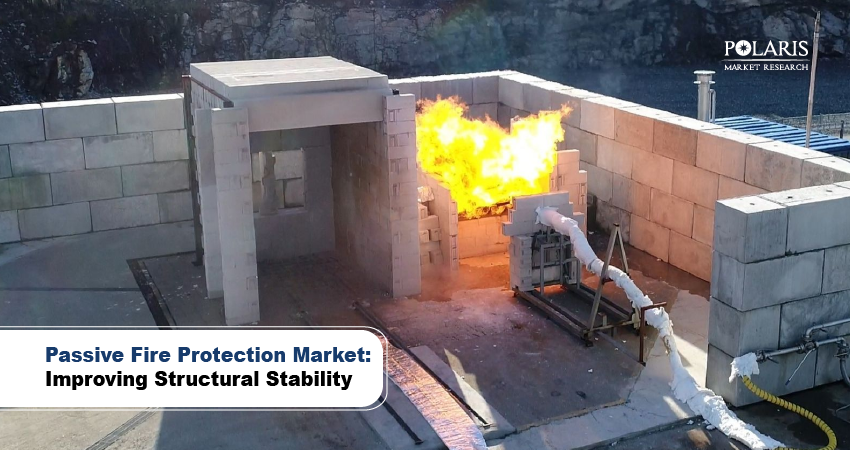
Passive fire protection includes design and construction methods used for limiting the spread of smoke and fire in a building or structure. Fire-resistant materials such as steel, concrete, and brick are used in passive fire protection. It also encompasses the installation of fireproof floors and ceilings.
Passive fire protection features are usually built into the structure. As such, active interference isn’t needed for their functioning. This makes them different from active fire protection systems, which need power or human intervention for operation.
Passive fire protection is a key aspect of building safety. This is because it helps in preventing or slowing down the spread of fire. That way, occupants have more time for evacuation. Additionally, firefighters get more time for containing and extinguishing the fire.
Passive Fire Protection Market Stats
As per our latest market assessment, the passive fire protection market is poised to register sustained growth in the coming years. The market for passive fire protection stood at USD 4.49 billion in 2024. The market is expected to account for a CAGR of 6.85% between 2025 and 2034.
There has been a rise in global investments in infrastructure projects such as railways, airports, and commercial complexes. This has resulted in increased adoption of advanced passive fire protection solutions. The expansion of cities globally is also having a favorable impact on the growth of the market.
Examples of Passive Fire Protection Methods
Intumescent Fireproofing
This method involves applying a protective coating to structural steel. The coating can be added as a thin film layer or applied as intumescent paint. Exposure of the coating to high temperatures results in the expansion of the chemical properties of these coatings. This results in the formation of an additional layer around columns and steel beams. This extra layer extends the time period for which steel can sustain high temperatures.
Fire Doors
Many think that the key purpose of a fire door is to provide a clear way of escape. But products from the fire doors and partitions market are also an important part of the compartmentation strategy of a building. Cold smoke seals or intumescent strips are usually used for reinforcing fire doors. These materials prevent the passage of smoke to offer additional fire resistance.
Compartmentation
This passive fire protection method aims at containing smoke and fire to a specific area of a facility. Compartmentation helps in protecting the structural integrity of a building. A clear path for escape is also made possible by compartmentation. There are several forms of compartmentation systems, including partitions and barriers. Specific fire-resistant materials are usually used for making compartmentation units.
Fire Dampers
Almost all modern buildings make use of HVAC systems, as available in the HVAC systems market. The installation of fire dampers is often done to make sure that the systems don’t become a conduit for flames. A rapid rise in heat triggers these dampers, which prevent air flow through the system.
Benefits of Passive Fire Protection
- Slows Down Spread Of Fire: Passive fire protection features help keep fire contained in one area. This slows the movement of flames and gives people more time to respond.
- Enables Safe Evacuation: These systems keep the building stable. They also reduce the amount of smoke entering escape areas. This makes it easier for individuals to escape buildings.
- Minimizes Structural Damage: Fire-resistant materials help the building stay strong even as temperatures rise. This reduces the chances of collapse.
- Support Firefighting Efforts: Solutions from the passive fire protection market keep the fire from spreading at a quick rate. This allows firefighters to control and put out the fire in a more efficient way.
New Development in Passive Fire Protection Industry
ASFP Introduces New Membership Category to Strengthen Passive Fire Protection Supply Chain
The Association for Specialist Fire Protection (ASFP) has introduced a new membership category. The membership is intended for companies supplying important materials and components in passive fire protection products. With the new membership category, ASFP aims to boost collaboration and innovation in the industry.
ASFP is allowing suppliers of chemicals, fabrics, compounds, and fire-door parts to join. That way, it intends to help material suppliers and product manufacturers work more closely. According to the managing director of ASFP, the step will lead to better-performing products and support sustainability efforts.
Conclusion
Passive fire protection systems are designed to work along with other building materials. They create a more effective fire-resistant structure. Passive fire protection systems have been effective at preventing the spread of fire across a facility. Solutions from the passive fire protection market are often used with active fire protection solutions to minimize losses and provide maximum protection.