Rare earth metals are essential for manufacturing electric vehicles, electronics, and defense equipment. But their supply chains depend on a small number of countries for mining and processing. Companies are exposed to risks from export controls, trade diversion, or supply constraints. Today, industry in particular uses minerals such as lithium, cobalt, graphite, nickel and rare earths. Understanding these risks can help companies identify reliable suppliers and plan for their future supply needs through 2034.
What Are Critical Minerals and Rare Earth Elements?
Critical minerals are raw materials used in important products and technologies. They support industries such as clean energy, transport, electronics, and defense. A mineral becomes a supply concern when it is difficult to source or depends on a small number of suppliers.
Rare earth elements are a group of 17 metals. The group includes 15 lanthanides, along with scandium and yttrium. These metals are used in electric motors, wind turbines, electronics, and other advanced equipment.
Light vs. Heavy Rare Earth Elements (LREE vs. HREE)
Rare earth elements are divided into light and heavy groups. Each group has different properties and uses.
| Type | Examples | Main Uses | Availability |
| Light rare earth elements (LREEs) | Neodymium, praseodymium | Electric motors, wind turbines, permanent magnets | Generally more abundant |
| Heavy rare earth elements (HREEs) | Dysprosium, terbium | High-performance magnets and high-temperature applications | Generally less abundant |
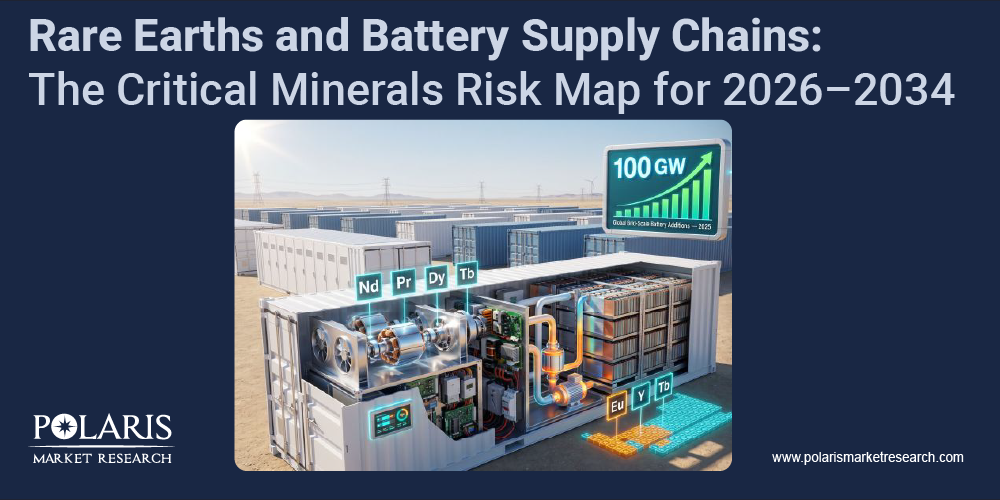
Neodymium and praseodymium help magnets produce strong magnetic force. At high temperatures dysprosium and terbium help magnets perform. These materials are important for many electric vehicle motors and industrial systems.
The difference matters to buyers. A shortage of one specific rare earth element can create problems even when other materials are available.
Why Are Critical Mineral Supply Chains So Concentrated?
For mining, refining, and processing critical mineral supply chains depend on a small number of countries. This leaves manufacturers exposed to delays, price changes, and trade restrictions.
Mining vs. Processing Concentration
Mining minerals in different countries does not always mean the supply chain is secure. Processing can still depend on a single major supplier.
Consider a company that buys minerals from several mining countries. If all those materials go to the same country for refining, the company still faces a common risk. A problem at that stage could affect every supplier.
This is the reason why companies must take into account the suppliers of their suppliers. They should be aware of the locations where the materials are mined, refined, and transformed into usable products. This information helps them identify weak points before they cause delays.
Export Controls and Policy Changes
Export restrictions can change how quickly critical minerals reach manufacturers. New licences or trade rules may delay shipments and increase costs.
A prime example of this is rare earths. Their applications include defense hardware, electronics, wind turbines, and electric vehicles. Restrictions on exports or processing technology can affect several industries at once.
Companies should keep an eye on official trade announcements and periodically review their sourcing plans. Also check if alternative suppliers can meet their quality and delivery needs. A backup supplier is useful only if it can provide the right material on time.
The Critical Minerals Risk Map, 2026–2034
Not all critical minerals face the same supply risks. Some depend heavily on a few processing countries, while others face mining or trade challenges. The table below gives a working view of the main risks businesses should monitor.
| Mineral | Main Use | Supply Risk Level | Key Risk Driver | Industries Most Exposed |
| Rare earths (NdPr, Dy, Tb) | Permanent magnets | High | Concentrated processing and magnet production | EVs, wind energy, defense |
| Graphite | Battery anodes | High | Concentrated processing and battery-grade production | EVs, batteries, energy storage |
| Lithium | Battery production | High | Processing dependence and changing supply conditions | EVs, energy storage |
| Cobalt | Battery materials and specialty alloys | High | Mining concentration and refining dependence | EVs, electronics, aerospace |
| Nickel | Batteries and stainless steel | Medium | Production changes and refining capacity | EVs, steel, manufacturing |
| Gallium | Semiconductors and electronic components | High | Concentrated production and export controls | Electronics, telecommunications, defense |
These risk levels are an indicative assessment for this article. They are not official Polaris Market Research ratings.
Which Industries Are Most Exposed?
Electric vehicles are among the industries most exposed to critical mineral shortages. Battery makers need lithium and graphite, while some battery chemistries also use nickel and cobalt. Many EV motors also rely on rare earth magnets.
Wind energy faces similar challenges. Some wind turbines use permanent magnets made with rare earth elements. A shortage of these materials can delay equipment production and project schedules.
For aerospace materials, magnets, electronics, and advanced equipment require specialized materials. Finding suitable alternatives can take time.
Critical minerals are also needed by semiconductor and consumer electronics manufacturers. Some semiconductor technology uses gallium, for example. A supply problem can affect component availability and production costs.
For these industries, the main concern is not just whether a mineral is available. It is whether the required grade, quantity, and quality can be delivered on time.
How Are Governments and Companies Responding?
Governments and businesses are looking for ways to reduce dependence on a small number of mineral suppliers. Their efforts include domestic production, strategic reserves, recycling, and alternative materials.
Strategic Reserves and Domestic Supply
Some governments are investing in critical minerals to make their supply chains more secure. The aim is to improve access to materials needed by important industries.
In January 2026 Australia announced a USD 1.2 billion Critical Minerals Strategic Reserve. The reserve will initially focus on antimony, gallium, and rare earth elements. For clean energy, advanced manufacturing, and defense equipment these materials are important.
The reserve is designed to support Australian mineral producers and help supply trading partners. It is one example of how governments are addressing supply chain risks.
The European Union is taking similar steps through its Critical Raw Materials Act. By 2030, it aims to ensure that no more than 65% of its annual needs for any strategic raw material comes from a single non-EU country at a relevant processing stage.
Over time these efforts may create more sourcing options. However, building mines and processing plants takes years. New projects also need funding, infrastructure, and suitable permits.
Recycling and the Circular Economy
Recycling offers another way to obtain critical minerals. Instead of relying only on newly mined materials, companies can recover useful resources from products that have reached the end of their life. Battery recycling can recover lithium, cobalt, and nickel. From magnets used in motors and industrial equipment, rare earth recycling can recover materials.
But there are practical problems. The costs of collection and recovery can be considerable and not all used products are easily recyclable. The amount of material available also depends on how many products reach the end of their useful life.
Recycling can help ensure long-term supply security despite these challenges. Investing in better recovery methods and collection systems can help companies reduce waste, recover valuable materials, and diversify their critical minerals supply chain.
Substitution and Battery Chemistry Changes
Companies are also looking at products that use fewer critical minerals. This can reduce their exposure to materials that are difficult to source.
For example, lithium iron phosphate (LFP) batteries. Their cathodes require zero cobalt, zero nickel. This makes them useful to manufacturers who want to reduce dependence on these two metals. However, LFP batteries still require lithium and other materials.
Some designs of electric motors can also be made without rare earths. The right choice depends on cost, efficiency, weight, and performance.
Changing materials isn’t always easy. Companies need to test new designs to verify that they meet product specifications. Still, even small changes can give buyers more options when supplies become tight.
What Does This Mean for Buyers Through 2034?
As electric vehicles, batteries, and clean energy expand critical mineral demand is expected to grow. For manufacturers this makes reliable sourcing important.
The global Rare Earth Metals Market was valued at USD 5.47 billion in 2025. The market is anticipated to grow to USD 9.44 billion by 2034, at a CAGR of 6.25%. The Lithium-Ion Battery Market is valued at USD 136.39 Billion in 2025. By 2034 the market is expected to reach USD 406.45 billion, growing at a CAGR of 12.90%.
Businesses can manage supply risks by taking three steps:
Map suppliers: Identify risks across tier-2 and tier-3 suppliers.
Secure supply: Consider long-term agreements and alternative suppliers.
Track policies: Review export controls and trade changes quarterly.
Read Rare Earth Metals Market growth trends, business opportunities, Request a Sample Report.
FAQs
What Are Critical Minerals?
Critical minerals are materials used in energy, transport, electronics and defense. Examples include lithium, cobalt, graphite, nickel, and rare earth elements.
Why Are Rare Earth Elements Important for Electric Vehicles?
Neodymium and praseodymium are used in many EV magnets for motors. Dysprosium and terbium help magnets perform at high temperatures.
What Is the Difference Between Light and Heavy Rare Earth Elements?
The light rare earths are neodymium and praseodymium. Heavy rare earths include dysprosium and terbium, which are generally less abundant and improve magnet performance at high temperatures.
Which Battery Minerals Face the Highest Supply Risk?
Supply concentration risks are significant for rare earths and graphite. Lithium, cobalt, and nickel also face processing and supply challenges.
How Can Companies Reduce Critical Mineral Supply Risk?
Companies can diversify suppliers, enter into long-term contracts, invest in recycling and explore alternative battery technologies.