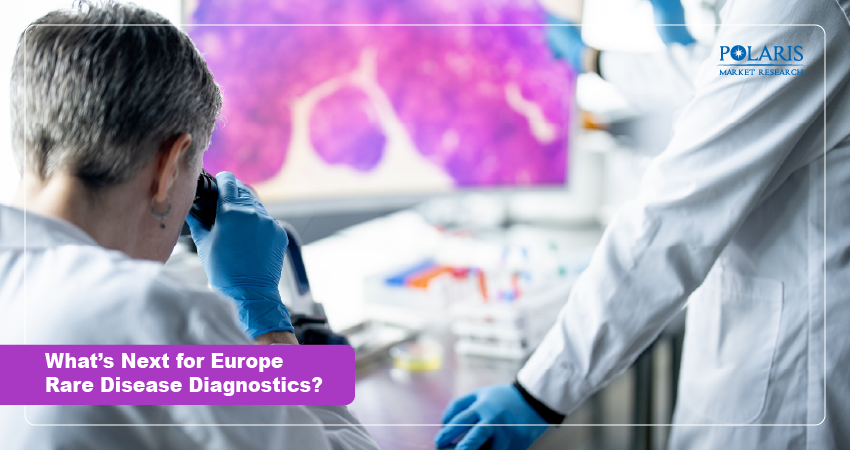
Getting a diagnosis is usually the first step towards treatment. But this step can take a very long time for people living with rare diseases. Many families go from one doctor to another, hoping someone will finally explain what’s wrong. Symptoms may look common or change over time. As such, the real problem often stays hidden. This can leave patients confused and worried.
Thankfully, these things are improving. Advances in the Europe rare disease diagnostics market are helping doctors find rare diseases earlier. Keep reading as we cover all you need to know about the rare disease diagnostics landscape in Europe.
What Are Rare Diseases?
Rare diseases are conditions that affect only a small number of people. Even though each disease is uncommon, there are more than 6,000 rare conditions today. Together, they affect millions of people in Europe. These diseases can take the form of genetic problems, immune issues, and neurological conditions. Some rare diseases appear in childhood. Others develop later in life.
A major challenge is that the symptoms of rare diseases look similar to those of common illnesses. As such, it’s easy for doctors to miss the main cause. Many patients can spend years trying to find the correct diagnosis. Early diagnosis is important as it helps patients get the right treatment sooner. It also improves their overall well-being.
What Are Rare Disease Diagnostics?
The rare disease diagnostics market involves tests and tools used by doctors to find out whether a person has a rare health condition. As rare diseases often look like common illnesses, diagnosing them can be difficult. Doctors usually need to combine basic checkups with more advanced tests to get clear answers.
These tests may include genetic testing, blood or urine tests, and imaging scans. Digital tools that track symptoms may also be used for rare disease diagnostics. Given the hard-to-recognize nature of rare diseases, doctors often need to look at the person’s genes and body chemistry.
The process of rare disease diagnostics can be complex. But getting an early diagnosis is highly important. It allows doctors to choose the right treatment plans. Serious health problems can also be prevented that way. The introduction of new technology has made rare disease diagnostics more accurate across Europe.
What Are Types of Rare Disease Diagnostic Methods?
Genetic Testing: Genetic testing examines a person’s DNA to identify changes that may cause disease. Many rare conditions are linked to genetic mutations. So, this method is highly important. Tests like whole-genome sequencing allow doctors to find the exact cause. These tests are becoming common across Europe.
Biochemical Tests: Some rare diseases affect how chemicals are used by the body. Biochemical tests check blood or urine samples to see if something is out of balance. This helps diagnose metabolic disorders. It also shows how well the internal systems of the body are working.
Imaging Techniques: Various imaging tools from the CT scanner and magnetic resonance imaging market can enable doctors to visualize the interior of the body. They may find abnormal structures in bones and tissues that could suggest a rare condition. For instance, an MRI can be performed to detect pathologies of the brain.
Newborn Screening: Most European countries offer newborn screening for uncommon diseases. Newborn screening involves a few drops of blood. With these tests, some conditions can be found early. This then allows for early treatment to begin.
Basic Checkups and Long-term Tracking: Basic symptoms are necessary for the diagnosis of many rare diseases. Symptom assessment enables doctors to identify patterns and clues.
What’s Europe Rare Disease Diagnostics Market Outlook?
The Europe rare disease diagnostics market is expected to experience sustained growth. The market is projected to reach USD 22,767.23 million by 2032. It is anticipated to exhibit a CAGR of 9.1% during the projection period.
How Specialized Centers Are Improving Patient Pathways?
Europe has set up many rare disease diagnostics centers. These centers focus on diagnosing and treating difficult conditions. They bring together experts from different medical areas. They have advanced labs that help identify complex issues. Furthermore, they guide patients and families through each step of the care process.
Rare disease diagnostics need input from different specialists. So, these centers use a team-based approach. Geneticists and immunologists work together so patients don’t have to move from one clinic to another. This makes the process faster.
Many of these centers are also a part of the European Reference Networks (ERNs). These networks link doctors from different countries. They allow them to share knowledge and access tools that may not exist in one location. This teamwork in Europe is one of the region’s biggest strengths in improving rare disease diagnosis.
How Digital Tools and AI Are Supporting Early Detection?
Digital health tools are helping in the diagnosis of rare diseases. Electronic health records and AI-based screening give doctors better ways to spot unusual symptoms. These tools are still developing. But they are already showing strong benefits.
Artificial intelligence (AI) can quickly study medical records and scans to pick up early signs of rare conditions. Telemedicine allows patients to speak with specialists without a long travel. Digital symptom trackers help by recording daily changes. This makes it easier for doctors to look for patterns that would otherwise be missed.
The use of these tools in the Europe rare disease diagnostics market doesn’t replace doctors. Instead, they support them by making the diagnosis process more streamlined. As a result, patients can get answers and proper care sooner.
Conclusion
The Europe rare disease diagnostics market landscape is improving. Better genetic tests and new digital tools are allowing patients to get faster results. Of course, challenges still exist. But awareness and technology are getting better each year. All these efforts are helping more people get early answers and the right care. Early diagnosis provides families with clarity and hope after years of uncertainty.