
Anal Fistula Treatment Market Share, Size, Growth, Trend 2026-2034
REPORT DETAILS
Anal Fistula Treatment Market Summary
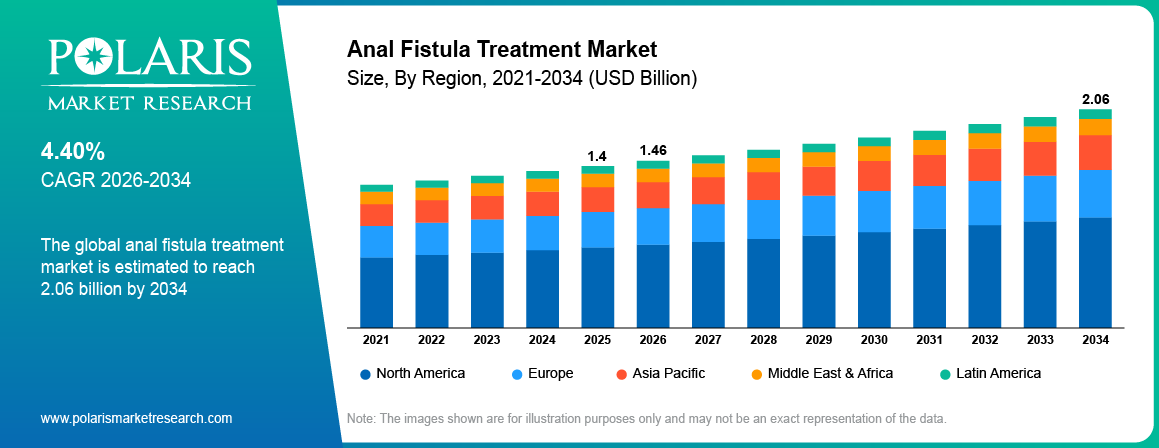
Global anal fistula treatment market size was valued at USD 1.4 billion in 2025. The market is anticipated to grow from USD 1.46 billion in 2026 to USD 2.06 billion by 2034, exhibiting the CAGR of 4.40% during the forecast period.
Market Statistics
Key Takeaways
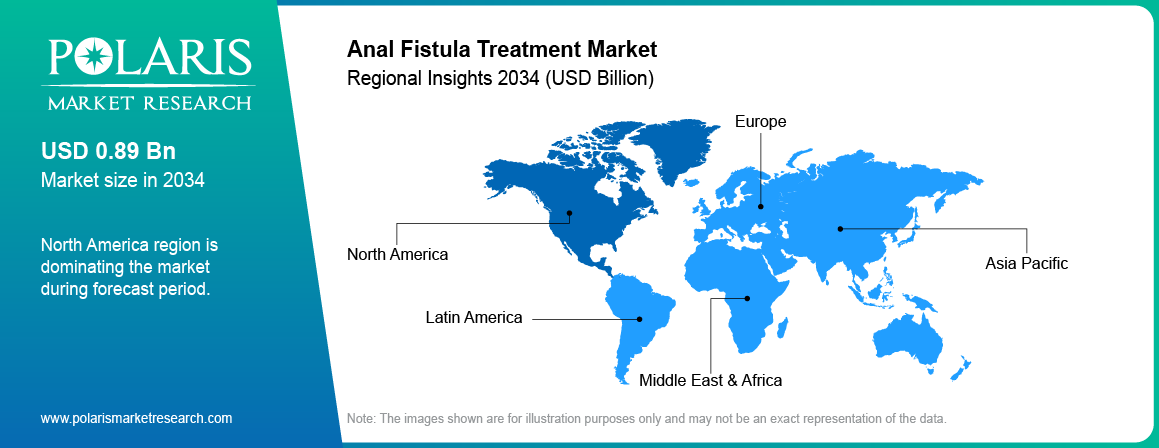
- In 2025, North America dominated the global market with 43.6% share. Rising prevalence of inflammatory bowel diseases contributed to the dominance.
- The U.S. led the North American market with 80.5% revenue share in 2025. Rising healthcare investments from both public and private sectors drive the U.S. market growth.
- The Asia Pacific Anal Fistula Treatment market is expected to record the highest CAGR of 9.8% during the forecast period. The growth is attributed to the increasing approvals for drugs aimed to treat bowel diseases.
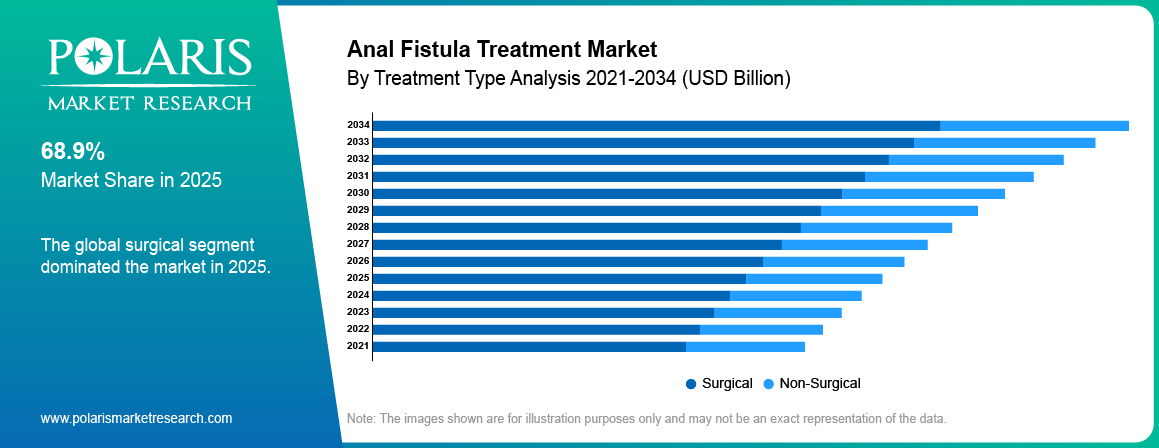
- In 2025, the Surgical segment held the largest market share of 68.9%. This is fueled by increasing preference for treatments that prioritize safety and effectiveness.
- The Hospitals segment would register the highest CAGR of 10.4% during the forecast period. Availability of a wide array of treatments offered in hospitals fuels the segment growth.
Note: Figures and projections outlined in this report are the result of Polaris Market Research’s proprietary analytical processes, grounded in the latest available datasets and market observations.
Anal Fistula Treatment in Simple Terms
Anal fistula treatment is performed to close an abnormal tunnel formed between the anal canal and skin. Treatments is sued to eliminate infection, reduce pain, and prevent recurrence. Surgery, minimally invasive procedures, or specialized medications are preferred to restore normal tissue healing.
Industry Dynamics
- Surging geriatric population prone to bowel conditions fuels the growth of the market.
- Rising prevalence of inflammatory bowel diseases such as Crohn's disease drives the market growth.
- High cost of treatment hinders the demand for anal fistula treatment.
- Growing preference for minimally invasive treatments would create lucrative market opportunities.
- Increasing advancements in medical technologies boost the market expansion.
Anal Fistula Treatment Market Overview and Key Insights
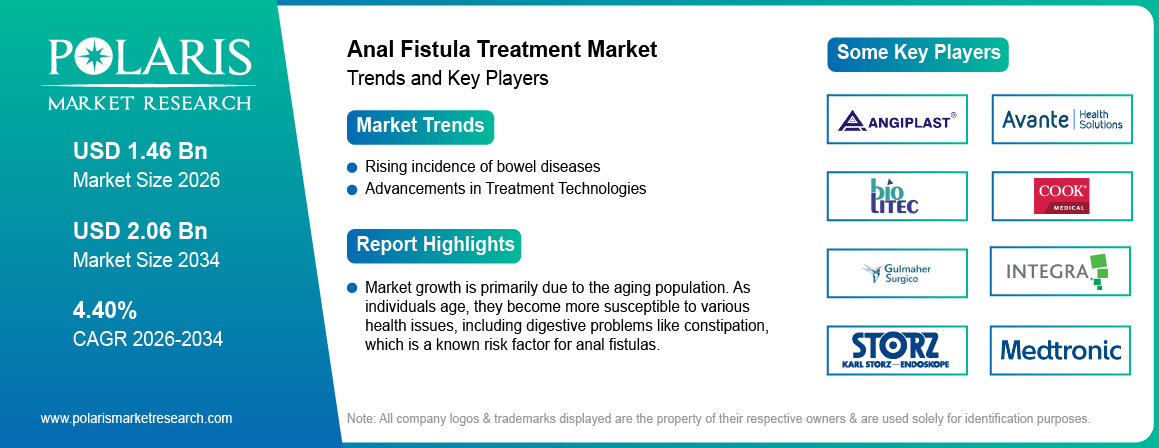
Market growth is primarily due to the aging population. As individuals age, they become more susceptible to various health issues, including digestive problems like constipation, which is a known risk factor for anal fistulas. Moreover, there is a noticeable uptick in the incidence of constipation globally. This increase can be linked to various lifestyle factors, such as sedentary lifestyles, inadequate fiber intake, & poor hydration, all of which contribute to digestive issues.
Market participants are actively involved in creating and introducing new products to the market. This could involve innovations, improvements, or entirely novel offerings that cater to evolving consumer needs or technological advancements. Companies are conducting clinical trials to test the safety, efficacy, and feasibility of new treatments, therapies, or medical products. Clinical trials are essential for gaining regulatory approvals and ensuring that products meet the approval and required standards.
- For instance, in March 2022, Ossium Health, Inc. received approval from the U.S. Food and Drug Administration (FDA) for its Investigational New Drug (IND) application related to OSSM-001. This mesenchymal stem cell (MSC) product is designed to address refractory perianal fistulas in individuals diagnosed with Crohn's disease.
Source: Polaris Market Research Analysis
To Understand More About this Research: Download Sample Report
Additionally, the growing adoption of unhealthy diets, characterized by high levels of processed foods, sugars, and fats, further exacerbates digestive problems and increases the likelihood of developing constipation. The Lancet study published in June 2021 shed light on the significant impact of constipation on healthcare systems. With approximately 1 million hospital visits attributed to constipation annually, it underscores the widespread nature of this issue and the burden it places on healthcare resources.
The laser treatment for anal fistula is a minimally invasive technique that utilizes focused laser energy to treat and manage anal fistulas, a condition characterized by an abnormal tunnel-like passage between the anal canal and the skin near the anus. Laser technology allows for precise and targeted energy delivery. This precision helps in sealing the fistula tract effectively while minimizing damage to surrounding tissues. Also, as compared to traditional surgical methods, this laser treatment may result in reduced postoperative pain and discomfort. The minimally invasive nature of the procedure contributes to a quicker recovery and potentially fewer complications, contributing to an increase in industry growth.
Furthermore, the escalating demand for safe and productive treatments with minimal risk of recurrence and fewer adverse effects is driving major industry players to introduce advanced pharmaceuticals and devices. Moreover, technological innovations in anal fistula treatment are catalyzing market expansion. Various procedures such as combined drainage Seton techniques & LIFT-plug are recognized as effective therapies for complex anal fistulas. These breakthroughs in anal fistula treatment are expected to drive anal fistula treatment market growth.
Source: Polaris Market Research Analysis
How Anal Fistula Treatment Works
- MRI-Based Diagnosis: An MRI or endoanal ultrasound is used to determine the nature and complexity of the fistula tract.
- Fistula Classification: Fistulas are then classified based on their nature to determine an effective modality of treatment.
- Treatment Selection: A surgical or minimally invasive procedure is preferable; this is done based on the classification of the fistula and sphincter involvement.
- Seton Placement: Seton is placed to drain the infection. It helps prepare complex fistulas for definitive repair.
- Fistulotomy Procedures: Fistula tract is surgically cut open to improve healing in simple fistulas.
- Advancement Flap Surgery: Healthy tissues are used to close the internal opening without disturbing the sphincters.
- Stem Cell Therapies: Regenerative cell therapy can be opted for complex fistulas due to Crohn’s disease.
- Post-Operative Care & Follow-Up: Infection control and wound healing are followed up.
Anal Fistula Treatment Market Drivers and Opportunities
Rising incidence of bowel diseases
The increasing incidence of inflammatory bowel diseases such as Crohn's disease & ulcerative colitis, the introduction of novel therapeutic products, and the growing preference for non-surgical treatment options like fibrin glue injection and adipose-derived stem cell therapy. For instance, a study conducted by researchers at the University of Nottingham, funded by Crohn's & Colitis U.K. and Coeliac U.K. in 2022, unveiled that the prevalence of Crohn's disease and ulcerative colitis within the United Kingdom (U.K.) population surpasses previous estimations. According to the findings, 1 in every 123 individuals in the U.K. is affected by either Crohn's disease or ulcerative colitis, collectively totaling nearly half a million people living with inflammatory bowel disease (IBD) in the U.K.
Advancements in Treatment Technologies
Ongoing advancements in medical technologies, including surgical techniques and imaging modalities, enhance the effectiveness of anal fistula treatments. Innovations such as minimally invasive procedures and laser treatments provide patients with more options and contribute to anal fistula treatment market growth. Further, increased awareness about anal fistulas, coupled with improved diagnostic capabilities, leads to more individuals seeking medical attention for their condition. This heightened awareness and improved diagnostic rates positively impact the demand for advanced treatment options.
Growth of Minimally Invasive & Regenerative Fistula Therapies
The shift toward minimally invasive fistula treatment is gaining momentum as patients and physicians increasingly favor procedures that reduce trauma and shorten recovery windows. FiLaC (Fistula-tract Laser Closure), LIFT (Ligation of Intersphincteric Fistula Tract), and bio-absorbable plug implants are some of the methods that have gained popularity in recent times as an alternative to traditional fistulotomy.
- Less pain and discomfort experienced by patients in comparison to open surgery
- Quicker recovery times that will allow a quicker resumption of normal activities
- Smaller incisions with lower risk of sphincter damage
- Lower complication and infection rates
- Increased patient acceptance, particularly among recurrent-case patients
Anal Fistula Treatment Market Restraints and Challenges
High cost of treatment
The growth of the anal fistula treatment market faces several challenges, primarily stemming from the high costs associated with treatment and a lack of awareness regarding available treatment options. As per data from the National Center for Biotechnology Information (NCBI), the average yearly expense for Adalimumab per individual is approximately USD 12,343 in the United Kingdom. Conversely, in emerging nations like India, China, and Russia, the absence of reimbursement schemes for intestinal fistula treatment constrains the uptake of these medications within the region.
Technological Advancements in Anal Fistula Treatment
| Technology | Purpose | Key Benefit |
| Single-Cell RNA Sequencing Research | Studies cellular mechanisms of fistula formation | Supports development of targeted regenerative therapies |
| Advanced Diagnostic Imaging | Uses MRI and endoanal ultrasound for fistula mapping | Improves diagnostic accuracy and treatment planning |
| Video-Assisted Anal Fistula Treatment (VAAFT) | Endoscopic visualization and closure of fistula tracts | Minimally invasive with faster recovery and sphincter preservation |
| Precision Surgical Planning | Utilizes detailed imaging to guide procedure selection | Reduces complications and recurrence risk |
| Digital Healthcare Integration | Enables electronic records, telemedicine, and remote follow-up | Enhances care coordination and post-operative monitoring |
Source: Polaris Market Research Analysis
Anal Fistula Treatment Market Segment Analysis
The market is primarily segmented based on drug type, treatment type, application, end use, and region.
| By Drug Type | By Treatment Type | By Application | By End Use | By Region |
|
|
|
|
|
Source: Polaris Market Research Analysis
Anal Fistula Treatment Market, by Treatment Type
Surgical segment accounted for the largest market share in 2025
In 2025, the surgical segment accounted for the largest market share. This is attributed to the increasing prevalence of infections associated with fistulas and the growing demand for treatment options that prioritize safety and effectiveness.
Moreover, the incorporation of medical therapy in conjunction with surgical interventions shows potential in substantially mitigating the severity of the disease and potentially achieving complete eradication. As a result, surgical procedures are recommended as the preferred approach for addressing anal fistulas in patients, contributing to the anticipated growth in the anal fistula treatment market size.
Surgical intervention for anal fistulas surgery is linked to low re-currence rates, minimal incontinence, & low quality of life. The optimal treatment choice hinges on the fistula's location and whether it is a single tract or branches out in multiple directions. Surgical options encompass various procedures such as fistulotomy, bio-prosthetic plugs, advanced flap techniques, seton methods, & innovative approaches like, LIFT & FiLaC therapy. Among these, fistulotomy stands out as the most prevalent surgical procedure for treating anal fistulas.
Surgical vs. Non-Surgical Anal Fistula Treatment
| Factor | Surgical Treatment | Non-Surgical Treatment |
| Effectiveness | High. Offers definitive fistula closure | Moderate. Mainly controls symptoms and infection |
| Recovery Time | Longer due to wound healing | Shorter with minimal downtime |
| Recurrence Risk | Lower when appropriately performed | Higher, especially without definitive repair |
| Complexity Handling | Suitable for simple and complex fistulas | Best for symptom management or selected cases |
| Hospital Stay | Often requires hospital or day-surgery admission | Usually outpatient with limited hospital visits |
Anal Fistula Treatment Market, by End User
Hospitals segment expected to witness fastest CAGR during the forecast period.
Hospitals segment expected to witness fastest CAGR during the forecast period. This growth is primarily driven by the extensive array of treatment alternatives hospitals provide, ranging from surgical interventions to minimally invasive procedures and pharmaceutical therapies. Furthermore, hospitals are equipped with the essential infrastructure and specialized medical personnel to deliver holistic care for individuals afflicted with anal fistulas.
Moreover, the increasing prevalence of chronic conditions like diabetes and obesity is bolstering the expansion of the hospital segment. Individuals with chronic ailments face a higher risk of experiencing complications related to anal fistulas, such as abscesses and infections. As a result, the demand for hospital-based treatments for anal fistulas is on the rise, underscoring the significance of hospitals in addressing the healthcare needs of affected populations.
Source: Polaris Market Research Analysis
Real-World Applications of Anal Fistula Treatment
| Application | Real-World Example |
| Crohn's Disease-Related Fistula Management | Gastroenterology centers use biologic therapies (e.g., anti-TNF agents) alongside surgery to treat complex perianal fistulas in Crohn's disease patients. |
| Recurrent Anal Abscess Treatment | Colorectal surgeons routinely drain recurrent abscesses. They perform definitive fistula repair to prevent repeated infections. |
| Stem Cell-Assisted Fistula Healing | Specialized centers in Europe and other regions use allogeneic mesenchymal stem cell therapy for complex Crohn's-related anal fistulas where approved. |
| Minimally Invasive Fistula Closure Procedures | Colorectal clinics adopt laser ablation (FiLaC), fibrin glue, and fistula plugs. It helps preserve anal sphincter function and reduce recovery times. |
Source: Polaris Market Research Analysis
Anal Fistula Treatment Market Regional Analysis
Regional Market Trends in Anal Fistula Treatment Market
| Region | Market Position | Key Trend |
| North America | Largest Market | Advanced healthcare infrastructure, specialized colorectal centers, high treatment adoption, and availability of innovative surgical technologies |
| Europe | Second-Largest Market | Strong healthcare systems, favorable reimbursement, and increasing adoption of minimally invasive fistula treatment procedures |
| Asia Pacific | Fastest-Growing Market | Large patient population, rising gastrointestinal disorders, higher investment in healthcare, and improved access to colorectal care |
| Latin America | Emerging Market | Healthcare modernization, awareness of colorectal disorders, and increased availability of specialist surgery facilities |
| Middle East & Africa | Developing Market | Higher healthcare expenditure, development of hospitals’ facilities, and rising rates of diagnoses and treatments |
Source: Polaris Market Research Analysis
North America dominated the largest market share in 2025
In 2025, North America dominated the largest market share. This is primarily due to its large patient base grappling with inflammatory bowel diseases, the region's swift uptake of advanced technologies, and noteworthy healthcare investments from both public and private sectors. According to the 2022 report from the Mayo Clinic, surgeons across the U.S. possess extensive experience in managing anal fistulas, with over 1,000 patients receiving treatment annually.
Asia Pacific region is expected to witness the fastest CAGR during the forecast period.
Asia Pacific region is expected to witness the fastest CAGR during the forecast period. Rising awareness regarding the available treatment choices for the condition within the region, coupled with the growing approvals for drugs aimed at treating the disease, are anticipated to drive the anal fistula treatment market revenue in the area. For instance, in December 2021, Eisai Co., & Gilead Sciences reached an agreement for the commercialization and distribution of filgotinib, an oral JAK1 preferential inhibitor designated for ulcerative colitis and Crohn's disease indications in the Asia.
Source: Polaris Market Research Analysis
Emerging Innovations Shaping Patient Outcomes
Innovation across diagnostics, biologics, and closure technology reshape the clinical outcome profile of the market.
| Innovation | Expected Impact on Patient Outcomes |
| Biologic therapies | Lower recurrence rates in Crohn's-associated fistulas |
| Biosimilar treatments | Comparable efficacy at reduced treatment cost, improving access |
| Stem cell-based therapy | Enhanced tissue healing, reduced re-intervention need |
| AI-assisted diagnostic tools | Faster, more precise fistula tract mapping and classification |
| Advanced fistula closure devices | Reduced post-operative complications, shorter healing time |
| Personalized treatment planning | Better long-term disease management, tailored to fistula complexity |
Source: Polaris Market Research Analysis
Anal Fistula Treatment Market Competitive Landscape
The anal fistula treatment market dynamics involve a comprehensive understanding of the factors that influence their activities, strategies, and overall performance within the market research report. With numerous players in the sector, the global market analysis is set to witness moderate competition among companies. Considering changing consumer preferences, many firms are broadening their product ranges to strengthen their competitive edge within the market trends.
Some of the major players operating in the global market include:
- Angiplast Pvt. Ltd.
- Avante Health Solutions
- Biolitec AG
- Cliniva Healthcare
- Cook Medical
- Gulmaher Surgico
- Integra LifeSciences
- KARL STORZ
- Medtronic plc
- Novo Surgical Inc.
- Signum Surgical
- Sklar Surgical Instruments
Anal Fistula Treatment Market Recent Developments
- In May 2025, Signum Surgical announced positive first-in-human clinical results for its BioHealx™ implant, demonstrating an 84.4% primary healing rate with no reported fistula recurrence. The findings underscore the implant’s potential to support durable healing, minimize complications, and enhance patient quality of life compared with conventional treatment approaches.
- In July 2024, Signum Surgical Ltd. secured U.S. FDA De Novo marketing clearance for the BioHealx™ bio-absorbable implant. Designed as a minimally invasive solution for complex anal fistulas, the device offers surgeons a safer and less disruptive alternative to traditional surgical interventions, marking a key milestone in expanding treatment options for patients with limited minimally invasive therapies.
Future Outlook
The anal fistula treatment industry is expected to experience steady growth in the coming years. This is due to rising gastrointestinal disease prevalence and expanding healthcare access. Also, innovations in minimally invasive therapies would boost the market expansion in the future. The market is witnessing emerging technologies such as regenerative medicine, biologics, stem cell therapy, and precision diagnostics. They are projected to improve treatment outcomes. Future market expansion will be driven by innovation in colorectal care. Growing demand for patient-centered treatment solutions would also support the market development.
Anal Fistula Treatment Market Report Coverage
The anal fistula treatment market report emphasizes on key regions across the globe to provide better understanding of the product to the users. Also, the report provides market insights into recent developments, trends and analyzes the technologies that are gaining traction around the globe. Furthermore, the report covers in-depth qualitative analysis pertaining to various paradigm shifts associated with the transformation of these solutions.
The report provides detailed analysis of the market while focusing on various key aspects such as competitive analysis, drug type, treatment type, application, end use, and their futuristic growth opportunities.
Anal Fistula Treatment Market Report Scope
| Report Attributes | Details |
| Market size value in 2025 | USD 1.4 billion |
| Market size value in 2026 | USD 1.46 billion |
| Revenue forecast in 2034 | USD 2.06 billion |
| CAGR | 4.40% from 2026 – 2034 |
| Base year | 2025 |
| Historical data | 2021 – 2024 |
| Forecast period | 2026 – 2034 |
| Quantitative units | Revenue in USD billion and CAGR from 2026 to 2034 |
| Segments covered |
|
| Regional scope |
|
| Competitive Landscape |
|
| Report Format |
|
| Customization | Report customization as per your requirements with respect to countries, region and segmentation. |
Source: Polaris Market Research Analysis
Anal Fistula Treatment Market Frequently Asked Questions
The Anal Fistula Treatment Market report covering key segments are drug type, treatment type, application, end use, and region.
Anal Fistula Treatment Market Size Worth $2.06 Billion By 2034
Global anal fistula treatment market , exhibiting the CAGR of 4.40% during the forecast period.
North America is leading the global market
key driving factors in Anal Fistula Treatment Market are rising incidence of bowel diseases
An anal fistula is basically a small connection channel that occurs between the anal canal and the outer skin area near the anus due to infection in the anal glands or abscess. It often causes pain, swelling, discharge, and recurrent infections.
Fistulotomy, seton placement, advancement flap surgery, ligation of the intersphincteric fistula tract (LIFT), fibrin glue, fistula plugs, stem cell therapy, and antibiotics for infection control are among the treatment options. The treatment selection depends on the fistula's complexity and location.
Most of the time, surgeries have to be used in the treatment of anal fistula because anal fistulas do not heal on their own. Medications can be used to reduce infections and inflammations but surgeries are the most common method.
Download Sample Report of Anal Fistula Treatment Market
Please fill out the form to request a customized copy of the research report.


