
Cancer Gene Therapy Market Share, Size, Trends, Industry Analysis Report, 2026 - 2034
REPORT DETAILS
Cancer Gene Therapy Market Size and Growth Overview
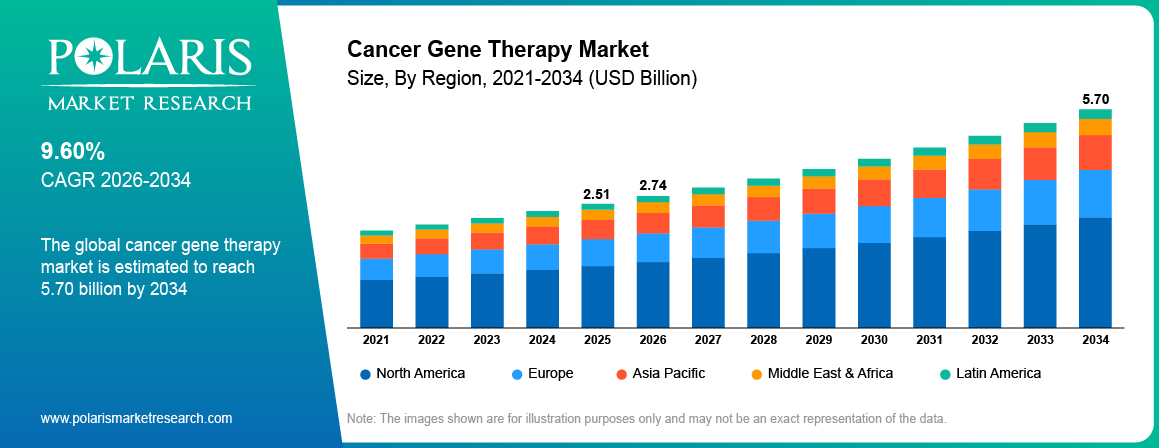
The global cancer gene therapy market size was valued at USD 2.51 billion in 2025. The market is projected to grow at a CAGR of 9.60% from 2026 to 2034. Rising cancer cases and breakthroughs in gene editing are a few of the key factors driving market growth. The market is also benefiting from supportive regulatory pathways for personalized oncology treatments.
Market Statistics
Cancer Gene Therapy Market Key Takeaways
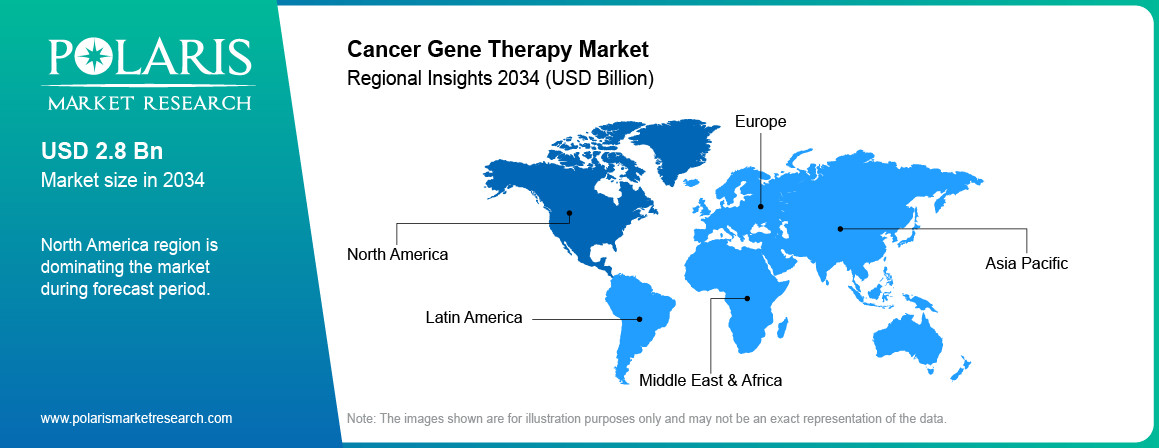
• North America dominated the global market with 44.0% revenue share in 2025. The leading position is attributed to rising emphasis on technological advancements and increasing investments in R&D.
• The U.S. led the North American market with 86.5% share in 2025. Presence of key players and well-established healthcare infrastructure boost the market expansion.
• The Asia Pacific cancer gene therapy market is anticipated to register a substantial CAGR of 10.7% during the forecast period. Rising geriatric population and surging government investments and initiatives in healthcare support the market development.
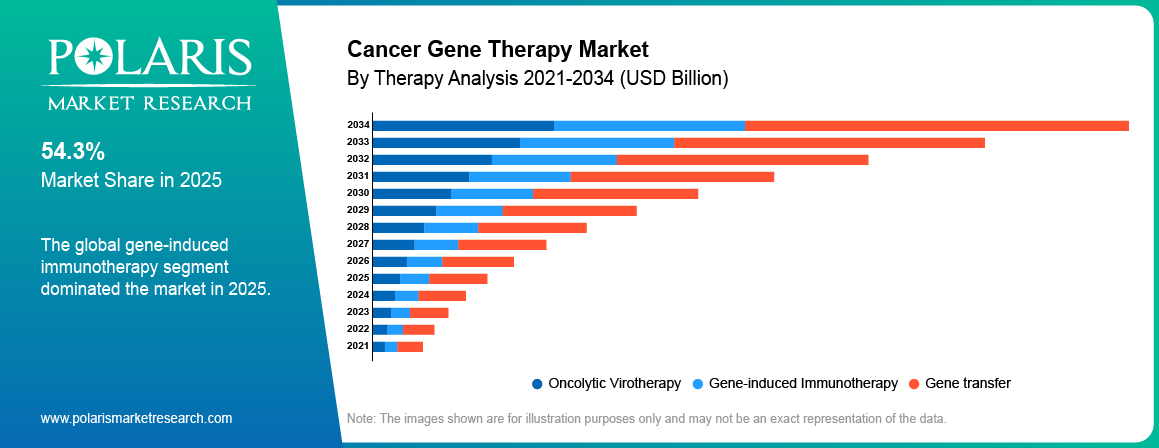
• The gene-induced immunotherapy segment dominated the market with 42.0% share 2025. This is due to the increasing investments in R&D and advancements in gene technology.
• The hospitals segment is expected to record a significant CAGR of 38.0% during the forecast period. The demand for cancer treatment is higher in hospitals owing to the increasing prevalence of cancer.
Note: Figures and projections outlined in this report are the result of Polaris Market Research’s proprietary analytical processes, grounded in the latest available datasets and market observations.
What Is Cancer Gene Therapy? Definition, Types and Applications
Cancer gene therapy includes innovative forms of treatment based on the modification, replacement, or introduction of genes to treat different cancers. Different forms of cancer gene therapy are viral or non-viral gene transfer, CRISPR gene editing, oncolytic gene therapies, and cell-based gene therapies. This therapy may act on tumors, help restore normal gene functions, or enhance the immune response against tumors. Different kinds of cancers are being researched to understand the possibilities of using cancer gene therapy.
How Does Cancer Gene Therapy Work?
Identification of Cancer: In this stage, it is identified what type of cancer the person is suffering from. This is usually achieved with the help of imaging, biopsies, or clinical assessments.
Genetic Analysis: This stage is concerned with studying genetic features of a particular tumor and individual under consideration in order to discover mutations and abnormalities in genetics.
Selection of Therapies: The techniques of gene therapy depends on the cancer profile.
Gene Identification and Delivery: Delivery of therapeutic gene or creation of modified immune cells is affected through various means, including CRISPR technology and vectors.
Targeting Cancer Cells: Therapeutic genes or manipulated immune cells are aimed towards cancer cells. They help suppress cancer, restore normal function, and destroy the cancer cell selectively also.
Immune Response Activation: The treatment would use the immune response against cancer and eliminate the cancer cells directly because of some genetic changes.
Monitoring the Patients: The patient is strictly monitored for the effectiveness of treatment, side effects, duration of effectiveness, and development of the disease.
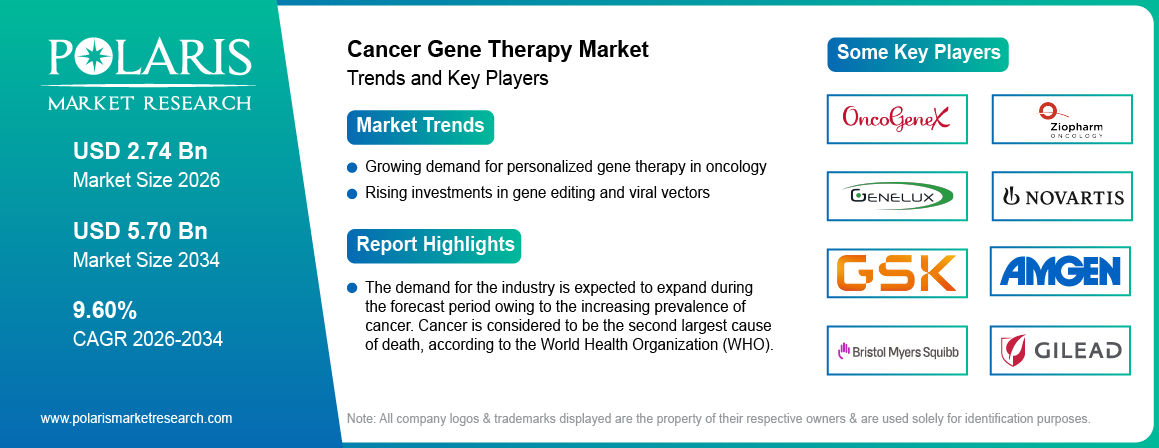
The industry gained popularity with highly successful results in its clinical and preclinical trials. With the increased investment in R&D, rising demand for DNA-based therapeutics, and acceptable gene therapy, the growth of the cancer gene therapy market will increase over the forecast period.
The cancer gene therapy market was negatively impacted during the COVID-19 pandemic. The treatment of the disease witnessed a decline in demand during the pandemic owing to the rising cases of COVID-19. The diagnosis of diseases was suspended amid the pandemic as people were afraid to visit hospitals. Many hospitals and clinics were completely utilized by COVID-19 treatments. However, after the pandemic, the market is expected to grow during the forecast period.
As this treatment is preclinically and clinically getting high success rates, the demand for treatment is increasing in many countries, such as India, China, the U.S., and many others. With the increasing number of cancer cases, advancements are made in molecular biology, virology, and immunology. With the advanced infrastructure, healthcare advancement, and rising R&D investment, the industry is expected to grow in the future.
Cancer Gene Therapy vs. Traditional Cancer Treatment: Key Differences
| Factor | Cancer Gene Therapy | Traditional Cancer Treatment |
| Approach | Targets genetic abnormalities, tumor-specific pathways, or immune mechanisms involved in cancer progression | Primarily targets rapidly dividing cancer cells or removes/destroys tumors through physical or chemical means |
| Precision | Highly personalized and often designed around specific mutations, biomarkers, or patient-specific tumor characteristics | Generally broader in action, with treatment selected based on cancer type, stage, and standard clinical protocols |
| Technologies | Uses gene editing, viral/non-viral vectors, engineered immune cells, and molecular delivery platforms | Relies on chemotherapy, radiation therapy, surgery, hormone therapy, and other conventional oncology methods |
| Long-Term Potential | Offers potential for durable or long-lasting responses through targeted genetic correction or immune reprogramming | Often requires repeated treatment cycles, maintenance therapy, or combination regimens to manage recurrence |
Source: Polaris Market Research Analysis
Cancer gene therapy has gained popularity with its successful results in clinical and preclinical trials. The market is witnessing increased investments in research and development (R&D). There has also been an increased demand for DNA-based therapeutics. All of these factors are contributing to the market development. The market is also benefiting from the rising prevalence of cancer globally. Cancer is a leading cause of death worldwide. It accounted for over 10 million deaths in 2024, or nearly one in six deaths (source: who.int).
Source: Polaris Market Research Analysis
AI-Enabled Gene Editing, Vector Design and Clinical Development
AI-Based Gene Editing: AI applications are being developed to allow scientists to analyze genetic information, find potential targets for cancer treatment, and design new gene editing therapies. Such technology can be helpful for improving the effectiveness of developing gene therapies for treating cancer.
Vector Design: Researchers are currently exploring AI tools to improve the design of vectors for gene therapy delivery. By analyzing a large number of biological data sets, scientists will be able to find some features of vectors that could facilitate delivery and target selection.
Clinical Development and Patient Selection: By analyzing patient and genomic data using AI applications, scientists could select patients who would be good candidates for clinical trials and find some treatment response patterns. It could help with optimizing development programs.
Therapy Optimization: By analyzing treatment data, scientists could find certain patterns related to the safety and efficacy of treatment and treatment response. It can be useful for optimizing gene therapy methods and researching more targeted treatments.
Approved and Emerging Cancer Gene Therapy Use Cases
- CAR-T Therapy for Blood Cancer: Kymriah, Yescarta, Tecartus, and Breyanzi are some of the genetically engineered T-cell therapies that are applicable in specific conditions of leukemia and lymphoma. The treatments involve genetic engineering of the patient's T-cells to identify and destroy cancer cells.
- CAR-T Therapy for Multiple Myeloma: Abecma and Carvykti are examples of CAR-T therapies that are applied in targeting BCMA, a protein found in multiple myeloma cancer cells. They are genetically modified treatments that modify T cells of the patient to recognize and attack cancer cells.
- Engineered T-Cell Therapy for Solid Tumors: Tecelra is one of the genetically modified T-cell receptor treatments applicable to certain patients suffering from synovial sarcoma.
- Oncolytic Virus Therapy: Oncolytic viruses are specially designed to infect and kill cancer cells by inducing an immune response against cancerous growths. Imlygic is an oncolytic virus treatment for cancer that can be cited as an example.
- Personalized & Next Generation Gene Therapies: There has been increased interest in the use of next-generation methods for cancer gene therapy that include the use of CRISPR, next-generation viral vectors, and non-viral approaches.
Market Trends in Cancer Gene Therapy
Gene Editing with CRISPR: Gene editing with CRISPR technologies is being researched as an innovative approach to create customized gene changes and develop more accurate cancer therapies. The use of CRISPR in cancer research can bring new opportunities for gene editing.
Non-Viral Vector Delivery: The delivery of therapeutic genes by using non-viral vectors such as nanoparticles or others is being researched to improve the efficacy of gene therapy and avoid disadvantages that may exist in viral vectors.
Allogeneic Cell Therapies: Allogeneic cell therapies represent one of the promising approaches in cell therapy research. It implies the use of donor cells for the creation of the therapy, which can address some challenges related to the specificity of the therapy.
AI in the Design of Gene Therapies: AI technologies are actively being researched to be applied for the analysis of genomics information, identification of targets, selection of patients, and gene therapy design. In addition, they can be used in gene editing research.
Expansion into Solid Tumors: Research in cancer gene therapy is shifting from blood cancers to solid tumors. Now scientists are studying the application of gene therapy for breast, lung, pancreatic, colorectal cancers, and melanoma.
Drivers and Commercial Opportunities
What Is Driving the Cancer Gene Therapy Market?
- Rising Global Cancer Burden Is Expanding Demand for Gene-Based Oncology Treatments: The growing incidence of cancers is fueling the need for improved treatment options, which results in exploring the use of gene-based treatment modalities. Further, the growing incidence of difficult-to-treat cancers among patients is making pharmaceutical companies focus on innovative approaches to cancer gene therapy.
- Demand for Precision Oncology and Personalized Gene Therapies: Rising demand for targeted therapies fuels the market growth. Scientists and healthcare practitioners are becoming more interested in therapies that target cancer on the molecular level. Targeted medications work by acting on mutations. It leads to a better treatment outcomes. The treatment also helps reduce damage to healthy cells and minimize adverse effects. The rising adoption of precision oncology, biomarker-based treatment selection, and personalized cancer care accelerates the development and commercialization of gene-based cancer therapies.
Market Opportunities
Expanding Gene Therapy Applications in Solid Tumors
The increasing emphasis on the potential application of gene therapy in solid tumors represents a substantial commercial opportunity for the companies involved in the field. Research conducted on breast cancer, lung cancer, pancreatic cancer, colorectal cancer, and melanoma is broadening the scope of application of gene therapy beyond hematologic malignancies. Innovations in technologies related to gene editing, delivery vectors, and immune engineering could facilitate the creation of new therapies for individuals who have a limited number of treatment options. As clinical studies advance, new therapies for solid cancers can increase the scope of patients that can be addressed and generate additional income sources. More investments in such applications can also foster new gene therapy platforms and collaborations.
Manufacturing, Safety, Regulation, Reimbursement, and Access Barriers
There are certain factors that can pose challenges to the growth and development of the cancer gene therapy market. For example, the complex nature of production requires special infrastructure, a highly sophisticated system of production, and rigorous quality control systems for viral vectors, engineered cells, and gene modifications. All these increase the cost of production and make large-scale manufacturing more difficult.
Concerns related to immunological reactions, off-target effects, insertion effects, and toxicities of vectors may also pose obstacles in clinical trials and regulatory approval processes. Moreover, stringent regulatory standards, long-term patient follow-up, and large amounts of data on safety and efficacy could further delay drug development process and increase costs associated with compliance.
Expensive therapy and difficulties in securing coverage also could act as barriers to the uptake of innovative treatments, especially those that need specialized facilities for delivery. Poor healthcare infrastructure and concentration of advanced oncology treatment options in the developed countries could act as a hurdle in gaining access to therapies.
Cancer Gene Therapy Manufacturing, Cost, Safety and Regulatory Challenges
| Challenge | Impact on the Market |
| High Treatment Costs | Cancer gene therapies involve substantial R&D investment, complex manufacturing, and personalized treatment processes, resulting in high therapy costs and reimbursement challenges that can limit broader market adoption. |
| Complex Manufacturing | The production of viral vectors, engineered immune cells, and gene-modified therapies requires specialized facilities, strict quality control systems, and advanced technical expertise, increasing operational complexity and production costs. |
| Regulatory Challenges | Stringent approval pathways, extensive safety and efficacy requirements, and long-term follow-up obligations can slow product development, delay commercialization, and increase compliance burdens for market participants. |
| Limited Accessibility | Access to cancer gene therapy remains limited in many regions due to high costs, concentration of treatment centers in developed markets, and insufficient infrastructure for advanced oncology therapies. |
| Long Clinical Development Timelines | Multi-phase clinical trials, extensive preclinical validation, and prolonged patient monitoring requirements make the development process lengthy, capital-intensive, and uncertain. |
| Safety Concerns Related to Gene Delivery | Potential risks such as immune responses, off-target effects, insertional mutagenesis, and vector-related toxicity continue to create challenges in clinical development, regulatory review, and physician adoption. |
Source: Polaris Market Research Analysis
Key Technology Segments in the Cancer Gene Therapy Market
- Precision Oncology and Personalized Medicine: Deal with treatment methods based on tumor genetics and biomarkers, making the impact of gene therapy more precise.
- Gene Editing and Genetic Engineering Technologies: Comprise approaches such as CRISPR techniques, viral or non-viral ways of gene delivery, gene therapy, and any other methods of gene therapy. It leads to genetic changes or regulations to therapeutically modify genes responsible for making cancer.
- Cell and Immune Cell Therapy: Use of CAR-T therapy, TCR-T therapy, and therapies with K-cells related to the application of specifically tailored immune cells to eliminate cancer cells from the human body.
- Molecular Therapy and Targeted Medications: Explain molecular therapy based on particular genes and signaling pathways and other elements influencing the occurrence of cancer.
- Advanced Gene-Delivery and Oncolytic-Virus Technologies: Encompass oncolytic viruses and other means of sticking to the target molecule by utilizing viral vectors, which allow dosage delivery of a required agent.
Source: Polaris Market Research Analysis
Cancer Gene Therapy Market Segmentation
The market is primarily segmented based on therapy, end-use, and region.
| By Therapy | By End-Use | By Region |
|
|
|
Source: Polaris Market Research Analysis
Segment Analysis by Therapy
The gene-induced immunotherapy segment led with a 42.0% share in 2025. This is owing to rising investments in R&D and advancements in gene technology. In gene-induced immunotherapy, genes are introduced into the body as pieces of DNA to immunize the body with healthy genes; this can be done in various ways. Therapeutic genes or genetically modified immune cells are delivered or engineered to target tumor cells or stimulate antitumor immunity. Some of the methods used include ACT, CAR-T, TCR, and TIL, amongst others. With higher government organization investment in R&D, the segment is anticipated to dominate the industry over the forecast period.
Role of Viral Vectors in Cancer Gene Therapy
Viral vector technologies play a critical role in cancer gene therapy. This is due to their high gene delivery efficiency and adaptability across multiple oncology applications. They can introduce therapeutic material into target cells.
- Adeno-Associated Virus (AAV): AAV vectors are widely studied for their relatively low immunogenicity and stable gene delivery potential. Their study is conducted to assess suitability for targeted therapeutic applications in certain cancer research settings.
- Lentiviral Vectors: Lentiviral vectors are commonly used in ex vivo cancer gene therapy, particularly in CAR-T and other engineered immune cell therapies. This is due to their ability to integrate genetic material into host cells for sustained expression.
- Adenoviral Vectors: Adenoviral vectors are used to deliver therapeutic genes directly into tumor tissues. They are also important in the development of oncolytic virus-based cancer therapies. It is due to their strong transgene expression capabilities.
- Gene Delivery Efficiency: Viral vectors are valued for their high transduction efficiency. They enable effective transfer of therapeutic genes into cancer cells or immune cells. They also help improve the overall performance of gene-based oncology treatments.
- Targeted Therapeutic Delivery: Advanced viral vector platforms are being designed to enhance tumor targeting and reduce off-target effects. They also improve safety profiles and support more precise delivery of therapeutic payloads in cancer treatment.
Cancer Gene Therapy Market by Delivery Approach: Ex Vivo vs. In Vivo
The in vivo segment accounted for a 58.7% share in 2025. In vivo technique refers to direct delivery of genetic material to the patient's body, in which the therapy acts on target cells to bring about the desired change in genes. This may help simplify the therapy process by eliminating the step of extracting cells from the body. Recent developments in delivery methods have helped enhance the capacity of delivery of genetic material to specific cancer cells or tissues. Ongoing research in viral vectors, non-viral methods, and gene editing is creating new opportunities for in vivo cancer gene therapy.
The ex vivo segment is projected to grow at a CAGR of 10.6% during 2026–2034. Ex vivo entails the extraction of cells from the body of the patient, modification of such cells in the lab using genes, and subsequent introduction of the altered cells back into the patient’s body. This type of procedure is commonly applied in gene-modified cell therapy and CAR-T treatment. The increasing application of CAR-T therapy in the treatment of blood-related cancers is boosting the need for ex vivo technologies. Further advancements in cell modification and production techniques are enabling increased adoption of such technologies in cancer therapy.
Cancer Gene Therapy Market by Cancer Type: Hematologic Malignancies vs. Solid Tumors
The hematologic malignancies segment led with a 54.2% share in 2025. Hematologic malignancies include cancers like leukemia, lymphoma, and multiple myeloma. The segment is a significant market for cancer gene therapy due to the rising use of CAR-T and other gene-altered cell therapies. The expansion of clinical studies along with the availability of cancer gene therapies is supporting the growing adoption of gene-based therapies among hematological cancer patients.
The solid tumors segment is projected to grow at a CAGR of 9.1% during 2026–2034. Solid tumors include cancers such as breast, lung, pancreatic, colon, and skin cancers. Gene therapy is increasingly emerging as an option for solid tumors because firms are experimenting with gene delivery, immunotherapy, oncolytic viruses, and gene editing. Advances in tumor targeting and delivery systems are expected to drive the segment’s growth.
Cancer Gene Therapy Market by End-User
The hospitals segment is projected to account for a 38% CAGR. This is facilitated by the rise in usage of advanced cancer treatments as well as the presence of oncology specialties. Additionally, hospitals offer the necessary infrastructure and professionals who can handle such advanced therapies and treat the patients. Investments in advanced cancer care and increased usage of gene-based therapies are anticipated to further propel the growth of this segment.
Cancer Gene Therapy Applications in Solid Tumors
| Solid Tumor Type | Gene Therapy Application |
| Breast Cancer | Gene therapy in breast cancer focuses on targeting oncogenic mutations, enhancing immune responses, and delivering tumor-suppressing genes to inhibit tumor growth and improve treatment precision. |
| Lung Cancer | In lung cancer, gene therapy is being explored to target driver mutations, improve sensitivity to treatment, stimulate anti-tumor immunity, and support precision treatment strategies for both non-small cell and small cell lung cancers. |
| Pancreatic Cancer | Pancreatic cancer gene therapy research emphasizes targeted gene delivery, oncolytic viral therapies, and immune-modulating approaches aimed at overcoming tumor resistance and improving therapeutic response in aggressive tumor environments. |
| Melanoma | In melanoma, gene therapy is used to enhance immune-mediated tumor destruction, support oncolytic virus-based treatment, and improve the effectiveness of immuno-oncology approaches against advanced skin cancers. |
| Colorectal Cancer | Gene therapy applications in colorectal cancer include correction or targeting of cancer-related genetic abnormalities, delivery of therapeutic genes to tumor cells, and development of targeted treatments that improve anti-cancer activity while minimizing damage to healthy tissue. |
Source: Polaris Market Research Analysis
Cancer Gene Therapy Pricing, Reimbursement and Patient Access
Pricing: Cancer gene therapies have a relatively high development and treatment cost because of complicated research, specialized production, modern facilities, and the need for skilled personnel. High initial cost of some gene therapies can present challenges for healthcare systems and patients in particular, especially when treatment involves specialized administration and follow-up.
Reimbursement: Reimbursement is one of the key factors influencing adoption of cancer gene therapies. Payers should evaluate clinical benefit and value of these therapies when making reimbursement decisions. High cost of some therapies may result in increased pressure on healthcare budgets, thus contributing to the emergence of payment and reimbursement strategies helping to control the cost of advanced therapy.
Patient Access: Patient access to cancer gene therapies is restricted by the high treatment cost, insurance issues, and limited availability of specialized facilities. Patients residing in areas with low oncology infrastructure might encounter certain difficulties in getting these therapies. Development of healthcare infrastructure, improvements in insurance, and an increase in the number of specialized centers will help address this challenge.
Cancer Gene Therapy Safety, Long-Term Follow-up and Regulatory Requirements
Safety: Gene therapies targeting cancers need to be evaluated for their safety as they create long-lasting changes within the cells and impact the immune system. It is the responsibility of developers to evaluate any potential risks related to such therapies, including the immune reaction, effects on normal cells, toxicities associated with treatments, and more. Safety evaluation is crucial in order to understand if a certain therapy has the potential to provide desired benefits without creating any risks.
Long-term Follow-Up: Long-term follow-up is an essential step in developing cancer gene therapies since some side effects can be observed months or even years after the treatment. Such observation allows for evaluating delayed safety issues, changes in treatment response, and durability of the effect. Long-term follow-up also serves as additional safety and efficacy data regarding cancer gene therapies after clinical development.
Regulatory Requirements: Regulators demand comprehensive information about safety, efficacy, quality, and manufacturing processes of the gene therapies used to treat cancer. Clinical development, manufacturing processes, product quality, and patient monitoring should meet the requirements set by regulatory agencies in order to receive approval of the drug.
Source: Polaris Market Research Analysis
Cancer Gene Therapy Market Analysis by Region
North America led with a 44.0% revenue share in 2025. This is primarily due to technological advancements and rising R&D in the region. The presence of key market players and an established healthcare infrastructure further strengthens the dominance of the regional market. Factors that influence the market expansion include increased expenditure on cancer research and development of gene and cell treatments.Additionally, the region is benefiting from the increase in clinical research and availability of facilities for treatment. The favorable environment for biotech research is prompting companies to develop innovative cancer gene therapy approaches.
Asia Pacific is anticipated to register a 10.7% CAGR. Growth in the region is facilitated by investments made in the healthcare infrastructure and cancer research, as well as advancements in treatment methods. Increased awareness regarding gene therapy and the expansion of the biotechnology and pharmaceutical industries are contributing to the growth of the market. Moreover, increasing cases of cancer and clinical research activities in the countries of the region are creating opportunities for cancer gene therapy providers.
Technological Advancements in Cancer Gene Therapy
| Technological Advancement | Impact on Cancer Gene Therapy Market |
| CRISPR-Based Therapies | Gene-editing technologies such as CRISPR are positively impacting cancer therapy. They allow for the accurate editing of cancer associated genes, which effectively corrects genetic defects. As a result, it opens avenues for creating innovative cancer drugs and therapies. |
| Improved Delivery Systems | Advances in viral vectors, non-viral carriers, nanoparticles, and tumor-targeted delivery platforms are enhancing gene transfer efficiency, reducing off-target effects, and improving the safety and effectiveness of cancer gene therapies. |
| Synthetic Biology | Synthetic biology is supporting the design of programmable gene circuits, engineered immune cells, and customized therapeutic constructs that can respond more effectively to tumor-specific signals and improve treatment control. |
| Next-Generation CAR-T Therapies | New CAR-T platforms are being developed with improved tumor targeting, enhanced persistence, lower toxicity, and greater effectiveness against solid tumors, expanding the role of cell-based gene therapies in oncology. |
| Personalized Gene Medicines | Personalized gene therapy approaches based on genomic profiling, biomarker analysis, and patient-specific tumor characteristics are enabling more tailored treatment strategies and supporting the shift toward precision oncology. |
Source: Polaris Market Research Analysis
Source: Polaris Market Research Analysis
Cancer Gene Therapy Market Trends by Region
| Region | Emerging Regional Market Trends |
| North America |
|
| Europe |
|
| Asia Pacific |
|
Source: Polaris Market Research Analysis
Cancer Gene Therapy Market Competitive Landscape
The cancer gene therapy market is highly competitive, with the pharmaceuticals and biotech companies concentrating their efforts on the development and commercialization of gene-modified cell-based therapies, gene editing, virus vectors, and many other therapies. These firms are strengthening their market positioning by developing new products, conducting clinical trials, establishing collaborations and partnership agreements, as well as investing in innovative gene therapy platforms. In addition, firms are diversifying their product portfolio from hematologic malignancies towards solid tumors and developing innovative technologies, including CRISPR and non-viral delivery systems. Innovation and success in clinical trials will play a key role in shaping competition in the future.
List of Key Cancer Gene Therapy Market Companies
- Adaptimmune Limited (US WorldMeds)
- Alaunos Therapeutics, Inc.
- Amgen Inc.
- Bristol Myers Squibb Company
- CARsgen Therapeutics
- Genelux Corporation (Develops oncolytic immunotherapies including Olvi-Vec)
- Genetix Biotherapeutics
- Gilead Sciences, Inc. (Kite Pharma)
- GlaxoSmithKline plc (Commercial owner of Imlygic, an oncolytic viral therapy for melanoma lesions)
- JW Therapeutics
- Krystal Biotech, Inc.
- Legend Biotech
- Nanjing IASO Biotechnology
- Novartis AG (Commercial CAR-T owner of Kymriah and an active cell-and-gene therapy participant)
- Orchard Therapeutics (a Kyowa Kirin company)
Recent Developments
- July 2026: Confluence Genetics launched Cas-CLEAR, Collaterally Enhanced Activated Ribonuclease. It is a new CRISPR technology platform for cancers treatment. It will be used for cancers carrying defined genetic signatures.(Source: businesswire.com)
- September 2025: Stanford Medicine scientists unveiled an AI system, CRISPR-GPT, designed to help researchers plan gene-editing studies. The tool creates designs, evaluates data, and fixes design issues, speeding up the gene editing workflow overall. (source: stanford.edu)
Future Outlook of Cancer Gene Therapy Market
The market will expand in the coming years. Improvements in gene editing, personalized treatments, and immune therapy would boost the growth. Next-generation CAR-T treatment, improved delivery methods, AI-assisted development of treatment, and increasing investments in precision medicine will all contribute to growth in the future. In addition, gene therapy is expected to play an increasingly vital role in advanced cancer management.
Cancer Gene Therapy Market Market Segmentation
By Therapy
- Oncolytic Virotherapy
- Gene-induced Immunotherapy
- Gene transfer
By Vector Type
- Lentivirus
- RetroVirus & gamma RetroVirus
- AAV
- Modified Herpes Simplex Virus
- Adenovirus
- Others
By Delivery Approach
- Ex Vivo
- In Vivo
By Cancer Type
- Hematologic Malignancies
- Leukemia
- Lymphoma
- Multiple Myeloma
- Solid Tumors
- Breast Cancer
- Lung Cancer
- Pancreatic Cancer
- Colon Cancer
- Skin cancer
By End-User
- Hospitals
- Research Institutes
- Biopharma Companies
- Diagnostic centers
- Others
By Region
- North America
- U.S.
- Canada
- Europe
- Germany
- France
- UK
- Italy
- Spain
- Netherlands
- Russia
- Rest of Europe
- Asia Pacific
- China
- Japan
- India
- Malaysia
- South Korea
- Indonesia
- Australia
- Vietnam
- Rest of Asia Pacific
- Middle East & Africa
- Saudi Arabia
- UAE
- Israel
- South Africa
- Rest of Middle East & Africa
- Latin America
- Mexico
- Brazil
- Argentina
- Rest of Latin America
Cancer Gene Therapy Market Report Scope
| Report Attributes | Details |
| Market size value in 2025 | USD 2.51 billion |
| Market size value in 2026 | USD 2.74 billion |
| Revenue forecast in 2034 | USD 5.70 billion |
| CAGR | 9.60% from 2026 - 2034 |
| Base year | 2025 |
| Historical data | 2021 - 2024 |
| Forecast period | 2026 - 2034 |
| Quantitative units | Revenue in USD billion and CAGR from 2026 to 2034 |
| Segments covered | By Therapy, By End-Use, By Region |
| Regional scope | North America, Europe, Asia Pacific, Latin America; Middle East & Africa |
| Key companies | BioCancell, GlobeImmune, Inc., Aduro Biotech, OncoGeneX, New Link Genetics., ZioPharm Oncology, Genelux Corporation, Novartis AG, GlaxoSmithKline PLC (GSK), Amgen, Inc., Bristol Myers, Squibb Company, Karyopharm Therapeutics, Inc., Gilead Sciences, Inc., Adaptimmune Limited, Sarepta Therapeutics, Inc, Biogen, Orchard Therapeutics Plc |
Source: Polaris Market Research Analysis
Cancer Gene Therapy Market FAQ's
The market was valued at USD 2.51 billion in 2025 and is projected to grow from USD 2.74 billion in 2026 to USD 5.70 billion by 2034 at a CAGR of 9.60%.
The market growth is driven by increasing cancer prevalence and accelerating FDA and NMPA approvals. Also, expanding CAR-T clinical pipelines and breakthroughs in CRISPR-based gene editing technologies propel the market expansion.
North America leads the cancer gene therapy market, dominating with a 44.0% revenue share in 2025, driven by a rising emphasis on technological advancements and increasing investments in R&D.
Significant issues are expensive treatment costs and difficulties in scaling technology. Moreover, long-term safety issues related to insertional mutagenesis restrict its wide use.
Cancer gene therapy uses genetic material or genetically modified cells to attack tumors, restore or alter gene function, deliver therapeutic payloads, or strengthen antitumor immune responses.
They may provide more targeted activity in selected patients, but they can also cause severe immune, neurologic, hematologic, and gene-delivery-related adverse effects. Safety depends on the product and patient population.
The treatment provided by gene therapy for cancer is targeted and personalized. It has the potential to lead to long-lasting remission and can provide better results than currently known medications.
Download Sample Report of Cancer Gene Therapy Market
Please fill out the form to request a customized copy of the research report.


