
Multiomics for Precision Medicine Market Size, Share, Trends & Forecast, 2026–2034
REPORT DETAILS
Multiomics for Precision Medicine Market Summary
The multiomics for precision medicine market is valued at USD 1,707.5 Million in 2025 and is projected to reach USD 7014.8 Million by 2034, growing at a CAGR of 17.0% from 2026 till 2034. This expansion is supported by three interconnected spending requirements which include generation of additional molecular layers, integration with clinical information, and interpretation that can support a defined drug-development decision. The commercial opportunity therefore extends beyond sequencing volume and increasingly depends on the ability to package assays, software, quality systems, and interpretation into repeatable workflows.
Market Statistics
Multiomics for Precision Medicine Market Key Takeaways
- North America is the dominant regional market with the market share of 41.36% in 2025, supported by large-scale biomedical datasets, established sequencing infrastructure, biopharma activity, and translational research capabilities.
- Asia Pacific is projected to register the fastest regional growth during the forecast period, driven by expanding sequencing and digital-health infrastructure across China, Japan, Singapore, and India.
- Consumables represent the largest component segment, growing at a CAGR of 17.3% during the forecast period, ahead of the market average.
- Instruments are positioned as the fastest-growing component segment, at a CAGR of 17.72%, as expanding sequencing and multiomic profiling infrastructure drives continued capital investment.
- Genomics leads the omics-type segment, holding a 40.64% share in 2025, while
- Bulk multiomics holds the largest technology share, while Spatial multiomics is the fastest-growing technology segment, ahead of both bulk and single-cell approaches.
- Clinical utility and governed data access are emerging as decisive competitive factors. The EHDS establishes staged secondary-use provisions, while U.S. programs apply controlled access and security requirements to sensitive biomedical datasets.
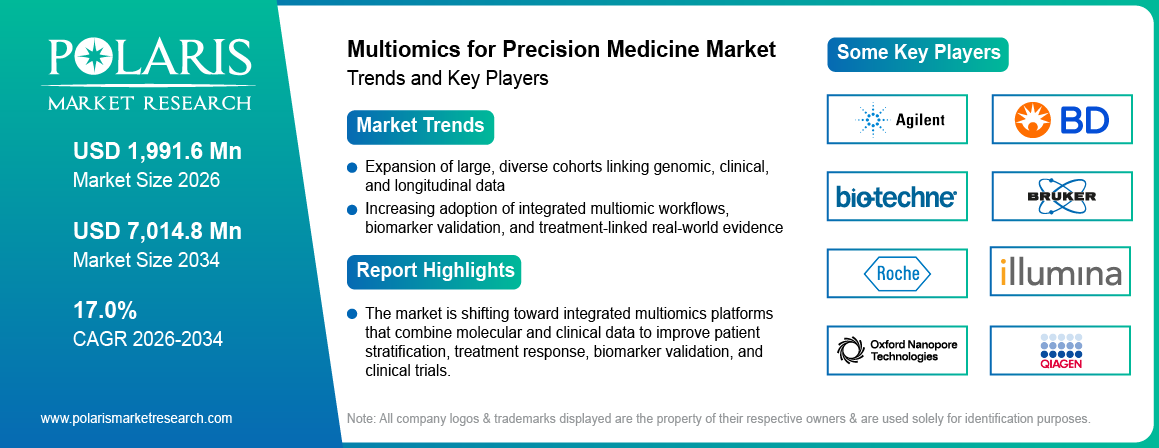
- Large linked cohorts, integrated workflows, single-cell and spatial analysis, and treatment-linked real-world datasets are expanding the commercial opportunity beyond conventional sequencing.
Note: Figures and projections outlined in this report are the result of Polaris Market Research’s proprietary analytical processes, grounded in the latest available datasets and market observations.
Market Definition and Growth Analysis
Multiomics for precision medicine combines two or more molecular layers, including genomics, transcriptomics, proteomics, metabolomics, epigenomics, and spatial or single-cell measurements, with clinical and longitudinal information. The approach is intended to explain differences in disease progression, treatment response, and patient risk that cannot always be resolved through a single molecular modality.
(For coverage of the broader multiomics technology landscape, including instruments, consumables, and adjacent applications beyond precision medicine, see Polaris's Multiomics Market report.)
The commercial boundary sits between broad multiomics research and clinical genomics. A qualifying workflow links multiple molecular layers to a health decision or to evidence generation capable of supporting such a decision. This distinction is becoming more relevant as large population programs combine genomic information with electronic health records, proteomics, RNA sequencing, behavioral information, and other longitudinal data. The NIH All of Us Research Program provides data from more than 747,000 participants, including more than 535,000 whole genomes, nearly 482,000 linked EHRs, nearly 10,000 proteomics profiles, and nearly 9,000 RNA-seq profiles (Source: nih.gov).
Clinical translation introduces a higher evidence threshold than exploratory research. Repeatability, analytical validity, traceable software, biomarker validation, secure data environments, and evidence that a multiomic finding changes a defined clinical or development decision become important purchasing criteria.
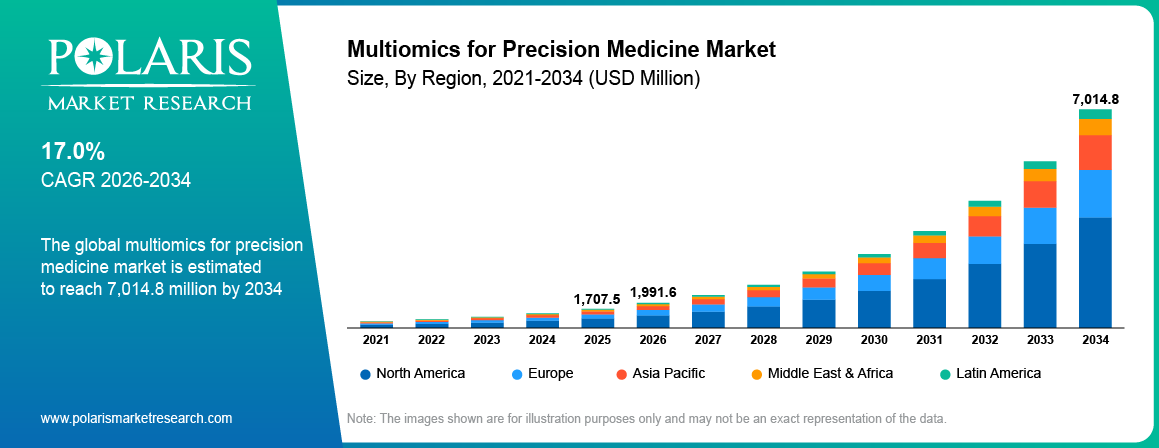
Source: Polaris Market Research Analysis
Large public datasets are reducing part of the discovery burden while increasing demand for analytical infrastructure. NIH data releases have identified 275 million previously unreported genetic variants from nearly 250,000 participants, while later All of Us releases expanded the resource to 1.3 billion genetic variants and introduced additional proteomic, RNA sequencing, and long-read genomic capabilities (Source: reliantmedicalgroup.org). Such datasets create requirements for secure cloud environments, biomarker validation, data harmonization, and analytical tools capable of translating population-level discoveries into precision-medicine applications.
Commercial growth will increasingly depend on evidence quality rather than data volume alone. Buyers place greater value on workflows that demonstrate reproducibility, maintain provenance, manage missing information, and connect molecular signatures with treatment response or prognosis. Vendors controlling multiple stages of the workflow can bundle instruments, reagents, software, and services, while specialized providers can compete by solving high-cost bottlenecks such as single-cell processing, spatial resolution, proteomic depth, or clinical interpretation.
Market Dynamics
Driver Impact Analysis
| Market Driver | Est. CAGR Impact | Geographic Relevance | Impact Timeline |
| Diverse linked cohorts | +4.2% | North America, Europe | Long-term structural |
| Integrated multiomic workflows | +3.8% | Global | Short- to medium-term |
| Governed health-data reuse | +2.0% | Europe; North America | Medium term, 2-4 years |
| Treatment-linked real-world datasets | +2.6% | North America; Europe | Short to medium term |
| Single-cell and spatial resolution | +1.9% | Research-intensive markets | Medium to long term |
Source: Polaris Market Research Analysis
Driver: Large, Diverse Patient Cohorts Strengthening Precision-Medicine Models
Large, diverse, linked cohorts are strengthening the statistical foundation for precision-medicine models. The All of Us program provides data from more than 747,000 participants, including more than 535,000 whole genomes, while its participant base includes substantial representation from communities historically underrepresented in biomedical research (Source: nih.gov). Broader representation matters as models developed from narrow populations lose performance when applied to different ancestry groups. Multiomics adds further biological context by connecting genomic risk with protein, RNA, metabolic, environmental, and longitudinal clinical signals. The resulting commercial demand extends into cohort curation, phenotype harmonization, biomarker validation, and clinical-grade interpretation.
Driver: Integrated Multiomics Workflows Reducing Operational Friction
Integrated workflows reduce the operational friction associated with adding molecular layers. Illumina's roadmap links genomics with spatial transcriptomics, single-cell analysis, CRISPR, methylation, and multimodal analytics, while its collaboration with Ovation involves a 25,000-patient GLP-1 dataset containing whole-genome and proteomic information (Source: illumina.com). Such workflows allow researchers to examine treatment response through several biological dimensions while reducing the number of disconnected analytical handoffs. The commercial implication is stronger demand for interoperable platforms, although buyers must also consider vendor concentration and ecosystem dependency.
Driver: Health-Data Regulation Creating Structured Pathways for Data Reuse
Health-data regulation is creating more structured pathways for the reuse of sensitive molecular and clinical information. Regulation (EU) 2025/327 entered into force in March 2025, with secondary-use provisions applying in stages from 2029 and genomic data provisions from 2031 (Source: health.ec.europa.eu). The framework creates a common structure for discovering, accessing, and processing health data, although privacy, authorization, and governance requirements remain. U.S. models use a different approach, including registered and controlled access tiers, institutional agreements, identity verification, and security controls.
Restraints: Gap Between Exploratory Association and Demonstrated Clinical Utility
The key restraint is the gap between exploratory association and demonstrated clinical utility. Multiomic models are affected by small cohorts, batch effects, missing information, tissue-access limitations, and changes in laboratory methods or patient populations. Although sequencing costs are declining, expenses for sample preparation, data storage, computing, validation, security, and clinical interpretation can remain high. Buyers therefore need to assess the total cost of implementing a multiomics solution, rather than focusing only on the cost per sample.
Opportunities: Disease-Specific Longitudinal Datasets Tied to Treatment Response
Disease-specific longitudinal datasets tied to treatment response represent a high-value opportunity. The Illumina-Tempus collaboration combines genomic AI with multimodal clinical data to generate evidence across disease areas, illustrating how molecular data can support biomarker hypotheses, treatment-routing approaches, and trial enrichment. Data assets become more valuable when consent, provenance, longitudinal follow-up, and permitted analytical use are clearly established.
Source: Polaris Market Research Analysis
Market Segment Analysis
The report analyzes the multiomics for precision medicine market across technology, component, application, omics type, end user and region.
Component Insights
Consumables hold the largest share of the component segment, valued at USD 512.1 million in 2025. Reagents, kits, and assay consumables represent recurring, per-sample spend across every molecular layer, from sequencing libraries to proteomic and metabolomic assay panels, making this the highest-volume, most consistently repurchased component of a multiomics workflow.
Instruments are projected to register the fastest growth, at a CAGR of 17.72%. Continued investment in sequencing platforms, mass spectrometry systems, and single-cell and spatial profiling instruments is expanding the installed base capable of generating multiomic data, supporting sustained capital equipment demand even as per-sample costs decline.
Omics Type Insights
Genomics leads the omics-type segment with the market size of USD 693.9 million in 2025. This is majorly due to its stable reference layer for inherited and somatic variation. Transcriptomics adds information about active gene expression, proteomics provides functional signals, metabolomics captures downstream biochemical states, and epigenomics provides information about regulatory changes. The growing ability to combine genomic variation and methylation in a single workflow illustrates the movement toward integrated molecular measurement.
Proteomics segment is projected to grow at a CAGR of 16.4% during the forecast period. This segment is gaining momentum as researchers seek functional evidence that can complement genomic findings. Illumina's NGS-based SomaSeq Discovery workflow measures 9,500 human protein targets, demonstrating how protein measurement can be connected to sequencing-based infrastructure. Greater proteomic depth can improve biomarker characterization and help explain differences between genomic risk and observed disease or treatment response.
Technology Insights
Bulk multiomics holds the largest size of USD 1,053 million in 2025 as it remains suitable for cohort-scale studies and provides an efficient approach to profiling larger populations. Its economics and established workflows support broad research programs where the primary objective is to identify associations across large sample sets.
Spatial multiomics is projected to grow at the fastest rate, at a CAGR of 17.46%, ahead of both bulk and single-cell approaches. These methods move analysis from an averaged tissue measurement toward individual cells and their spatial relationships. Such resolution can reveal cellular heterogeneity, resistant populations, and immune states that bulk measurements may obscure. Higher sample-processing, imaging, computational, and annotation requirements also make these workflows more specialized.
Application Insights
Oncology leads the application segment with the market size of USD 581.4 million in 2025. Cancer care already uses molecular subtyping, treatment selection, resistance monitoring, and biomarker assessment, creating several points at which additional molecular layers can influence decisions. Multiomic analysis can connect genomic alterations with expression, protein activity, tissue context, and treatment response.
Rare disease applications are growing strongly at a CAGR of 17.7% during the forecast period. They are positioned for strong growth as multiomic evidence can help resolve uncertain variants and connect genomic findings with RNA or protein-level effects. The approach is particularly relevant where conventional genomic interpretation leaves a substantial diagnostic gap and additional molecular evidence can clarify phenotype relationships.
End User Insights
Academic and research institutes represent the leading end-user group, holding a market share of 38.47% in 2025, reflecting their central role in generating and analyzing large-scale multiomic datasets across population studies and translational research programs. Pharmaceutical and biotechnology companies represent the second-largest group, at 36.03% share, applying multiomics to target discovery, trial stratification, resistance analysis, and biomarker strategy, giving them a direct commercial incentive to identify biological signals that improve development decisions and reduce clinical-program uncertainty.
Hospitals and clinical laboratories are positioned for strong growth as multiomics moves closer to clinical decision-making. This segment is expected to grow at a CAGR of 16.1% during the forecast period. These buyers require stronger validation, rapid turnaround, clinical-system integration, and interpretable reporting than exploratory research users. CROs and specialized service providers also benefit by supplying capabilities that organizations cannot economically build internally.
Market Segment Performance Summary
| Segment | Category | Base-Year Status | Key Driver |
| Consumables | Component | Largest share | Recurring per-sample reagent and assay spend |
| Instruments | Component | Fastest growing | Expanding sequencing and profiling infrastructure |
| Genomics | Omics Type | Largest share | Anchor reference layer |
| Transcriptomics | Omics Type | Fastest growing | Active gene expression signal |
| Bulk multiomics | Technology | Largest share | Cohort-scale economics |
| Spatial multiomics | Technology | Fastest growing | Heterogeneity and tissue-context resolution |
Source: Polaris Market Research Analysis
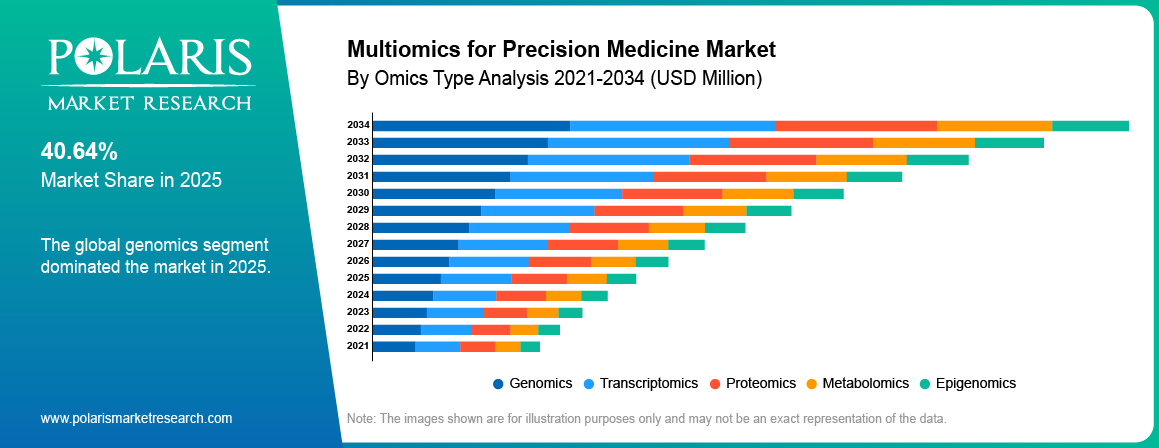
Source: Polaris Market Research Analysis
Regional Insights
North America Multiomics for Precision Medicine Market Trends
North America holds the dominant market share of 41.36% in Multiomics for Precision Medicine in 2025. The US combines large public cohorts, substantial biopharma activity, academic translational centers, and established sequencing infrastructure. The All of Us program now includes more than 535,000 whole genomes linked to nearly 482,000 EHRs, alongside proteomics and RNA sequencing (Source: nih.gov). The regional ecosystem includes Illumina, Tempus AI, Thermo Fisher Scientific, 10x Genomics, Bio-Techne, and specialized service providers. Clinical adoption, however, continues to require evidence, laboratory quality systems, reimbursement logic, and secure management of identifiable health data.
Europe Multiomics for Precision Medicine Market Insights
Europe represents the second largest market estimating a market size of USD 477.7 million in 2025. The market holds a significant share of the global market and is developing through a regulation-led model. The European Health Data Space entered into force in March 2025, created a framework for secondary use of health data with staged application for genomic information (Source: health.ec.europa.eu). Germany, France, the Netherlands, Denmark, Sweden, and the UK maintain strong genomics and translational research capabilities. Vendors operating in Europe must account for GDPR, national implementation requirements, data permits, and interoperability rather than treating the region as a single procurement environment.
Asia Pacific Multiomics for Precision Medicine Market Outlook
Asia Pacific is projected to register the fastest CAGR of 17.6% during the forecast period. China, Japan, South Korea, Singapore, Australia, and India combine large populations with expanding sequencing and digital-health infrastructure. China offers cohort scale and manufacturing capabilities but operates under human genetic resource and data controls that influence cross-border projects. Japan emphasizes regulated clinical evidence, Singapore functions as a concentrated research and biopharma hub, and India's opportunity is linked to population diversity, expanding hospital networks, and cost-sensitive service models.
Latin America Multiomics for Precision Medicine Market Assessment
Latin America is growing steadily in the multiomics for precision medicine market. Brazil and Mexico represent important markets through academic medical centers, diagnostic networks, and biopharma research. Population diversity provides an opportunity for ancestry-aware precision models, although fragmented records, variable reimbursement, and limited access to advanced assays restrict routine clinical deployment. Centralized services, research partnerships, and disease-focused cohorts provide practical entry routes for vendors without requiring broad instrument placement.
Middle East and Africa Multiomics for Precision Medicine Market Analysis
The Middle East and Africa represent a moderate share of the global market. Saudi Arabia, the UAE, Qatar, South Africa, and selected research hubs are developing genomics and digital-health capabilities. National genome programs can accelerate infrastructure and cohort recruitment, while rare-disease requirements create specific diagnostic opportunities. Commercial activity remains concentrated in major centers, making local governance agreements, trained bioinformatics teams, and long-term sample and data stewardship important market-entry considerations.
Regulatory Scenario
| Region or Country | Policy Environment | Key Regulations or Programs | Market Implication | Trend |
| US | Favorable | 21st Century Cures Act; All of Us controlled data tiers | Large governed cohort and translational infrastructure | Expanding |
| European Union | Developing | Regulation (EU) 2025/327; EHDS | Staged cross-border secondary use | Developing |
| United Kingdom | Favorable | UK GDPR; national genomic medicine infrastructure | Population genomics and clinical networks | Expanding |
| Japan | Favorable | PMD Act and national genomic initiatives | Evidence-focused clinical adoption | Stable |
| China | Restrictive | Human Genetic Resources Regulation; data rules | Large cohorts with cross-border controls | Uncertain |
| Singapore | Favorable | National precision medicine programs | Regional translational hub | Expanding |
| India | Developing | Digital Personal Data Protection Act 2023 | Large diverse populations; evolving governance | Developing |
| Saudi Arabia/UAE | Developing | National genome and digital-health programs | Concentrated public investment | Early stage |
Source: Polaris Market Research Analysis and Government and regulatory body publications.
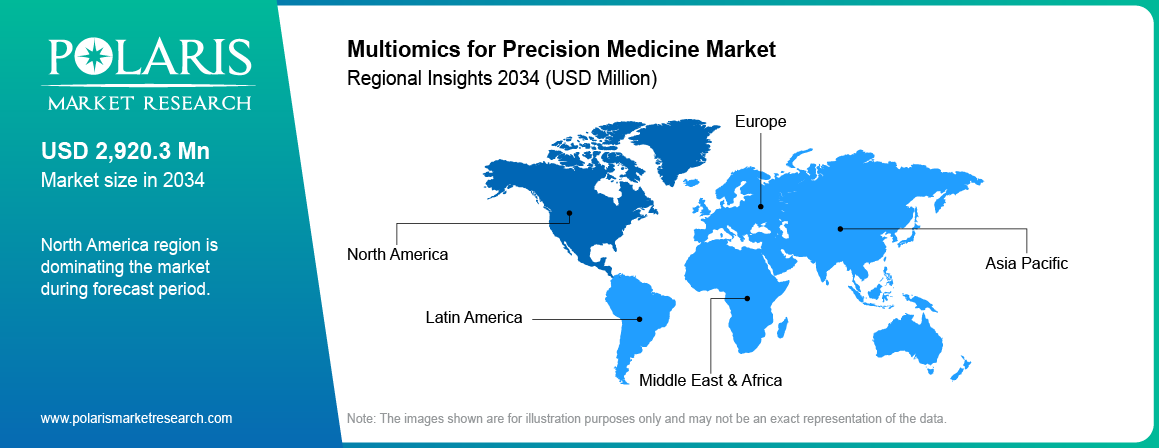
Source: Polaris Market Research Analysis
Multiomics for Precision Medicine Market Competitive Landscape
Competition spans sequencing companies, single-cell and spatial specialists, proteomics suppliers, bioinformatics platforms, clinical-data companies, and specialized multiomics service providers. Illumina uses its sequencing installed base to extend into protein measurement, methylation, single-cell workflows, and multimodal analysis. Thermo Fisher Scientific competes through instruments, reagents, mass spectrometry, and laboratory reach, while 10x Genomics focuses on single-cell and spatial workflows. Bio-Techne adds strength in protein and spatial biology tools.
Data assets represent a separate competitive dimension. Tempus AI combines multimodal clinical data and AI capabilities, while Ovation.io provides a longitudinal clinical biobank. These assets cannot be replicated simply by expanding an assay portfolio because their value depends on consent, provenance, clinical linkage, follow-up, and permitted analytical use. Service providers such as Psomagen compete through sequencing and multiomics services, study design, sample handling, turnaround, and bioinformatics.
Competitive Landscape Snapshot
| Company | Est. Market Position | Primary Strength | Geographic Focus | In Report |
| Illumina | Top 3 | Sequencing installed base and connected multiomics | Global | Yes |
| Thermo Fisher Scientific | Top 5 | Broad instruments, MS and reagents | Global | Yes |
| F. Hoffmann-La Roche | Top 5 | Companion diagnostics and AI-driven digital pathology | Global | Yes |
| QIAGEN | Top 10 | Multiomics sample prep, sequencing panels, and bioinformatics software | Global | Yes |
| Agilent Technologies | Top 10 | Genomics and proteomics instrumentation | Global | Yes |
| 10x Genomics | Top 10 | Single-cell and spatial workflows | North America; Europe; Asia | Yes |
| Tempus AI | Top 10 | Multimodal clinical data and AI | US | Yes |
| Bio-Techne | Top 10 | Protein and spatial biology tools | Global | Yes |
| BD | Top 10 | Diagnostics instruments and precision-medicine sample workflows | Global | Yes |
| Oxford Nanopore Technologies | Niche leader | Long-read sequencing for multiomic profiling | Global | Yes |
| SOPHiA GENETICS | Niche leader | AI-driven genomic analytics and companion diagnostics | US; Europe | Yes |
| Bruker | Niche leader | Mass spectrometry and spatial biology instrumentation | Global | Yes |
| Ovation.io | Niche leader | Longitudinal clinical biobank | US | Yes |
| Psomagen | Regional leader | Sequencing and multiomics services | North America; Asia | Yes |
Source: Company publications and Polaris Market Research Analysis
Multiomics for Precision Medicine Market Technology and Innovation Landscape
Technology development is moving toward higher dimensionality, lower sample consumption, and tighter integration between measurement and interpretation. Illumina's 5-base workflow combines genomic variation and methylation, while NGS-based proteomics provides access to 9,500 protein targets through a sequencing-based readout. These developments reduce some of the operational barriers associated with adding molecular layers.
Technology and Innovation Landscape
| Technology | Adoption Stage | Key Development | Market Impact |
| Connected multimodal analytics | Growing deployment | Illumina expanded Connected Multiomics in Feb. 2025 | Interpretation throughput |
| NGS-based proteomics | Early commercial deployment | 9,500-protein SomaSeq Discovery workflow | Assay breadth |
| 5-base genomic + methylation | Early commercial deployment | Illumina 5-base launch, Oct. 2025 | Sample efficiency |
| Single-cell and spatial omics | Growing deployment | Roadmap expansion, Feb. 2025 | Heterogeneity resolution |
| Treatment-linked real-world multiomics | Pilot or early research | 25,000-patient GLP-1 dataset, May 2025 | Response stratification |
Source: Polaris Market Research Analysis.
Single-cell and spatial systems change the unit of analysis from a mixed tissue sample to individual cells and their locations. This additional resolution can reveal resistant cell populations, immune states, and tissue relationships that bulk measurements can obscure. The resulting datasets are larger and more specialized, shifting part of the market bottleneck from measurement toward computation, annotation, and validation.
Premium Insights
Use Case Analysis
| Buyer or Investor Type | Primary Use Case | Key Insight Sought | Decision Horizon |
| Biopharma translational medicine leaders | Trial stratification and biomarker strategy | Evidence that a signature changes enrollment or response prediction | 2–5 years |
| Hospital molecular tumor boards | Complex treatment decisions | Validated, interpretable multiomic report | 1–3 years |
| Rare-disease diagnostic networks | Clarify uncertain variants | RNA/protein evidence tied to phenotype | 1–3 years |
| Oncology-focused PE and venture funds | Platform diligence | Cohort rights, validation and recurring revenue | 3–7 years |
| Population-health programs | Risk stratification and disparity analysis | Representative cohorts and longitudinal outcomes | 5–10 years |
Source: Polaris Market Research Analysis.
Biopharma translational teams use multiomics to identify targets, define responder populations, and develop biomarker strategies. Hospitals use integrated evidence to support complex treatment decisions, while rare-disease networks can combine genomic findings with RNA or protein evidence to clarify uncertain variants. Investors focus more heavily on cohort rights, validation, recurring revenue, and the ability to convert proprietary data into a defensible evidence asset.
Cost and Pricing Benchmarking
| Product or Service Type | Est. Price Range (USD) | Key Cost Driver | Complexity or Tier |
| Bulk genomic + transcriptomic research package | Not publicly verified | Sample count, depth, extraction and analysis | Research tier |
| Single-cell multiomics project | Not publicly verified | Cell recovery, library type, sequencing depth | Advanced tier |
| Spatial transcriptomics project | Not publicly verified | Slide area, resolution, imaging and annotation | Premium tier |
| NGS proteomics study | Not publicly verified | Protein panel, sample count and sequencing | Advanced tier |
| Clinical interpretation and validation | Not publicly verified | Evidence level, reporting and regulatory controls | Clinical tier |
Source: Public pricing sources, company filings, and Polaris Market Research Analysis.
Forward Outlook
The next stage of the market will be determined increasingly by evidence density rather than data volume alone. Cohorts combining multiple molecular layers with standardized clinical histories, treatment exposure, and repeated outcomes can generate greater commercial value because the same infrastructure can support successive biomarker and therapeutic programs. The continuing expansion of All of Us illustrates how molecular and clinical layers can accumulate within a common research resource.
Reusable infrastructure will be particularly important. Validated pipelines, governed data models, and disease-specific reference datasets can support multiple studies and improve the economics of subsequent projects. Vendors relying exclusively on one-off custom analyses may face margin pressure unless project knowledge is converted into software, standardized services, or proprietary datasets.
Key Players in the Multiomics for Precision Medicine Market
- Agilent Technologies, Inc.
- BD (Becton, Dickinson and Company)
- Bio-Techne Corporation
- Bruker Corporation
- F. Hoffmann-La Roche Ltd
- Illumina, Inc.
- Ovation.io, Inc.
- Oxford Nanopore Technologies plc
- Psomagen, Inc.
- QIAGEN N.V.
- SOPHiA GENETICS SA
- Tempus AI, Inc.
- Thermo Fisher Scientific Inc.
- 10x Genomics, Inc.
Multiomics for Precision Medicine Market Industry Developments
- August 4, 2026: SOPHiA GENETICS entered a global collaboration with AstraZeneca to develop, validate, and deploy two companion diagnostics supporting precision oncology therapies, covering solid tumor and hematological oncology applications (Source: prnewswire.com).
- August 2026: Metabolon launched the Peak Science Grant Program, providing researchers with access to metabolomics analysis, bioinformatics tools, and scientific expertise (Source: metabolon.com).
- May 7, 2026: Roche entered a definitive agreement to acquire PathAI for up to USD 1.05 billion, combining PathAI's AI-driven digital pathology platform with Roche's companion diagnostics and oncology portfolio to accelerate precision cancer diagnosis (Source: roche.com).
Global Multiomics for Precision Medicine Market Report Segmentation
By Component Outlook (Revenue, USD Million, 2021–2034)
- Instruments
- Consumables
- Software
- Services
- Datasets
By Omics Type Outlook (Revenue, USD Million, 2021–2034)
- Genomics
- Transcriptomics
- Proteomics
- Metabolomics
- Epigenomics
By Technology Outlook (Revenue, USD Million, 2021–2034)
- Bulk Multiomics
- Single-Cell Multiomics
- Spatial Multiomics
- Other
By Application Outlook (Revenue, USD Million, 2021–2034)
- Oncology
- Rare Disease
- Cardiometabolic
- Neurology
- Other
By End User Outlook (Revenue, USD Million, 2021–2034)
- Pharmaceutical & Biotechnology Companies
- Academic & Research Institutes
- Hospitals & Clinical Laboratories
- Contract Research Organizations & Service Providers
- Other
By Regional Outlook (Revenue, USD Million, 2021–2034)
North America
- US
- Canada
Europe
- Germany
- France
- UK
- Italy
- Spain
- Netherlands
- Rest of Europe
Asia Pacific
- China
- Japan
- India
- South Korea
- Taiwan
- Australia
- Rest of Asia Pacific
Latin America
- Brazil
- Mexico
- Argentina
- Rest of Latin America
Middle East & Africa
- Saudi Arabia
- UAE
- South Africa
- Rest of Middle East & Africa
Multiomics for Precision Medicine Market Report Scope
| Report Attributes | Details |
| Market Size in 2025 | USD 1,707.5 Million |
| Market Size in 2026 | USD 1,991.6 Million |
| Revenue Forecast by 2034 | USD 7,014.8 Million |
| CAGR | 17.0% from 2026–2034 |
| Base Year | 2025 |
| Historical Data | 2021–2024 |
| Forecast Period | 2026–2034 |
| Quantitative Units | Revenue in USD Million and CAGR |
| Report Coverage | Revenue Forecast, Growth Factors, Competitive Landscape, Industry Trends, and Strategic Analysis |
| Segments Covered | By Technology, By Component, By Application, By Omics Type, By End User and By Region |
| Regional Scope | North America, Europe, Asia Pacific, Latin America, Middle East & Africa |
| Competitive Landscape | Company Profiling, Product Benchmarking, Financial Analysis, Market Developments, and Strategic Initiatives |
| Report Format | PDF + Excel |
| Customization | Available by Country, Region, and Segment |
Source: Polaris Market Research Analysis
Multiomics for Precision Medicine Market – Research Methodology Overview
The research methodology for the Multiomics for Precision Medicine Market follows Polaris Market Research's structured, multi-stage process, combining primary and secondary research with top-down and bottom-up estimation to deliver a validated market size and forecast through 2034.
The project began with defining market scope, distinguishing clinically-oriented multiomics workflows from broader multiomics research, and aligning segmentation across component, omics type, technology, application, end user, and region against the 2020-2024 historical period and 2025 base year. Secondary research formed the primary data foundation, drawing on company filings and annual reports from sequencing, proteomics, and clinical-data vendors, government and public health databases including the NIH All of Us Research Program, regulatory publications such as the European Health Data Space and 21st Century Cures Act, and paid life sciences intelligence platforms, contributing roughly 60-70% of total data inputs. This was supplemented by primary research, interviews with biopharma translational medicine leaders, hospital molecular tumor board representatives, and specialized service providers, providing 30-40% validation weight and grounding the analysis in actual purchasing criteria rather than published estimates alone.
Collected data was structured and standardized into a consistent format across all six segments and five regions, with values converted to USD million and cross-checked for consistency, maintaining a variance threshold below 5% wherever inputs from multiple sources overlapped.
Market sizing combined two approaches. The top-down method began with total addressable spend across genomics, proteomics, and clinical data infrastructure, then narrowed the scope by applying precision-medicine-relevant penetration rates and splitting the result across regions and segments. The bottom-up method independently built the market from company-level data across leading sequencing, instrumentation, software, and service providers, aggregating segment-level revenues and adjusting for coverage gaps using industry benchmarks. Both approaches were reconciled within a ±5-10% variance range to arrive at the final market size.
Forecasting incorporated historical adoption patterns, clinical evidence thresholds, and regulatory timelines, including staged secondary-use provisions under the European Health Data Space, validated against supply-side inputs on instrument and reagent capacity and demand-side inputs on biopharma and hospital investment activity.
All estimates were validated through a triangulation framework, cross-verifying company-level data, primary interview inputs, and secondary benchmarks, with segment totals checked against the overall market structure and regional estimates aligned to the global total.
Research Methodology Phases
| Research Phase | Key Activities | Data Sources |
| Project setup & secondary research | Scope definition, segmentation alignment, review of vendor filings and public health databases | Company filings, NIH and EHDS publications, life sciences intelligence platforms |
| Primary research | Interviews with biopharma, hospital, and service-provider stakeholders | Translational medicine leaders, molecular tumor boards, specialized providers |
| Market sizing | Top-down and bottom-up estimation, reconciled within ±5-10% variance | Company revenues, penetration rates, regional and segment splits |
| Forecasting & validation | Triangulation across company, primary, and secondary data | Clinical adoption trends, regulatory timelines, capacity signals |
Source: Polaris Market Research Analysis
Multiomics for Precision Medicine Market FAQ's
The market was valued at USD 1,991.6 million in 2026 and is projected to grow at a CAGR of 17.0% through 2034.
Genomics identifies molecular variation, while RNA, proteins, metabolites, methylation, and spatial information can show pathway activity, functional effects, and biological context.
Oncology leads the application segment, holding a 34.05% share in 2025.
North America led the market in 2025. The US has a large evidence-generation base, including more than 747,000 All of Us participants.
Instruments are projected to register the fastest growth, at a CAGR of 17.72% during the forecast period.
Regulation determines how vendors access, process, secure, and reuse sensitive molecular and clinical information.
Key barriers include data rights, sample quality, cross-site reproducibility, incomplete clinical annotation, computational requirements, cybersecurity, and uncertain reimbursement.
Important criteria include cohort access, analytical validity, external validation, workflow integration, turnaround time, interpretability, security, and the ability to connect molecular results with clinical outcomes.
Academic and research institutes lead the end-user segment, holding 38.47% share in 2025, narrowly ahead of pharmaceutical and biotechnology companies at 36.03%.
Genomics leads the omics-type segment with a market size of USD 693.9 million in 2025. Bulk multiomics leads the technology segment, valued at USD 1,052.8 million in 2025.
Download Sample Report of Multiomics for Precision Medicine Market
Please fill out the form to request a customized copy of the research report.


