
Exosome Therapeutics Market Size, Share, and Forecast 2026 to 2034
REPORT DETAILS
Exosome Therapeutics Market Summary
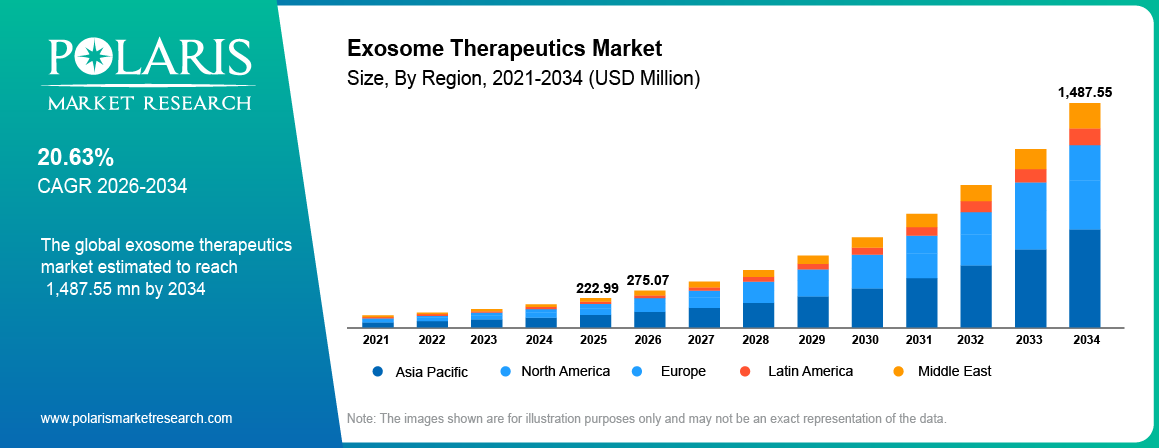
The global exosome therapeutics market size was valued at USD 222.99 million in 2025. It is projected to grow from USD 275.07 million in 2026 to USD 1,487.55 million by 2034, exhibiting a CAGR of 20.63% during 2026–2034. Growth is driven by late-stage clinical progress, active CBER regulatory review, engineered exosome platforms, and expanding therapeutic applications.
Market Statistics
Exosome Therapeutics Market Key Takeaways
- North America dominated the exosome therapeutics market with 41.72% share in 2025, driven by advanced clinical programs and strong regulatory activity.
- Asia Pacific is expected to register the fastest growth at 25.47% CAGR during 2026–2034, supported by expanding clinical research and biotechnology activity.
- Mesenchymal Stem Cell Derived accounted for 46.38% share in 2025, supported by its broad clinical pipeline and regenerative medicine applications.
- Cardiosphere Derived Cell is expected to register the fastest growth at 23.72% CAGR during 2026 to 2034, supported by Deramiocel, whose PDUFA date was extended to November 22, 2026 after the FDA accepted a major BLA amendment with 24-month HOPE-3 data.
- Cardiovascular & Muscular Disease accounted for 25.74% share in 2025, owing to increasing clinical investment and the development of Deramiocel for Duchenne muscular dystrophy.
- Inhaled/Localized is expected to register the fastest growth at 23.48% CAGR during 2026–2034, supported by expanding respiratory and targeted delivery applications.
Note: Figures and projections outlined in this report are the result of Polaris Market Research’s proprietary analytical processes, grounded in the latest available datasets and market observations.
What is Exosome Therapeutics Market?
The exosome therapeutics market covers therapeutic products based on exosomes and other extracellular vesicles. An exosome-based therapy may work as a direct biologic or as a delivery system for genetic, protein, and other therapeutic payloads. The market covers clinical-stage products through potential commercial approval. It forms the therapeutic segment of the broader exosomes market, while research reagents, diagnostic biomarkers, and topical cosmetic products remain outside the core scope. Exosome therapies are being studied as cell-free treatment approaches within the regenerative medicine market and across drug delivery, immune modulation, and other therapeutic areas.
The market includes mesenchymal stem cell derived exosomes, cardiosphere derived cell exosomes, and engineered exosome platforms. The major applications include cardiovascular and muscular diseases, respiratory and acute care, infectious diseases, vaccinology and neurodegenerative diseases. Hospitals and specialty treatment facilities are key locations for therapy and clinical care. Contract development and manufacturing organizations support product development, manufacturing, testing, and scale-up activities, building on capabilities from the cell therapy manufacturing market. Advances in exosome isolation, purification, characterization, and cargo loading are also expanding the range of therapeutic products under development.
Regulatory development is central to the market. Therapeutic exosome products require formal regulatory review before commercial distribution. The FDA IND clearance process permits clinical investigation of products that are not yet approved. The market also includes programs moving through the CBER regulatory pathway. Clinical-stage candidates like Deramiocel and ExoFlo are evidence of the development of different therapeutic approaches. Clinical advancement and potential commercialization still require consistency in manufacturing, potency testing, product characterization, quality control and safety assessment.
Advances in engineered delivery platforms, growing clinical development, and expanding applications across multiple disease areas are driving the exosome therapeutics market. Therapeutic exosomes are moving into later stages of development with clinical programs such as Deramiocel and ExoFlo. Engineered exosome platforms are also expanding applications to targeted RNA, protein, and small molecule delivery. These advances are broadening the potential application of exosomes in muscular diseases, respiratory conditions, infectious diseases, vaccinology and genetic medicine. Greater investment in manufacturing capabilities, clinical studies, and regulatory development is also contributing to market expansion.
Drug Pipeline Analysis
The exosome therapeutics drug pipeline includes candidates across regenerative medicine, respiratory disease, vaccinology, wound healing, and genetic medicine. Deramiocel (CAP-1002) represents one of the most advanced programs in the pipeline. The candidate is an allogeneic cardiosphere-derived cell therapy with an exosome-mediated mechanism of action, developed for Duchenne muscular dystrophy. Its FDA review, with a PDUFA date of November 22, 2026, is the key near-term regulatory milestone for the broader market.
Deramiocel's Phase 3 HOPE-3 program provides important clinical evidence for the platform. HOPE-3 met its primary endpoint with a 54% slowing of upper limb (PUL v2.0) decline (p=0.029) and showed a 91% slowing of left ventricular ejection fraction decline (p=0.041) versus placebo. Other programs are also progressing. ExoFlo is in Phase 3 for acute respiratory distress syndrome. ILIAS Biologics completed Phase 1 of ILB-202. Capricor's StealthX entered Phase 1 in 2025, but the program was placed on hold in August 2026. Evox's ExoEdit programs remain preclinical and focus on CRISPR-based gene editing.
| Candidate | Company | Mechanism | Phase | Status |
| Deramiocel (CAP-1002) | Capricor Therapeutics | Cardiosphere-derived cells; exosome-mediated immunomodulation | BLA under FDA review | AdComm vote 3–9 (July 2026); PDUFA extended to November 22, 2026 |
| ExoFlo | Direct Biologics | MSC-derived extracellular vesicles, anti-inflammatory | Phase 3 | EXTINGUISH ARDS trial actively enrolling |
| StealthX (vaccine candidate) | Capricor Therapeutics | Engineered exosomes displaying viral surface proteins | Phase 1 | Dosed August 2025 (Project NextGen); on hold since August 2026 |
| ExoEdit programs (MSH3, ATXN2) | Evox Therapeutics | Exosome delivery combined with CRISPR-based gene editing | Preclinical | Advancing toward IND for neurodegenerative targets |
| AGLE-102 | Aegle Therapeutics | MSC-derived exosomes for wound healing | Phase 1/2a | Evaluated in dystrophic epidermolysis bullosa wounds |
| ILB-202 and engineered exosome pipeline | ILIAS Biologics | srIκB protein delivered via EXPLOR-engineered exosomes | Phase 1 completed | Phase 1b/2a IND planned; AKI, sepsis, preterm labor |
Source: Polaris Market Research Analysis
Deramiocel's development has broader implications for the category because a regulatory precedent could provide greater clarity for other clinical-stage exosome programs. The exosome-based therapy field includes a broad group of clinical-stage programs, although the maturity and mechanisms differ substantially across candidates. This makes regulatory progress, manufacturing consistency, potency testing, and clinical validation important factors for future pipeline advancement.
Market Dynamics
Driver Impact Analysis
| Driver / Opportunity | Impact on CAGR | Timeframe | Analysis |
| Driver: Advancing Regulatory Development of Deramiocel | High (+) | Short term (2026–2027) | BLA under CBER review; PDUFA extended to November 22, 2026; first approval would set CMC and potency precedent |
| Driver: Expansion of Engineered Exosome Platforms | High (+) | Medium to long term | ExoEdit (CRISPR) and Rett syndrome collaboration; ILB-202 Phase 1 completed; StealthX vaccine Phase 1 (on hold) |
| Opportunity: Development of a Regulatory Precedent | High (+) | Medium term (2027–2030) | First exosome-mediated approval would clarify CMC, potency, and evidence requirements for follow-on programs |
| Opportunity: Growth of Respiratory and Acute Care Applications | Medium (+) | Medium to long term | ExoFlo Phase 3 ARDS trial with RMAT; nebulized MSC-derived exosomes for asthma and COPD in Asia |
Source: Polaris Market Research Analysis
Driver: Advancing Regulatory Development of Deramiocel
Regulatory progress for Deramiocel is driving development activity in the exosome therapeutics market. The candidate's BLA for Duchenne muscular dystrophy is under CBER review. In August 2026, the FDA accepted Capricor's major BLA amendment with 24-month HOPE-3 open-label extension data and extended the PDUFA date to November 22, 2026. More regulatory development could result in more clearly defined requirements for manufacture, potency testing, clinical evidence and regulatory submissions. These developments are improving visibility into the extracellular vesicle drug pipeline and may assist other developers in planning clinical programs, manufacturing strategies and regulatory submissions for future therapeutic candidates (Source: BioPharm International).
Driver: Expansion of Engineered Exosome Platforms
The development of engineered exosome technologies is expanding the application scope of the market outside the conventional regenerative medicine. Capricor Therapeutics dosed the first subjects in a Phase 1 clinical trial of its StealthX exosome-based vaccine in August 2025 as part of the NIAID-funded Project NextGen program. Evox Therapeutics is developing ExoEdit, a CRISPR-based gene modification system that is delivered in exosomes. ILIAS Biologics completed a Phase 1 trial of ILB-202, an engineered exosome loaded with the anti-inflammatory protein srIκB through its EXPLOR platform. These advances are expanding the utility of the engineered exosome platform in vaccinology, genetic conditions, neurodegenerative diseases and targeted therapeutic delivery. The larger pool of applications is creating new development opportunities and increasing the potential for use of exosome technologies across multiple therapeutic areas (Source: Capricor Therapeutics).
Restraint: Lack of Standardized Manufacturing and Potency Frameworks
Lack of standardized manufacturing and potency requirements is limiting the development of exosome therapeutics. Exosome products are different in source cells, production methods, cargo composition, purification processes and characterization methods. These differences pose challenges in product comparison, quality assessment, and consistency of processes across clinical programs. Developers must therefore build candidate-specific manufacturing processes and potency assays. The FDA's July 2025 Complete Response Letter for Deramiocel, which flagged CMC deficiencies, shows how these gaps can delay approval. Moving from clinical batches to commercial quantities also poses additional challenges under the CBER regulatory pathway that could impact development timelines and commercialization plans.
Opportunity: Development of a Regulatory Precedent
The first approval of an exosome-mediated therapeutic would establish an important regulatory precedent for the industry. Such a precedent is expected to provide developers with clearer information on manufacturing requirements, potency testing, clinical evidence, and regulatory submissions. Greater clarity reduces uncertainty for companies developing new exosome-based therapy candidates and improves investment visibility across early-stage programs. It also opens up opportunities for partnerships between biotechnology companies and manufacturing providers. Clearer requirements after FDA IND clearance mean that more candidates can enter clinical development and more therapeutic programs can move forward toward potential commercialization.
Opportunity: Growth of Respiratory and Acute Care Applications
The exosome therapeutics market is witnessing new opportunities with the increase in demand for respiratory and acute care applications. In February 2026 Alps Group announced a potential pipeline expansion in nebulized hUCMSC-derived exosome therapy for asthma and COPD following publication of preliminary clinical case findings. Clinical development in this area is expanding the application base beyond muscular and regenerative diseases. Greater focus on respiratory conditions may also increase demand for inhaled and localized administration. These developments may create new opportunities for MSC-derived exosome therapies in acute inflammatory and respiratory applications and expand the clinical use of extracellular vesicle technologies (Source: ALPS Group).
Exosome Therapeutics Market Segmentation Analysis
The report provides a comprehensive analysis of the exosome therapeutics market by source, application, route of administration, end use, and region to identify leading market segments and high-growth opportunities.
By Source
The mesenchymal stem cell derived segment held the 46.38% share in 2025, making it the leading source category in the exosome therapeutics market report. The segment includes candidates such as ExoFlo and represents a broad portion of the current clinical pipeline. MSC-derived exosomes draw on established cell sourcing from the stem cell market and are being evaluated across inflammatory, respiratory, regenerative, and other therapeutic applications. The cardiosphere derived cell segment includes Deramiocel and represents a more advanced clinical pathway. Other and engineered sources include StealthX and ExoEdit. These platforms expand exosome applications into vaccine development, gene editing, and targeted therapeutic delivery across different disease areas.
The cardiosphere derived cell segment is expected to register the fastest growth at 23.72% CAGR during 2026–2034, driven by the advanced development of Deramiocel for Duchenne muscular dystrophy. Deramiocel represents an important clinical program within this source category and provides greater visibility to cardiosphere-derived cell exosome technology. The other and engineered source segment is also expanding through the engineered exosome platform approach. Evox is developing ExoEdit for CRISPR-based gene editing and ILIAS Biologics has completed Phase 1 of ILB-202, while Capricor placed StealthX on hold in August 2026. The therapeutic uses of these programs may not be restricted to the field of regenerative medicine.
By Application
The cardiovascular and muscular disease segment held the 25.74% share in 2025, making it the leading application category in the exosome therapeutics market. The segment is anchored by Deramiocel, which is being developed for Duchenne muscular dystrophy. The program has progressed through multiple clinical stages and includes evaluation of skeletal and cardiac muscle outcomes. Respiratory and acute care is another important application area. Direct Biologics is developing ExoFlo in the Phase 3 EXTINGUISH ARDS trial for hospitalized adults with moderate to severe acute respiratory distress syndrome. These programs are extending the use of exosome-based therapy to muscular, cardiac, inflammatory and respiratory diseases.
The respiratory and acute care segment is expected to witness highest growth at a CAGR of 25.36% during 2026-2034 owing to development of exosome therapies for acute inflammatory and respiratory conditions. ExoFlo holds FDA RMAT designation, and nebulized MSC-derived exosome programs for asthma and COPD are emerging in Asia. Clinical progress in this area is expanding the application base beyond muscular diseases. It is also creating opportunities for inhaled and localized administration. Further clinical validation may increase demand for MSC-derived exosome therapies across respiratory and acute care applications.
By Route of Administration
In terms of administration route, the intravenous segment occupied 61.84% of the market in 2025, leading the administration routes in the current clinical pipeline. Both Deramiocel and the extracellular vesicle drug ExoFlo are administered intravenously. The route provides for systemic delivery for applications in multiple tissue or organ systems. The inhaled and localized segment is expected to grow at the fastest CAGR of 23.48% during the forecast period of 2026-2034. Site specific delivery research and respiratory programs are the driving force behind the demand for alternative delivery methods.
By End Use
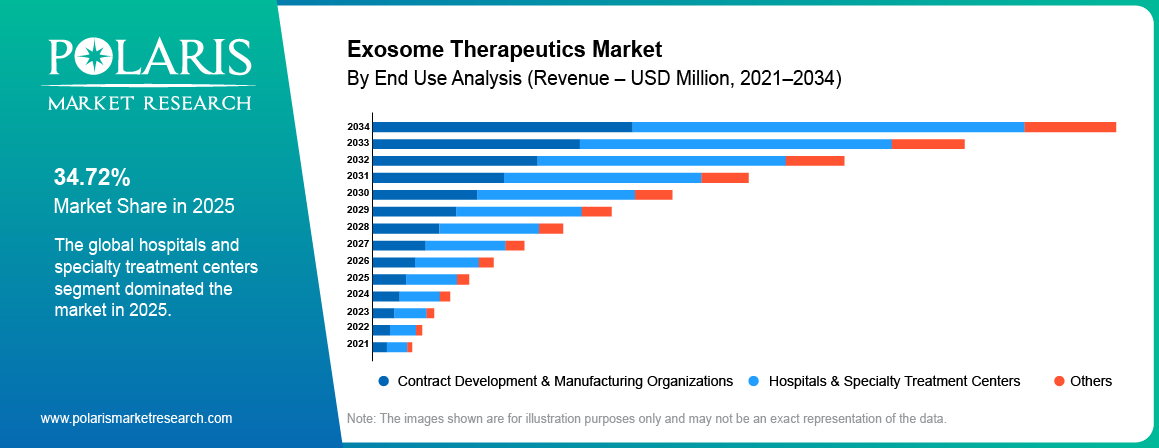
The leading end use category was the hospitals and specialty treatment centers segment with a 34.72% share in 2025. Most exosome therapeutic candidates are still in clinical development and require institutional supervision for administration. Hospitals have specialized facilities for treatment, monitoring of patients, clinical trial procedures and follow up. Contract development and manufacturing organizations are expected to register the fastest growth at 24.18% CAGR during 2026–2034. Rising clinical development activity under the CBER regulatory pathway is creating demand for specialized GMP manufacturing, process development, quality testing, and scale-up services, in line with growth in the advanced therapy medicinal products CDMO market.
Regional Analysis
North America Exosome Therapeutics Market Size and Share
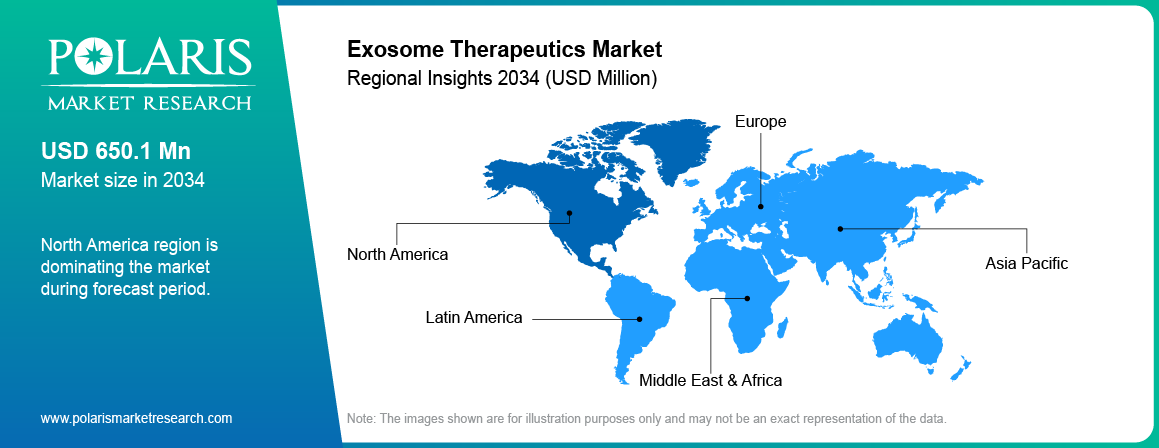
North America exosome therapeutics market accounted for 41.72% of the global market in 2025, driven by advanced clinical development and regulatory activity in the US. Capricor Therapeutics, Direct Biologics, and Aegle Therapeutics are developing therapeutic exosome candidates across cardiovascular, muscular, respiratory, and wound-healing applications. In November 2025, Capricor Therapeutics demonstrated a scalable method to load therapeutic siRNA and PMO into exosomes to allow for the production of larger batches for potential clinical development, although Capricor later placed its exosome platform programs on hold pending regulatory clarity. The US is also a major hub for regulatory development through the FDA and CBER. Key programs in the regional pipeline are Deramiocel, ExoFlo and AGLE-102. Clinical research and investment in extracellular vesicle technologies is expanding the base of therapeutic applications. These developments are enhancing the importance of North America in the global exosome therapeutics market analysis and opening up possibilities for further clinical and commercial development (Source: MedPath).
Asia Pacific Exosome Therapeutics Market Size and Share
Asia Pacific exosome therapeutics market is projected to grow at the fastest CAGR of 25.47% during the forecast period, driven by expanding biotechnology research and clinical development across South Korea, China, India, and Japan. In January 2026, Pandorum Technologies partnered with Nucelion Therapeutics to expand GMP-compliant manufacturing of exosome-based therapies for ocular diseases across the APAC region. Shanghai Ruijin Hospital and other Chinese hospital groups are investigating inhalation therapy with MSC-derived exosomes. These actions are propelling regional development in respiratory applications and extracellular vesicle therapies and engineered delivery systems. The Asia Pacific region is predicted to contribute more to the global pipeline, with further clinical research and biotechnology investment, and to underpin the exosome therapeutics industry forecast (Source: Times of India).
Europe Exosome Therapeutics Market Size and Share
In 2025, Europe exosome therapeutics market accounted for 24.18% of the global market due to the increase in biotechnology research and development of advanced extracellular vesicle technologies. In June 2026, Evox Therapeutics collaborated with the Rett Syndrome Research Trust to assess its ExoEdit exosome-based platform for gene modification therapies for Rett syndrome. These developments are broadening the regional pipeline for targeted exosome therapeutics and gene-editing applications. Research capabilities throughout the region are also supporting the development of advanced therapeutic delivery systems. Further progress in the engineered exosome platform segment is expected to expand clinical research and create opportunities across neurodegenerative and other targeted treatment applications (Source: Evox Therapeutics).
Latin America Exosome Therapeutics Market Size and Share
Latin America exosome therapeutics market accounted for 4.52% of the global market in 2025, reflecting its position within the global therapeutic exosome landscape. Regional opportunities are linked to the development of clinical research, biotechnology capabilities, specialist treatment centers, and manufacturing infrastructure. Market expansion across individual countries may also be influenced by clinical trial activity and regulatory development. As exosome-based therapies progress through clinical development, investment in specialized treatment infrastructure could enable regional adoption. The enhancement in research capabilities and manufacturing capacity could further propel the participation in the global market. These factors are expected to influence the future contribution of the region to the exosome therapeutics market share during the forecast period.
Middle East & Africa Exosome Therapeutics Market Size and Share
The Middle East & Africa exosome therapeutics market accounted for 3.95% of the global market in 2025, reflecting the region’s early-stage participation in clinical exosome development. Market development involves clinical research, investment in biotechnology, infrastructure for specialized treatment, and the development of regulations in individual countries. The expansion of research capabilities could open up opportunities for clinical evaluation of exosome-based therapies. Development of manufacturing capacity may also support future therapeutic applications and regional supply needs. As clinical programs advance globally, improvements in specialist healthcare infrastructure and biotechnology investment may shape regional participation. These factors are expected to influence the future exosome therapeutics market share across the Middle East & Africa during the forecast period.
Exosome Therapeutics Market Regulatory Landscape
| Region | Regulator and Pathway | Key Signal |
| United States | FDA CBER; IND to BLA; RMAT available | Deramiocel PDUFA Nov 22, 2026; ExoFlo RMAT |
| Europe | EMA and national agencies; CTA under EU CTR | EVENEW: first EMA-authorized MSC-exosome trial |
| South Korea | MFDS; IND and Advanced Regenerative Bio Act | ILIAS ran the first Korean global exosome trial |
| China | NMPA; investigator-initiated hospital studies | Inhaled MSC-exosome studies at Chinese hospitals |
| Japan | PMDA | Capricor began regulatory engagement in 2026 |
Source: Polaris Market Research Analysis
Exosome Therapeutics Market Competitive Landscape
| Company | HQ | Market Position | Geographic Stronghold | Lead Asset & Stage |
| Capricor Therapeutics, Inc. | US | Market leader | North America | Deramiocel; BLA review |
| Direct Biologics, LLC | US | Late-stage challenger | North America | ExoFlo; Phase 3 |
| ILIAS Biologics Inc. | South Korea | Emerging challenger | Asia Pacific | ILB-202; Phase 1 completed |
| EXO Biologics SA | Belgium | Emerging challenger | Europe | EXOB-001; Phase 1/2 |
| Aegle Therapeutics Corporation | US | Niche player | North America | AGLE-102; Phase 1/2a |
| Aruna Bio, Inc. | US | Emerging player | North America | AB126; Phase 1b/2a |
| Kimera Labs Inc. | US | Niche player | North America | Placental MSC EVs; Phase I/IIa |
| Evox Therapeutics Ltd. | UK | Platform innovator | Europe | ExoEdit; preclinical |
| NurExone Biologic Inc. | Canada/Israel | New entrant | North America, Middle East | ExoPTEN; preclinical |
| ExoCoBio Inc. | South Korea | New entrant (therapeutics) | Asia Pacific | ASCE+ platform; preclinical |
| ReNeuron Group plc | UK | Platform licensor | Europe | CustomEX; partnering |
Source: Polaris Market Research Analysis
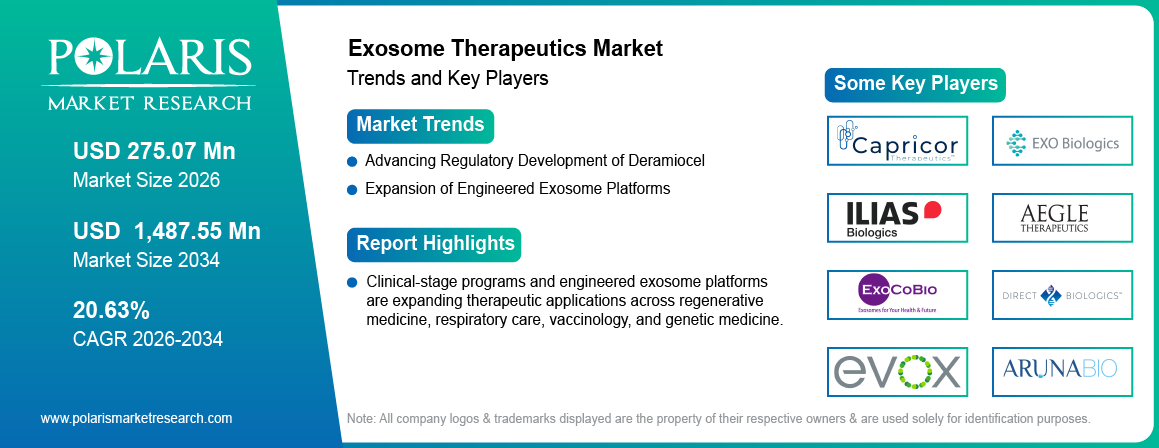
The market is developing around clinical-stage therapeutic platforms and engineered exosome technologies, with companies pursuing different approaches across regenerative medicine, respiratory care, gene editing, and vaccine applications. Capricor Therapeutics, Direct Biologics, Evox Therapeutics, Aegle Therapeutics, ILIAS Biologics, Aruna Bio, EXO Biologics, ExoCoBio, NurExone Biologic, and Kimera Labs represent key participants across different development stages. Competitive differentiation is linked to clinical progress, regulatory advancement, therapeutic application, exosome source, delivery route, manufacturing capabilities, and platform technology. Deramiocel represents a key late-stage program within the market, while ExoFlo and ExoEdit reflect distinct approaches to therapeutic development. Regulatory progress, clinical validation, engineered delivery capabilities, and manufacturing readiness are expected to shape competitive positioning across the exosome therapeutics market.
Source: Company filings and named press releases.
Exosome Therapeutics Market Technology and Innovation Landscape
Technology and Innovation Landscape Snapshot
| Technology | Primary Use | Example | Maturity |
| Native MSC-derived exosomes | Anti-inflammatory, tissue repair | ExoFlo, EXOB-001 | Phase 1–3 |
| Cell therapy with exosome-mediated action | Cardiac and skeletal muscle protection | Deramiocel | BLA review |
| Protein-loaded engineered exosomes | Intracellular protein delivery | ILIAS EXPLOR (ILB-202) | Phase 1 completed |
| Gene-editing exosomes | CRISPR payload delivery | Evox ExoEdit | Preclinical |
| Surface-display vaccine exosomes | Antigen presentation | Capricor StealthX | Phase 1 (on hold) |
| Neural-derived exosomes | Crossing the blood-brain barrier | Aruna Bio AB126 | Phase 1b/2a |
| Scalable GMP production | Yield and batch consistency | ExoPulse, Pure-Exo, Bio-Engine kits | Commercial services |
Source: Polaris Market Research Analysis
The key technology shift in the exosome therapeutics market is the move from native cell-derived exosomes toward engineered platforms for targeted therapeutic delivery. Evox Therapeutics' ExoEdit combines exosome delivery with CRISPR-based gene editing for MSH3 and ATXN2 targets. This engineered exosome platform extends applications from regenerative medicine to targeted genetic therapies. Another pathway of innovation is to engineer exosomes to present viral proteins for vaccine use, exemplified by Capricor’s StealthX, while ILIAS Biologics' EXPLOR platform loads therapeutic proteins into exosomes for intracellular delivery. These developments are expanding the use of exosomes across gene editing, vaccines, and targeted therapeutic delivery.
Exosome Therapeutics Use Case Analysis
Cardiovascular and Muscular Disease
Cardiovascular and muscular disease represents a major application area for exosome-based therapy. Capricor's Deramiocel is being developed for Duchenne muscular dystrophy through a cardiosphere-derived cell platform. In the Phase 3 HOPE-3 trial, Deramiocel slowed upper limb decline by 54% and left ventricular ejection fraction decline by 91% versus placebo. These results support exosome-mediated approaches in muscular disease, while MSC-derived exosome candidates are being explored for related inflammatory and regenerative indications. Continued clinical and regulatory development may extend the use of exosome therapeutics in these treatment areas.
Acute Respiratory Disease
There are significant opportunities for extracellular vesicle drug development in respiratory and acute care applications. Direct Biologics is evaluating ExoFlo in the Phase 3 EXTINGUISH ARDS trial in hospitalized adults with moderate to severe acute respiratory distress syndrome. The program expands exosome therapeutic applications beyond muscular and regenerative medicine. Clinical development in acute respiratory disease may also create opportunities for inhaled and localized delivery. Further progress in ExoFlo may expand the use of extracellular vesicle drug platforms across acute respiratory care.
Infectious Disease and Vaccinology
Infectious disease and vaccinology represent an emerging application for an engineered exosome platform. Capricor’s StealthX vaccine candidate entered a Phase 1 trial for human testing in August 2025, as part of a Project NextGen program supported by the NIAID. The platform applies engineered exosomes to display viral surface proteins for vaccine development. This approach broadens the scope of exosomes applications other than regenerative medicine and therapeutic delivery. Further clinical development may provide avenues for the engineered exosome platform in infectious disease prevention and vaccine development.
Neurodegenerative Disease
Neurodegenerative disease is an emerging application area for engineered exosomes that carry genetic payloads. Evox Therapeutics' ExoEdit programs leverage exosome delivery with CRISPR-based gene modification to target MSH3 and ATXN2. This approach uses exosomes as delivery vehicles for genetic payloads rather than relying on native regenerative properties. Aruna Bio's AB126, a neural stem cell-derived exosome, has also received FDA IND clearance for acute ischemic stroke. In the future, engineered exosomes may be used for a broader variety of specific neurodegenerative diseases. Regulatory considerations under the CBER regulatory pathway will remain relevant as these programs advance toward clinical development.
Exosome Therapeutics Market Premium Insights and Forward Outlook
Deramiocel Regulatory Progress May Influence Category Development
Deramiocel, with a PDUFA date of November 22, 2026, represents an important regulatory milestone for the exosome therapeutics market. Its regulatory progress provides a reference point for other clinical-stage programs across different indications and mechanisms. The FDA review could impact the development strategies and regulatory expectations of other exosome-based therapeutic programs. This development may serve as a guide for future clinical and regulatory planning by companies developing respiratory, regenerative and engineered exosome platforms.
Engineered Delivery Platforms Are Expanding Beyond Regenerative Applications
Unlike regenerative candidates such as ExoFlo and Deramiocel, StealthX and ExoEdit follow an engineered exosome platform approach. StealthX is focused on vaccine delivery, while ExoEdit uses exosomes to deliver CRISPR gene-editing payloads. These platforms enhance the use of exosomes as therapeutic delivery vehicles. Further development may create opportunities across vaccines, genetic medicine, and targeted therapies. This diversification is expanding the technology base of the exosome therapeutics market.
Cost and Pricing Benchmarking Analysis
No exosome therapeutic has a public commercial treatment price as of 2026. The exosome therapeutics market report therefore focuses on clinical development, regulatory progress, and development-related costs. Capricor reported approximately $237.9 million in cash, cash equivalents, and marketable securities as of June 30, 2026, sufficient to fund operations for at least 12 months (Source: SEC). Public pricing for GMP-grade exosome manufacturing or CDMO services is not disclosed by the companies profiled in the report. Cost comparison therefore remains focused on development funding and manufacturing requirements rather than commercial treatment prices.
| Cost Component | Disclosed Figure | Notes |
| Capricor Therapeutics cash position | ~$237.9 million (June 30, 2026) | Sufficient for at least 12 months; spans the November 22, 2026 PDUFA date |
| Commercial treatment price | Not applicable | No exosome therapeutic holds regulatory approval as of 2026 |
| GMP manufacturing / CDMO cost | - | Not publicly disclosed by companies profiled in this report |
Source: Polaris Market Research Analysis
Key Players
-
Capricor Therapeutics, Inc.
-
Direct Biologics, LLC
-
EXO Biologics SA
-
Evox Therapeutics Ltd.
-
ExoCoBio Inc.
-
ILIAS Biologics Inc.
-
Kimera Labs Inc.
-
NurExone Biologic Inc.
-
ReNeuron Group plc
Industry Developments
-
September 2026: EVerZom completed CTA-enabling preclinical studies for EVerGel, an MSC-derived exosome and hydrogel therapy for complex perianal fistulas linked to Crohn’s disease. (Source: BioSpace)
-
August 2026: The FDA's CBER accepted Capricor Therapeutics' major BLA amendment for Deramiocel, including 24-month HOPE-3 open-label extension data, and extended the PDUFA date to November 22, 2026, following a 3–9 advisory committee vote in July 2026. (Source: CGTLive)
-
July 2026: Bio-Engine launched two MSC culture products designed to improve cell expansion and exosome manufacturing, including a kit that increased exosome yield by 2.8-fold. (Source: Bio-Engine)
-
July 2026: INTENT Biologics received FDA Breakthrough Therapy designation for PEP Biologic, a platelet-derived exosome therapy for diabetic foot ulcers advancing toward Phase 3 development. (Source: Business Wire)
-
June 2026: Kimera Labs implemented ISO 9001, ISO 13485, and ISO 22716 quality standards to support placental MSC-derived exosome manufacturing and its Phase I/IIa IND program, with the Phase I safety trial targeted for completion by Q3 2026. (Source: Kimera Labs)
-
May 2026: NurExone Biologic advanced to Stage 2 of the EU-backed EIT Health Catapult Programme 2026 for its exosome-based regenerative platform for spinal cord and optic nerve injuries. (Source: GlobeNewswire)
-
April 2026: China Medical University Hospital and collaborators created a targeted exosome platform for intravenous delivery of BDNF mRNA to the site of spinal cord injury, showing improved motor coordination in preclinical models. (Source: PR Newswire)
Exosome Therapeutics Market Segmentation
By Source Outlook (Revenue, USD Million, 2021–2034)
-
Mesenchymal Stem Cell Derived
-
Cardiosphere Derived Cell
-
Other/Engineered
By Application Outlook (Revenue, USD Million, 2021–2034)
-
Cardiovascular & Muscular Disease
-
Respiratory & Acute Care
-
Infectious Disease & Vaccinology
-
Neurodegenerative Disease
-
Others
By Route of Administration Outlook (Revenue, USD Million, 2021–2034)
-
Intravenous
-
Inhaled/Localized
-
Others
By End Use Outlook (Revenue, USD Million, 2021–2034)
-
Hospitals & Specialty Treatment Centers
-
Contract Development & Manufacturing Organizations
-
Others
By Regional Outlook (Revenue, USD Million, 2021–2034)
-
North America
-
US
-
Canada
-
-
Europe
-
Germany
-
France
-
UK
-
Italy
-
Spain
-
Netherlands
-
Rest of Europe
-
-
Asia Pacific
-
China
-
Japan
-
India
-
South Korea
-
Taiwan
-
Australia
-
Rest of Asia Pacific
-
-
Latin America
-
Brazil
-
Mexico
-
Argentina
-
Rest of Latin America
-
-
Middle East & Africa
-
Saudi Arabia
-
UAE
-
South Africa
-
Rest of Middle East & Africa
-
Exosome Therapeutics Market Report Scope
| Report Attributes | Details |
| Market Size in 2025 | USD 222.99 Million |
| Market Size in 2026 | USD 275.07 Million |
| Revenue Forecast by 2034 | USD 1,487.55 Million |
| \CAGR | 20.63% from 2026–2034 |
| Base Year | 2025 |
| Historical Data | 2021–2024 |
| Forecast Period | 2026–2034 |
| Quantitative Units | Revenue in USD Million and CAGR |
| Report Coverage | Revenue Forecast, Growth Factors, Competitive Landscape, Industry Trends, and Strategic Analysis |
| Segments Covered |
|
| Regional Scope | North America, Europe, Asia Pacific, Latin America, Middle East & Africa |
| Competitive Landscape | Company Profiling, Product Benchmarking, Financial Analysis, Market Developments, and Strategic Initiatives |
| Report Format | PDF + Excel |
| Customization | Available by Country, Region, and Segment |
Source: Polaris Market Research Analysis
Why Choose Polaris Market Research
Polaris Market Research & Consulting, Inc. builds its exosome therapeutics market report using primary regulatory filings, clinical trial registrations, company disclosures, and investor materials. This approach provides direct visibility into clinical development, regulatory progress, therapeutic applications, and company pipelines. The research also separates therapeutic exosome products from exosome research products and aesthetic applications. Regulatory events are tracked as key market developments because they may influence clinical advancement, investment activity, and commercialization opportunities. The analysis also evaluates developments across regenerative medicine, respiratory care, vaccinology, neurodegenerative diseases, and engineered exosome technologies.
The analysis can be customized by source, application, route of administration, end use, region, and company coverage. Buyers can also request detailed exosome therapeutics market analysis for specific therapeutic areas, clinical-stage candidates, engineered exosome platforms, regulatory developments, manufacturing requirements, and regional opportunities. Company coverage can also be adjusted based on the client's investment or research requirements. This structure allows the report to focus on specific development stages, therapeutic applications, geographic markets, or competitive groups within the exosome therapeutics industry.
Exosome Therapeutics Market Research Methodology
The research process follows a five-phase methodology covering regulatory filings, clinical trial registrations, company disclosures, FDA communications, company press materials, and SEC filings. Secondary research establishes the clinical and regulatory landscape, while primary validation checks key developments against direct company and regulatory sources. Competitive benchmarking separates the exosome therapeutics market from the Exosome Research Market and the Aesthetic Exosomes Market. Proprietary data reconciliation is then applied to the internal Polaris market model. A final quality and sourcing review checks the consistency of the analysis before publication. This process provides a structured basis for evaluating market size, segmentation, regional activity, competitive developments, and the clinical pipeline.
The methodology places greater focus on primary regulatory sources due to the regulatory sensitivity of therapeutic exosome products. FDA communications and SEC filings provide important evidence for regulatory progress, company funding, and development activities. Clinical trial registrations and company disclosures provide information on therapeutic candidates and development stages. The analysis also evaluates the CBER regulatory pathway, which is relevant to exosome products requiring full regulatory review. This source mix helps assess the transition from early research to clinical development and potential commercialization. The final analysis is compiled through a healthcare and biologics research review focused on source quality and consistency.
Research Methodology Phases
| Phase | Focus |
| 1. Secondary Mapping | Regulatory filings, clinical trial registrations, company disclosures |
| 2. Primary Validation | FDA communications, company press materials, SEC filings |
| 3. Competitive Benchmarking | Scope separation check against Exosome Research and Aesthetic Exosomes reports |
| 4. Proprietary Reconciliation | Internal Polaris market model validation |
| 5. Quality and Sourcing Review | Final editorial and citation check |
Source: Polaris Market Research Analysis
Exosome Therapeutics Market FAQ's
The global exosome therapeutics market size was valued at USD 222.99 million in 2025, according to Polaris Market Research. The market is projected to grow from USD 275.07 million in 2026 to USD 1,487.55 million by 2034, at a CAGR of 20.63% during 2026–2034.
The exosome therapeutics market is driven by the regulatory progress of Deramiocel and the expansion of engineered exosome platforms. Deramiocel's BLA is under FDA review, while engineered platforms such as ExoEdit and ILB-202 are extending exosome use into gene editing and targeted protein delivery.
North America dominated the exosome therapeutics market with a 41.72% share in 2025. The lead is supported by late-stage US programs such as Deramiocel and ExoFlo and by active FDA and CBER regulatory review.
Asia Pacific is expected to register the fastest CAGR of 25.47% during 2026–2034. Growth is supported by clinical research in South Korea, China, Japan, and India, including ILIAS Biologics' engineered exosome program and inhaled MSC-exosome studies in Chinese hospitals.
The mesenchymal stem cell derived segment held the largest share at 46.38% in 2025. MSC-derived exosomes make up a broad part of the clinical pipeline, including ExoFlo, and are studied for inflammatory, respiratory, and regenerative uses.
The cardiosphere derived cell segment is expected to grow at the fastest CAGR of 23.72% during 2026–2034. Growth is linked to Deramiocel, a cardiosphere-derived cell therapy for Duchenne muscular dystrophy that is under FDA review.
Cardiovascular and muscular disease led the market with a 25.74% share in 2025, anchored by Deramiocel for Duchenne muscular dystrophy. Respiratory and acute care is expected to be the fastest-growing application, led by ExoFlo's Phase 3 ARDS trial.
Intravenous administration held the largest share at 61.84% in 2025, as both Deramiocel and ExoFlo are given by IV infusion. The inhaled and localized segment is expected to grow the fastest due to respiratory and site-specific delivery programs.
Key players in the exosome therapeutics market include Capricor Therapeutics, Direct Biologics, ILIAS Biologics, EXO Biologics, Aegle Therapeutics, Aruna Bio, Kimera Labs, Evox Therapeutics, NurExone Biologic, ExoCoBio, and ReNeuron Group. Capricor leads with the most advanced program, Deramiocel.
The major challenge is the lack of standardized manufacturing and potency frameworks for exosome products. Differences in source cells, purification, and characterization make quality control difficult, as shown by the CMC issues cited in the FDA's July 2025 Complete Response Letter for Deramiocel.
The key opportunities are a first regulatory approval that sets a precedent for the category and growth in respiratory and acute care applications. A first approval would clarify manufacturing, potency, and evidence requirements for other exosome-based therapy developers.
The Polaris Market Research report covers the exosome therapeutics market by source, application, route of administration, end use, and region for 2026–2034. It uses 2025 as the base year and 2021–2024 as historical data.
Exosome therapeutics are drug products made from exosomes, the small extracellular vesicles that cells release to carry proteins and RNA. They are developed as cell-free biologics or as delivery vehicles for RNA, protein, and gene-editing payloads.
No exosome-based therapeutic has FDA approval as of October 2026. Deramiocel, Capricor Therapeutics' cell therapy with an exosome-mediated mechanism, is the most advanced candidate and has a PDUFA target action date of November 22, 2026.
Deramiocel (CAP-1002) is Capricor Therapeutics' allogeneic cardiosphere-derived cell therapy for Duchenne muscular dystrophy that acts through exosome signaling. The FDA extended its PDUFA date to November 22, 2026 after accepting 24-month HOPE-3 data as a major amendment.
Exosome products intended to treat disease are regulated by the FDA as biological drugs and need IND clearance for trials and BLA approval for sale. No exosome product is FDA approved, and the FDA has issued warning letters to companies marketing unapproved exosome products.
Exosome therapy uses the vesicles that cells secrete instead of the living cells themselves. This cell-free approach avoids cell engraftment and replication and allows easier storage and dosing, though exosome products still need full FDA biologic review.
Exosome therapies are in development for Duchenne muscular dystrophy, acute respiratory distress syndrome, acute kidney injury, ischemic stroke, wound healing, spinal cord injury, and neurogenetic diseases. None is approved yet, so all uses remain investigational.
Yes, engineered exosomes can carry proteins, RNA, and gene-editing payloads to target cells. Evox Therapeutics' ExoEdit delivers CRISPR tools, and ILIAS Biologics' ILB-202 delivers an anti-inflammatory protein and has completed a Phase 1 trial.
Most clinical exosome therapies are given by intravenous infusion. Inhaled or nebulized delivery is being studied for respiratory diseases such as ARDS, asthma, and COPD, and local delivery is used for wounds and tissue repair.
No exosome therapeutic has an approved commercial price as of 2026 because none has received FDA approval. Prices advertised by clinics relate to unapproved products and do not reflect regulated exosome therapies.
Exosome therapeutics are drug candidates that require FDA or EMA approval to treat disease. Exosome research products are kits, reagents, and instruments for laboratory study, while aesthetic exosomes are used in skin and hair treatments. Polaris tracks each as a separate market.
Download Sample Report of Exosome Therapeutics Market
Please fill out the form to request a customized copy of the research report.


