
Circulating Tumor Cells Market Size, Share, Trends & Forecast, 2026–2034
REPORT DETAILS
Circulating Tumor Cells Market Summary
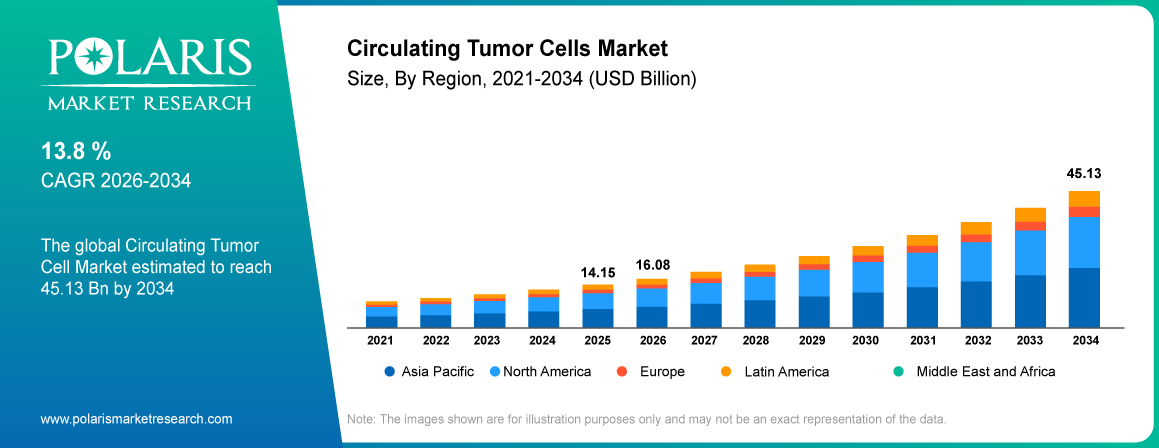
The circulating tumor cells market size was valued at USD 14.15 billion in 2025, growing at a CAGR of 13.8% from 2026 to 2034. Advancements in noninvasive diagnostic technologies and increased demand for more accurate and less invasive diagnostic methods are propelling the CTC market growth.
Market Statistics
Circulating Tumor Cells Market Key Takeaways
- North America accounted for the largest market share of 42.6% in 2025. The regional dominance is attributed to advanced healthcare infrastructure and strong investments in oncology research and development.
- The Asia Pacific market is anticipated to register a CAGR of 16.2% during the forecast period, driven by rapid improvements in healthcare infrastructure and growing awareness regarding early cancer detection.
- The CTC detection & enrichment methods segment accounted for the largest market share of 38.7% in 2025, primarily due to its critical role in isolating and purifying CTCs from blood samples for further analysis.
- The devices or systems segment is projected to register the highest CAGR of 15.4% during the forecast period. This is owing to the increasing adoption of automated systems for CTC isolation, detection, and analysis.
- The hospitals and clinics segment dominated the market with a 48.9% share in 2025. The growing adoption of CTC-based diagnostic technologies for cancer diagnosis and monitoring in clinical settings fuels the dominance.
Note: Figures and projections outlined in this report are the result of Polaris Market Research’s proprietary analytical processes, grounded in the latest available datasets and market observations.
What is Circulating Tumor Cells Market?
The circulating tumor cells (CTC) market focuses on the detection, analysis, and treatment of tumor cells that circulate in the bloodstream, offering potential for early cancer diagnosis, monitoring, and personalized treatment. The growth of this market is driven by advancements in noninvasive diagnostic technologies, increasing cancer prevalence, and the demand for more accurate and less invasive diagnostic methods. The integration of artificial intelligence and machine learning platforms in data analysis is rising as it enables improved patient outcomes. Additionally, the rising focus on precision oncology is expected to further fuel CTC market expansion.
How Circulating Tumor Cell Testing Works?
Circulating Tumor Cell testing is a blood test that detects cancer cells that have broken away from the tumor and traveled into the bloodstream.
- A small blood sample is collected from the patient.
- Advanced technologies separate the rare circulating tumor cells from normal blood cells.
- The isolated tumor cells are identified and examined for their genetic and biological characteristics.
- Doctors use the results to monitor cancer progression, evaluate treatment response, and support personalized treatment decisions.
Comparison Matrix: CTC vs ctDNA
| Attribute | Circulating Tumor Cells (CTCs) | Circulating Tumor DNA (ctDNA) |
| What It Captures | Whole, often-viable tumor cells | Fragmented tumor-derived DNA |
| Analysis Depth | Enables protein, RNA, and single-cell multi-omics analysis | Primarily genomic/mutational analysis |
| Abundance in Blood | Very rare (often <10 per mL) | Comparatively more abundant, easier to detect at low tumor burden |
| Best Suited For | Phenotypic/functional studies, culture, MRD with intact-cell context | High-sensitivity mutation tracking, early-stage detection |
| Market Position | Complementary; increasingly bundled with ctDNA in multi-analyte panels | Faster-growing standalone segment; competitive/complementary to CTCs |
Source: Polaris Market Research Analysis
Market Dynamics
Driver: Technological Advancements in Liquid Biopsy
Continuous innovations in liquid biopsy technologies drive the circulating tumor cells market growth. Liquid biopsy, which involves analyzing CTCs in blood samples, offers a noninvasive alternative to traditional biopsy procedures. This method allows for real-time monitoring of tumor progression and detection of genetic mutations, which is essential for personalized cancer treatment. The increased focus on personalized medicine and minimally invasive diagnostic methods is propelling the growth of liquid biopsy applications in oncology. There is a rising emphasis on integrating AI in liquid biopsy to improve overall liquid biopsy process. AI adoption involves use of machine learning and deep learning technologies. It helps process complex, noisy circulating biomarker data. The technologies enhance diagnostic accuracy and facilitate early cancer detection, propelling the liquid biopsy market development.
CTC Liquid Biopsy vs. Traditional Tissue Biopsy
| Attribute | CTC Liquid Biopsy | Traditional Tissue Biopsy |
| Invasiveness | Minimally invasive (blood draw) | Invasive (needle or surgical sample) |
| Sample Collection | Repeatable, low patient burden | Limited by tumor accessibility and patient tolerance |
| Monitoring Frequency | Enables serial, real-time monitoring | Typically one-time or infrequent |
| Real-Time Analysis | Captures current tumor heterogeneity | Reflects tumor state at time of sampling only |
| Metastatic Tracking | Well-suited to tracking disease spread | Limited to sampled site |
Source: Polaris Market Research Analysis
Driver: Increasing Cancer Prevalence and Demand for Early Diagnosis
The rising global incidence of cancer is a significant CTC market driver. As cancer rates continue to increase, particularly among aging populations, there is a growing need for early and accurate diagnostic methods to improve survival rates. According to the International Agency for Research on Cancer, cancer accounted for an estimated 9.96 million deaths in 2025, which is an increase from 9.76 million deaths in 2024. This growing cancer burden has spurred the demand for effective diagnostic tools, such as CTCs, that enable earlier detection and treatment. The ability of CTCs to detect cancer in its early stages, even before symptoms appear, makes this technology highly valuable for timely interventions (Source: gco.iarc.who.int).
Driver: Integration of Artificial Intelligence and Data Analytics
The integration of artificial intelligence (AI) and machine learning (ML) into the analysis of CTCs is accelerating market growth. AI algorithms can process vast amounts of data collected from CTC samples to identify patterns and predict treatment responses more accurately than traditional methods. AI enhances CTC detection by analyzing complex imaging and molecular data with high sensitivity and specificity. Machine learning algorithms identify cancer cell patterns, enabling earlier diagnosis and monitoring of disease progression. AI-powered platforms streamline data interpretation, supporting personalized treatment planning and therapy adjustments. Continuous AI learning improves detection accuracy and adaptability to new biomarkers, advancing cancer research and patient care outcomes.
AI-based platforms can also streamline the interpretation of liquid biopsy results, providing clinicians with actionable insights faster. The adoption of AI in oncology is expected to continue expanding, as it offers significant improvements in the efficiency of cancer detection and personalized treatment planning.
Restraint: High Cost of CTC Testing
High cost of circulating tumor cell testing is a key market restraint. Detecting and analyzing rare tumor cells requires advanced equipment, laboratory procedures, and expertise, making it more expensive than conventional diagnostic procedures. Limited reimbursement may also limit patient accessibility especially in developing countries. Thus, hospitals and laboratories may be less inclined to adopt such technologies which may slow the overall market growth.
Restraint: Technical and Clinical Challenge
CTC testing has technical and clinical challenges due to tumor cells' low concentration in the bloodstream and analytical variability. The need for advanced and sensitive technology for detection and enumeration may limit the test attractiveness to healthcare professionals. Furthermore, the procedure’s clinical validity for diagnosis of a specific cancer type and indication is yet to be established.
Opportunity: Growing Demand for Personalized Cancer Treatment
Preference for personalized medicine and oncology treatment is growing rapidly, which would create a massive opportunity for the CTC market in the coming years. The CTC test can provide critical information on tumorigenesis by detecting tumor cells in peripheral blood through simple blood draw. Thus, it is becoming a valuable diagnostic tool in cancer management. Moreover, it tracks tumor response to therapy. This noninvasive technique is expected to gain popularity as it offers more reliable results compared to traditional tissue biopsies.
Trend: Role in Precision Oncology
CTC testing is playing an essential role in precision oncology. The analysis of CTCs can provide relevant information about a patient’s cancer to help select the most appropriate therapy. Moreover, compared to a traditional biopsy, tests of blood samples for CTCs can be used several times to follow the evolution of the tumor and determine the effectiveness of a given treatment. Additionally, it may allow detecting treatment failure or resistance or predict metastasis in some cancers. Therefore, this technique is expected to play a critical role in the growing need for personalized approaches to cancer treatment.
Challenges in Circulating Tumor Cells Market
The CTC market faces challenges related to the technology of detection, a standardized testing procedure, and adoption in the clinic setting. CTCs occur in small numbers in the blood, making its isolation and analysis difficult. Different technologies may give different results, necessitating standardized testing strategies. Additionally, the clinical validation of CTC detection technologies and assays is limited for specific cancer types, hindering their widespread adoption.
Segment Insights
| Segment Axis | Categories | Largest Share Driver |
| Technology | CTC Detection & Enrichment; Direct Detection; CTC Analysis | Detection & enrichment methods lead on isolation/purification role |
| Product | Kits & Reagents; Blood Collection Tubes; Devices/Systems | Kits & reagents lead on repeat-purchase, high-usage consumable model |
| Application | Clinical and Research | Clinical segment driven by advantages of CTC in clinical settings. |
| Specimen | Blood; Bone Marrow; Other Body Fluids | Blood leads on accessibility and established methodology |
| End Use | Research & Academic Institutes; Hospitals & Clinics; Diagnostic Centers; Biopharmaceutical Companies (new) | Hospitals & clinics lead on direct patient-care integration |
Source: Polaris Market Research Analysis
Market Assessment by Technology
By technology, the circulating tumor cells market is primarily segmented into three categories: CTC detection & enrichment methods, CTC direct detection methods, and CTC analysis. Among the different approaches used in circulating tumor cell (CTC) research, the detection and enrichment methods segment led the market with 38.7% share in 2025. This is because they play a critical role in separating and purifying CTCs from blood samples, making it possible to study them more closely. Techniques like immunomagnetic separation, microfluidics, and density gradient centrifugation are widely used since they are efficient, sensitive, and help preserve the viability of the cells.
The CTC analysis segment is expected to register the highest CAGR of 15.8% during the forecast period. The growth is attributed to the integration of advanced technologies such as AI and machine learning in data analysis. These technologies are revolutionizing the analysis of CTCs, enabling precise molecular profiling and a better understanding of tumor dynamics. With the increasing trend toward personalized medicine, the ability to analyze CTCs and identify genetic mutations or resistance markers is becoming more critical in developing tailored treatment plans. This trend is expected to drive the CTC analysis segment, especially as the use of AI and data-driven insights becomes more prevalent in clinical oncology.
Market Evaluation by Products
The market segmentation, based on products, includes kits & reagents, blood collection tubes, and devices or systems. The kits & reagents segment held the largest circulating tumor cells market share of 41.6% in 2025, as it is integral to detecting and enriching CTCs in blood samples. These products are essential for both clinical and research applications, allowing laboratories and healthcare providers to perform tests with high accuracy and reliability. The widespread adoption of liquid biopsy techniques in oncology is driving the demand for these products, particularly as they enable noninvasive cancer detection and treatment monitoring. The kits and reagents segment benefits from ongoing advancements in technology that improve test sensitivity and ease of use.
The devices or systems segment is projected to exhibit the highest CAGR of 15.4% during the forecast period. The growth is driven by the increasing adoption of automated and highly efficient systems for CTC isolation, detection, and analysis. These systems, such as microfluidic devices and immunomagnetic separation tools, provide faster results and improve the precision of CTC diagnostics. As healthcare providers continue to seek more efficient and automated solutions for cancer diagnosis and monitoring, the demand for sophisticated devices and systems is expected to rise significantly. This growth is also supported by the increasing trend toward personalized and targeted cancer therapies, which rely on advanced CTC technologies for better clinical decision-making.
Market Evaluation by Application
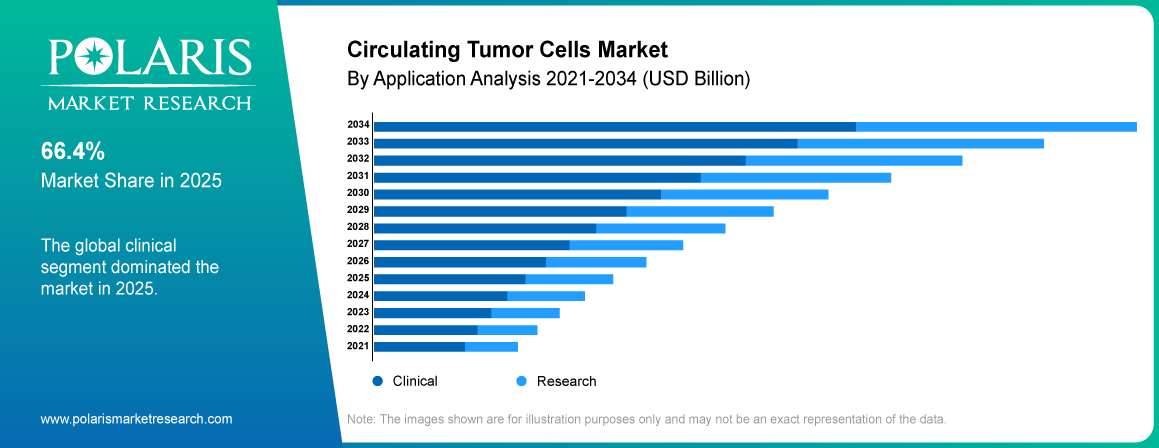
The circulating tumor cells market segmentation, based on application, includes clinical and research. The clinical segment dominated with the largest share of 66.4% in 2025. This segment focuses on using CTC tests in clinical settings to manage cancer. These tests enable clinicians to monitor disease progression, assess treatment efficacy, and predict metastasis risk. Additionally, the tests are minimally invasive because they require only a blood sample from the patient. This offers several advantages over traditional tissue-based biopsies. Moreover, multiple tests can be done for a single patient to help determine the rate of progression of cancer. This domain has attracted considerable interest, driven by the growing need and scope for personalized medicine and precision oncology.
The research segment is expected to witness the fastest growth, with a CAGR of 15.1% during the forecast period. Researchers are constantly studying and analyzing CTCs to understand the basic mechanisms of cancer progression, including tumor metastasis, genetic aberrations, and pharmacological resistance. This segment involves various pharmaceutical and biotechnology companies that are involved in the research and development of therapeutics against various cancers. Moreover, with the increasing investment in research and development and the growing need for liquid-biopsy technologies, several academic and research institutes are expected to invest in advanced circulating tumor cell detection technologies, thereby driving the segment growth.
Market Assessment by Specimen
The CTC market, by specimen type, is segmented into blood, bone marrow, and other body fluids. Among these, blood hold the largest share of 68.7% in 2025. This is because blood is the most commonly used and easily accessible sample for CTC detection. Blood-based testing is highly valued for being noninvasive, making it the preferred option for early cancer detection, ongoing monitoring, and treatment evaluation. The dominance of this segment is further supported by the huge volume of blood samples collected in diagnostics and the strong set of established methods already in place for blood-based CTC analysis. On top of this, the rapid progress in liquid biopsy technologies most of which focus specifically on blood has helped maintain its leading position in the market.
At the same time, the bone marrow specimen segment is emerging as the fastest-growing area with CAGR 14.9% during the forecast period. This rise is driven mainly by the growing demand for more specific and localized tumor insights. Since bone marrow is a primary site for cancers like leukemia and lymphoma, it gives researchers and clinicians a clearer window to study CTCs in such conditions. With new biopsy techniques making it easier to isolate CTCs from bone marrow, this segment is receiving increasing attention. Moreover, the current shift towards precision oncology, which emphasizes personalized cancer profiling and targeted treatments is expected to further accelerate the growth of the bone marrow segment, particularly when it comes to monitoring how patients respond to therapies.
Market Evaluation by End Use
The circulating tumor cells market, by end use, is segmented into research & academic institutes, hospitals & clinics, and diagnostic centers. The hospitals and clinics segment holds the largest market share of 48.9% in 2025, primarily due to the increasing adoption of CTC-based diagnostic technologies in clinical settings for cancer diagnosis, monitoring, and treatment planning. These healthcare institutions play a critical role in patient care and the integration of CTC technologies in clinical practice, where their use in personalized treatments is rapidly expanding. Hospitals and clinics benefit from continuous advancements in diagnostic methods, which allow for more accurate detection and monitoring of cancer in real-time, thereby boosting their adoption of CTC-based technologies.
The diagnostic centers segment is expected to register a CAGR of 15.6% during the forecast period, as these centers specialize in offering noninvasive, specialized diagnostic tests such as CTC detection. With the rising demand for liquid biopsy tests, diagnostic centers are increasingly focusing on CTC-based assays for cancer detection and monitoring. The growing preference for outpatient diagnostic services, combined with the need for quicker and more reliable diagnostic results, is driving the growth of this segment. Furthermore, advancements in technology and the expansion of CTC testing options in the diagnostic sector are expected to continue fueling the growth of diagnostic centers as they integrate more sophisticated CTC detection systems.
The biopharmaceutical segment is expected to exhibit a CAGR of 18.15% during the forecast period driven by increasing investment in cancer drug development and personalized therapies. These companies are using circulating tumor cell analysis for studying tumor biology and behavior, mechanism of action and treatment resistance. CTC testing supports clinical trials and facilitates the evaluation of new drugs for cancer treatment. The shift towards targeted therapies and precision oncology is expected to drive the demand for CTC analysis. Moreover, the need for less invasive approaches for obtaining tumor information further supports the CTC analysis market growth for this segment.
Key Areas of the Circulating Tumor Cells Market
Molecular Profiling & Biomarker Analysis
Molecular profiling and biomarker analysis involve examining genetic and biological properties of cancer cells. In the context of circulating tumor cells (CTC) market, these processes provide information about particular mutations, proteins, and biomarkers, which could be present in tumor cells. Analyzing CTCs allows observation of changes in cancerous tissues without multiple biopsies. This approach helps select optimal treatment for each patient based on their individual needs. Moreover, constant monitoring of cancer by using CTCs method leads to detection of treatment resistance and its mechanisms. Increasing use of molecular profiling and biomarker analysis for personalized medicine and precision oncology is expected to drive the market growth.
Breast Cancer & Solid Tumor Applications
The circulating tumor cells market supports breast cancer and several other solid tumor applications through liquid biopsy technologies that isolate and analyze tumor cells from blood samples. In breast cancer, CTC tests are used to identify metastatic disease and guide treatment in cases where tumor biopsies are not possible. For instance, Epic Sciences' cell-based test, DefineMBC, is a CLIA blood test that analyzes both CTCs and cell-free DNA from blood to provide insight into metastatic breast cancer. Liquid biopsy products for solid tumors such as prostate, lung, and colorectal cancers are designed to isolate and enrich CTCs for downstream biomarker discovery and analysis of treatment response, such as ANGLE's Parsortix PC1 System, a CE-marked and FDA-cleared CTC isolation device that enables epitope-independent enrichment of CTCs based on size and deformability for use in genomic and proteomic profiling of multiple tumor types.
Metastatic Cancer Monitoring Applications
In the circulating tumor cells (CTCs) market, cancer monitoring applications enable real-time, minimally invasive assessment of disease burden, treatment response, and progression risk for breast, colorectal, and prostate tumors. Enumerating CTCs in serial samples allows evaluation of therapeutic response. A decrease in CTC count indicates improved survival, while stable or increased counts are associated with treatment resistance or relapse. Platforms such as Menarini Silicon Biosystems' CellSearch can be regularly used in clinical practice to follow-up on cancer treatment. It is an FDA-approved technology used for the detection of CTCs in patients with metastatic breast, colorectal, and prostate cancer. It quantifies CTCs to guide therapeutic decision-making in cases where tissue biopsy is unsuitable or insufficient to capture tumor heterogeneity.
Advancements in CTC Detection Technologies
Advancements in technologies to detect and analyze circulating tumor cells (CTCs) are contributing to the improved understanding of rare tumor cells present in the circulation. Conventional CTC detection methods have faced the challenge of low cell yield. Emerging platforms enable improved cell capture and isolation, as well as comprehensive molecular characterization of CTCs. This increases the accuracy of such tests. Moreover, these technologies further facilitate a deeper understanding of the genetic and phenotypic heterogeneity of tumors. Increased R&D investment in liquid biopsy and cancer therapeutics is expected to fuel the adoption of innovative detection technologies and expand their applications in clinical and research settings.
Automation & High-Throughput Cancer Diagnostics
Automation and high-throughput cancer diagnostics are playing a major role in the development of novel CTC isolation and detection technologies. Automated approaches reduce the amount of labor and time needed to process patient samples. This also minimizes the human error. Similarly, high-throughput platforms enable large-scale research and high-volume clinical diagnostics. These factors are expected to drive the increasing adoption of automated CTC detection and analysis technologies across the globe. Additionally, such solutions further offer cost benefits by improving operational efficiencies within a laboratory, thereby driving growth.
Hospital & Clinical Adoption Trends
Hospitals and clinical laboratories are increasingly adopting CTC tests as awareness of the relevance of liquid biopsy in cancer management grows. Testing for the presence of CTCs enables clinicians to obtain critical insights into tumor biology, including information on how these cells respond to specific therapies and whether they are resistant to such treatments. Additionally, such information provides important prognostic and metastatic information that might be absent in conventional tissue biopsies or difficult to obtain from such biopsies. Consequently, hospital laboratories and specialized cancer centers are adopting such technologies to meet the growing demand for circulating tumor cells companion diagnostics and to support precision oncology initiatives.
Academic & Cancer Research Applications
Academic institutions and cancer research centers employ circulating tumor cell analysis to better understand cancer progression and development. Researchers studying CTCs examine mechanisms by which cancer cells enter the circulatory system to metastasize, become resistant to therapies, and grow. Furthermore, the analysis of CTCs supports the development of genetic and tumor biology-based approaches and novel cancer biomarkers. Academic institutions and research centers employ advanced technologies to identify and study rare cancer cells.
Drug Development & Clinical Trial Applications
Circulating tumor cell testing is increasingly used in drug development and clinical trial applications. Pharmaceutical and biotechnology companies are using CTC analysis to understand tumor biology and study treatment response. CTC testing is useful in clinical trials since it can assess drug treatments and recognize cancerous mutations during trials. It helps develop targeted therapies. Since it requires only blood samples, patients can be tested multiple times for CTC testing to determine their treatment. Moreover, personalized medicine and precision oncology are driving more and more interest in CTC technology for cancer drug discovery and clinical trials.
Benefits for Patient-Centric Cancer Care
CTC testing significantly contributes to patient-centric cancer care by providing tumor insight from minimally invasive method. The test only requires a simple blood draw, reducing the need for multiple tissue biopsies in cancer detection and management. Moreover, oncologists can use the information obtained from CTC tests to monitor the response of the tumor to therapy. The patient blood testing can implement personalized treatment strategies, which are increasingly common in modern cancer care. Moreover, such tests are relatively quick and can be done multiple times to monitor the progress of the treatment.
CTC Market Regional Insights
| Region Name | Share / CAGR | Driver |
| North America | 42.6% Share | Mature clinical trial ecosystem, favorable reimbursement for molecular diagnostics, and high adoption of precision oncology. |
| Asia Pacific | 16.2% CAGR (2026-2034) | Rising cancer incidence, expanding healthcare infrastructure, and large patient populations driving cost-effective CTC screening demand. |
| Europe | 12.7% CAGR (2026-2034) | Advanced healthcare systems, extensive oncology research, and growing adoption of personalized cancer treatment strategies. |
| Latin America | 15.2% CAGR (2026-2034) | Increasing cancer awareness, gradual healthcare investment, and expanding access to advanced diagnostics in major markets. |
| Middle East & Africa | 12.1% CAGR (2026-2034) | Government investments in specialized cancer centers (especially GCC) to improve diagnostic accuracy and regional survival rates. |
Source: Polaris Market Research Analysis
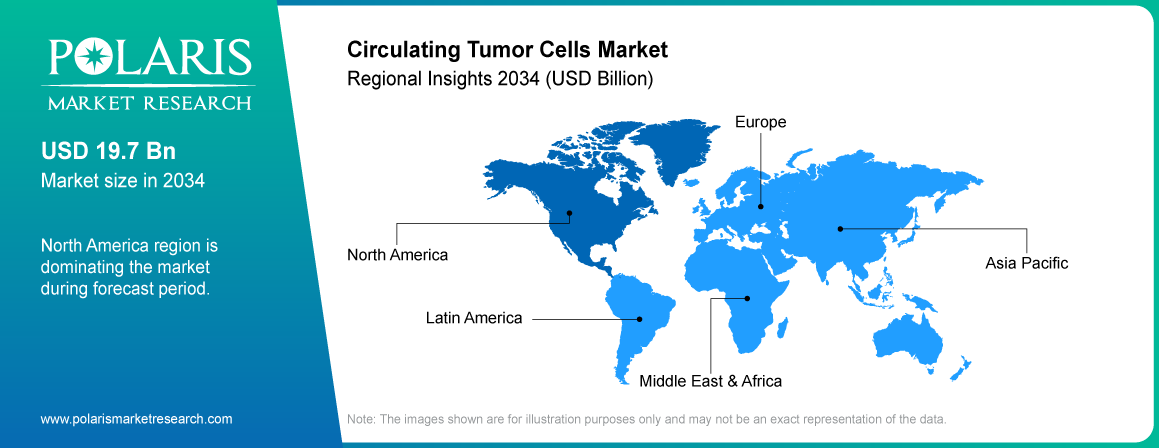
By region, the study provides circulating tumor cells market insights into North America, Europe, Asia Pacific, Latin America, and the Middle East & Africa. North America held the largest market share of 42.6% in 2025, driven by the region's advanced healthcare infrastructure, high adoption of advanced diagnostic technologies, and strong emphasis on research and development in oncology. The presence of key market players and ongoing investments in CTC-based diagnostic technologies further bolster the region’s dominance. Additionally, the increasing prevalence of cancer, coupled with rising demand for noninvasive diagnostic methods and personalized medicine, is contributing to North America's market leadership. Europe also represents a significant market, but North America's early adoption of liquid biopsy technologies and established healthcare systems place it at the forefront in terms of market share and growth potential.
The Asia Pacific circulating tumor cells market is expected to register the highest CAGR of 16.2% during the forecast period due to rapid advancements in healthcare infrastructure, rising cancer prevalence, and increasing awareness about early cancer detection. Countries such as Japan, China, and India are major contributors to this growth. Japan and China, in particular, are witnessing significant investments in oncology research and the development of noninvasive diagnostic technologies. The growing healthcare expenditure in these countries, along with the increasing adoption of liquid biopsy methods, is driving the demand for CTC technologies. According to the Organization for Economic Co-operation and Development, Japan spent USD 5,790 per capita on health as of 2025. In India, the rise in cancer cases and improvements in diagnostic facilities are likely to further fuel the market. The region’s vast population, coupled with the expanding healthcare access and rising demand for efficient diagnostic tools, positions Asia Pacific as a key growth area of the market (Source: oecd.org).
The Europe circulating tumor cells market is expected to exhibit a CAGR of 12.7% during the forecast period, driven by the growing emphasis on personalized medicine, advancements in cancer diagnostics, and increasing cancer prevalence. The region benefits from a well-established healthcare infrastructure and high research investment in oncology, particularly in countries such as Germany, the UK, and France. According to Germany Trade and Invest, German company BioNTech signed an agreement worth up to USD 11.1 billion with Bristol-Myers Squibb to develop cancer medication. With a strong focus on noninvasive diagnostic solutions, European countries are increasingly adopting liquid biopsy technologies, including CTC detection, to improve early cancer detection and treatment monitoring. Moreover, regulatory support and collaborations between academic institutions, healthcare providers, and private companies contribute to the market growth in this region. The ongoing adoption of precision oncology further fuels the demand for CTC-based diagnostics in Europe (Source: gtai.de).
Regulatory & Companion Diagnostics Standards
| Regulatory Aspect | Standard / Framework | Key Details |
| FDA Classification | 21 CFR 866.6020 | Class II Immunomagnetic Circulating Cancer Cell Selection and Enumeration System (Product Code NQI). |
| FDA-Cleared Platform | CellSearch (Menarini Silicon Biosystems) | Only FDA-cleared CTC enumeration system; 510(k) clearances for metastatic breast (2004), colorectal (2007), and prostate cancer (2008). |
| Intended Use | Adjunctive monitoring | Aid in monitoring patients with metastatic cancer; not standalone diagnostic or treatment-selection tool. |
| Quality & Risk Standards | ISO 14971; CLIA | Risk management (ISO 14971) for device development; CLIA high-complexity laboratory requirements for laboratory-developed CTC tests. |
| Performance Guidance | FDA Special Controls (2004) | Class II Special Controls specify reproducibility, interference, limits of detection, linearity, recovery, and cutoff validation. |
| Companion Diagnostics | FDA CDx pathway | No FDA-approved CTC-based companion diagnostics to date; LDTs require CLIA compliance and biomarker confirmation via FDA-cleared/approved tests when used for therapy selection. |
| EU/CE Mark | IVDR (EU) 2017/746 | CTC devices marketed in Europe require CE marking under In Vitro Diagnostic Regulation with clinical evidence and post-market surveillance. |
| Emerging Devices | De Novo / 510(k) | New enrichment platforms (e.g., ANGLE Parsortix) pursue FDA clearance via De Novo or 510(k) pathways for specific metastatic indications. |
Source: Polaris Market Research Analysis
Competitive Insights
Key players in the circulating tumor cells market include Menarini Silicon Biosystems, Sysmex Corporation, QIAGEN N.V., Bio-Techne Corporation, Thermo Fisher Scientific Inc., Apocell Inc., AngioDynamics, Epigenomics AG, Biolidics Limited, Circulogix, ScreenCell, Greiner Bio-One, Miltenyi Biotec GmbH, Fluxion Biosciences, CellBxHealth plc, Illumina, Inc., Bio-Rad Laboratories, Inc., Natera, Inc., and Sysmex Inostics GmbH. These companies actively develop, produce, and commercialize CTC detection technologies and devices, offering solutions ranging from cell enrichment kits to automated systems and molecular analysis platforms. They continue to contribute to the market growth through their innovative approaches to liquid biopsy technologies, noninvasive cancer diagnostics, and personalized oncology solutions.
The competitive landscape of the CTC industry is shaped by a mix of established players and newer entrants that focus on technology innovation and enhancing diagnostic capabilities. Companies such as Menarini Silicon Biosystems and Thermo Fisher Scientific offer a wide range of liquid biopsy solutions, including CTC detection kits and integrated systems that streamline the process of isolating and analyzing CTCs. Other companies, such as Bio-Techne and Miltenyi Biotec, focus on developing sophisticated laboratory tools and systems for high-throughput testing, expanding the scope of research applications. Additionally, companies such as Circulogix and AngioDynamics are focusing on creating specialized devices and platforms for improved CTC collection and analysis, positioning themselves to meet the growing demand for more efficient and accurate diagnostic tools.
The CTC market is becoming increasingly competitive as players strive to differentiate themselves through technological innovation, strategic partnerships, and geographic expansion. Companies such as QIAGEN N.V. and Bio-Techne have formed collaborations with academic and healthcare institutions to advance their CTC testing technologies and expand their market reach. Moreover, advancements in AI and machine learning are pushing companies to develop smarter diagnostic platforms that offer faster and more precise CTC analysis. The increasing preference for noninvasive cancer diagnostics and the rising focus on personalized medicine will likely drive further investments in R&D and foster continued competition among these key market players. As the market matures, companies will continue to innovate and refine their offerings to cater to the evolving needs of clinicians and researchers.
List of Circulating Tumor Cells Key Players
- AngioDynamics
- Apocell Inc.
- Biolidics Limited
- Bio-Rad Laboratories, Inc.
- Bio-Techne Corporation
- CellBxHealth plc
- Circulogix
- Epigenomics AG
- Fluxion Biosciences
- Greiner Bio-One
- Illumina, Inc.
- Menarini Silicon Biosystems
- Miltenyi Biotec GmbH
- Natera, Inc.
- QIAGEN N.V.
- ScreenCell
- Sysmex Corporation
- Sysmex Inostics GmbH
- Thermo Fisher Scientific Inc.
Circulating Tumor Cells Industry Developments
- July 2026: Plus Therapeutics, Inc. announced a collaboration with Genomic Testing Cooperative, LCA to integrate GTC’s NGS technology into the CNSide cerebrospinal fluid (CSF) assay platform. The deal is expected to deliver hundreds of DNA and RNA biomarkers from single CSF specimen, which is directly aligned with the recent NCCN Guidelines (V. 2.2026). It recognizes CSF CTC alongside tumor-derived DNA and expand the leptomeningeal treatment algorithm from “CSF cytology” to “CSF analysis” (Source: ir.cerenome.com)
- July 2026: Cancer Cell Diagnostics commercially launched CellSight DNA, a blood-based genomic profiling test that analyzes intact circulating tumor cells. The platform assessed more than 500 genes and identified key tumor markers, supporting comprehensive cancer profiling from a standard blood draw. (Source: clpmag.com)
- May 2026: CellBxHealth collaborated with AdventHealth for the use of its Parsortix CTC platform in two multi‑center studies that are advancing minimally invasive cancer monitoring. (Source: pharmatimes.com)
- August 2025: ANGLE plc entered a collaboration with Myriad Genetics, Inc. to enable the feasible use of Parsortix-derived CTC DNA with existing tissue-based diagnostic tests of Myriad Genetics. (Source: accessnewswire.com)
- July 2025: CiNTL Pharma B.V. and SmartCatch announced collaboration to advance precision oncology and AI-enabled clinical research solutions globally. With this deal, CiNTL Pharma’s vision for agentic software in clinical trial design and execution will be united with SmartCatch’s pioneering X-Tracker technology. X-Tracker, an automated, label-free platform, is used to isolate viable CTCs from whole blood and other biofluids. (Source: cintlpharma.com)
Testing Cost and Infrastructure
CTC testing requires sophisticated laboratory equipment, new technologies, and oncology expertise. These factors increase the cost of the procedure and reduce its availability, especially in smaller medical facilities. The isolation of rare tumor cells requires extensive infrastructure investment and expertise. This factor has become a significant limitation in adopting CTC testing in the healthcare system. Advanced medical facilities need to invest in new technologies which restrain the growth of industry.
Future Outlook
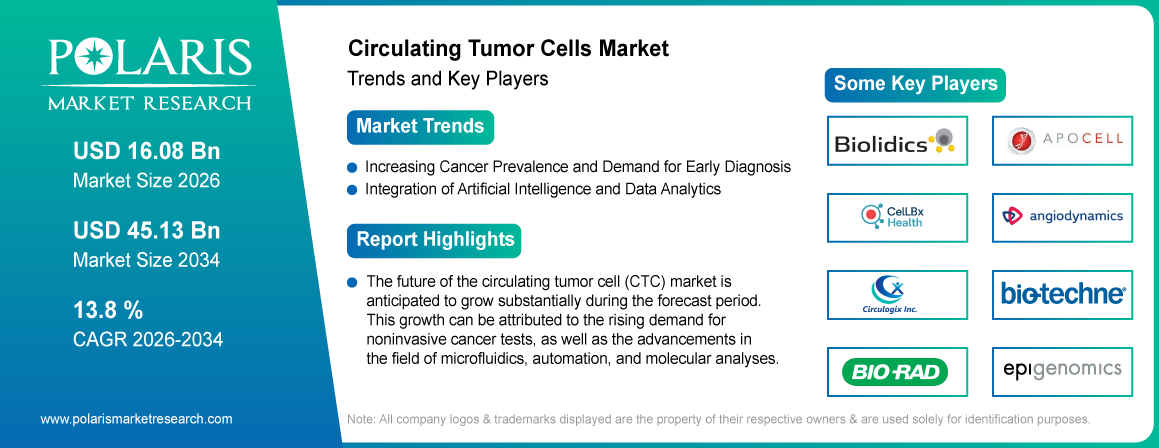
The future of the circulating tumor cell (CTC) market is anticipated to grow substantially during the forecast period. This growth can be attributed to the rising demand for noninvasive cancer tests, as well as the advancements in the field of microfluidics, automation, and molecular analyses. The CTC market is expected to benefit from its growing role in the clinical setting, as it is expected to facilitate treatment monitoring, drug development, and precision oncology. Moreover, the increasing adoption of liquid biopsies in healthcare organizations is expected to propel the CTC market growth in the years to come.
Research Methodology
- Market estimates are derived using a blend of primary and secondary research, validated through weighted-average and combined top-down/bottom-up modeling approaches.
- Secondary research covers company filings, clinical trial registries, liquid biopsy regulatory approvals, oncology diagnostics publications, industry journals, and paid third-party databases to build baseline estimates.
- Primary research includes interviews with key industry participants such as CTC technology providers, oncologists, clinical laboratory directors, and biopharmaceutical R&D professionals, to validate accuracy and capture forward-looking insights.
- Base year considered is 2025, with a forecast provided through 2034; revenues are expressed in USD Billion.
- Parent market is identified as the global liquid biopsy and cancer diagnostics market; the addressable segment is narrowed using CTC-based testing adoption rates across clinical and research settings.
- Bottom-up model aggregates regional CTC demand across technology, product, application, specimen, and end use, validated against vendor revenue disclosures from Menarini Silicon Biosystems, Thermo Fisher Scientific, QIAGEN, Bio-Rad, and others.
- Regional coverage spans North America, Europe, Asia Pacific, Middle East & Africa, and Latin America, further segmented by major countries.
- Projected 13.8% CAGR (2026–2034) reflects weighted analysis of rising global cancer incidence, growing preference for minimally invasive liquid biopsy over tissue biopsy, expanding use in treatment monitoring, and increasing pharmaceutical R&D investment in precision oncology.
- Findings are cross-validated across multiple estimation methods to ensure consistency, accuracy, and reliability of the final market sizing.
Market Segmentation
By Technology Outlook (Revenue-USD Billion, 2021–2034)
- CTC Detection & Enrichment Methods
- CTC Direct Detection Methods
- CTC Analysis
By Products Outlook (Revenue-USD Billion, 2021–2034)
- Kits & Reagents
- Blood Collection Tubes
- Devices or Systems
By Application Outlook (Revenue-USD Billion, 2021–2034)
- Clinical
- Research
By Specimen Outlook (Revenue-USD Billion, 2021–2034)
- Blood
- Bone Marrow
- Other Body Fluids
By End Use Outlook (Revenue-USD Billion, 2021–2034)
- Research & Academic Institutes
- Hospital & Clinics
- Diagnostic Centers
- Biopharmaceutical Companies
By Regional Outlook (Revenue-USD Billion, 2021–2034)
- North America
- U.S.
- Canada
- Europe
- Germany
- France
- UK
- Italy
- Spain
- Netherlands
- Russia
- Rest of Europe
- Asia Pacific
- China
- Japan
- India
- Malaysia
- South Korea
- Indonesia
- Australia
- Vietnam
- Rest of Asia Pacific
- Middle East & Africa
- Saudi Arabia
- UAE
- Israel
- South Africa
- Rest of Middle East & Africa
- Latin America
- Mexico
- Brazil
- Argentina
- Rest of Latin America
Circulating Tumor Cells Market Report Scope
| Report Attributes | Details |
| Market Size in 2025 | USD 14.15 billion |
| Market Size in 2026 | USD 16.08 billion |
| Revenue Forecast by 2034 | USD 45.13 billion |
| CAGR | 13.8% from 2026 to 2034 |
| Base Year | 2025 |
| Historical Data | 2021–2024 |
| Forecast Period | 2026–2034 |
| Quantitative Units | Revenue in USD billion and CAGR from 2026 to 2034 |
| Report Coverage | Revenue Forecast, Market Competitive Landscape, Growth Factors, and Industry Trends |
| Segments Covered |
|
| Regional Scope |
|
| Competitive Landscape |
|
| Report Format |
|
| Customization | Report customization as per your requirements with respect to countries, regions, and segmentation. |
Source: Polaris Market Research Analysis
How is the report valuable for an organization?
Workflow/Innovation Strategy
The circulating tumor cells market has been segmented into detailed segments of technology, products, specimen, and end use. Moreover, the study provides the reader with a detailed understanding of the different segments at both the global and regional levels.
Growth/Marketing Strategy
The growth strategy for the circulating tumor cells (CTC) market focuses on expanding product offerings, enhancing technological capabilities, and increasing market reach. Companies are investing in research and development to improve the sensitivity and accuracy of CTC detection methods, with a growing emphasis on integrating artificial intelligence and machine learning for better data analysis. Strategic partnerships with healthcare providers, research institutions, and biotechnology companies are also crucial for expanding product applications and increasing market penetration. Additionally, circulating tumor cells key players are focusing on geographical expansion, particularly in emerging markets, to capitalize on the rising demand for noninvasive cancer diagnostic solutions.
Circulating Tumor Cells Market FAQ's
The circulating tumor cells market was valued at USD 14.15 billion in 2025 and is projected to reach USD 45.13 billion by 2034. Rising demand for noninvasive diagnostics drives the market growth.
The market is expected to grow at a CAGR of 13.8% from 2026 to 2034. The growth will be driven by the increasing focus on precision oncology.
North America held the largest market share of 42.6% in 2025. The regional market growth is attributed to region's advanced healthcare infrastructure and high adoption of advanced diagnostic technologies.
Key players include Menarini Silicon Biosystems, Sysmex Corporation, QIAGEN N.V., Bio-Techne Corporation, Thermo Fisher Scientific Inc., ANGLE plc, Biolidics Limited, ScreenCell, Miltenyi Biotec GmbH, Fluxion Biosciences, and others.
The CTC detection and enrichment methods segment held the largest market share of 38.7% in 2025. This is due to its key role in isolating and purifying CTCs from blood samples for further analysis.
The kits and reagents segment accounted for the largest market share of 41.6% in 2025. Segment growth is driven by ongoing technological advancements that improve test sensitivity and ease of use.
Circulating Tumor Cells (CTCs) are cancer cells that break away from a tumor and enter the bloodstream. They can provide information about cancer progression, metastasis, and treatment response.
Key trends include advancements in liquid biopsy, AI-based CTC analysis, personalized medicine, automation, and the growing adoption of precision oncology.
New companies can focus on advanced detection technologies, AI integration, cost-effective testing, automation, and partnerships with healthcare and research organizations.
CTCs are intact cancer cells that enter the bloodstream, while circulating tumor DNA (ctDNA) consists of small DNA fragments released by tumor cells. CTCs provide cellular information, whereas ctDNA mainly provides genetic information about the tumor.
CTCs can support companion diagnostics by identifying tumor biomarkers and genetic changes that may help determine whether a patient is suitable for a specific targeted therapy. They can also support treatment monitoring and personalized cancer care.
The report can benefit pharmaceutical and biotechnology companies, diagnostic firms, hospitals, research institutions, investors, and healthcare organizations.
Download Sample Report of Circulating Tumor Cells Market
Please fill out the form to request a customized copy of the research report.


