
Healthcare Cybersecurity Market Size, Share, Trends and Forecast, 2026–2034
REPORT DETAILS
Healthcare Cybersecurity Market Summary
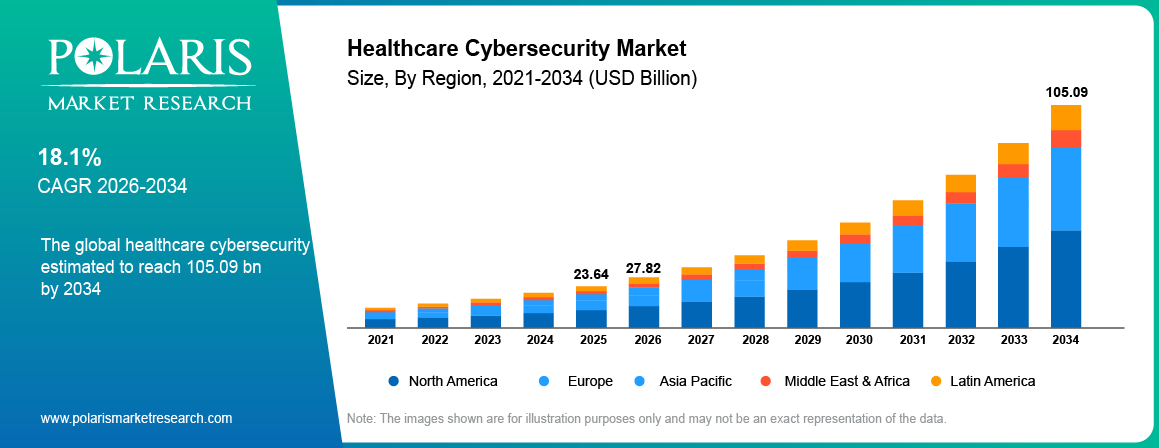
The global healthcare cybersecurity market was valued at USD 23.64 billion in 2025 and is projected to record a CAGR of 18.1% from 2026 to 2034. The growth is driven by rising healthcare data volume, rising cyberattacks, and an increase in adoption of connected medical devices.
Market Statistics
Key Takeaways
- North America dominated the market with the largest share of 39.5% in 2025 due to strict data security regulations and increased cyber-attacks.
- The market in Europe is expected to witness a significant CAGR of 17.6% during the forecast period due to strict data security regulations.
- The market in Asia Pacific is expected to record a CAGR of 20.4% during the projected period. The growth is attributed to rapid increase in digital healthcare services.
- The antivirus/antimalware segment accounted for the largest share of the healthcare cybersecurity market size with 26.3%. This is due to the increased incidence of malware attacks on hospitals.
- The DDoS segment is projected to register a CAGR of 19.3% during the forecast period, due to an increase in number of cyber-attacks.
Note: Figures and projections outlined in this report are the result of Polaris Market Research’s proprietary analytical processes, grounded in the latest available datasets and market observations.
What is Healthcare Cybersecurity?
Healthcare cybersecurity is the application of technology, products, policies, and processes to secure patient data, electronic health records (EHRs), hospital networks, internet-enabled medical devices, cloud infrastructure, and clinical systems. Hospital cybersecurity solutions ensure hospitals can operate safely while keeping patient data secure.
The market covers a variety of solutions, including identity & privileged access management, risk & compliance management, antivirus & anti-malware, DDoS mitigation, security information & event management (SIEM), and intrusion detection & prevention. However, there are new solutions emerging such as extended detection and response (XDR), Zero Trust Access, Cloud, and Internet of Medical Things (IoMT). Hospitals, health systems, health insurers, medical device manufacturers, and pharmaceutical & life science companies will purchase these solutions.
There are three main drivers for this market. First is an increase in cyberattacks. Cyber-attacks & IT incidents are the cause of most major breaches that are reported to the HHS Office for Civil Rights (OCR). Secondly, regulation. The OCR's Risk Analysis Initiative means many ransomware settlements now have a lack of enterprise risk analysis as their first finding. A new HIPAA Security Rule will also see Multifactor Authentication & Encryption become mandatory. Thirdly, connected care. The FDA's final guidance for February 2026 states that device cybersecurity forms part of safety & efficacy. This has seen Medical Device manufacturers and hospitals work to manage their software bill of materials (SBOM) and patches.
How Healthcare Cybersecurity Works
- Identify Assets: Identify all important healthcare data, systems, cyber device, and networks that need protection.
- Assess Risk: Find possible security threats and weaknesses that could expose patient data or disrupt hospital operations.
- Control Access: Allow only authorized staff to access patient information and healthcare systems.
- Monitor Networks and Devices: Continuously check systems and medical devices for unusual activities.
- Detect Threats: Identify cyberattacks, suspicious activities, or possible data breaches.
- Contain Threats: Take immediate corrective action plans to stop the attack and prevent further damage.
- Restore Systems: Recover affected data, systems, and services to bring healthcare operations back to normal.
- Feed Lessons Back: Review the incident, identify gaps, and improve security measures to prevent future attacks.
Ransomware vs Healthcare Data Breach
| Aspect | Ransomware Attack | Data Breach |
| Main Effect | Locks systems and often steals data first ("double extortion") | Unauthorized access to or disclosure of protected health information |
| Operational Impact | High: EHR downtime, diverted ambulances, delayed care | Can be none; systems may keep running |
| HIPAA Treatment | Presumed a breach of ePHI unless a low probability of compromise is shown | Breach notification rules apply |
| Recovery Focus | Restore from clean backups; rebuild systems | Contain access; notify affected individuals |
Source: Polaris Market Research Analysis
Market Dynamics
Driver: Rising Ransomware and Healthcare Data Breaches
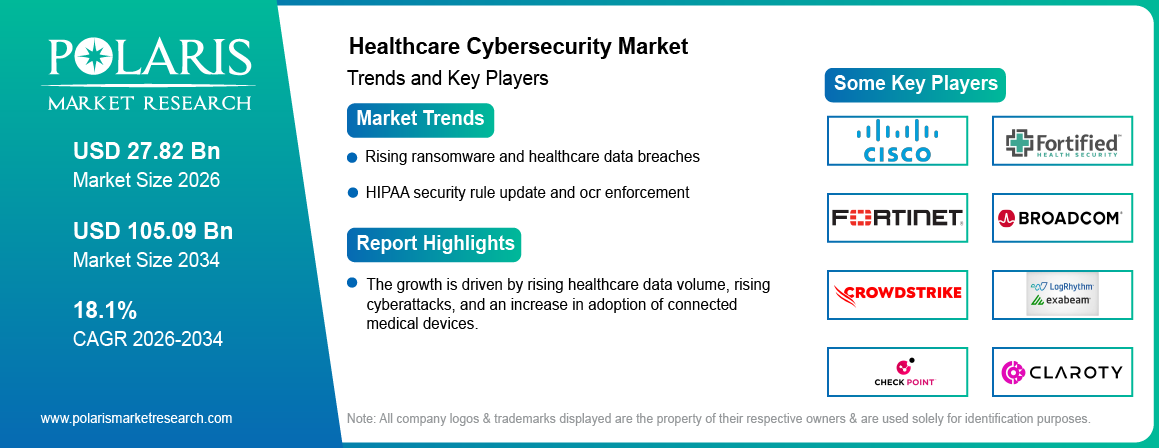
The growing number of ransomware attacks and data breaches is increasing the need for cyber security in healthcare. These attacks put patient information, hospital systems, and daily operations at risk. According to the HIPAA Journal, in 2025, 772 data breaches affected around 138.5 million individuals. Hacking and IT-related incidents were the main causes of data breach incidents. This is pushing hospitals and healthcare providers to invest more in cybersecurity to protect sensitive data and prevent service disruptions (Source: hipaajournal.com).
Driver: HIPAA Security Rule Update and OCR Enforcement
Stricter data protection requirements are increasing the need for healthcare cybersecurity solutions. In January 2025, HHS proposed an update to the HIPAA Security Rule to strengthen the protection of patient data. However, the proposed update has not yet become a final rule. At the same time, the Office for Civil Rights (OCR) continues to take action against healthcare organizations that fail to meet existing security requirements. Recent settlements and penalties are encouraging hospitals and healthcare providers to improve risk assessments, strengthen data protection, and invest in better cybersecurity systems (Source: hhs.gov).
Driver: FDA Medical Device Cybersecurity Requirements
The growing use of connected medical devices is increasing the need for stronger cybersecurity in healthcare. In February 2026, the FDA issued final guidance that strengthens cybersecurity expectations for medical device manufacturers. These requirements focus on identifying software risks, fixing security weaknesses, providing timely updates, and tracking the software used in medical devices. As a result, medical device manufacturers and hospitals are placing greater focus on protecting connected devices from cyberattacks and keeping patient data safe (Source: fda.gov).
Restraint: Legacy Operating Systems and Devices
Many hospitals use outdated systems such as computers, software, and medical devices that are difficult to upgrade. These systems may not support modern security solutions; they can also be costly to upgrade, delaying the implementation of advanced security measures in healthcare.
Restraint: 24/7 Availability
Hospitals rely on their systems and medical devices to run 24/7. Sometimes, they can be affected by implementing security updates, upgrades, and maintenance. To prevent causing any disruption to the hospitals, they may not make any changes. This means that it can be difficult to implement new security solutions.
Restraint: Lack of Cyber Security Experts
Many healthcare organizations lack skilled cyber security experts. This means that it can be difficult to recruit and retain experts. This increases pressure on staff as there aren’t enough people to deal with the security systems. It causes a delay in improving cybersecurity and increases the vulnerability of healthcare organizations.
Restraint: Security Issues from Third Parties
Hospitals often rely on external vendors for software, cloud services, medical devices, and IT support. This can cause security issues as they may have access to sensitive patient information. If a vendor has a cyber-attack then this can cause issues for the hospital. It can be difficult to manage security across many vendors and increases the risk of data breaches.
Restraint: Limited Budget for IT
Many hospitals do not have much of a budget for IT. They will prioritize spending on patients, medical devices, and every day running costs. They may not focus on investing in cyber security. Advanced security solutions can be costly to purchase. This can cause issues for smaller hospitals to put in place strong cyber security solutions.
Restraint: Cost to Comply
Healthcare organizations have strict data protection and cyber security requirements. This can cause extra costs as they need to perform regular checks, audits, training, upgrades, and documentation. These costs can cause an issue for smaller healthcare providers to implement new cyber security solutions.
Opportunity: Increasing Demand for IoMT Security Solutions
The increasing use of connected medical devices, such as patient monitors, smart beds, and imaging equipment, would create new opportunities for healthcare cybersecurity providers. These devices collect and share sensitive patient data but can be vulnerable to security threats. Solutions are therefore required to help healthcare organizations identify connected devices, monitor them, and spot any potential threats. This creates growth opportunities for cybersecurity providers to offer improved visibility, monitoring, and protection solutions.
Healthcare IT Security vs IoMT / Medical Device Security
| Factor | Healthcare IT (Servers, PCs, EHR) | IoMT/Connected Medical Devices |
| Patching | Regular vendor patch cycles | Often needs manufacturer validation; some devices cannot be patched quickly |
| Lifecycle | 3–5 years typical | 10+ years common; legacy operating systems persist |
| Agent Support | Endpoint agents widely supported | Usually agentless monitoring only |
| Primary Risk | Data theft and system outage | Patient-safety impact and clinical downtime |
| Key Control | EDR/XDR, MFA, backups | Asset inventory, SBOM review, network segmentation |
| Regulatory Anchor | HIPAA Security Rule | FDA premarket guidance and FD&C Act Section 524B |
Source: Polaris Market Research Analysis
Opportunity: Rising Use of AI Security Solutions
The rising number of cyberattacks is creating demand for AI in cybersecurity solutions in healthcare. AI can help security teams improve detection of suspicious activity, detect threats, and respond to cyberattacks quicker. AI further helps reduce the workload of IT security teams. Healthcare can make use of these solutions to improve threat monitoring and response times. This would create opportunities for companies. It will offer AI-based security monitoring and detection solutions.
Opportunity: Growing Adoption of Managed Security Services
Many small hospitals, clinics, and rural healthcare providers do not have the budget or specialist staff to manage their own cybersecurity. This creates opportunities for managed security service providers to offer cost-effective solutions to protect their systems. These solutions provide constant monitoring of systems, detection of threats, protection of data, and incident response. Smaller healthcare organizations can outsource their cybersecurity requirements, which will improve their security. This is creating new business opportunities for cybersecurity service providers.
Opportunity: Increasing Demand for Identity Security Solutions
Numerous users within a healthcare organization, such as doctors, nurses, administrators, and third-party service providers, need access to patient data and hospital systems. It is becoming increasingly important to manage user access. Identity security solutions allow healthcare organizations to ensure only authorized users have access to sensitive information. Solutions such as multi-factor authentication and identity management can reduce the risk of unauthorized access and data theft. This creates opportunities for cybersecurity companies to offer enhanced identity and access protection solutions.
Healthcare Cyber Threat Landscape
| Threat Vector | How it Affects Healthcare | Key Controls and Lessons |
| Ransomware: encryption + exfiltration | Attackers increasingly use double extortion: they steal PHI and financial data, encrypt EHRs, imaging, labs, pharmacy, and billing systems, then threaten publication if payment is not made. This can force ambulance diversion, cancel procedures, delay diagnosis and treatment, and disrupt claims and payments. | Maintain tested, offline/immutable backups; network segmentation; isolate infected systems quickly; and rehearse clinical, financial, and administrative downtime procedures. Recovery can take weeks or months even after a ransom payment. |
| Phishing, credential theft, and BEC | Stolen credentials and business email compromise give attackers access to email, remote portals, EHRs, and payment workflows. Generative AI makes phishing more convincing and scalable, increasing risks of fraudulent payment requests, account takeover, and ransomware entry. | Enforce phishing-resistant MFA, especially for privileged, remote-access, vendor, and executive accounts, apply least privilege, monitor anomalous logins, and run continuous staff awareness and payment-verification training. The Change Healthcare intrusion began through a Citrix portal without MFA. |
| Third-party and supply-chain cyber risk | Business associates, claims clearinghouses, EHR vendors, cloud providers, and connected-device suppliers create concentration risk: a compromise at one vendor can affect thousands of providers simultaneously. PHI may also be exposed through vendor systems even when a hospital’s own network is not breached. | Conduct vendor risk assessments, require contractual security and breach notification terms, monitor third-party access, and prepare vendor-outage playbooks. The 2024 Change Healthcare attack disrupted claims, eligibility, pharmacy, and payment flows nationwide. |
| Cybersecurity as a patient-safety issue | Cybersecurity is not only confidentiality: attacks threaten the availability of clinical systems and the integrity of records, orders, imaging, medication data, and device functions. Lost access or corrupted data can delay care, cause treatment errors, and divert patients to other facilities. | Treat cyber resilience as clinical resilience: protect critical care pathways, validate data integrity, maintain manual workflows, and plan for operations without core systems for at least 30 days. |
Source: Polaris Market Research Analysis
Report Segmentation
By Type of Solution
Antivirus/antimalware accounted for the largest revenue share of 26.3% of the healthcare cybersecurity market size in 2025. The dominance is attributed to the increased number of malware attacks on hospitals. Healthcare organizations contain high volumes of sensitive patients’ information and are therefore attractive to cyber criminals. Antivirus/antimalware solutions help identify and block malicious software. With the increased use of smart devices, computers and digital healthcare solutions there is an increased demand for these solutions.
Identity and access management segment is expected to register a CAGR of 18.6% during the healthcare cybersecurity market forecast period. The growth is attributed to the growth of the identity and access management in healthcare industry. Hospitals and healthcare facilities are composed of multiple users, including doctors, nurses, administration etc. This requires them to have access to various systems. With the increased adoption of EHRs, remote access, and cloud-based services, there is a rising requirement for solutions that help verify identities.
Risk and compliance management segment is expected to record a CAGR of 17.8% during the forecast period. This is due to the rising demand for data protection solutions. Healthcare organizations must regularly identify any security risks and ensure that patients’ information is protected. With the increase in cyber-attacks, hospitals are beginning to implement risk management solutions. They also must comply with regulations such as HIPAA. This means that there is an increased demand for solutions, which help manage compliance.
DDoS mitigation segment is expected to register a CAGR of 19.3% during the forecast period. This is due to the increased risk of cyberattacks. These attacks can cause disruption to hospital websites and online services. With the increased use of telehealth systems, patient portals, and cloud-based healthcare solutions, there is an increased need for solutions to mitigate DDoS attacks. Healthcare providers are implementing DDoS mitigation solutions.
Security information and event management (SIEM) is expected to exhibit a CAGR of 18.9% during the forecast period. This is driven by the increased need to monitor healthcare systems. Hospitals use multiple digital systems, networks, and medical devices. Thus, it can be difficult to manually monitor security. SIEM solutions will gather and analyze security information across multiple systems. With the increased incidence of cyber-attacks, healthcare organizations are beginning to implement these solutions to identify any abnormal activity quicker.
Intrusion detection systems (IDS) segment is expected to register a CAGR of 17.6% during the forecast period. This is fueled by the increased need to identify unauthorized access and suspicious activity. Hospitals have sensitive patient records, smart medical devices, and important digital systems. IDS solutions help identify any abnormal activity within networks. With the increased use of smart healthcare devices, cloud-based systems and digital patient records there is an increased demand for solutions.
By Type of Threat
The malware segment accounted for the largest healthcare cybersecurity market share with 28.3% in 2025. This is propelled by an increase in cyber-attacks. Malware can cause damage to systems, steal sensitive information, and disrupt hospital operations. With an increase in digital patient records, smart medical devices, and online healthcare systems, there is increased risk of malware attacks. Therefore, healthcare organizations are looking to improve their security by using advanced solutions to detect and prevent malicious software.
The DDoS segment is projected to exhibit a CAGR of 19.3% during the forecast period due to rising cyberattacks. These attacks can cause disruption to hospital websites, patient portals, telehealth platforms, and other critical systems. As reliance on digital healthcare services grows, demand for constant uptime is increasing. Healthcare providers are therefore investing in DDoS protection solutions.
The advanced persistent threat segment is projected to record a CAGR of 19.7% during the forecast period. This is due to an increase in targeted cyber-attacks. Hackers will gain access to systems and will sit undetected for long periods of time. They will target patient records, medical research and sensitive business information. As healthcare data becomes increasingly valuable, organizations are investing in advanced detection and real-time monitoring.
The spyware segment is projected to register a CAGR of 18.4% during the forecast period. This is driven by an increase in risk of unauthorized surveillance. Spyware secretly collects patient information, login credentials, and sensitive information from devices. With an increase in digital patient records, smart devices, and online healthcare systems, there are more opportunities for attacks to occur. Healthcare organizations are also investing in advanced endpoint security and monitoring to prevent any data being stolen.
The lost or stolen devices segment is projected to grow at a CAGR of 16.9% during the forecast period. This is due to an increase in the usage of devices such as laptops, smartphones, tablets, and portable medical devices within healthcare facilities. These can contain sensitive patient information, which can pose a risk if lost or stolen. With increased adoption of online healthcare services and mobile patient records there are increased risks. Healthcare providers are investing in tracking, encryption and remote deletion solutions.
By End Use
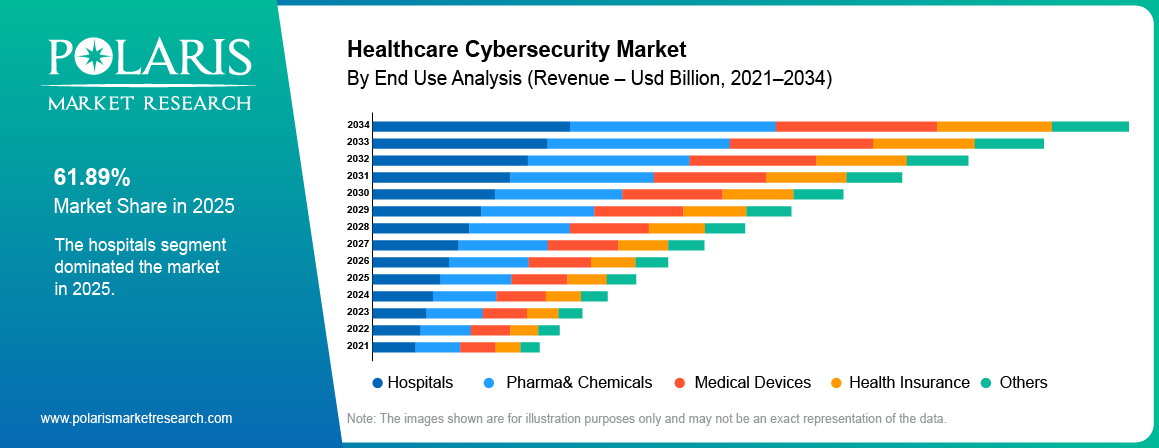
The hospitals segment dominated the healthcare cybersecurity industry in 2025 with a 61.89% share. This is due to an increase in the use of electronic medical records, connected medical devices, and digital hospital systems. Hospitals hold large volumes of sensitive patient data. Therefore, they are a prime target for ransomware. Cyber-attacks can disrupt medical services. With an increased need to secure hospital networks, ensure continuous operations, and comply with data protection regulations, hospitals are increasing their cyber security investments.
The pharma & chemicals segment is expected to experience a CAGR of 17.5% during the forecast period. This is due to the rising requirement to secure sensitive research data, drug development, and manufacturing data. Pharmaceutical companies contain highly valuable intellectual property and business data, meaning they are more prone to cyber-attacks. Due to an increase in digitized manufacturing, cloud technology and connected technologies, pharmaceutical companies are investing in cyber security solutions to help protect their data.
The medical devices segment is projected to grow at a CAGR of 18.8% over the forecast period. This is attributed to an increase in usage of connected devices, remote monitoring devices, and smart medical devices. These devices capture and transmit sensitive patient data, which can make them vulnerable to cyber-attacks. Security threats can also impact the performance of these medical devices. With an increase in IoMT (Internet of Medical Things) devices, manufacturers, and healthcare providers are investing in cyber security solutions to protect medical devices.
The health insurance segment is expected to record a CAGR of 17.9% over the forecast period. This is due to an increase in the requirement to secure sensitive customer, medical and financial data. Health insurance companies hold large volumes of personal and financial data that makes them more prone to cyber theft and fraud. With an increase in digitizing insurance, online claims and cloud services, healthcare insurers are looking to implement stronger cyber security solutions to help protect customer data.
Security Priorities by End Use
| End Use | Assets Protected | Main Threats | Top Priorities |
| Hospitals & Health Systems | EHR, clinical workstations, medical devices, patient portals | Ransomware, phishing, vendor compromise | Uptime, segmentation, backups, MFA |
| Medical Device Manufacturers | Device software, firmware, update servers | Exploitable components, insecure updates | Secure design, SBOM, 524B documentation, postmarket monitoring |
| Health Insurers / Payers | Member and claims data, payment systems | Credential theft, BEC, third-party breaches | Identity security, fraud detection, vendor risk |
| Pharmaceuticals & Chemicals | R&D and clinical-trial data, manufacturing OT | IP theft, APTs, OT disruption | Data protection, OT security, supply-chain assurance |
Source: Polaris Market Research Analysis
Key Technologies in Healthcare Cybersecurity
Identity and Access Management vs Zero Trust
Healthcare identity and access management (IAM) helps ensure that patients’ records, hospital systems and any sensitive data can only be accessed by those who are authorized. This is done using multi factor authentication (MFA), single sign on and access rights. IAM also ensures that when new employees come into the organization or their roles change, their access to systems gets updated. Zero trust architecture ensures users and devices are always verified. This helps prevent unauthorized access and stealing of data.
IAM vs Zero Trust in Healthcare
| Aspect | Identity and Access Management (IAM) | Zero Trust |
| What it is | Tools and processes that create, authenticate and govern user identities and their access rights | A security architecture that verifies every access request continuously, assuming no user, device or network is trusted by default |
| Scope | People and service accounts | Identity, device, network, application and data together |
| Typical controls | MFA, single sign-on, role-based access, privileged access management, joiner-mover-leaver workflows | Least-privilege policies, device posture checks, micro-segmentation, continuous session evaluation |
| Healthcare example | Badge-tap SSO for clinicians across EHR workstations | Restricting an infusion-pump network segment so only the pump-management server can reach it |
| Relationship | A building block | The overall model; depends on strong IAM |
Source: Polaris Market Research Analysis
SIEM, XDR, and Healthcare Security Operations Centers
SIEM and extended detection and response (XDR) help to monitor hospital IT systems and identify potential cyber threats. SIEM helps gather data and identify a potential suspicious activity from the hospital network, electronic health records, computers and cloud systems. XDR gathers information from various security tools to give a greater insight into the potential threats. Security Operations Centre (SOCs) help to monitor systems 24/7 so cyber-attacks can be identified. SOC teams will also look into security issues and respond quickly. If a hospital does not have enough people in their security team, they can use external security providers.
SIEM vs XDR vs Managed SOC
| Aspect | SIEM | XDR | Managed SOC / MDR |
| Core job | Collect and correlate logs for detection and compliance reporting | Correlate endpoint, network, identity, email, and cloud telemetry for detection and response | Outsourced 24/7 monitoring, investigation and response |
| Data sources | Broad, any log source | Mostly vendor-native telemetry, plus integrations | Whatever tools the provider operates for the client |
| Response | Limited without SOAR | Built-in response actions | Analyst-led response |
| Fit in healthcare | Audit logging and HIPAA reporting | Faster ransomware containment on endpoints | Hospitals without in-house 24/7 security staff |
Source: Polaris Market Research Analysis
Cloud, EHR, Telehealth, and API Security
With an increase in cloud, hospital electronic health records and telehealth, there is an increase in the need to secure healthcare data. Data is stored and shared and can be compromised due to poor passwords, incorrect security settings, and unauthorized access. Data must be encrypted, logged in securely, and constantly monitored. Third party service providers must also have the correct security measures in place. Having strong cybersecurity will help hospitals offer healthcare services online whilst protecting patients’ data.
Cyber Resilience: Incident Response, Backup and Business Continuity
Cyber resilience helps healthcare organizations to keep operations running or get back up and running quickly following an attack, failure, and/or data breach. Hospitals will need to ensure they have secure data backups in place so they can get their important data back. They will also need clear incident response plans to know how to respond to cyber incidents. They should also know what systems to get back up and running first. Testing backups regularly will help hospitals be prepared. This will help reduce disruption, protect patient care, and get back to normal operations quickly.
Healthcare Cybersecurity Market Regional Insights
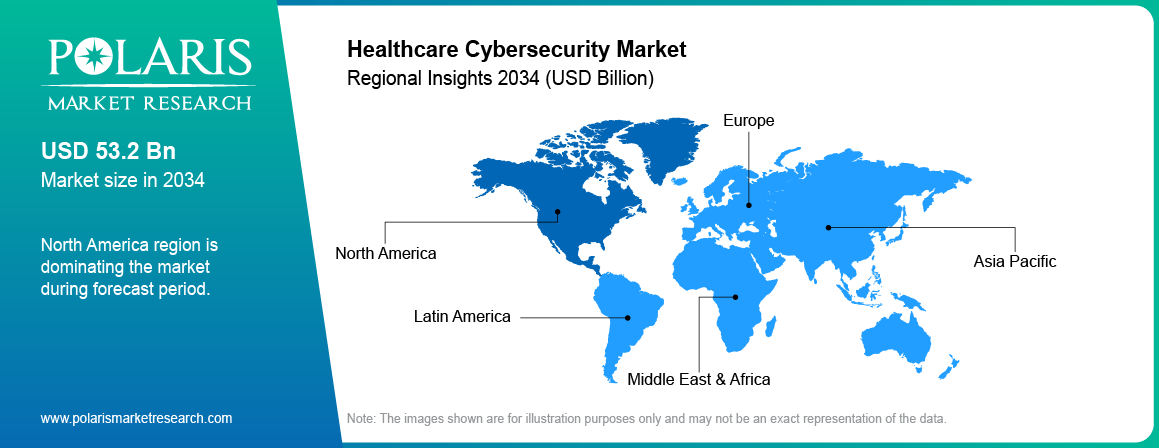
North America dominated the global healthcare cybersecurity market share with 39.5% in 2025. This is due to strict data security regulations and increased cyber-attacks. The HIPAA regulations and OCR enforcement in the U.S. are encouraging hospitals to secure patient information. There is an increase in demand for security with the increasing cybersecurity requirements set by the FDA within medical devices. PIPEDA in Canada is also encouraging healthcare organizations to protect personal information. There is an increase in digital health records and connected medical devices, which is driving the need for healthcare cybersecurity in North America.
The Europe healthcare cybersecurity market is expected to witness a significant CAGR of 17.6% during the forecast period. Due to strict data security regulations, healthcare organizations are being encouraged to implement secure data measures. Regulations such as GDPR and NIS2 are driving growth. There is an increase in demand for cybersecurity with increased cyber-attacks on hospitals. With an increase in digital health records, telemedicine, and connected medical devices ,healthcare organizations are looking to invest in more secure systems, driving the healthcare cybersecurity market growth in Europe.
The Asia Pacific healthcare cybersecurity market is expected to register a CAGR 20.4% during the forecast period. With a rapid increase in digital healthcare services, countries like China, India, Japan and Australia are investing in electronic health records, telemedicine, and connected medical devices. This rising adoption of digital services is driving the increased risk of cyber-attacks and data breaches with patient information. This is fueling the demand for cybersecurity. Increasing government investment in healthcare and increased awareness around data security encourage hospitals to invest in advanced cybersecurity solutions, thereby fueling the industry growth.
The Latin America healthcare cybersecurity market accounted for 8.2% revenue share in 2025. Due to increase in digital healthcare services, countries such as Brazil, Mexico and Argentina are implementing digital health records, telemedicine and online healthcare. This has increased the need for securing patient information. Increased investment into healthcare IT and increased awareness around data security regulations is encouraging hospitals to implement secure systems in the region.
The Middle East and Africa healthcare cybersecurity market is expected to witness growth rate of 19.1% during the forecast period due to increased investments into digital healthcare. Countries such as Saudi Arabia, UAE, South Africa etc., are embracing digital solutions such as electronic health records, telemedicine and smart hospitals. As more countries are embracing digital solutions there is an increased requirement to ensure healthcare systems and data are secure. Government run digital projects and increasing awareness is also driving demand in the market.
Healthcare Cybersecurity Use Cases
| Use case | Scenario | Cybersecurity response | Business and patient impact |
| EHR ransomware | Ransomware encrypts or locks the EHR and related scheduling, pharmacy, and billing systems, while attackers exfiltrate PHI and demand payment. | Isolate affected systems, activate incident response, restore from immutable backups, use downtime procedures, and notify patients and regulators as required. | Prevents or limits appointment cancellations, treatment delays, claims disruption, and extended manual operations. |
| Vulnerable infusion pumps or monitors | Connected infusion pumps, patient monitors, or imaging devices contain unpatched vulnerabilities or run legacy software accessible from the clinical network. | Maintain an IoMT inventory, segment device networks, monitor anomalous traffic, apply vendor patches where possible, and use compensating controls. | Reduces risk of device manipulation, clinical downtime, patient-safety incidents, and lateral movement into hospital systems. |
| Phishing of clinical staff | Nurses, physicians, or administrators receive AI-generated phishing emails impersonating IT, executives, or vendors to steal credentials or trigger fraudulent payments. | Deploy phishing-resistant MFA, email filtering, staff awareness training, suspicious-login monitoring, and payment-verification workflows. | Lowers credential theft, account takeover, ransomware entry, and business email compromise losses. |
| Compromised remote access | Attackers obtain credentials for a clinician, administrator, or vendor through an MFA-less VPN or remote-access portal and move into internal systems. | Enforce MFA and conditional access, restrict privileged access, monitor session behavior, revoke unused accounts, and segment remote-access pathways. | Prevents unauthorized EHR access, data theft, ransomware in healthcare deployment, and disruption of remote care or administrative operations. |
| Vendor or third-party breach | A claims clearinghouse, EHR vendor, cloud provider, or business associate is breached, exposing PHI or interrupting services used by many providers. | Assess vendor risk, require breach-notification terms, monitor third-party access, prepare vendor-outage playbooks, and validate data integrity after restoration. | Protects continuity of claims, eligibility, telehealth, and interoperability services while limiting PHI exposure and compliance risk. |
Source: Polaris Market Research Analysis
Key Market Players & Competitive Insights
The healthcare cyber security market is competitive with various global tech giants and healthcare-specific security companies. Some key players in the market include Broadcom, Cisco, Microsoft, IBM, Palo Alto Networks, CrowdStrike, Fortinet and Check Point. These companies offer products that help with data security, identity threat detection and response, protecting networks, and managing access. Other companies like Claroty, Imprivata and Fortified Health Security are also providing healthcare specific security services. Innovation, using AI to detect threats, and forming partnerships are being focused on by players in the market.
Vendor Positioning
| Company | Category | Healthcare-Relevant Strength |
| Palo Alto Networks | Network, SASE, XDR | Next-generation firewalls, Cortex XDR/XSIAM, Unit 42 incident response |
| CrowdStrike | Endpoint, XDR | Falcon endpoint protection and managed threat hunting |
| Microsoft | Identity, XDR, SIEM | Entra ID, Defender XDR, Sentinel; rural hospital cybersecurity program (2024) |
| Cisco | Network, SIEM | Network security plus Splunk SIEM and observability |
| Fortinet | Network, OT | Firewalls, SD-WAN and segmentation for clinical networks |
| IBM | Services | Managed security and consulting; Palo Alto Networks is its preferred security partner |
| Check Point Software Technologies | Network, cloud | Firewall and cloud security |
| Trellix | Endpoint, XDR | Combined FireEye product and McAfee Enterprise portfolios |
| Claroty (incl. Medigate) | IoMT / CPS | xDome device visibility and risk for hospitals |
| Armis (ServiceNow) | IoMT / asset intelligence | Agentless device discovery; part of ServiceNow since Apr 2026 |
| Fortified Health Security | Healthcare MSSP | Managed security services built only for healthcare |
| Imprivata | Healthcare IAM | Clinical SSO and privileged access [ANALYST: confirm inclusion] |
| Trend Micro | Endpoint, cloud | Endpoint, server and cloud workload protection |
| Sophos | Endpoint, MDR | MDR services; acquired Secureworks (2025) |
| Thales (Imperva) | Data & application security | Database, API and web-application protection |
Source: Polaris Market Research Analysis
List of Healthcare Cybersecurity Companies
- Broadcom Inc. (Symantec)
- Check Point Software Technologies Ltd.
- Cisco Systems, Inc.
- Claroty (including Medigate)
- CrowdStrike Holdings, Inc.
- Exabeam (LogRhythm)
- Fortified Health Security
- Fortinet, Inc.
- Hewlett Packard Enterprise (Juniper Networks)
- IBM Corporation
- Imprivata, Inc.
- Kaspersky
- Microsoft Corporation
- Palo Alto Networks, Inc.
- Sophos Ltd.
- Thales (Imperva)
- Trellix
- Trend Micro Incorporated
Recent Developments
- November 2026, Omega Systems launched a managed AI suite to help healthcare and financial-services organizations adopt AI, protect sensitive data, and automate workflows. The suite provides AI posture assessment, governance, security monitoring, and industry-specific compliance support for HIPAA, SEC, and FINRA requirements. (Source: prnewswire.com)
- October 2026, The White House and HHS launched Project Lifeline 250, a six-month pilot offering rural hospitals free cybersecurity hardware and services. Technology firms will upgrade defenses, provide backup drives, and help replace insecure legacy systems, beginning in South Carolina. (Source: healthcaredive.com)
- October 2026, Anthropic expanded its Cyber Verification Program and invited hospitals to apply. The three-tier program gives verified healthcare security teams access to advanced Claude models for vulnerability assessment, incident response, malware analysis, and authorized testing, while retaining safeguards against harmful cyber activity. (Source: healthcareitnews.com)
Future Outlook
The healthcare cybersecurity market is expected to witness strong growth in the coming years. The market growth would be driven by the increasing adoption of Zero Trust security, AI-based threat detection, and connected medical device protection. Healthcare organizations will focus more on monitoring IoMT devices, managing third-party security risks, and protecting patient data. Additionally, future updates to HIPAA requirements are expected to encourage further investments in cybersecurity solutions.
Research Methodology
- Market estimates are derived using a blend of primary and secondary research, validated through weighted-average and combined top-down/bottom-up modeling approaches.
- Secondary research covers vendor filings, healthcare data breach reports, HIPAA and GDPR compliance frameworks, healthcare IT spending data, industry journals, and paid third-party databases to build baseline estimates.
- Primary research includes interviews with key industry participants such as cybersecurity solution providers, hospital IT and security officers, medical device manufacturers, and health insurance compliance professionals, to validate accuracy and capture forward-looking insights.
- Base year considered is 2025, with a forecast provided through 2034; revenues are expressed in USD Billion.
- Parent market is identified as the global cybersecurity market; the addressable segment is narrowed using security spending ratios across hospitals, pharmaceutical companies, medical device makers, and insurers.
- Bottom-up model aggregates regional healthcare cybersecurity demand across solution type, threat type, and end use, validated against vendor revenue disclosures from Cisco, Palo Alto Networks, Fortinet, Microsoft, IBM, and others.
- Regional coverage spans North America, Europe, Asia Pacific, Middle East & Africa, and Latin America, further segmented by major countries.
- Projected 18.1% CAGR (2026–2034) reflects weighted analysis of escalating ransomware attacks on healthcare providers, rapid digitization of patient records and connected medical devices, tightening data protection regulations, and growing adoption of cloud-based healthcare systems.
- Findings are cross-validated across multiple estimation methods to ensure consistency, accuracy, and reliability of the final market sizing.
Healthcare Cybersecurity Market Segmentation
By Type of Solution Outlook (Revenue – USD Billion, 2021–2034)
- Identity and Access Management
- Risk and Compliance Management
- Antivirus and Antimalware
- DDoS Mitigation
- Security Information and Event Management
- Intrusion Detection System/ Intrusion Prevention System
- Others
By Type of Threat Outlook (Revenue – USD Billion, 2021–2034)
- Malware
- DDoS
- Advanced Persistent Threat
- Spyware
- Lost or Stolen Devices
- Others
By End Use Outlook (Revenue – USD Billion, 2021–2034)
- Pharma & Chemicals
- Medical Devices
- Health Insurance
- Hospitals
- Others
By Regional Outlook (Revenue – USD Billion, 2021–2034)
- North America
- U.S.
- Canada
- Europe
- Germany
- France
- UK
- Italy
- Spain
- Netherlands
- Russia
- Rest of Europe
- Asia Pacific
- China
- Japan
- India
- Malaysia
- South Korea
- Indonesia
- Australia
- Vietnam
- Rest of Asia Pacific
- Middle East & Africa
- Saudi Arabia
- UAE
- Israel
- South Africa
- Rest of the Middle East & Africa
- Latin America
- Mexico
- Brazil
- Argentina
- Rest of Latin America
Healthcare Cybersecurity Market Report Scope
| Report Attributes | Details |
| Market Size in 2025 | USD 23.64 Billion |
| Market Size in 2026 | USD 27.82 Billion |
| Revenue Forecast in 2034 | USD 105.09 Billion |
| CAGR | 18.1% from 2026 – 2034 |
| Base Year | 2025 |
| Historical Data | 2021 – 2024 |
| Forecast Period | 2026 – 2034 |
| Quantitative Units | Revenue in USD Billion and CAGR from 2026 to 2034 |
| Segments Covered | By Type of Solution By Type of Threat By End Use |
| Regional Scope | North America, Europe, Asia Pacific, Latin America, Middle East & Africa |
| Customization | Report customization as per your requirements with respect to countries, region, and segmentation |
Source: Polaris Market Research Analysis
Healthcare Cybersecurity Market FAQ's
The market size was USD 23.64 billion in 2025 and is expected to reach USD 105.09 billion by 2034.
The healthcare cybersecurity market is expected to record a CAGR of 18.1% during the forecast period.
Healthcare cybersecurity protects patient information, hospital networks, medical devices, and digital healthcare systems from cyberattacks, data theft, and unauthorized access.
Hospitals store valuable patient data and need continuous system access, making them attractive targets for cybercriminals seeking financial gains.
No, the updated HIPAA Security Rule remains proposed, with a target of July 2027; the existing rule remains in force.
IoMT cybersecurity protects connected medical devices from cyber threats. The FDA requires security plans, vulnerability management, software tracking, and timely security updates.
Zero Trust means verifying every user and device before granting access to hospital systems, patient records, and sensitive information.
Leading companies include Cisco, Microsoft, IBM, Fortinet, Palo Alto Networks, CrowdStrike, Broadcom, Claroty, Imprivata, and Check Point.

Download Sample Report of Healthcare Cybersecurity Market
Please fill out the form to request a customized copy of the research report.


