
Hemophilia A Treatment Market Research Report, Size, Share & Forecast by 2026 - 2034
REPORT DETAILS
Hemophilia A Treatment Market Summary
The global hemophilia A treatment market size was valued at USD 12.03 billion in 2025. The market is projected to grow from USD 12.27 billion in 2026 to USD 14.82 billion by 2034, exhibiting a CAGR of 2.35% from 2026 to 2034. Growing consciousness about hemophilia, growing acquisition of prophylactic treatment regimens, and gene therapy research are some critical factors propelling the market forward.
Market Statistics
Hemophilia A Treatment Market Key Takeaways
- In 2025, North America dominated the global market with 43.2% revenue share. The leading position is supported by the rising acquisition of advanced therapies across the region.
- The U.S. led the North American market with 82.1% share in 2025. Increasing investments in research and development bolster the U.S. market dominance.
- The Asia Pacific market is expected to exhibit a significant CAGR of 9.8% during the forecast period. Growing prevalence of hemophilia in populated countries such as China and India fuel the regional market expansion.
- Prophylaxis held the largest revenue share of 58.6% in 2025, due to increased awareness of its long-term benefits.
- Factor replacement therapy accounted for the largest share of 66.9% in 2025. This is due to its rising usage as the primary treatment for hemophilia A.
Note: Figures and projections outlined in this report are the result of Polaris Market Research’s proprietary analytical processes, grounded in the latest available datasets and market observations.
Introduction to Hemophilia A Treatment
Hemophilia A treatment are used to treat a genetic bleeding disorder resulting from insufficient clotting factor VIII. Factor replacement therapy and prophylactic therapies are some treatment methods that can be used. Non-factor replacement therapies, monoclonal antibodies, and gene therapies are other types of treatment that are employed in the management of the condition. They prevent bleeding episodes and reduce complications. They improve quality of life for patients.
The hemophilia A treatment market focuses on therapies for managing hemophilia A, a genetic bleeding disorder caused by insufficient clotting factor VIII. This market includes recombinant therapies, plasma-derived therapies, gene therapies, and emerging advancements in prophylactic treatments.
Rising awareness about hemophilia, growing adoption of prophylactic treatment regimens, and advancements in gene therapy research are a few of the key factors driving the hemophilia A treatment market growth. A notable trend is the development of extended half-life factor VIII products, offering reduced dosing frequency. Additionally, significant investments in innovative therapies, including non-factor replacement products and gene-editing technologies, are shaping the market landscape.
Hemophilia A Treatment Market Trends and Growth Factors
- Current clinical attempts have portrayed the possibility for continuing expression for factor VIII decreasing or diminishing the requirement for regular infusions is driving the market demand.
- Extended half-life (EHL) factor VIII commodities are acquiring traction as they enhance patient conformity by decreasing infusion frequency which is pushing the market growth.
- Notable funding in inventive therapies involving non factor replacement commodities and gene editing techniques are molding the market topography.
- The elevated prices of progressive hemophilia treatment showcases a prominent provocation to the market restricting patient accessibility, and impeding wider acquisition.
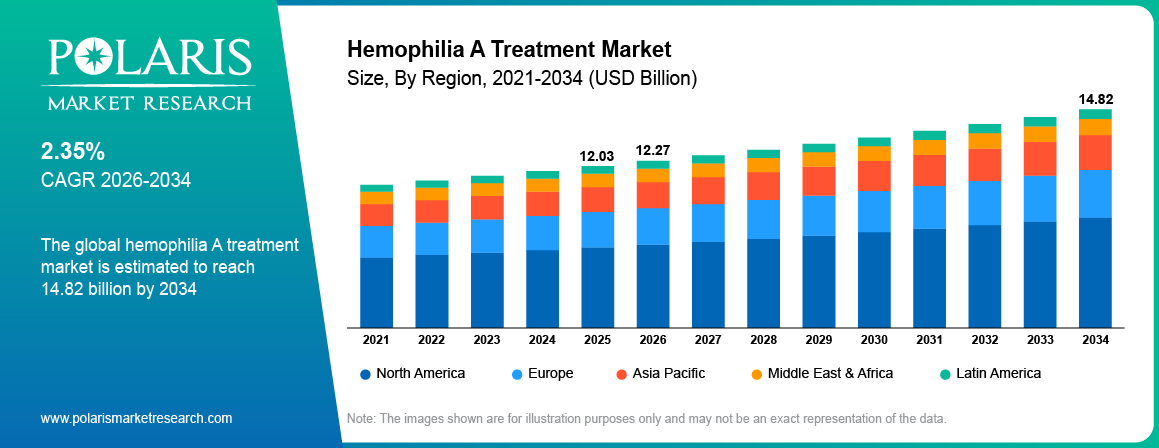
Source: Polaris Market Research Analysis
To Understand More About this Research: Download Sample Report
Hemophilia A Treatment Market Drivers, Restraints and Opportunities
Gene Therapy Advancements Reshaping Hemophilia A Treatment
Gene therapy focuses on correcting the underlying genetic defect by delivering a functional copy of the F8 gene, which codes for clotting factor VIII. Recent clinical trials have demonstrated the potential for sustained expression of factor VIII, reducing or eliminating the need for regular infusions. For example, a 2023 study published in The New England Journal of Medicine reported that patients receiving gene therapy achieved factor VIII activity levels sufficient to significantly reduce bleeding episodes. This advancement is further supported by the increasing number of regulatory approvals and the expanding pipeline of innovative gene therapies, highlighting the shift toward long-term, curative approaches. Thus, advancements in gene therapy are driving the hemophilia A market expansion.
Rising Adoption of Extended Half-Life Factor VIII Therapies
Extended half-life (EHL) factor VIII products are gaining traction as they improve patient compliance by reducing infusion frequency. Products like Eloctate and Adynovate have demonstrated clinical efficacy in maintaining factor VIII levels for longer durations compared to traditional therapies. According to data from the World Federation of Hemophilia (WFH), EHL therapies have improved the quality of life for patients by allowing for fewer injections while achieving better prophylactic outcomes. This trend addresses the challenges of adherence, particularly in younger populations, and is expected to drive further innovation in treatment protocols in the hemophilia A market.
Why Prophylaxis Is the Preferred Hemophilia A Treatment Approach
Prophylaxis was the most-preferred treatment in 2025. This was driven by the effectiveness of the approach as opposed to adoption trends. The periodic administration of factor VIII or alternative treatments such as emicizumab keeps the clotting activity at an adequate level that prevents bleeding as opposed to administering treatment to treat bleedings.
- Prevent recurrence of bleeding episodes, especially those in the joints and soft tissues.
- Avoids joint damage by reducing the chances of developing hemophilic arthropathy, one of the major disabilities among untreated patients.
- Facilitates improved mobility by ensuring that patients avoid the effects of repetitive bleeds.
- Ensures that disease management focuses more on preventing bleeds than managing the problem after it happens.
The use of a prevention approach and the convenience of products with extended half-life explains why prophylaxis was on high demand.
Growing Use of Non-Factor Hemophilia A Therapies
Non-factor replacement therapies, such as emicizumab, represent a significant shift in the treatment paradigm for hemophilia A. Unlike traditional factor-based treatments, these therapies work independently of factor VIII to restore clotting function. Emicizumab, approved by the FDA in 2017, has been widely adopted due to its subcutaneous administration and proven efficacy in reducing annualized bleeding rates. A 2022 study published in Blood Advances highlighted that patients on emicizumab experienced up to a 90% reduction in bleeding events compared to those on conventional factor replacement therapy. This trend underscores the growing preference for therapies offering convenience and improved outcomes, particularly for patients with inhibitors.
How Hemophilia A Treatment Works
- Diagnosis determines factor VIII deficiency via blood test results.
- Disease severity is evaluated by the level of factor VIII activity.
- Most suitable mode of treatment is decided upon.
- Replacement of factor or advanced treatment methods are given.
- Therapy prevents or controls bleeding incidences.
- Patients receive lifelong monitoring and management.
What Is Factor VIII Replacement Therapy?
Factor VIII replacement therapy is the principal mode of treatment for hemophilia A. This therapeutic modality is aimed at compensating the deficiency of the clotting factor with recombinant or plasma-derived products.
- Recombinant factor VIII products are produced via genetic engineering techniques.
- Plasma-derived factor VIII products are derived from human plasma and are used, especially in those areas where plasma fractionation facilities exist.
- The on-demand application of the drug means the use of a factor during an actual bleeding episode.
- The prophylactic application implies regular injections of factor VIII aimed at the prevention of bleeding events.
Both types of products are crucial for better management of patients and continue to be relevant in the treatment of hemophilia A despite the emergence of gene therapy and non-factor approaches.
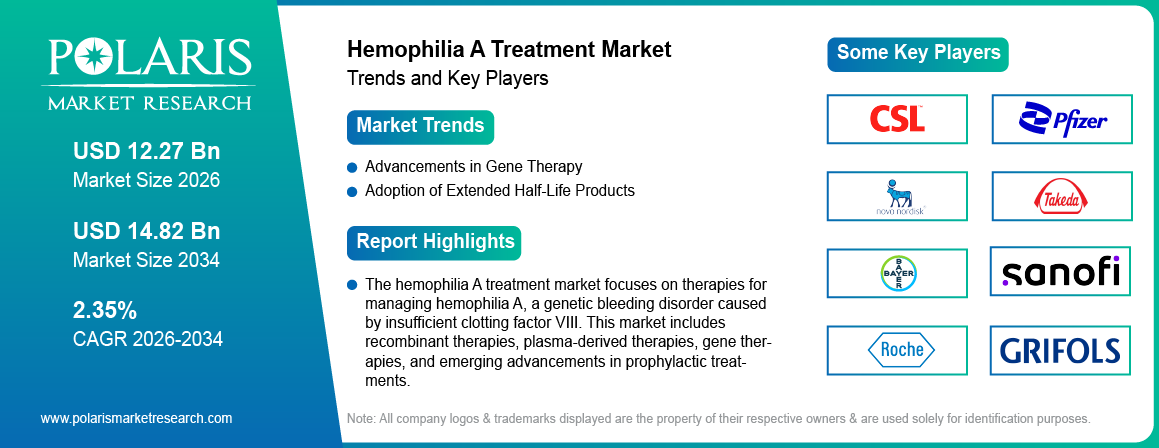
Source: Polaris Market Research Analysis
Segment Insights
Hemophilia A Treatment Market Assessment – Treatment Type-Based Insights
The hemophilia A treatment market, based on treatment type, is segmented into on-demand, cure, and prophylaxis, each catering to specific patient needs. Among these, prophylaxis hold the largest market share, driven by their ability to prevent bleeding episodes and maintain optimal quality of life. These treatments, primarily utilizing factor VIII replacement products or non-factor replacement therapies such as emicizumab, are being increasingly adopted due to their proven efficacy in reducing annualized bleeding rates. Growing awareness among healthcare providers and patients regarding the long-term benefits of prophylaxis further supports the dominance of this segment.
The cure segment, particularly with advancements in gene therapy, is registering the fastest growth in the market. These therapies offer the potential for sustained or permanent resolution of hemophilia A by addressing its genetic root cause. Clinical trials demonstrating the feasibility of achieving near-normal factor VIII activity levels have accelerated interest and investment in this segment. The ongoing approval of gene therapy products and increasing patient preference for one-time treatments over regular infusions are expected to fuel its rapid expansion. These developments are reshaping treatment paradigms and enhancing patient outcomes.
Hemophilia A Treatment Market Evaluation – Therapy Type-Based Insights
The hemophilia A treatment market, by therapy type, is segmented into factor replacement therapy, desmopressin & fibrin sealants, and gene therapy & monoclonal antibodies. The factor replacement therapy segment holds the largest market share, attributed to its established use as the primary treatment for hemophilia A. Both recombinant and plasma-derived factor VIII products are widely prescribed for their efficacy in managing bleeding episodes and for prophylaxis. The increasing adoption of extended half-life factor VIII products has further strengthened the segment's position, providing patients with improved convenience and reduced infusion frequency.
Gene therapy & monoclonal antibodies represent the fastest-growing segment due to their innovative and long-term therapeutic potential. Gene therapy, by addressing the genetic root cause of hemophilia A via genetic analysis, offers a curative approach that has gained significant traction among patients and providers. Similarly, monoclonal antibodies such as emicizumab have demonstrated effectiveness in both inhibitor and non-inhibitor patients, with subcutaneous administration providing a notable advantage. Robust clinical data and ongoing approvals in this segment are driving its rapid growth, supported by investments in R&D and the introduction of novel therapies to the market.
Difference Between Factor Replacement Therapy vs Gene Therapy
| Factor | Factor Replacement Therapy | Gene Therapy |
| Approach | Replaces missing factor VIII protein | Targets the underlying genetic cause |
| Treatment Frequency | Requires repeated administration | Potential long-term therapeutic benefit |
| Technology | Established and widely validated therapy | Advanced, innovative treatment platform |
| Adoption | Widely used in clinical practice | Growing clinical adoption |
Source: Polaris Market Research Analysis
Hemophilia A Treatment Market Outlook – Distribution Channel-Based Insights
The hemophilia A treatment market, segmented by distribution channel, includes hospital pharmacies and specialty pharmacies. Hospital pharmacies hold the largest market share due to their critical role in managing acute and emergency care for hemophilia patients. These pharmacies are integral to delivering factor replacement therapies and other treatments immediately during bleeding episodes or surgical procedures. Additionally, the presence of specialized healthcare professionals within hospitals ensures appropriate dosing and administration, further solidifying this segment’s prominence in the market.
Specialty pharmacies are registering the fastest growth in the market, driven by the increasing adoption of advanced therapies such as gene therapy and monoclonal antibodies. These pharmacies are uniquely equipped to manage high-cost and complex treatments, providing patients with the necessary support for long-term care and adherence. Their ability to offer personalized patient education, streamlined insurance processing, and home delivery services makes them an attractive option for managing chronic conditions like hemophilia A. The growth of specialty pharmacies is further fueled by partnerships with pharmaceutical companies and advancements in telepharmacy services, enhancing accessibility and patient convenience.
Applications of Hemophilia A Treatment (Real-World Use Cases)
| Application | Purpose |
| Preventing spontaneous bleeding episodes | Reduces the risk of unexpected internal bleeding. |
| Managing bleeding after injuries or surgeries | Controls blood loss during trauma or surgical procedures. |
| Long-term prophylactic care for severe hemophilia | Maintains adequate clotting factor levels to prevent recurrent bleeds. |
| Supporting joint health | Minimizes repeated joint bleeding and long-term joint damage. |
| Treating breakthrough bleeding events | Provides rapid bleeding control despite ongoing preventive therapy. |
| Improving patient quality of life | Enhances mobility, independence, and daily activities through advanced treatments. |
Source: Polaris Market Research Analysis
Source: Polaris Market Research Analysis
Hemophilia A Treatment Market Regional Analysis
By region, the study provides market insights into North America, Europe, Asia Pacific, Latin America, and the Middle East & Africa. The regional analysis of the hemophilia A treatment market highlights North America as holding the largest share, driven by its well-established healthcare infrastructure, high adoption of advanced therapies, and significant investments in research and development. The region benefits from favorable reimbursement policies and the presence of major biopharmaceutical companies actively involved in developing innovative treatments such as gene therapy and monoclonal antibodies. Additionally, increasing awareness campaigns by organizations like the National Hemophilia Foundation and robust clinical trial activity contribute to the market growth in this region. While Europe and Asia Pacific are also emerging as key markets due to advancements in healthcare systems and rising patient awareness, North America’s leadership is anchored by its comprehensive healthcare support and access to advanced treatments.
The Europe hemophilia A treatment market is experiencing steady growth, supported by advancements in healthcare infrastructure and widespread adoption of prophylactic therapies. Countries such as Germany, the UK, and France are leading the region due to their high awareness levels, strong reimbursement frameworks, and access to innovative treatments. Additionally, initiatives by organizations such as the European Haemophilia Consortium are enhancing patient education and driving the adoption of new therapies, including gene therapy and non-factor replacement treatments.
Asia Pacific represents a rapidly growing market for hemophilia A treatment, driven by increasing healthcare investments and a rising prevalence of hemophilia in densely populated countries like China and India. Expanding healthcare analytical testing services access and growing awareness of hemophilia management are encouraging the adoption of advanced treatments. Governments and non-profit organizations are playing a crucial role by supporting diagnostic initiatives and subsidizing therapies, particularly in emerging economies. The regional market growth is further supported by clinical trials and local manufacturing efforts to make innovative therapies more accessible and affordable.
Cost & Access Challenges in Hemophilia A Treatment
Despite remarkable progress made in the field of medicine, high prices of treatment are one of the biggest barriers for the treatment market of hemophilia A, especially in low and medium-income areas.
| Treatment Type | Primary Cost Driver | Access Barrier |
| Factor VIII Replacement Therapy | Frequent, lifelong infusions | Requires cold-chain logistics and consistent supply |
| Extended Half-Life Products | Premium pricing over conventional factor VIII | Limited reimbursement coverage in emerging markets |
| Non-Factor Replacement Therapies | High per-dose biologic cost | Availability concentrated in specialty pharmacy networks |
| Gene Therapy | High one-time treatment cost | Requires specialized administration centers, limiting geographic reach |
Source: Polaris Market Research Analysis
Overcoming such barriers will need continued efforts toward the development of cost-effective treatment models, improved access to specialty pharmacies, and increased support for diagnostics and reimbursement in underprivileged areas. These factors expected to shape competitive strategy through the forecast period.
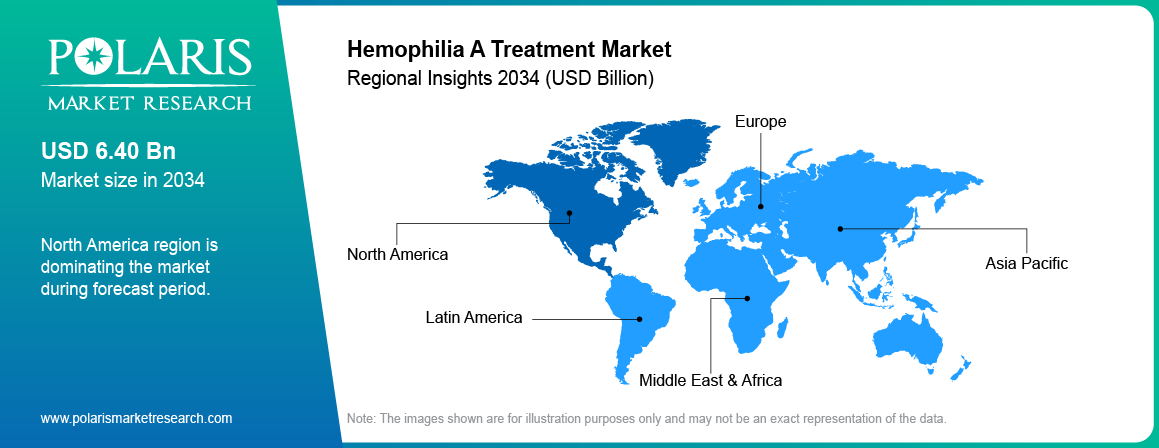
Source: Polaris Market Research Analysis
Hemophilia A Treatment Competitive Landscape and Market Positioning
Key players actively operating in the hemophilia A treatment market include CSL Behring, Pfizer Inc., Novo Nordisk A/S, Takeda Pharmaceutical Company Limited, Bayer AG, Sanofi (through its acquisition of Bioverativ), F. Hoffmann-La Roche Ltd., Octapharma AG, Grifols S.A., BioMarin Pharmaceutical Inc., Spark Therapeutics (a subsidiary of Roche), Aptevo Therapeutics, Kedrion Biopharma, Sangamo Therapeutics, and uniQure N.V. These companies focus on developing and delivering advanced therapies, including recombinant factor VIII, extended half-life products, gene therapies, and monoclonal antibodies.
The competitive landscape of the hemophilia A treatment market is characterized by continuous innovation and strategic collaborations. Companies such as BioMarin Pharmaceutical Inc. and uniQure N.V. are investing in gene therapy development, aiming to provide long-term solutions for hemophilia A patients. Established firms like CSL Behring, Novo Nordisk, and Takeda are focusing on improving existing therapies, such as extended half-life factor VIII products, to enhance patient convenience and adherence. Meanwhile, Roche and its subsidiary Spark Therapeutics are advancing monoclonal antibody treatments and gene therapy pipelines, highlighting a shift toward new, less invasive approaches.
Insights into the market reveal intense competition to address unmet needs, particularly for patients with inhibitors or those requiring prophylactic care. Companies are also engaging in partnerships to enhance R&D efforts and expand their geographical reach. For example, collaborations between biotech firms and academic institutions are accelerating the development of advanced treatments. Additionally, increasing focus on affordability and accessibility in emerging markets is shaping competitive strategies, with players investing in localized manufacturing and tailored solutions to address region-specific challenges.
CSL Behring is a prominent company in the hemophilia A treatment market, known for its comprehensive portfolio of plasma-derived and recombinant therapies. The company offers treatments like Afstyla, a single-chain recombinant factor VIII therapy designed for prophylaxis and on-demand use.
Roche has made significant contributions to the market through its product emicizumab (Hemlibra), a monoclonal antibody therapy for hemophilia A patients with and without inhibitors. This subcutaneous treatment has gained wide acceptance due to its ability to reduce bleeding episodes significantly.
List of Key Companies
- CSL Behring
- Pfizer Inc.
- Novo Nordisk A/S
- Takeda Pharmaceutical Company Limited
- Bayer AG
- Sanofi (through its acquisition of Bioverativ)
- F. Hoffmann-La Roche Ltd.
- Octapharma AG
- Grifols S.A.
- BioMarin Pharmaceutical Inc.
- Spark Therapeutics (a subsidiary of Roche)
- Aptevo Therapeutics
- Kedrion Biopharma
- Sangamo Therapeutics
- uniQure N.V.
Industry Developments
- June 2026: Pfizer Inc. announced the U.S. Food and Drug Administration (FDA) approval for the expanded indication for HYMPAVZI (marstacimab-hncq). It will be used to treat hemophilia A or B. The treatment is suitable for patients (aged 12 years and above) with inhibitors and pediatric patients (ages 6 to 11 years) with or without inhibitors.(Source: pfizer.com)
- In March 2025, the FDA approved fitusiran, an RNA interference therapy developed by Sanofi and Alnylam, for the treatment of hemophilia A and B. The therapy will be marketed under the brand name Qfitlia. Following the approval, analysts at William Blair described the decision as a “meaningful positive” for Alnylam, noting that Qfitlia is expected to generate a significant royalty stream for the company.
- In November 2024, Roche reported positive results from a Phase III clinical trial evaluating Hemlibra in pediatric patients, reinforcing its commitment to expanding therapeutic options for younger populations.
- In October 2024, CSL Behring announced a strategic collaboration with Enable Injections, LLC to enhance its gene therapy pipeline, aiming to provide innovative solutions for hemophilia A patients.
Future Outlook of hemophilia A treatment market
The hemophilia A treatment market is expected to grow during the forecast period. Healthcare systems are focusing on advancing therapies. Patients are gaining access to innovative treatment options. There is rising preference for gene therapy, extended half-life factor products, monoclonal antibodies, and personalized treatment. These approaches are expected to boost future market expansion. The market is witnessing continued innovation in rare disease therapeutics. It will reshape hemophilia care by reducing treatment burden and improving long-term outcomes.
Market Segmentation
By Treatment Type Outlook
- On-Demand
- Cure
- Prophylaxis
By Therapy Type Outlook
- Factor Replacement Therapy
- Desmopressin & Fibrin Sealants
- Gene Therapy & Monoclonal Antibodies
By Distribution Channel Outlook
- Hospital Pharmacies
- Specialty Pharmacies
By Regional Outlook
- North America
- US
- Canada
- Europe
- Germany
- France
- UK
- Italy
- Spain
- Netherlands
- Russia
- Rest of Europe
- Asia Pacific
- China
- Japan
- India
- Malaysia
- South Korea
- Indonesia
- Australia
- Vietnam
- Rest of Asia Pacific
- Middle East & Africa
- Saudi Arabia
- UAE
- Israel
- South Africa
- Rest of Middle East & Africa
- Latin America
- Mexico
- Brazil
- Argentina
- Rest of Latin America
Hemophilia A Treatment Market Report Scope
| Report Attributes | Details |
| Market Size Value in 2025 | USD 12.03 billion |
| Market Size Value in 2026 | USD 12.27 billion |
| Revenue Forecast by 2034 | USD 14.82 billion |
| CAGR | 2.35% from 2026 to 2034 |
| Base Year | 2025 |
| Historical Data | 2021–2024 |
| Forecast Period | 2026–2034 |
| Quantitative Units | Revenue in USD billion and CAGR from 2026 to 2034 |
| Report Coverage | Revenue Forecast, Market Competitive Landscape, Growth Factors, and Trends |
| Segments Covered |
|
| Regional Scope |
|
| Competitive landscape |
|
| Report Format |
|
| Customization | Report customization as per your requirements with respect to countries, regions, and segmentation. |
Source: Polaris Market Research Analysis
How is the report valuable for an organization?
Workflow/Innovation Strategy
The hemophilia A treatment market has been segmented into detailed segments of treatment type, therapy type, and distribution channel. Moreover, the study provides the reader with a detailed understanding of the different segments at both the global and regional levels.
Growth/Marketing Strategy
The growth and marketing strategy in the hemophilia A treatment market focus on expanding access to innovative therapies, increasing patient awareness, and enhancing treatment adherence. Companies are leveraging partnerships with healthcare providers and organizations to promote education and early diagnosis. Additionally, firms are investing in the development of gene therapies, extended half-life products, and monoclonal antibodies to address unmet medical needs. Targeting emerging markets with localized production and affordable treatment options is also a key strategy. Digital health platforms and telemedicine are being integrated to improve patient support and optimize treatment regimens
Frequently Asked Questions About the Hemophilia A Treatment Market
The hemophilia A treatment market size was valued at USD 12.03 billion in 2025 and is projected to grow to USD 14.82 billion by 2034.
The market is projected to register a CAGR of 2.35% from 2026 to 2034.
North America had the largest share of the market in 2025.
A few of the players actively operating in the hemophilia A treatment market include CSL Behring, Pfizer Inc., Novo Nordisk A/S, Takeda Pharmaceutical Company Limited, Bayer AG, Sanofi (through its acquisition of Bioverativ), F. Hoffmann-La Roche Ltd., Octapharma AG, Grifols S.A., BioMarin Pharmaceutical Inc., Spark Therapeutics (a subsidiary of Roche), Aptevo Therapeutics, Kedrion Biopharma, Sangamo Therapeutics, and uniQure N.V.
The prophylactic segment accounted for the largest share of the market in 2025.
The factor replacement therapy segment accounted for the largest share of the market in 2025.
Hemophilia A treatment refers to the medical interventions used to manage and treat hemophilia A. In this genetic disorder, the blood lacks sufficient clotting factor VIII, leading to difficulty in blood clotting and an increased risk of excessive bleeding. The primary treatment for Hemophilia A involves replacing the missing clotting factor through factor replacement therapy, which can be either recombinant or plasma-derived. Other treatment options include desmopressin (for mild cases), non-factor replacement therapies like emicizumab, and gene therapies, which aim to address the underlying genetic cause of the disorder. These treatments help manage bleeding episodes, prevent joint damage, and improve the quality of life for patients.
A few key trends in the hemophilia A treatment market are described below: Advancements in Gene Therapy: Ongoing development of gene therapies aiming for long-term or permanent solutions by addressing the genetic root cause of Hemophilia A. Growth of Extended Half-Life Products: Increased adoption of extended half-life factor VIII products to reduce the frequency of infusions and improve patient convenience. Rise of Non-Factor Replacement Therapies: Expanded use of therapies like emicizumab, which offer alternative treatment options that do not require factor VIII replacement. Focus on Personalized Medicine: Increasing emphasis on personalized treatment plans based on genetic profiling and individual patient needs.
A new company entering the hemophilia A treatment market could focus on developing innovative therapies, such as gene therapy or non-factor replacement treatments, which are gaining traction for their potential to offer long-term or permanent solutions. Additionally, investing in personalized medicine, tailored to the genetic profiles and specific needs of patients, could differentiate the company. Offering subcutaneous formulations or developing extended half-life products could enhance patient convenience and adherence. Partnering with healthcare providers and organizations to improve patient access, especially in emerging markets, and integrating digital health solutions for better disease management would also position the company for success.
Companies involved in treatment therapy products of hemophilia A and services, and other consulting firms must buy the report.
Factor VIII replacement is the treatment of choice that involves replacing the missing clotting protein in hemophilia A patients for them to form clots normally and decrease bleeding attacks.
The different types of treatments for hemophilia A include factor VIII replacement therapy, non-factor replacement therapy, gene therapy, on demand therapy for bleeding, and prophylactic therapy against recurring bleeding attacks.
The prophylactic therapy includes administering factor of clotting or any other therapy to prevent bleeding attacks in hemophilia patients.
Download Sample Report of Hemophilia A Treatment Market
Please fill out the form to request a customized copy of the research report.


