
Lipid Nanoparticle Raw Materials Market Size, Share, Trends & Forecast, 2026–2034
REPORT DETAILS
Lipid Nanoparticle Raw Materials Market Summary
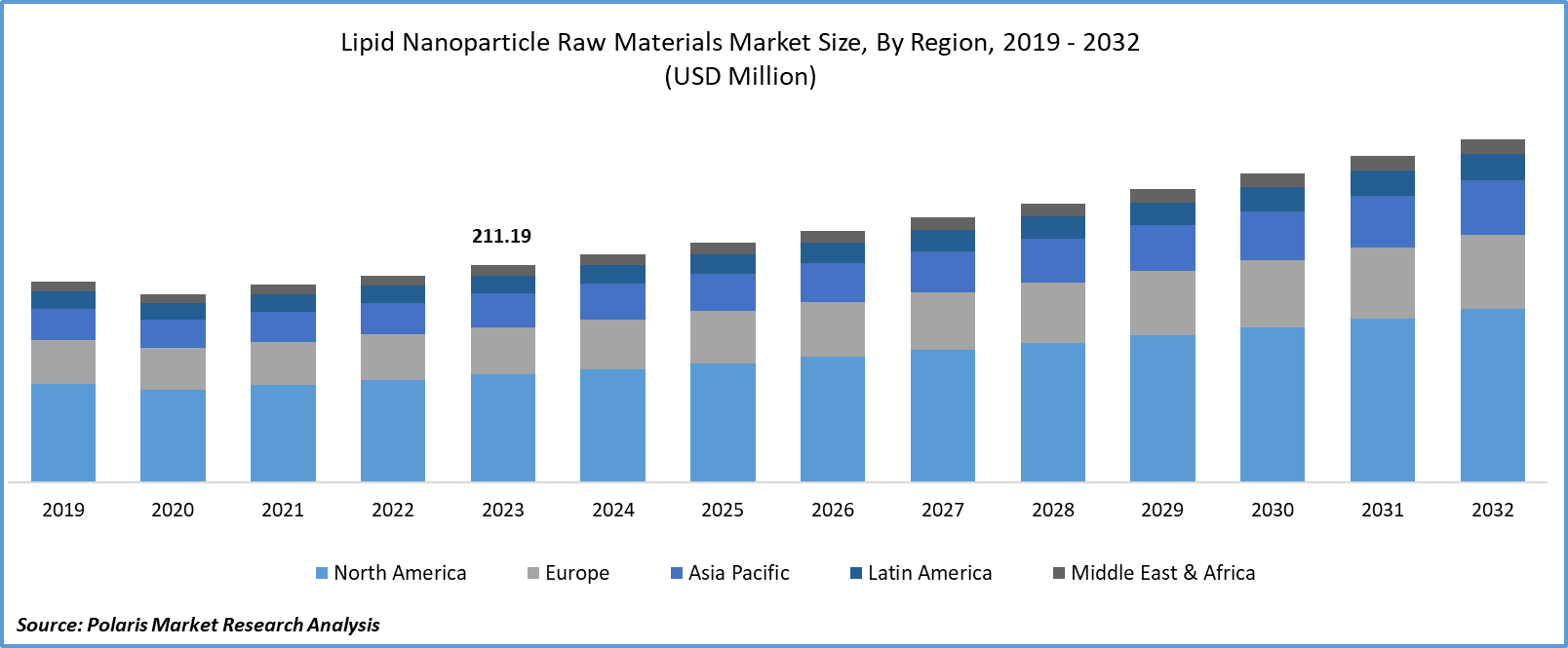
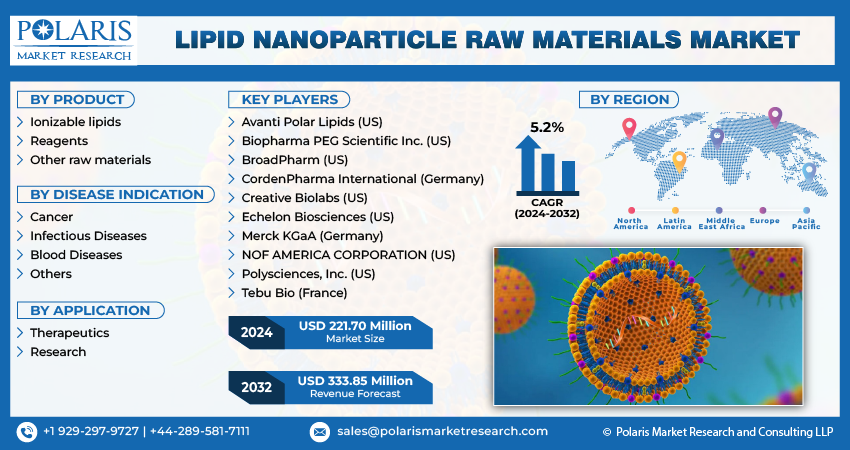
The global lipid nanoparticle raw materials market size was valued at USD 224.37 million in 2025. The market is projected to account for an 5.8% CAGR from 2026 to 2034. The rising prevalence of lung diseases has led to increased demand for lipid nanoparticle raw materials. The market is also benefiting from the growing adoption of mRNA technology in multiple therapeutic formulations.
Market Statistics
Lipid Nanoparticle Raw Materials Market Key Takeaways
- North America accounted for an 40.1% lipid nanoparticle raw materials market share in 2025. The presence of robust pharmaceutical and biotechnology sectors contributes to the regional market dominance.
- Asia Pacific is projected to witness the fastest growth at an 6.7% CAGR. Increased healthcare spending and medical research drive market growth in the region.
- The ionizable lipids segment led with an 57.21% lipid nanoparticle raw materials market share in 2025. This is due to their critical role in nucleic acid encapsulation and cellular uptake.
- The infectious diseases segment led with an 46.3% lipid nanoparticle raw materials market share in 2025. Lipid nanoparticles (LNPs) are essential for creating and delivering mRNA vaccines used against viral illnesses.
- The academic & research institutes segment is projected to grow at an 6.4% CAGR. Universities and labs drive early-stage innovation for gene therapies and advanced drug delivery.
Note: Figures and projections outlined in this report are the result of Polaris Market Research’s proprietary analytical processes, grounded in the latest available datasets and market observations.
How Lipid Nanoparticle Delivery Works?
How lipid nanoparticles work depends on the interaction between the nanoparticles and the drug and the targeted cells. Lipid content influences formation, stability, uptake by cells, and delivery of cargo. Thus, the mode of action of lipid nanoparticles is determined by the nature of individual lipids and formulation conditions.
Lipid mixing: Some lipids are added to the drug payload in order to start forming LNPs.
Particle formation: Lipids surround the drug payload as formulation conditions change. As a result, nanoparticles are created with specific sizes and composition.
Administration: The LNP formulation is administered using the chosen method of administration. Particles enter the biological system.
Cellular uptake: LNPs are able to interact with the cell membrane due to their lipidic nature and then be incorporated into cells by means of cellular uptake.
Payload release: Upon cellular uptake, certain changes in the cell can affect LNP structure so that the payload becomes accessible.
Biological action: The released payload works as intended. The selection of raw materials influences the efficiency of this delivery mechanism.
LNP vs Traditional Drug Delivery
In simple terms, lipid nanoparticles are capable of shielding drug payloads and regulating their delivery to target sites. Biocompatibility of lipids depends on the lipid material used. Drug encapsulation can protect sensitive payloads from degradation. In addition, LNPs have the potential to facilitate controlled delivery and improve the bioavailability of some drugs.
| Criterion | Lipid Nanoparticles | Traditional Delivery Systems |
| Delivery Efficiency | Efficient, protects payload from enzymatic damage during delivery | Less efficient, payload often degrades before reaching the target site |
| Targeting | Ability to engineer particles for selective targeting | Usually systemic, no precise targeting ability |
| Stability | Depends on formulation but can be enhanced through ionizable lipid design | Usually stable but not so flexible with payloads such as mRNA and siRNA |
| Cellular uptake | Based on lipid and surface charges | Based on passive transport or basic carriers |
| Therapeutic applications | mRNA vaccination, gene therapy, cancer treatment, RNA interference | Includes small molecule drugs, injections, and tablets |
Source: Polaris Market Research Analysis
Source: Polaris Market Research Analysis
Lipid Nanoparticle Manufacturing Process
Lipid nanoparticle manufacturing involves a defined series of processes that have to be completed in order. In each step, product quality depends on the processes used in that step. CDMO support can be used for contract manufacturing during production.
Material preparation: Preparation of the lipids and payload of the drugs to be used. GMP-grade lipids may be used for this process. This process occurs separately.
Lipid mixing: Dissolution of the lipids in a proper solvent. This gives rise to the formation of the lipid phase.
Formation of the particles: Mixture of the lipid phase with the aqueous solution of the payload. Particles are formed as the lipids surround the payload.
Removal of solvents: Removal of any organic solvent left in the formulation. Nanoparticles remain in an aqueous solution.
Purification: Unwanted products are removed from the nanoparticle suspension. This helps improve the formulation quality.
Concentration: Concentration of the LNP suspension to the desired levels. Formulation conditions are also assessed.
Filtration and filling: Filtration of the formulation where necessary. Filling of the formulated drug into appropriate containers.
Quality control checks are done at each stage of the process. Checks include determination of particle size, payload concentration, among others. Scale-up production may need similar process controls at higher production volumes.
Lipid Nanoparticle Raw Materials Market Dynamics
Driver : Rising Incidence of Lung Diseases
The burden of lung diseases is fueling the requirement for the development of novel treatment methods. Chronic obstructive pulmonary disease continues to be a significant health concern around the world. In June 2026, the World Health Organization reported that COPD accounted for 3.4 million deaths in 2023 (source: who.int). It also stated that COPD is the third leading cause of death globally. The magnitude of the disease burden is driving the need for novel treatment methods that can cure chronic respiratory diseases. LNPs have been tested for use in delivering genetic medicine that needs to be delivered to lung cells. This includes disorders like cystic fibrosis and others. Greater research interest in these areas can generate more demand for specific lipid compounds. Different lipids may be required depending on the delivery method. This can further drive lipid nanoparticle raw materials market demand.
Driver : Increasing Adoption of mRNA Technology
mRNA has expanded into new therapeutic areas. Therefore, the requirement for delivery platforms that will enable the protection of mRNA and its delivery to the cell is on the rise. LNPs are one of the popular delivery platforms used for this purpose. In August 2026, Artis BioSolutions inaugurated an integrated mRNA and LNP development and manufacturing facility. The facility covers mRNA drug substance manufacturing and lipid nanoparticle development (source: businesswire.com). The development indicates that organizations are making investments in the dedicated capacity to manufacture mRNA and LNP. Such capacity requires a steady supply of lipids. It also supports demand for specialized raw materials because of the increase in the number of mRNA programs in the pipeline. It can expand the customer base for LNP lipid suppliers beyond the vaccine companies.
Restraining Factors : Raw Material Supply Chain & Cost Challenges
Manufacturers of lipid nanoparticles rely on consistent availability of specialized raw materials. Some formulas may require unique ionizable lipids, whose suppliers are few in number. This may make their procurement difficult. The raw material also needs to be of high-quality standards. Variation in quality among different lots will influence the LNP formula. Delayed delivery of the raw material can affect the process of formulation. Manufacturing specialized lipids is also expensive. Any further purification process will make it even more expensive. As LNP production moves to larger batches, the demand for the material goes up. The supplier needs to ensure consistent quality at large volumes. This can make the process of development and manufacturing more costly.
Opportunities : Expansion of Specialized Lipid Supply for Emerging Developers
The increasing number of companies involved in LNP-based drug delivery technologies has created an expanded customer base for raw material suppliers. Small biotech companies frequently require unique lipids for formulating products at the early stages. In some cases, these companies may have different demands than large pharmaceutical companies. This provides opportunities for suppliers capable of producing raw materials in small batches. Technical assistance can allow researchers to choose the right lipid molecules for their formulations. Suppliers capable of providing raw materials for the early stages of development programs have an opportunity to build relationships before their projects enter the mass production stage. This can create a pathway to future orders in the development process. It also provides raw material suppliers with access to a broader range of LNP projects.
Opportunities : Integration of Lipid Raw Material Production With LNP Manufacturing
Collaboration between lipid suppliers and LNP manufacturers can open new service opportunities. Drug developers may want to collaborate with fewer suppliers in the process of formulation development. Integration into one model allows for better coordination between the manufacture of raw materials and the process of LNP manufacture. In addition, this can help LNP manufacturers coordinate requirements for lipids in accordance with the formulation. This model proves itself to be useful when the project advances from the laboratory stage to production in large quantities. The suppliers can tailor the production of the raw materials to the demands of manufacture. At the same time, the LNP manufacturer has an opportunity to give feedback on raw material performance. The model helps minimize the handovers between suppliers. In addition, it allows better communication regarding material specifications and requirements.
Trend : Greater Focus on Lipid Purity and Material Consistency
LNP manufacturers are increasingly concerned about the quality of the raw materials that go into their formulations. Even small differences in the lipid content can influence the quality of the resulting nanoparticles. This has led to increased importance being placed on the purity and consistency of the materials during the process of procurement. Manufacturers also need clear specifications for the materials used in LNP formulations. This would help improve consistency during the process of formulation development. The focus is particularly relevant as LNPs have moved from the research stage into the clinical manufacturing phase. Buyers may also place greater importance on supplier qualification and quality documentation.
Trend : Technological Advancements in Lipid Nanoparticles
The technology behind LNPs is no longer limited to formulations employed in the first generation of vaccines. Scientists are experimenting with new lipid particle formulations that are designed to carry various therapeutic cargoes. For example, they are exploring the development of ionizable lipids with varying chemical structures that may influence LNP behavior after introduction into the organism. In addition, researchers are searching for solutions aimed at enhancing delivery to extra-hepatic tissues. The other direction that is currently being explored in the development of LNPs is the use of LNPs as carriers for gene-editing systems. The latter requires a highly controlled delivery of cargo, including messenger RNA and guide RNA. Due to advancements in lipid chemistry, developers have a broader set of opportunities while formulating LNPs. In addition, LNP formulations are increasingly becoming versatile and adaptable to the needs of various therapies.
Role of Lipid Nanoparticles in mRNA Technology
By itself, mRNA is not effectively able to deliver itself into the cell. LNPs serve as an mRNA delivery system for the mRNA molecule. The LNP protects the mRNA from degradation before reaching the target cells. Once the molecule gets into the cell, it guides the synthesis of the desired protein. Thus, LNPs are valuable in mRNA vaccine development and other therapeutic uses. This strategy is also being researched for protein replacement and immune therapy. Different mRNA applications may require different lipid formulations. Demand is increasing for raw materials suitable for specific formulations. Growth in mRNA research thus fuels the use of ionizable lipids and other LNP components. It also diversifies the raw materials that mRNA product developers need to source. LNPs are also used in nucleic acid delivery. This supports the development of RNA therapeutics and siRNA delivery approaches.
Lipid Nanoparticles in Gene Therapy
Gene therapy involves the use of genetic materials to change or improve cellular functions. LNPs can be used to transport genetic medicines that are based on RNA. LNPs are able to transport molecules used in gene editing and other therapies. This gives gene therapy developers an alternative way of transporting the genetic cargo without using any viral vectors. LNP delivery is being tested for inherited conditions and other disorders that need changes in the cell. Formulation needs may depend on the genetic medicine and the target tissue. This generates the need for specific lipids in the process of developing a drug. Suppliers of raw materials can thus support gene therapy programs during formulation. The growth in gene therapy programs may increase the application of special lipids not only in vaccines but also in genetic medicines. This means that LNPs can be used as an alternative gene therapy delivery platform and non-viral vector for transferring genetic information. Moreover, LNPs are also being researched for CRISPR delivery. DNA manufacturing is also relevant to the broader development of genetic medicines.
Lipid Nanoparticles in Cancer Therapeutics
Cancer research is creating new ways to utilize LNPs for drug delivery. Scientists are investigating the delivery of RNA and other sensitive biological agents using LNPs. One of the methods is to deliver RNA that codes for a selected set of proteins within cells. The other one is to utilize RNA molecules to modulate particular cellular functions associated with cancer. LNPs can protect these biological agents during delivery and help in their cellular uptake. This makes them highly valuable for research in personalized cancer medicine. Moreover, LNPs can be used for therapeutic vaccines and other immunotherapeutic approaches. Such applications may require different lipid compositions depending on the payload and desired outcome. With the progress of cancer programs, developers may require more lipid types for LNPs. LNPs are also being studied for their role in targeted drug delivery systems and as a tumor-targeted nanocarrier in precision oncology.
Impact of Vaccine Development on LNP Raw Material Demand
The vaccine development process is influencing the demand for LNP raw materials through an increase in the need for raw materials that satisfy the requirements of pharmaceutical manufacturing processes. As the vaccine development process progresses from research to production, there is higher and more uniform demand for raw materials in larger quantities, which means that quality must be maintained in all production batches. As such, it is critical to have sources of quality pharmaceutical-grade lipids and mRNA vaccine lipid components.
Different material specifications might also be needed by vaccine developers as they conduct the formulation optimization and process development process. Hence, the transition from research to large-scale production may alter the purchasing needs of LNP raw materials for vaccine developers. Contract manufacturers and vaccine manufacturers may develop longer-term purchasing plans for the materials. Overall, the vaccine development process is creating additional opportunities for LNP raw materials in terms of their use in vaccine production.
Source: Polaris Market Research Analysis
Lipid Nanoparticle Raw Materials Market Segmentation
The lipid nanoparticle raw materials market is primarily segmented based on product, disease indication, application, end-use, and region.
| Category | Segments |
| By Product | Ionizable Lipids (PEGylated Lipids, Sterol Lipids, Neutral Phospholipids) · Kits · Reagents · Other Raw Materials |
| By Disease Indication | Cancer · Infectious Diseases · Blood Diseases · Others |
| By Application | Therapeutics · Research |
| By End-Use | Pharmaceutical & Biotechnology Companies · Academic & Research Institutes · Others |
| By Region | North America (U.S., Canada) · Europe (UK, Germany, France, Italy, Spain, Netherlands, Russia, Rest of Europe) · Asia Pacific (China, India, Japan, Malaysia, Indonesia, South Korea, Rest of Asia Pacific) · Latin America (Brazil, Mexico, Argentina, Rest of Latin America) · Middle East & Africa (Saudi Arabia, UAE, Israel, South Africa, Rest of Middle East & Africa) |
Source: Polaris Market Research Analysis
By Product
The ionizable lipids market segment accounted for an 57.21% lipid nanoparticle raw materials market share in 2025. Ionizable lipids have extensive applications in formulating LNP drug delivery systems because they can change charge under varying conditions. This attribute is useful when loading the payload into LNPs during formulation. Ionizable lipids can help release the payload after interacting with cellular membranes. They are especially valuable for delivering mRNA and other forms of nucleic acids. Requirements for lipid materials also depend on the nature of the payload the system delivers. This creates demand for lipids with varied chemistry. As such, manufacturers have developed ionizable lipids to meet the demand for diverse lipid materials.
The kits segment is projected to account for an 6.2% CAGR. LNP kits have the ability to offer readily available materials for the preparation and analysis of lipid nanoparticle formulations. These products may simplify formulation development, as they would not require individual components for creation. Their usage could be important when it comes to evaluating LNP formulations in a laboratory setting. The demand could be further increased as laboratories continue investigating mRNA and other nucleic acid deliveries. The segment may benefit from research into LNPs in the pharmaceutical and biotech industries.
By Disease Indication
The infectious diseases segment led the lipid nanoparticle raw materials market with an 46.3% share in 2025. LNPs have been extensively investigated for vaccines and treatment options for infectious diseases. The protection offered by LNPs to nucleic acid payloads makes them valuable for the development of mRNA vaccines. LNPs can aid in delivering mRNA into cells that can produce proteins that trigger an immune response. Thus, this has raised the need for LNP-based strategies for infectious diseases. Various vaccine development programs will differ in terms of lipid composition depending on the nature of the payload and formulations involved. This drives demand for ionizable lipids, phospholipids, cholesterol, and PEG-lipids. Therefore, research into infectious diseases can fuel the need for LNP raw materials.
The cancer segment is projected to witness the fastest growth at a 7.1% CAGR. LNPs are being investigated as delivery agents for biological cargo like RNA used in cancer research. LNPs can protect biological cargo from damage during delivery and allow their successful incorporation by the target cell. This makes LNPs suitable for researching mRNA and cancer vaccine delivery. Increasing interest is being shown in techniques that use LNPs for the delivery of genetic cargo for therapeutic purposes. The above uses may employ different lipids depending on the type of cargo and therapy used. More cancer research programs using LNPs as delivery agents could boost the demand for tailored raw materials. This could result in rapid growth of the cancer segment over the forecast period.
By Application
The therapeutic segment accounted for an 62.54% lipid nanoparticle raw materials market share in 2025. LNPs have been used to deliver active agents in various therapeutic research applications. Their ability to carry nucleic acid payloads makes them suitable for developing RNA and gene therapies. LNPs can protect sensitive payloads during delivery. The choice of lipid components may differ depending on the specific therapeutic being developed. This leads to varying needs for raw materials during the development of formulations. In this case, advances in LNP-based therapies by pharmaceutical and biotechnology firms may increase demand for lipid materials. Therapeutic applications may thus form an important source of demand for LNP raw materials.
The research segment is projected to account for an 6.0% CAGR. LNPs are used in research labs to study drug delivery and the delivery of nucleic acid-based treatments. Such studies involve evaluating various lipids to understand how the delivery of a payload is affected by them. This results in the need for various lipids and LNPs. Scientists may evaluate different formulations before choosing a particular one that could be used in further studies. As LNP research expands in the pharmaceutical and biotechnology segments, demand for research raw materials could rise. The segment would also benefit from the use of LNPs in mRNA and gene-based therapy research.
Research Applications of Lipid Nanoparticles
| Research Application | Lipid Nanoparticle Role |
| Cell delivery studies | Lipid nanoparticles are used in research on cellular delivery of biological molecules and the effect of lipid composition on delivery. |
| Nucleic acid research | Lipid nanoparticles are used in nucleic acid delivery research, such as mRNA and siRNA. |
| Gene editing studies | Lipid nanoparticles may contain components used in gene-editing research, allowing researchers to examine delivery approaches. |
| Formulation research | Variations of lipid combination may be tested to see how particle size, stability, and payload change. |
| Tissue delivery research | LNPs are tested in the research to see how they perform for tissue delivery to the specific cells. |
| Payload evaluation | Lipid nanoparticles may be tested for various biological payloads to determine their usefulness in the experiment. |
| Preclinical studies | Lipid nanoparticle formulations are evaluated in preclinical research before proceeding with further development. Regenerative medicine is another research area where LNP-based delivery approaches are being explored. |
Source: Polaris Market Research Analysis
By End-Use
The pharmaceutical & biotechnology companies segment accounted for the largest lipid nanoparticle raw materials market share of 64.7% in 2025. These companies use LNPs to manufacture vaccines, therapeutics, and other drug candidates with specific delivery needs. The companies' research processes may depend on a variety of LNP formulations, depending on the payload and its intended application. This increases the need for lipid materials during development and evaluation. Companies may also choose from a variety of lipid compositions before finalizing a particular formulation. As the LNP-based drug candidates progress to various stages of research and preclinical studies, there is a greater need for the material. The growing development of mRNA and gene-based drugs is also likely to contribute to LNP applications in this end-use category.
The academic & research institutes segment is projected to grow at an 6.4% CAGR. These institutes use LNPs in experimental applications related to drug delivery and biological studies. Experiments with various lipid formulations allow scientists to assess how these components affect particle formation and payload delivery. LNPs are also used in studies that involve mRNAs, gene editing, and nucleic acid-based techniques. Such studies require smaller amounts of research lipids for formulation tests. A growing number of experimental studies may increase demand for individual lipid components and LNP research materials. Partnerships between academic institutions and biotechnology researchers may also increase the use of LNPs in experimental studies. This could help increase demand from the academic and research end-user category.
Source: Polaris Market Research Analysis
Regional Insights
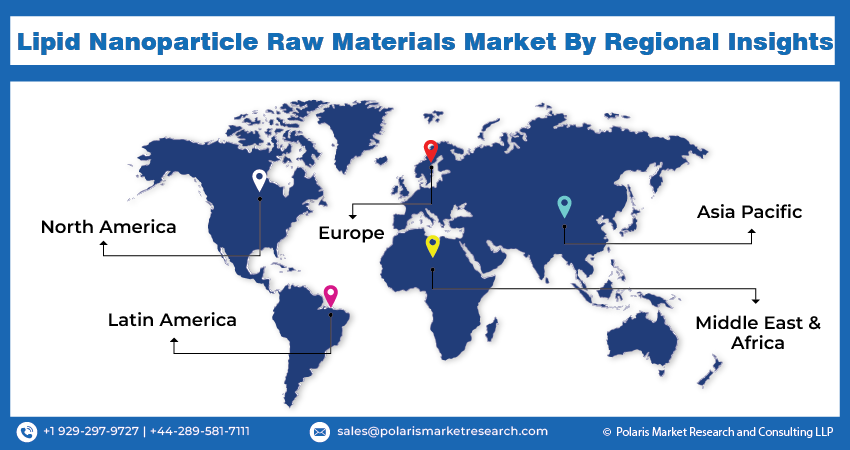
The global LNP raw materials market shows varying growth rates by region. In North America, the industry is boosted by existing pharmaceutical research and LNP activities. In Europe, there is already a substantial presence of drug development and manufacturing facilities. In Asia Pacific, the biotechnology and pharmaceutical industry is growing. Meanwhile, Latin America and the Middle East and Africa are growing steadily as LNP activities expand.
North America
North America led the global market with an 40.1% share in 2025. There is a considerable presence of pharmaceutical and biotech companies engaged in LNP research in the region. Academic institutions have also contributed to the use of LNPs in delivery studies. In addition, mRNA vaccine development programs have increased demand for lipids. Companies in the region are also developing LNP drug formulations along with other nucleic acid delivery techniques. This increases the demand for specific raw materials for their formulation and development. The U.S. is a substantial contributor to activities in the region because of the presence of pharma companies focusing heavily on R&D. The biotech/life sciences industry in Canada also adds value to these activities. This gives North America a strong position in the LNPs raw materials market.
Asia Pacific
Asia Pacific is projected to witness rapid growth at an 6.7% CAGR. Research and development activity is rising in pharmaceuticals and biotech. Countries such as China, Japan, South Korea, and India have increased capacity for drug development and life science research. Research on LNPs for mRNA-based products, gene therapies, and other nucleic acid applications is increasing. This is driving a growing need for lipids for research. Local producers are also focusing on developing more advanced drug development and manufacturing capabilities. As more LNP-based programs are developed in the region, demand for specialized raw materials will rise. Increasing research and development activity in the area could accelerate market growth in the region.
Europe
Europe accounted for an 27.8% share of the global lipid nanoparticle raw materials market in 2025. The region has a well-established pharmaceutical and biotechnology industry that will fuel LNP R&D and product development. Various companies based in Europe are focusing on developing vaccines and medicines using lipid nanoparticles for delivery of vaccines and drugs. Academic institutions are involved in research for formulations of LNP and nucleic acid delivery. Such research activities generate a demand for specific lipids used in the formulations and testing process. Europe also has a well-established base for pharmaceutical manufacturing plants, which may help in LNP-based product development. Various countries, including Germany, France, and the UK, have a thriving life science industry. Ongoing investments in drug development are creating demand for LNP raw materials. Europe is thus poised to remain a major regional market throughout the forecast period.
Latin America and Middle East & Africa
Latin America and Middle East & Africa are projected to account for a CAGR of 5.2% and 4.8%, respectively. There is gradual development in pharmaceuticals and biotechnology research in the regions. LNPs are being researched for applications in vaccines and nucleic acid-based therapies. This is creating demand for lipids that are used in formulation research. Local drug producers are also building capabilities in advanced drug formulations. This may be helpful for further development of LNP technology. Research organizations contribute to early-stage work on drug delivery and advanced formulations. However, there is less LNP development compared to North America, Europe, and Asia Pacific. This is because the market is smaller in size than other regions. Pharmaceutical research and the development of advanced drugs will drive demand for LNP raw materials.
Source: Polaris Market Research Analysis
Regulatory Landscape for Lipid Nanoparticle Products
Lipid nanoparticle regulatory requirements depend on the nature of the product, its intended use, and development phase. For pharmaceuticals, the safety and quality of both the LNP formulation and the drug substance are evaluated by the regulatory authorities. Specifications regarding the identity, purity, composition, and consistency of the raw materials used in the preparation of LNPs are critical. This is especially important since minor variations in the chemical structure of ionizable lipids could impact the performance of the LNPs.
For clinical products, the manufacturing process of LNPs should comply with appropriate GMPs. Any modification in the suppliers of the lipids or any change in the specifications of raw materials should be evaluated when such modifications could impact the quality of the product. The submission to the regulatory agencies should include data about the composition and manufacturing process of the LNP system. In the United States, the Food and Drug Administration evaluates LNP-based products under the applicable drug or biologic framework. In the European Union, LNPs are developed according to the requirements of the European Medicines Agency and pharmaceutical regulations.
Key Market Players & Competitive Landscape
The lipid nanoparticle raw materials market comprises the suppliers of specialized lipids used in formulations in the pharmaceutical industry. Competition depends on the suppliers' ability to provide the required raw material in accordance with the specifications necessary for the manufacture of LNPs. Ionizable lipids remain a competitive area because of their chemical structure, which varies from one formulation to another. Competition among suppliers is also dependent on the availability of different types of lipids for various uses. Some LNP raw material suppliers specialize in the provision of research-grade materials, while others provide materials appropriate for pharmaceutical development stages.
Another competitive area in the lipid nanoparticle raw materials market is custom lipid development services, which enable developers to obtain materials made specifically for a particular LNP formulation. Manufacturing capacity is another competitive factor as LNP programs progress to higher volumes. Companies that have already built manufacturing facilities can support customers in later stages of product development. Regulatory documentation and quality systems are also important when providing materials for pharmaceutical applications.
Vendor Positioning
| Company | Headquarters | Primary Positioning |
| Avanti Research, LLC (a Croda subsidiary) | U.S. | Broad catalog of research- and GMP-grade lipids; expanding via archaeal tetraether lipid partnerships |
| CordenPharma International | Germany | CDMO with dedicated LNP starter kits for mRNA formulation |
| Merck KGaA | Germany | Large-scale specialty chemicals supplier with PEGylated and ionizable lipid lines |
| NOF AMERICA CORPORATION | U.S. / Japan | Proprietary ionizable lipid chemistries (e.g., COATSOME® series) |
| Evonik Industries AG | Germany | Large-scale pharmaceutical lipid manufacturing and CDMO capacity |
| BroadPharm | US | Custom PEG and lipid synthesis for research and preclinical use |
| Creative Biolabs / Echelon Biosciences / Tebubio | US / France | Specialty reagent and kit suppliers serving academic and biotech research |
Source: Polaris Market Research Analysis
List of Key Companies
- Avanti Research, LLC (a Croda subsidiary)
- Biopharma PEG Scientific Inc.
- BroadPharm
- CordenPharma International
- Creative Biolabs
- Echelon Biosciences
- Evonik Industries AG
- Merck KGaA
- NOF AMERICA CORPORATION
- Phosphorex
- Polysciences, Inc.
- Tebubio
Recent Developments in the Industry
- August 2026: Evonik announced an investment in a new GMP drug product manufacturing facility in Vancouver, Canada. The company stated that the facility will expand its capacity for lipid-based drug delivery. It will also support production of vaccines and other advanced medicines. (source: evonik.com)
- June 2026: Avanti Research, LLC announced a collaboration with NovoArc to make next-generation tetraether lipid technologies available to researchers. The collaboration adds specialized lipid materials for research into LNP and liposome design. (source: croda.com)
Future Outlook
The lipid nanoparticle raw materials market is expected to remain strong as LNP drug development expands beyond vaccines. mRNAs will continue being one of the major sources of demand for LNP raw materials; however, there is also gene therapy work creating new applications for LNP. More diverse formulations may be required from the raw material suppliers as developers try different lipid structures. Moreover, the demand for pharmaceutical-grade raw materials is rising, as more LNP drugs enter the clinical and commercial production phases. Established manufacturing capacity could give a competitive advantage to some of the raw material suppliers in addressing greater demands for the materials.
Research Methodology
The study uses both top-down and bottom-up approaches to estimate the lipid nanoparticle raw materials market. The findings are compared with paid market databases and proprietary datasets. Historical and current information on raw material revenues, product launches, and company financials comes from public filings, industry associations, and paid databases.
Primary research includes interviews with raw material manufacturers, CDMOs, and pharmaceutical and biotechnology companies. These discussions help check volume and pricing assumptions and provide insight into pipeline activity that may not be publicly available. Secondary research covers peer-reviewed journals such as Nature Biomedical Engineering and PNAS, along with FDA and EMA regulatory information. Company annual reports, investor presentations, and relevant Polaris Market Research studies are also reviewed.
The lipid nanoparticle raw materials market estimates are developed across product, application, disease indication, end-use, and regional segments. The bottom-up results are compared with a top-down assessment of pharmaceutical and biotechnology R&D spending. Data from interviews, secondary research, and internal databases are then reconciled to produce the final estimates. All figures undergo internal review before publication.
Lipid Nanoparticle Raw Materials Market Report Scope
| Report Attributes | Details |
| Market Size Value in 2025 | USD 224.37 million |
| Market Size Value in 2026 | USD 237.26 million |
| Market Forecast 2034 | USD 372.48 million |
| CAGR | 5.8% from 2026 to 2034 |
| Base Year | 2025 |
| Historical Data | 2021–2024 |
| Forecast Period | 2026–2034 |
| Quantitative Units | Revenue in USD million and CAGR from 2026 to 2034 |
| Report Coverage | Revenue Forecast, Market Competitive Landscape, Growth Factors, and Industry Trends |
| Segments Covered |
|
| Regional Scope |
|
| Competitive Landscape |
|
| Report Format |
|
| Customization | Report customization as per your requirements with respect to countries, regions, and segmentation. |
Source: Polaris Market Research Analysis
Lipid Nanoparticle Raw Materials Market FAQ's
Lipid nanoparticle raw materials are the ingredients used to produce LNPs. Ionizable lipids form the main functional component. Phospholipids, cholesterol, and PEG lipids are other components often included. The particular mix will depend on the LNP formula and the drug being delivered.
The global market was valued at USD 224.37 million in 2025. It is forecast to reach USD 372.48 million by 2034. The market is projected to account for an 5.8% CAGR from 2026 to 2034.
LNPs are used when a drug payload needs help getting into cells. They can protect the payload during delivery and facilitate cellular uptake. This is especially relevant for mRNA and other nucleic acid-based medicines, which are difficult to deliver without a suitable carrier.
Ionizable lipids help package nucleic acid molecules during LNP production. Their charge properties then change under different conditions. This helps the LNP interact with cells and release its payload after cellular uptake. They are therefore a major material in LNP formulations for mRNA delivery.
The mRNA is enclosed within the LNP before administration. The particle protects the mRNA and helps it enter cells. Once the mRNA reaches the cell, it is used to produce the target protein. The immune system can then respond to that protein.
North America held the leading position with an 40.1% share in 2025. The U.S. has a strong base of pharmaceutical and biotechnology companies working with LNP technology. mRNA vaccine development has also created an established demand for specialized lipid materials in the region.
The market should continue to benefit from LNP research outside vaccine development. mRNA medicines remain an important area, while gene therapy research is adding other uses. Suppliers are also likely to see demand for a wider range of lipid materials as developers work on different LNP formulations.
Download Sample Report of Lipid Nanoparticle Raw Materials Market
Please fill out the form to request a customized copy of the research report.


